About Shark Alley
Shark Alley is a well-known dive site in the Bahamas, specifically off the coast of New Providence near Nassau, celebrated for its reliable shark encounters. This site offers an immersive experience where divers can observe Caribbean reef sharks, a common species in Bahamian waters, in their natural environment. The unique topography and consistent presence of these pelagic animals make it a highlight for many divers visiting the region. The dive site is relatively shallow, typically around 12 meters (40 feet), making it accessible to a wide range of certification levels. The consistent depth also contributes to excellent light penetration, enhancing visibility and making it a popular spot for underwater photography. The bottom composition is generally sandy with scattered reef formations, providing a natural stage for the shark activity. While Caribbean reef sharks are the stars, the site also attracts other marine life common to the Bahamian reefs, including various colorful fish species and occasional rays. The clarity of the Bahamian waters, often exceeding 30 meters (100 feet), ensures that observations are clear and engaging. Diving here provides both an educational and exhilarating experience, showcasing the vibrant ecosystem of the Caribbean Sea. Dive operators often combine a standard shark observation dive with an optional shark-feeding experience for those seeking a more adrenaline-fueled interaction. This controlled interaction allows divers to get closer to the sharks under the guidance of experienced professionals, emphasizing safety and respect for the marine environment.
Highlights
Caribbean reef shark encountersShallow water shark divingExcellent underwater visibilityAdrenaline-fueled shark feedingAccessible for various diver levelsVibrant reef marine life
Season calendar
Best months to dive here
Jan
Feb
Mar
Apr
May
Jun
Jul
Aug
Sep
Oct
Nov
Dec
Excellent
Good
Off-Season
Nov – May (Peak)
Tiger sharks at Tiger Beach, hammerheads off Cat Island, best visibility up to 40m, calm seas.
Jun & Oct (Shoulder)
Reef sharks, nurse sharks, dolphins. Slightly rougher seas but still diveable.
Jul – Sep (Hurricane)
Many operators pause. If open, expect reduced visibility and unpredictable weather.
Dive site facts: Shark Alley
- Depth
- 12 m
- Current
- Mild to moderate
- Visibility
- 30–45 m
- Water temperature
- 24–31°C
- Entry
- Boat / Giant stride
- Level
- Open Water Diver
- Dive type
- Shark encounter, reef
- Region / port
- New Providence, Nassau
- Coordinates
- 24.17, -76.2
Conditions & Currents
Currents at Shark Alley are generally mild to moderate, depending on tidal movements, but rarely pose significant challenges for divers given the shallow depth. Divers typically experience gentle drifts, allowing for comfortable observation of the shark activity. Entry is usually a giant stride from the dive boat, followed by a controlled descent to the sandy bottom. Exit involves ascending slowly and performing a safety stop before surfacing near the boat. Visibility is consistently high, often ranging from 30 to 45 meters (100 to 150 feet), though it can be slightly reduced after heavy rainfall in the wet season. Thermoclines are generally not a significant factor at this shallow site. While shark feeding events are controlled, divers must maintain situational awareness and follow the dive guide's instructions closely to ensure safety and avoid accidental contact during these active en
Marine life & sighting chances

Caribbean reef shark
Year-round · common
Snapper
Year-round · common
Jack
Year-round · common
Tangs
Year-round · occasional
Damsel fish
Year-round · occasional
Butterfly fish
Year-round · occasional
Angel fish
Year-round · occasional
Lizard fish
Year-round · occasional
Scorpionfish
Year-round · occasional
Sergeant majors
Year-round · occasional
Eagle ray
Year-round · rare
Loggerhead turtle
Year-round · rareDive profile & how the dive runs
A typical dive at Shark Alley begins with a giant stride entry from the dive boat. Divers descend to approximately 12 meters (40 feet) onto a sandy patch, often marked by the dive guide. The initial phase involves positioning oneself around the designated area to observe the Caribbean reef sharks, which are usually attracted by the boat's presence or a controlled feeding. Divers maintain a static position, often kneeling or hovering gently, to allow the sharks to swim freely around them. The route is circular, staying within the main 'alley' of activity. As the dive progresses, divers may follow the sharks at a respectful distance, ensuring not to disrupt their natural patterns. The turn point is determined by air consumption, usually around 80 bar (1100 psi). Ascent is slow and controlled, with the safety stop conducted at 5 meters (15 feet) for three minutes, often surrounded by curious reef fish. The dive concludes with surfacing near the boat for exit.
Underwater photography
Shark Alley is a prime location for wide-angle photography, especially with the clear Bahamian waters and frequent shark encounters. A fisheye lens is highly recommended to capture the full scope of the sharks and the underwater environment. External strobes are essential to bring out the vibrant colors and details of the sharks and reef, especially against the bright surface light. Buoyancy control is paramount to avoid disturbing the sandy bottom or coral patches and to maintain a stable position while sharks swim nearby. When photographing the sharks, maintain a respectful distance and avoid aggressive movements that might startle them. During controlled shark feeding, be mindful of other divers and the feeder, ensuring your shots do not interfere with the activity or safety protocols. Ambient light is usually plentiful due to the shallow depth, but strobes will enhance detail and contrast.
Combine with nearby dive sites
- Runway Wall
A famous wall dive off New Providence, known for Caribbean reef sharks and shallow depths.
- James Bond Wrecks
Explore the Vulcan Bomber and Tears of Allah wrecks, filmed for James Bond movies, in 12 meters of water.
- Stuart Cove's Wall
Located off New Providence, offering diverse marine life and various shark interactions.
- Current Cut
A high-speed drift dive between Great Eleuthera and Current Island, abundant with reef life.
Getting there & logistics
Access to Shark Alley typically begins by flying into Lynden Pindling International Airport (NAS) in Nassau, New Providence. Major airlines offer regular flights from the US, Canada, and Europe. From Nassau, dive operators like Stuart Cove's provide daily boat trips to Shark Alley, often included in multi-dive packages. Trips are usually day excursions, lasting several hours for two to three dives. Inter-island travel in the Bahamas can involve commuter planes or ferries, but for Shark Alley, Nassau is the primary departure point. There are generally no specific dive permits required for Shark Alley, but shark diving excursions may have additional costs. Many divers combine this site with other New Providence attractions, or as part of a longer liveaboard itinerary exploring other Bahamian islands like the Exumas or Bimini for different shark species.
Safety & environment
Diving at Shark Alley, particularly during shark feeding events, requires strict adherence to dive brief instructions. While no shark-related injuries to guests have been reported by major operators, divers must always maintain situational awareness and respect the animals. Insurance covering diving accidents and emergency evacuation is highly recommended. The nearest recompression chamber is located in Nassau, New Providence. In the event of a dive emergency, evacuation would typically involve transportation back to Nassau via boat, then land transport to the medical facility. Divers should ensure their equipment is in good working order and be comfortable with buoyancy control. It is also crucial to stay with the dive group and avoid solo excursions, especially in an environment with active sharks.
Who it suits — and who it doesn't
Suited for
- Certified Open Water Divers
- Shark enthusiasts
- Underwater photographers
- Divers seeking adrenaline-filled experiences
- Beginners comfortable with boat diving
Less suited for
- Divers with uncontrolled buoyancy
- Those uncomfortable with close shark proximity
- Individuals prone to panic in dynamic environments
- Divers unwilling to follow strict safety protocols
FAQ
Shark Alley FAQ
What kind of sharks can I expect to see at Shark Alley?
At Shark Alley, you can consistently expect to encounter Caribbean reef sharks. These are the primary species that frequent the site and are the focus of most shark diving and feeding experiences offered here. Occasionally, other reef species may pass through, but the Caribbean reef sharks are the main attraction.
Do I need special certification to dive with sharks at Shark Alley?
No, you do not need a special certification beyond an Open Water Diver certification to dive at Shark Alley. The site is shallow, typically around 12 meters (40 feet), making it accessible to most certified divers. However, it is essential to be comfortable with your diving skills and to follow all instructions from the dive guides.
Is shark feeding conducted at Shark Alley, and is it safe?
Yes, many dive operators at Shark Alley offer controlled shark feeding experiences. These are conducted under strict supervision by experienced professionals who ensure diver safety. While thrilling, divers must adhere to all safety protocols and maintain designated positions to observe the sharks responsibly and safely during these interactions.
What is the water visibility like at Shark Alley?
Shark Alley generally boasts excellent water visibility, often ranging from 30 to 45 meters (100 to 150 feet). The clear, warm waters of the Bahamas contribute to superb underwater viewing conditions, which is ideal for observing the sharks and the surrounding marine environment. Visibility might slightly decrease after heavy rainfall.
What kind of camera equipment is best for photographing sharks here?
For photographing sharks at Shark Alley, a wide-angle lens, such as a fisheye, is highly recommended to capture the breadth of the scene and the sharks in their environment. External strobes are also crucial to illuminate the subjects and bring out colors, especially given the bright conditions and the need to reduce backscatter. Good buoyancy control is key for stable shots.
Why dive Shark Alley from a liveaboard?
Shark Alley is one of Bahamas's signature dive sites. A liveaboard sleeps you on the water and puts you in the water for three to four guided dives per day, including dawn and night dives that day-boat operators rarely offer. You skip the daily commute back to port and reach quieter, less-crowded sites in the same region on a single trip.
Below are the liveaboards that include Shark Alley on their Bahamas itineraries.
Liveaboards diving Shark Alley
These liveaboards may visit Shark Alley on selected itineraries — the exact dive sites depend on departure, weather and conditions.
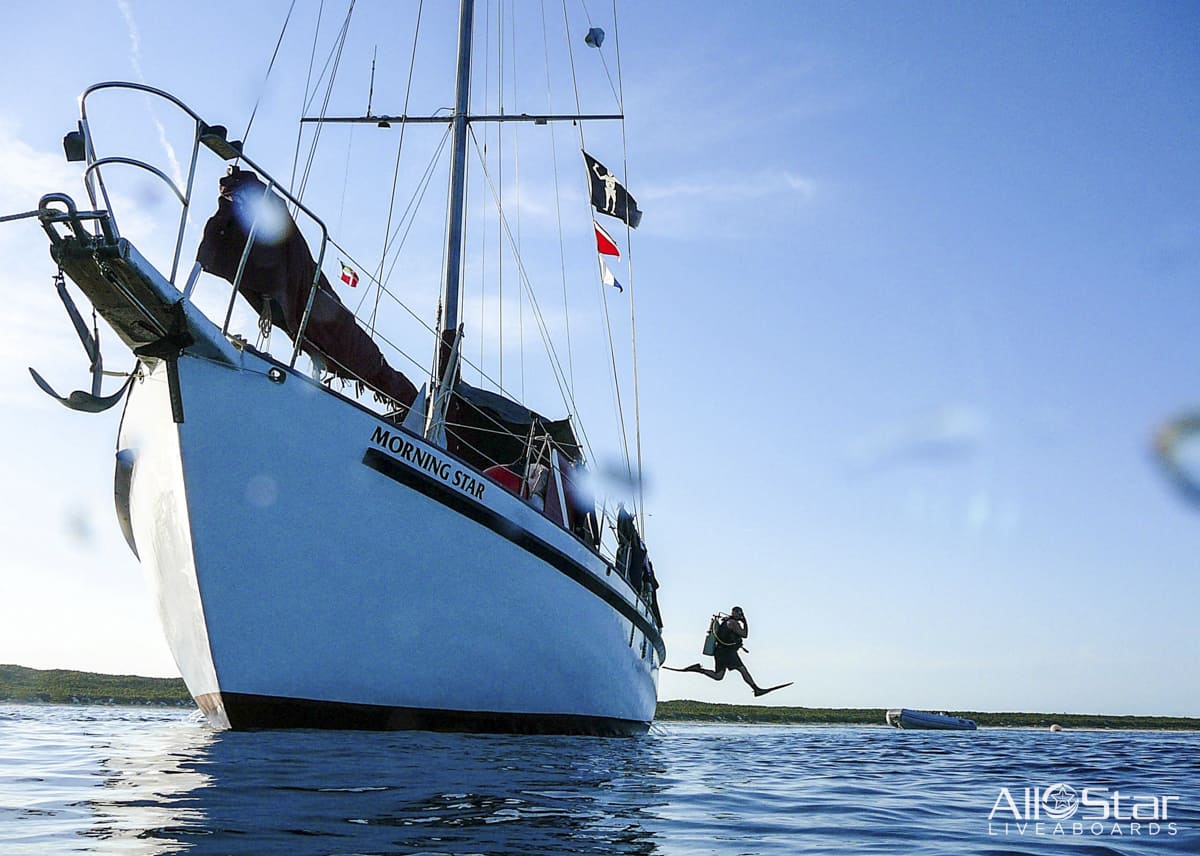
All Star Blackbeards Morning Star
Bahamas
24 guests20 m
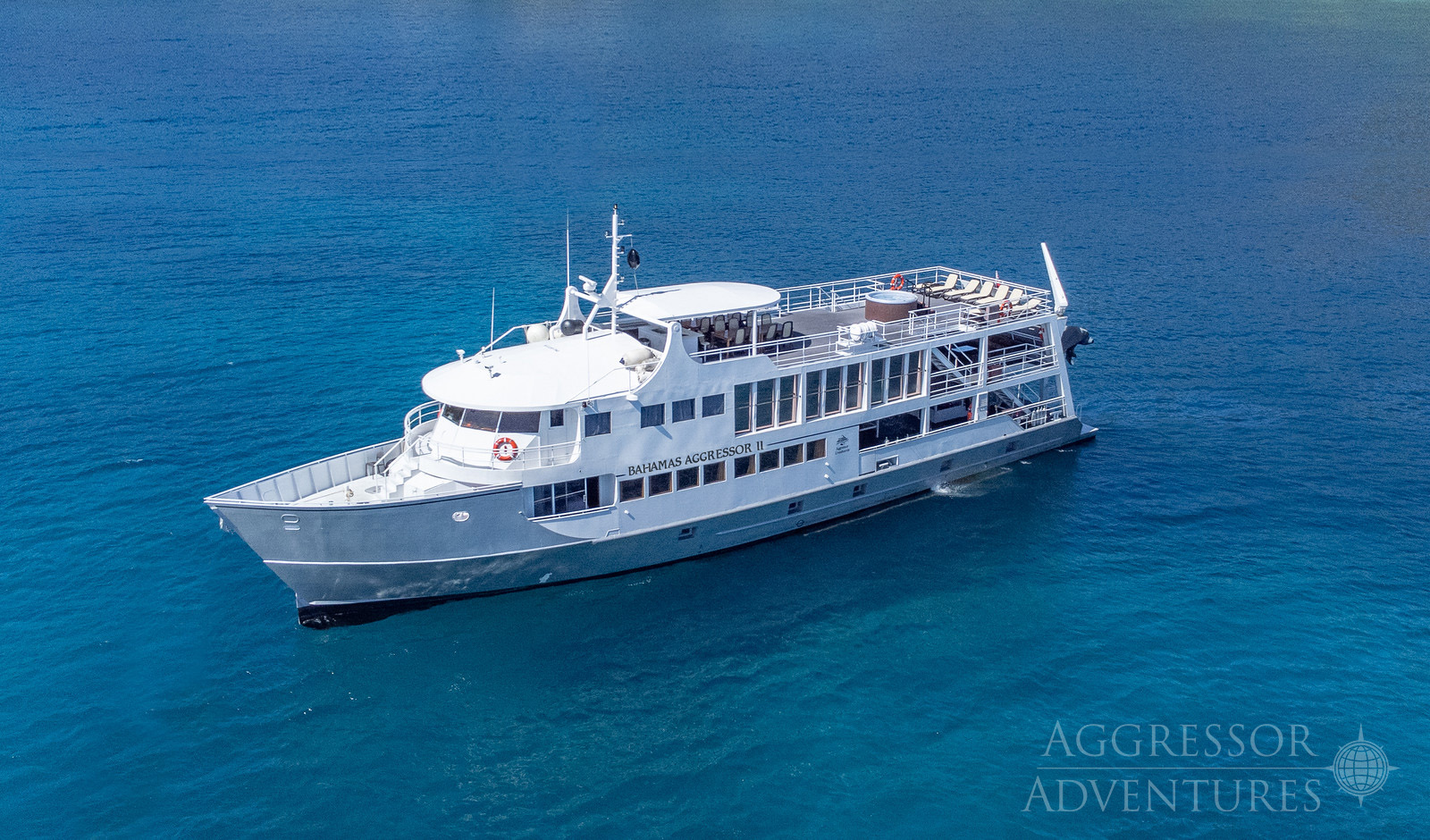
Bahamas Aggressor II
Bahamas
20 guests34 m
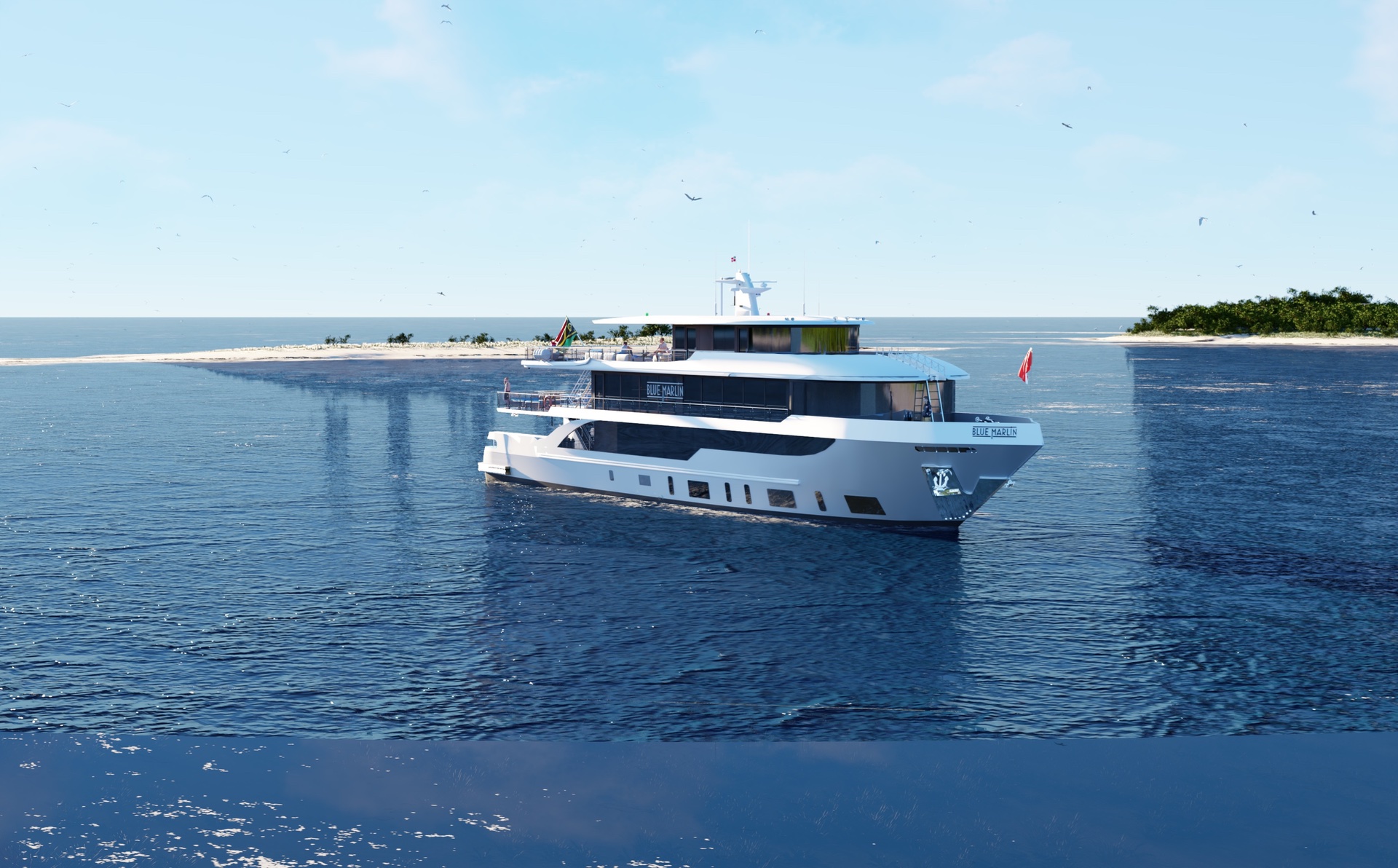
Blue Marlin
Bahamas
26 guests42 m
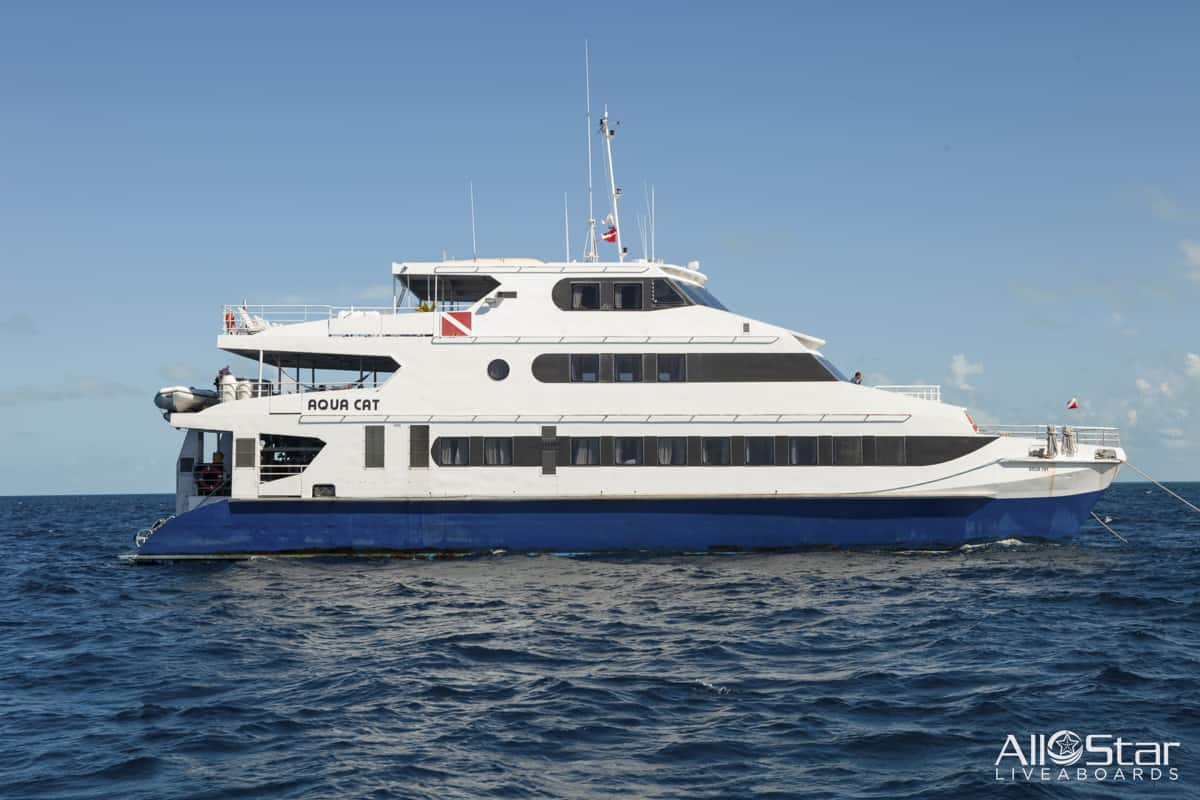
All Star Aqua Cat
Bahamas
30 guests31 m
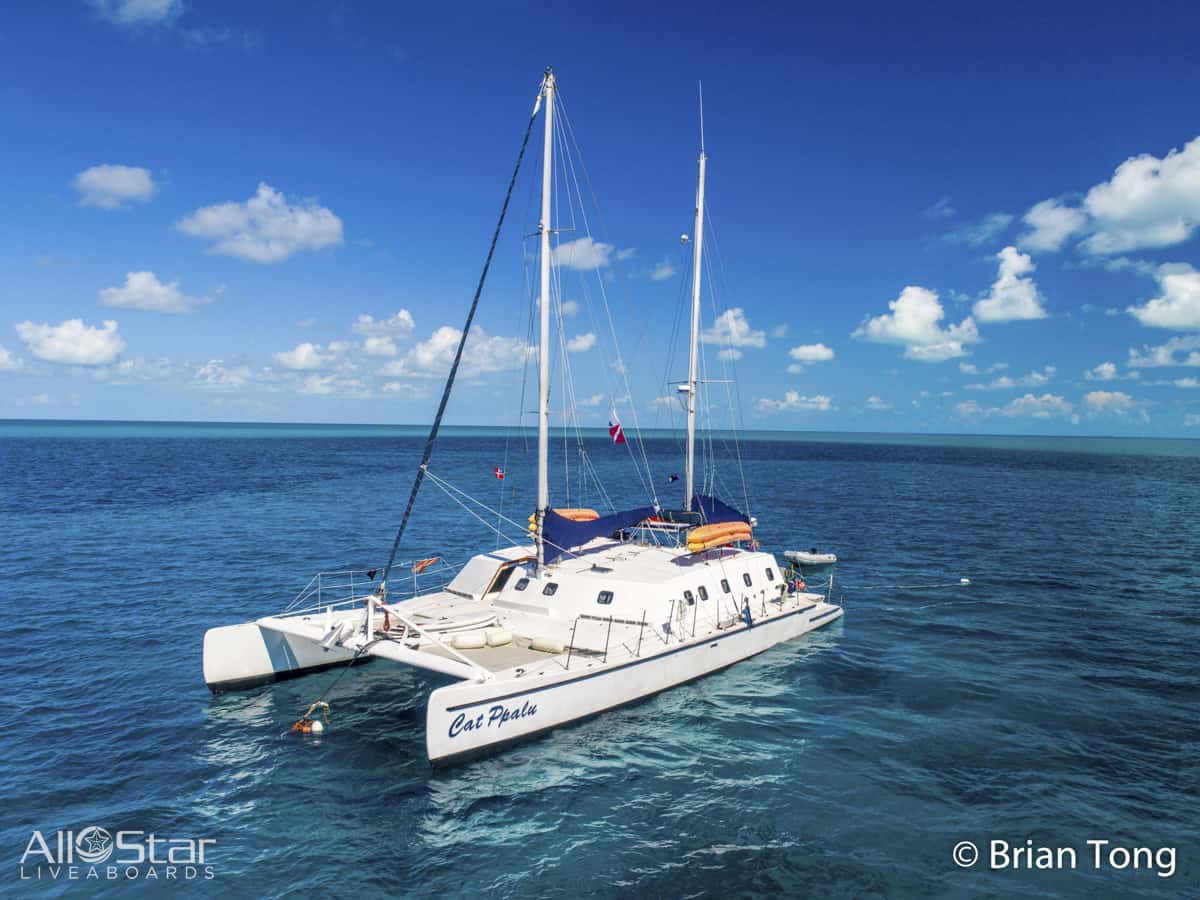
All Star Cat Ppalu
Bahamas
12 guests20 m
Dive sites similar to Shark Alley
Same character, same waters — six more sites divers love for the exact same reasons.Compare seasons, access and liveaboard routes — then pick the site that fits your trip best.
© Esri — Maxar, Earthstar, GIS
3 Fathom Wall
Cayman Islands
3 Fathom Wall is an exciting and fish-filled dive site located in the Cayman Islands, specifically at the intersection of the renowned Bloody Bay Wall.
- Suitable for
- Intermediate
- Current
- Mild
- Access
- Liveaboard only
- Depth
- ≤ 3000 m
- Theme
- Reef
While specific details for a dive site named "3 Riff" are not present in the provided sources, general diving conditions and characteristics for the Dominican Republic…
- Suitable for
- Advanced
- Current
- Mild
- Access
- Dayboat
- Depth
- 30–55 m
- Theme
- Reef
The dive site known as 3 Rocks is located off the coast of Sosúa in Puerto Plata, Dominican Republic, offering an accessible and lively underwater experience.
- Suitable for
- Beginner
- Current
- Mild
- Access
- Dayboat
- Depth
- 2–8 m
- Theme
- Reef
4 Amigos is a notable dive site located in the Bay Islands of Honduras, an area renowned for its extensive Mesoamerican Barrier Reef System, which is the world's second-longest.
- Suitable for
- Intermediate
- Current
- Moderate
- Access
- Liveaboard or dayboat
- Depth
- 9–40 m
- Theme
- Reef
© Esri — Maxar, Earthstar, GIS
6 Toed Cat
Mexico
The dive site known as "6 Toed Cat" is not a recognized dive location in Mexico; rather, it refers to the polydactyl felines, many with six toes, that inhabit the Ernest Hemingway Home and Museum in Key West, Florida.
- Suitable for
- Beginner
- Current
- Mild
- Access
- Liveaboard or dayboat
- Depth
- —
- Theme
- Reef
© Esri — Maxar, Earthstar, GIS
Aaron's Backyard
Honduras
Aaron's Backyard is a noted dive site within the Roatan Marine Park in Honduras, part of the extensive Mesoamerican Barrier Reef System.
- Suitable for
- Intermediate
- Current
- Moderate
- Access
- Liveaboard or dayboat
- Depth
- 9–40 m
- Theme
- Reef