About The Arches
Les Arches de Sakatia, located near Nosy Be, is a captivating dive site characterized by distinctive underwater architecture. The main feature is a series of impressive rock formations, including three prominent arches situated at depths of 19 to 20 meters, which then lead to a smaller arch on a 15-meter plateau. These structures rise dramatically from a sandy seabed at 23 to 24 meters. The site is a vibrant habitat for diverse marine species, attracting both pelagic enthusiasts and macro photographers. Large animals such as whitetip reef sharks and manta rays are frequently sighted, cruising through the arches or along the deeper sandy areas. Simultaneously, the intricate rock surfaces and crevices harbor an abundance of smaller creatures, making it a rich spot for detailed observation. Optimal diving conditions, including excellent visibility and less intense currents, are typically found during the dry season from April to October. The Arches can present moderate to strong currents, particularly during the wet season, requiring careful buoyancy control and an intermediate skill level. This site offers a unique combination of dramatic topography and abundant marine life for a memorable dive experience.
Highlights
Impressive rock archesWhitetip reef sharksManta ray sightingsLeaf scorpionfishGhostpipefishMacro photography heavenDiverse coral formationsSandy bottom at 24m
Season calendar
Best months to dive here
Jan
Feb
Mar
Apr
May
Jun
Jul
Aug
Sep
Oct
Nov
Dec
Excellent
Good
Dive site facts: The Arches
- Depth
- 12–24 m
- Current
- Moderate to strong
- Visibility
- 15–40 m
- Water temperature
- 24–30°C
- Entry
- Boat
- Level
- Intermediate
- Dive type
- Reef, arches, pelagic, macro
- Region / port
- Nosy Be, Madagascar
- Coordinates
- 13.2485° S, 48.0683° E
Conditions & Currents
Currents at The Arches can be variable, ranging from weak to moderate, but they can become strong, especially during the wet season from November to March. Navigating the arches and plateaus requires careful attention to buoyancy and good current awareness, making the site more suitable for intermediate divers. Visibility is generally very good, often between 15 to 40 meters, but it can decrease during whale shark season from October to December due to increased plankton, which paradoxically attracts large pelagics. Water temperature remains pleasantly warm, typically ranging from 24°C to 30°C throughout the year, so a 3mm to 5mm wetsuit is usually sufficient. Divers should be prepared for potential drift and plan their gas consumption accordingly, especially when strong currents are present.
Marine life & sighting chances
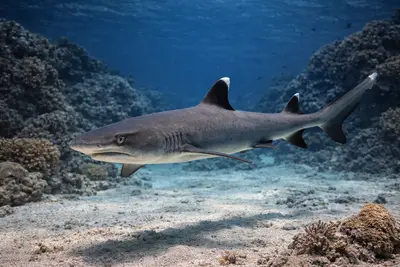
Whitetip reef shark
occasional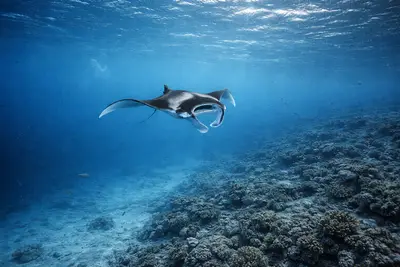
Manta ray
occasional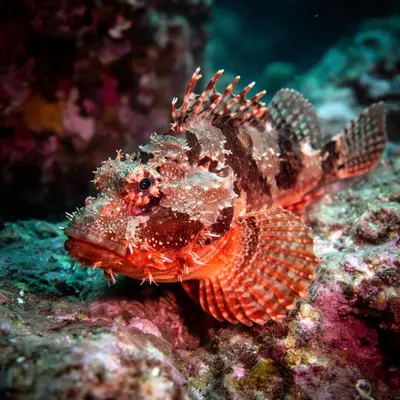
Scorpionfish
occasional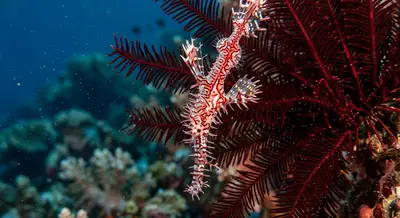
Ornate ghostpipefish
occasional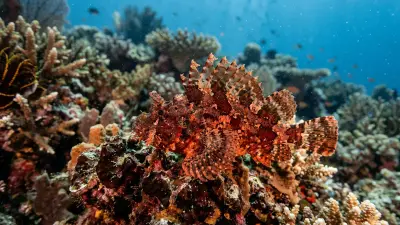
Leaf scorpionfish
occasional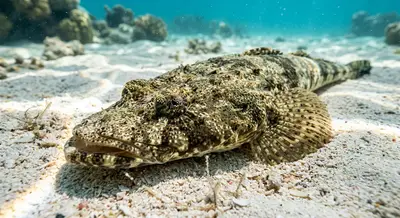
Flathead
occasional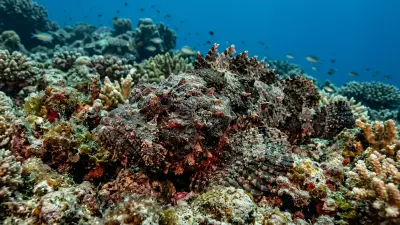
Stonefish
occasional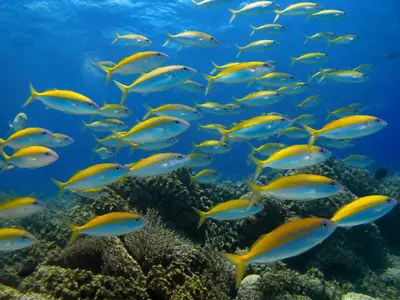
Fusilier
common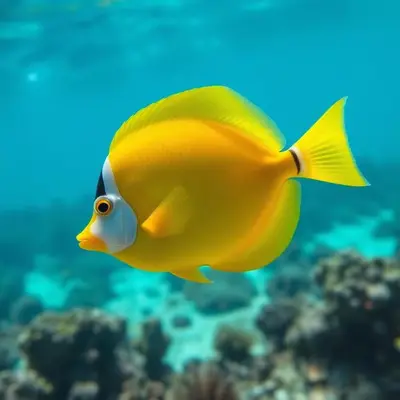
Surgeonfish
common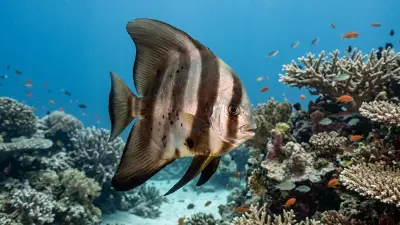
Batfish
common
Barracuda
common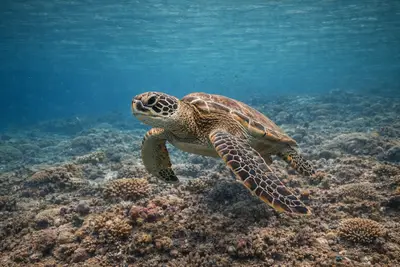
Green turtle
common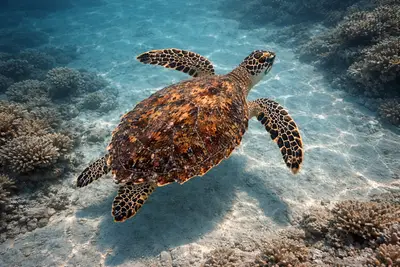
Hawksbill turtle
commonDive profile & how the dive runs
Divers typically access The Arches by boat. The dive begins by descending to the main rock formations, where three prominent arches are found at depths of 19 to 20 meters. After exploring these larger structures, the route often continues along a plateau at approximately 15 meters, leading to a smaller arch. The sandy bottom around the arches ranges from 23 to 24 meters, providing opportunities to spot bottom-dwelling macro life and larger pelagics passing through. Navigation requires careful buoyancy control due to the intricate formations and potential currents. The dive progresses by circling the main structures, observing both the dramatic landscape and the diverse marine inhabitants. The safety stop is usually conducted in the shallower sections of the plateau or along the reef, allowing divers to enjoy the vibrant coral life before ascending back to the surface.
Underwater photography
The Arches offers diverse photographic opportunities, catering to both wide-angle and macro photographers. For capturing the impressive rock formations and the potential presence of pelagic species like manta rays and sharks, a wide-angle lens is ideal. Be prepared for varying light conditions as you move through and around the arches; external strobes can help illuminate the darker areas and bring out coral colors. Macro enthusiasts will thrive here, with numerous small inhabitants such as leaf scorpionfish, ghostpipefish, stonefish, and flatheads. A macro lens with a diopter or close-up filters will be essential for these subjects. Excellent buoyancy control is paramount to avoid disturbing delicate marine life and to navigate the currents while composing shots. Patience is key for macro subjects, allowing them to settle before attempting a shot. Consider bringing a focus light for spotting camouflaged critters.
Combine with nearby dive sites
- Paroi des Merou
Paroi des Merou, meaning "Grouper Wall," is a distinguished dive site off Madagascar's coast, characterized by its dramatic wall topography.
- Roland Point
Roland Point is a celebrated dive site situated within the Nosy Be region of Madagascar, famed for its exceptional biodiversity and clear…
- Mitsio Wreck
The Mitsio Wreck lies on the seabed of the Mitsio Archipelago, a pristine and secluded diving destination off Madagascar's northwest coast.
- Manta Point
Manta Point is a world-renowned dive site located off the southern shore of Nusa Penida, famous as a cleaning station for oceanic manta…
- Abyss
The dive site known as "Abyss" is not specifically mentioned or described in the provided sources.
- Nosy Tanikely Marine Reserve
Nosy Tanikely Marine Reserve is a protected marine area situated in the middle of Nosy Be Bay, off Madagascar's northwest coast.
Getting there & logistics
Diving at The Arches is typically organized through dive centers based in Nosy Be, Madagascar, which serve as the primary departure point. Most dive operations are land-based resort centers, offering boat access to the dive sites. Nosy Be is accessible via Ivato International Airport (TNR) in Antananarivo, followed by a domestic flight to Fascene Airport (NOS) on Nosy Be. Trip lengths can vary, with many packages offering 6-night stays including multiple dives. While there are no specific park fees mentioned for The Arches, environmental contributions may apply depending on the operator. Dive trips often combine The Arches with other renowned sites in the Nosy Be region, such as Nosy Tanikely, Manta Point, and Abyss, allowing divers to experience a variety of marine environments and species.
Safety & environment
For dive emergencies in the Nosy Be region, the nearest hyperbaric chamber is located directly in Nosy Be. It is strongly recommended that all divers visiting Madagascar have comprehensive dive insurance, such as DAN Europe, in addition to standard travel insurance, to cover potential medical emergencies and evacuation costs. Site-specific hazards at The Arches include potential strong currents, particularly during certain seasons, which require divers to maintain good buoyancy control and follow their dive guide closely. The varied depth profile, reaching up to 24 meters, necessitates careful gas planning and adherence to no-decompression limits. Divers should be aware of potential encounters with marine life such as whitetip reef sharks and stonefish; maintaining a respectful distance and avoiding contact is crucial. Always dive with a reputable operator and ensure your equipment is well-maintained.
Who it suits — and who it doesn't
Suited for
- Intermediate to experienced divers comfortable with currents
- Photographers keen on both wide-angle and macro subjects
- Divers seeking dramatic underwater topography
- Those interested in pelagic encounters and reef fish diversity
- Divers preferring boat-accessed sites
Less suited for
- Beginner divers without current experience
- Divers with poor buoyancy control
- Those who prefer very calm, shallow conditions
- Divers uncomfortable with deeper sections (20-24m)
FAQ
The Arches FAQ
What kind of marine life can I expect to see at The Arches?
The Arches is known for a rich diversity of marine life. You can frequently spot large pelagics like whitetip reef sharks and manta rays. For macro enthusiasts, there are many smaller, fascinating creatures including leaf scorpionfish, ghostpipefish, stonefish, flatheads, and various reef fish suchl as fusiliers, surgeons, and barracudas.
How deep is The Arches dive site and what is the typical dive profile?
The average depth at The Arches is around 12 meters, but it can reach a maximum of 24 meters to the sandy bottom. The main arches are typically found at 19-20 meters, leading to a shallower plateau at 15 meters. Dives usually involve exploring these rock formations and the surrounding reef, ascending gradually.
Are there strong currents at The Arches?
Currents at The Arches can be variable. While they are often moderate, strong currents are possible, especially during the wet season from November to March. Divers should be prepared for potential drift and maintain good buoyancy control, making it more suitable for intermediate or experienced divers.
When is the best time of year to dive The Arches for optimal conditions?
The best time to dive The Arches for optimal conditions is during the dry season, from April to October. During these months, visibility is generally excellent, and currents are typically less intense, providing a more enjoyable and clear diving experience.
Is The Arches suitable for underwater photography?
Yes, The Arches is an excellent site for underwater photography, appealing to both wide-angle and macro photographers. Its dramatic rock formations and potential for pelagic encounters are great for wide-angle shots, while the abundant smaller critters like ghostpipefish and leaf scorpionfish offer superb macro opportunities.
Why dive The Arches from a liveaboard?
The Arches is one of Madagascar's signature dive sites. A liveaboard sleeps you on the water and puts you in the water for three to four guided dives per day, including dawn and night dives that day-boat operators rarely offer. You skip the daily commute back to port and reach quieter, less-crowded sites in the same region on a single trip.
Below are the liveaboards that include The Arches on their Madagascar itineraries.
Dive sites similar to The Arches
Same character, same waters — six more sites divers love for the exact same reasons.Compare seasons, access and liveaboard routes — then pick the site that fits your trip best.
Banc 06
Madagascar
Banc 06 is a shallow, fish-rich plateau dive located approximately 5 km behind Nosy Sakatia, off the coast of Nosy Be, Madagascar.
- Suitable for
- Beginner
- Current
- Mild
- Access
- Dayboat
- Depth
- 14–20 m
- Theme
- Reef
Andilana Reef
Madagascar
Andilana Reef, situated near Nosy Be on Madagascar's northwestern coast, presents a captivating underwater landscape that appeals to divers of all experience levels.
- Suitable for
- Intermediate
- Current
- Mild
- Access
- Liveaboard or dayboat
- Depth
- 6–22 m
- Theme
- Cave & cavern / Reef
Nosy Vorona
Madagascar
Nosy Vorona, nestled in the Nosy Be region of Madagascar, is celebrated for its exceptional underwater biodiversity and stunning coral formations.
- Suitable for
- Intermediate
- Current
- Strong
- Access
- Liveaboard or dayboat
- Depth
- 8–22 m
- Theme
- Reef
Russian Bay
Madagascar
Russian Bay is a tranquil dive site nestled off Nosy Be, Madagascar, offering a peaceful underwater escape within a sheltered bay.
- Suitable for
- Beginner
- Current
- Strong
- Access
- Liveaboard or dayboat
- Depth
- 4–16 m
- Theme
- Drift / Reef
Tanikely Canyon
Madagascar
Nosy Tanikely, often called "the island of small land," is an uninhabited islet nestled in the bay of Nosy Be, Madagascar.
- Suitable for
- Intermediate
- Current
- Strong
- Access
- Liveaboard or dayboat
- Depth
- 10–28 m
- Theme
- Reef / Wall
Paroi des Merou
Madagascar
Paroi des Merou, meaning "Grouper Wall," is a distinguished dive site off Madagascar's coast, characterized by its dramatic wall topography.
- Suitable for
- Advanced
- Current
- Moderate
- Access
- Liveaboard or dayboat
- Depth
- ≤ 40 m
- Theme
- Reef