Itinerary C (Baltra - Baltra)
Tribute · Galápagos · 6 nights
About this route
Embark on a captivating 7-day expedition through the Central & West Galápagos, delving into its rich wildlife and unique landscapes. This journey offers a chance to encounter giant tortoises, diverse bird species like flightless cormorants and blue-footed boobies, and fascinating marine life. Explore volcanic terrain, pristine beaches, and vibrant ecosystems that define these iconic islands. The itinerary combines thrilling land excursions with opportunities to observe the Galápagos' unique underwater world.
Regions on this route
Highlights
Fernandina Island
Fernandina is the youngest and westernmost island in the Galápagos, known for its pristine and untouched nature. Espinoza Point is a significant visitor site, home to large colonies of marine iguanas and the flightless cormorant. The island's active volcano, La Cumbre, forms a dramatic backdrop to its rugged, natural beauty.
- Pristine volcanic island
- Marine iguana colonies
- Flightless cormorant habitat
Isabela Island
Isabela is the largest island in the Galápagos, formed by six coalesced volcanoes. Its diverse landscapes include volcanic craters, extensive wetlands, and unique coastal areas. The island is rich in wildlife, featuring marine iguanas, giant tortoises, and various bird species, alongside excellent snorkeling sites like Tintoreras and Tagus Cove.
- Largest Galápagos island
- Volcanic landscapes
- Rich marine and land wildlife
Isla Bartolomé
Isla Bartolomé is an iconic volcanic islet famous for Pinnacle Rock, a distinctive rock formation. A climb to its summit provides panoramic views of the surrounding islands and diverse volcanic landscapes. The waters around Bartolomé are excellent for snorkeling, with opportunities to see Galápagos penguins and green sea turtles.
- Pinnacle Rock views
- Volcanic scenery
- Snorkeling with penguins
Puerto Ayora
Puerto Ayora is the largest town in the Galápagos, located on Santa Cruz Island. It serves as a hub for tourism and scientific research, offering a blend of local culture and conservation efforts. The town provides access to various land-based excursions and is a common point for visitor activities.
- Main port town
- Tourism and research hub
- Access to highlands
Santa Cruz Island
Santa Cruz is a central island in the Galápagos, renowned for its highlands where wild Galápagos giant tortoises roam. Its diverse ecosystems range from coastal beaches to volcanic landscapes, offering a variety of terrestrial and marine encounters. The island also hosts significant conservation efforts for its unique wildlife.
- Giant tortoise habitat
- Highland exploration
- Conservation efforts
Santiago Island
Santiago Island offers a mix of volcanic landscapes and diverse wildlife. Sullivan Bay, with its recent pahoehoe lava flows, is a prime example of its geological character. The island's shores and waters are home to Galápagos sea lions, marine iguanas, and various bird species, providing interesting visitor experiences.
- Volcanic formations
- Galapagos sea lions
- Unique coastal habitats
Sullivan Bay
Located on Santiago Island, Sullivan Bay presents a striking geological landscape dominated by pahoehoe lava flows that are relatively recent. This unique environment offers a glimpse into the volcanic origins of the Galápagos. Snorkeling in its clear waters can reveal Galápagos penguins, whitetip reef sharks, and sea lions.
- Pahoehoe lava flows
- Unique geological site
- Snorkeling opportunities
Shore excursions
- Hike in the highlands of Santa Cruz to observe wild giant tortoises in their natural habitat.
- Visit the El Chato Tortoise Reserve, an important conservation area.
- Explore the wetlands and the historical Wall of Tears on Isabela Island.
- Hike a trail to a viewpoint at Moreno Point, offering views of tidal lagoons and birdlife.
- Embark on a walking tour at Espinoza Point to encounter flightless cormorants and marine iguanas.
- Hike to a scenic viewpoint at Tagus Cove, known for its historical graffiti and panoramic views.
- Enjoy kayaking opportunities in the calm waters of Tagus Cove.
- Climb to the summit of Bartolomé Island for breathtaking views of Pinnacle Rock.
- Walk through the distinctive pahoehoe lava flows of Sullivan Bay.
- Visit Dragon Hill on Santa Cruz, a key site for Galápagos land iguanas and American flamingos.
Day-by-day plan
Day 1: Embarkation – Baltra Island
Today marks the embarkation day at Baltra Airport, where you will be met and transferred to the harbor. After a warm greeting and briefing aboard the Tribute, you'll settle into your cabin and enjoy your first lunch. In the afternoon, explore the highlands of Santa Cruz, known for its wild Galápagos giant tortoises roaming pastures, and visit the adjacent El Chato Tortoise Reserve.
Day 2: Isabela Island – Tintoreras and Wetlands
The morning begins with a navigation to Isabela Island, the largest and one of the youngest in the archipelago. Visit the offshore islet of Tintoreras, a known breeding colony for marine iguanas, offering excellent snorkeling opportunities among sea lions, marine turtles, stingrays, and whitetip sharks. In the afternoon, explore the wetlands and Wall of Tears in Isabela, a historical site with mangrove forests and a compelling story.
Dive sites: Tintoreras
Day 3: Isabela & Fernandina – Moreno Point and Espinoza Point
Day three brings exploration of Isabela and Fernandina Islands. Moreno Point on Isabela offers trails over solidified lava flows leading to a complex of tidal lagoons, where marine turtles and various bird species are often seen. Later, visit Espinoza Point on Fernandina, known for its terrestrial visitor site with unique animal species and the iconic flightless cormorant, set against the backdrop of Volcán La Cumbre.
Dive sites: Moreno Point, Espinoza Point
Day 4: Isabela Island – Tagus Cove and Wetlands
Today focuses on Tagus Cove on Isabela Island, featuring a dinghy ride along cliffs and a 30-minute hike to a viewpoint offering panoramic vistas. This site is particularly known for spotting the endemic Galápagos penguin. The afternoon revisits the wetlands, Wall of Tears, and the Tortoise Breeding Centre on Isabela, providing another opportunity to appreciate the island's conservation efforts and unique ecosystems.
Dive sites: Tagus Cove
Day 5: Bartolomé & Santiago – Pinnacle Rock and Sullivan Bay
Discover the iconic Bartolomé Island, famous for Pinnacle Rock, offering stunning panoramic views after a climb to its summit. The area is also popular for snorkeling to observe marine life like Galapagos penguins and green turtles. Later, proceed to Sullivan Bay on Santiago, a fascinating moon-like landscape formed by pahoehoe lava flows, offering more snorkeling chances to see Galapagos penguins, whitetip reef sharks, and sea lions.
Dive sites: Pinnacle Rock, Sullivan Bay
Day 6: Santa Cruz & Isabela – Dragon Hill and Vicente Roca Point
On Santa Cruz, visit Dragon Hill, a key site for Galápagos land iguanas and American flamingos, providing insight into the islands' unique flora and fauna. The afternoon takes you to Vicente Roca Point on Isabela, a spectacular volcanic area with a collapsed amphitheater. This location is ideal for snorkeling amidst a rich diversity of marine life, including various shark species, pufferfish, and seahorses.
Dive sites: Dragon Hill, Vicente Roca Point
Day 7: Disembarkation – Bachas Beach, Baltra
Your final visit is to Bachas Beach, a beautiful white sand beach on Santa Cruz, known as a nesting site for sea turtles and a habitat for various coastal birds. After exploring this pristine area, you will be transferred from Baltra back to the airport for your onward journey, concluding your Galápagos adventure.
Dive sites: Bachas Beach
Upcoming departures
- 2027-03-04 – 2027-03-10from 8,325 USDBook
- 2027-03-18 – 2027-03-24from 8,325 USDBook
- 2027-04-01 – 2027-04-07from 8,325 USDBook
- 2027-04-15 – 2027-04-21from 8,325 USDBook
- 2027-04-29 – 2027-05-05from 8,325 USDBook
- 2027-05-13 – 2027-05-19from 8,325 USDBook
- 2027-05-27 – 2027-06-02from 8,325 USDBook
- 2027-06-10 – 2027-06-16from 8,325 USDBook
- 2027-06-24 – 2027-06-30from 8,325 USDBook
- 2027-07-08 – 2027-07-14from 8,325 USDBook
- 2027-07-22 – 2027-07-28from 8,325 USDBook
- 2027-08-05 – 2027-08-11from 8,325 USDBook
All routes of this liveaboard
About the vessel
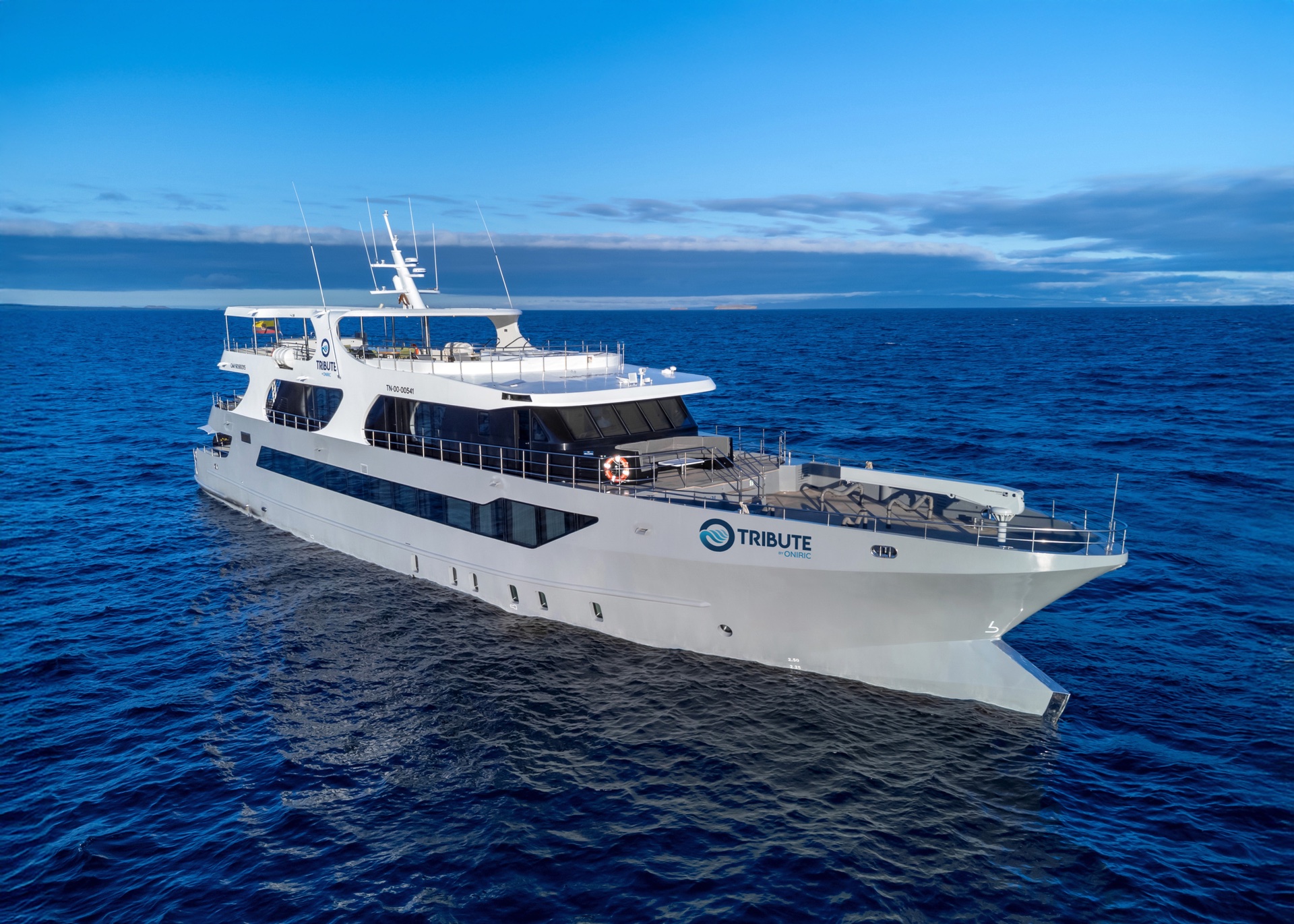 TributeGalápagos