Itinerary C (Baltra - Baltra)
Treasure of Galapagos · Galápagos · 6 nights
About this route
This 6-night liveaboard journey explores the largest seahorse-shaped island of Isabela, a region renowned for its untouched western end and significant role in evolutionary history. Guests have the opportunity to uncover the resilient pioneer species that thrive in the lava fields and observe unique adaptations in marine iguanas and flightless cormorants. This remote and isolated route promises an intimate encounter with the Galapagos' incredible biodiversity, without requiring prior diving experience.
Regions on this route
Highlights
Fernandina Island
Fernandina is the youngest and westernmost island in the Galápagos, characterized by its barren lava flows and active volcano. Its pristine environment makes it a key location for observing evolution in action, particularly with marine iguanas and flightless cormorants thriving here. The waters surrounding Fernandina are rich in nutrients, attracting a variety of marine life.
- Virgin coastlines
- Witness evolution
- Large marine iguanas
- Flightless cormorants
Isabela Island
Isabela is the largest island in the Galápagos, shaped like a seahorse and formed by six coalesced volcanoes. Its western coast is particularly untouched, offering a raw, pioneering landscape. The island provides a habitat for a wide array of species, including unique adaptations like the flightless cormorant and large marine iguanas, making it a prime location for observing endemic wildlife.
- Seahorse-shaped island
- Untouched western end
- Pioneer species habitat
- Outgrowths of adaptation
Rabida Island
Rabida Island is distinguished by its striking red sand beaches, a result of its high iron content. It is a vital nesting site for various seabirds and home to a brackish lagoon that often hosts flamingos. The island's unique coloration and resident wildlife provide a picturesque and ecologically significant experience for visitors.
- Red sand beaches
- Flamingo lagoon
- Seabird nesting sites
Santa Cruz Island
Santa Cruz Island is a central hub in the Galápagos and a key location for biodiversity. Its diverse landscapes range from arid lowlands to lush highlands. The island is known for its giant tortoise populations in the wild and beautiful white-sand beaches, offering a mix of terrestrial and marine attractions.
- Giant tortoise habitats
- Diverse landscapes
- White-sand beaches
Santiago Island
Santiago Island, also known as San Salvador, offers a diverse range of geological features and wildlife. Its black lava beaches and unique volcanic landscapes are home to various endemic species. The island's rich ecosystem includes tidal pools teeming with marine life, making it an important stop for observing both terrestrial and coastal creatures.
- Black lava beaches
- Diverse geology
- Coastal wildlife
Shore excursions
- Explore the virgin western coast of Isabela Island, witnessing pioneer species.
- Visit Eden Islet for volcanic formations and diverse marine life.
- Discover Dragon Hill to observe land iguanas.
- Explore the Wetlands of Isabela, rich in birdlife.
- Visit the historic Wall of Tears on Isabela Island.
- Witness unique lava formations and tide pools at Moreno Point.
- Explore Tagus Cove, a historic anchorage with coastal wildlife.
- Observe large marine iguana colonies at Espinosa Point on Fernandina Island.
- Take dinghy rides and snorkel at Vicente Roca Point.
- Walk along black lava beaches at Puerto Egas, Santiago Island.
- Visit the red sand beaches and flamingo lagoon of Rabida Island.
- Enjoy the white sands and lagoons of Bachas Beach, Santa Cruz Island.
Day-by-day plan
Day 1: Embarkation – Baltra, Galapagos
Upon arrival at Baltra Airport (GPS), guests will be transferred to the vessel for embarkation. After settling into cabins and receiving a welcome briefing, the afternoon is dedicated to enjoying the ship's facilities and preparing for the week's adventure.
Day 2: Isabela Island – Eden Islet & Dragon Hill
Today's activities focus on Isabela Island, starting with a visit to Eden Islet. This area is known for its volcanic formations and provides opportunities to observe various marine life. In the afternoon, the journey continues to Dragon Hill, where guests can explore unique landscapes and encounter terrestrial iguanas.
Dive sites: Eden Islet, Dragon Hill
Day 3: Isabela Island – Wetlands & Wall of Tears
The day continues exploring Isabela Island, with activities planned around the Wetlands. This diverse ecosystem supports a variety of birdlife and offers unique photo opportunities. Later, the ship visits the historic Wall of Tears, a significant landmark that tells a story of the island's past.
Dive sites: Wetlands (Isabela), Wall of Tears (Isabela)
Day 4: Isabela Island – Moreno Point & Tagus Cove
Today features more exploration of Isabela Island, visiting Moreno Point. This site is celebrated for its intricate lava formations and tide pools, offering a glimpse into the unique geology and small marine inhabitants of the Galapagos. The itinerary then moves to Tagus Cove, a historic anchorage known for its calm waters and opportunities for observing coastal wildlife and unique volcanic landscapes.
Dive sites: Moreno Point (Isabela), Tagus Cove (Isabela)
Day 5: Fernandina Island – Espinosa Point & Vicente Roca Point
The expedition sails to Fernandina Island, one of the youngest and most pristine islands, visiting Espinosa Point. This area is famous for its large colonies of marine iguanas and flightless cormorants, offering exceptional wildlife viewing. In the afternoon, the journey continues to Vicente Roca Point, a popular site for snorkeling and dinghy rides, where guests might spot sea turtles, sunfish, and various seabirds.
Dive sites: Espinosa Point (Fernandina), Vicente Roca Point
Day 6: Santiago Island – Puerto Egas & Rabida Island
Today's adventure includes a visit to Santiago Island, specifically Puerto Egas. This site is known for its unique black lava beaches and tidal pools, where guests can observe fur seals, marine iguanas, and various shorebirds. The journey then proceeds to Rabida Island, famous for its striking red sand beaches and a lagoon that often hosts flamingos, offering a picturesque setting for exploration and wildlife spotting.
Dive sites: Puerto Egas (Santiago), Rabida
Day 7: Disembarkation – Bachas Beach & Baltra Airport
The final morning includes a visit to Bachas Beach on Santa Cruz Island, known for its soft white sands and brackish lagoons often frequented by flamingos and sea turtles. Following this last excursion, guests will be transferred to Baltra Airport for their departure.
Dive sites: Bachas Beach (Santa Cruz)
Upcoming departures
- 2026-11-28 – 2026-12-04from 6,195 USDBook
- 2026-12-12 – 2026-12-18from 5,576 USDBook
- 2026-12-26 – 2027-01-01from 7,124 USDBook
- 2027-01-09 – 2027-01-15from 6,495 USDBook
- 2027-01-23 – 2027-01-29from 5,846 USDBook
- 2027-02-06 – 2027-02-12from 6,495 USDBook
- 2027-02-20 – 2027-02-26from 6,495 USDBook
- 2027-03-06 – 2027-03-12from 5,846 USDBook
- 2027-03-20 – 2027-03-26from 7,469 USDBook
- 2027-04-03 – 2027-04-09from 6,495 USDBook
- 2027-04-17 – 2027-04-23from 6,495 USDBook
- 2027-05-01 – 2027-05-07from 6,495 USDBook
All routes of this liveaboard
About the vessel
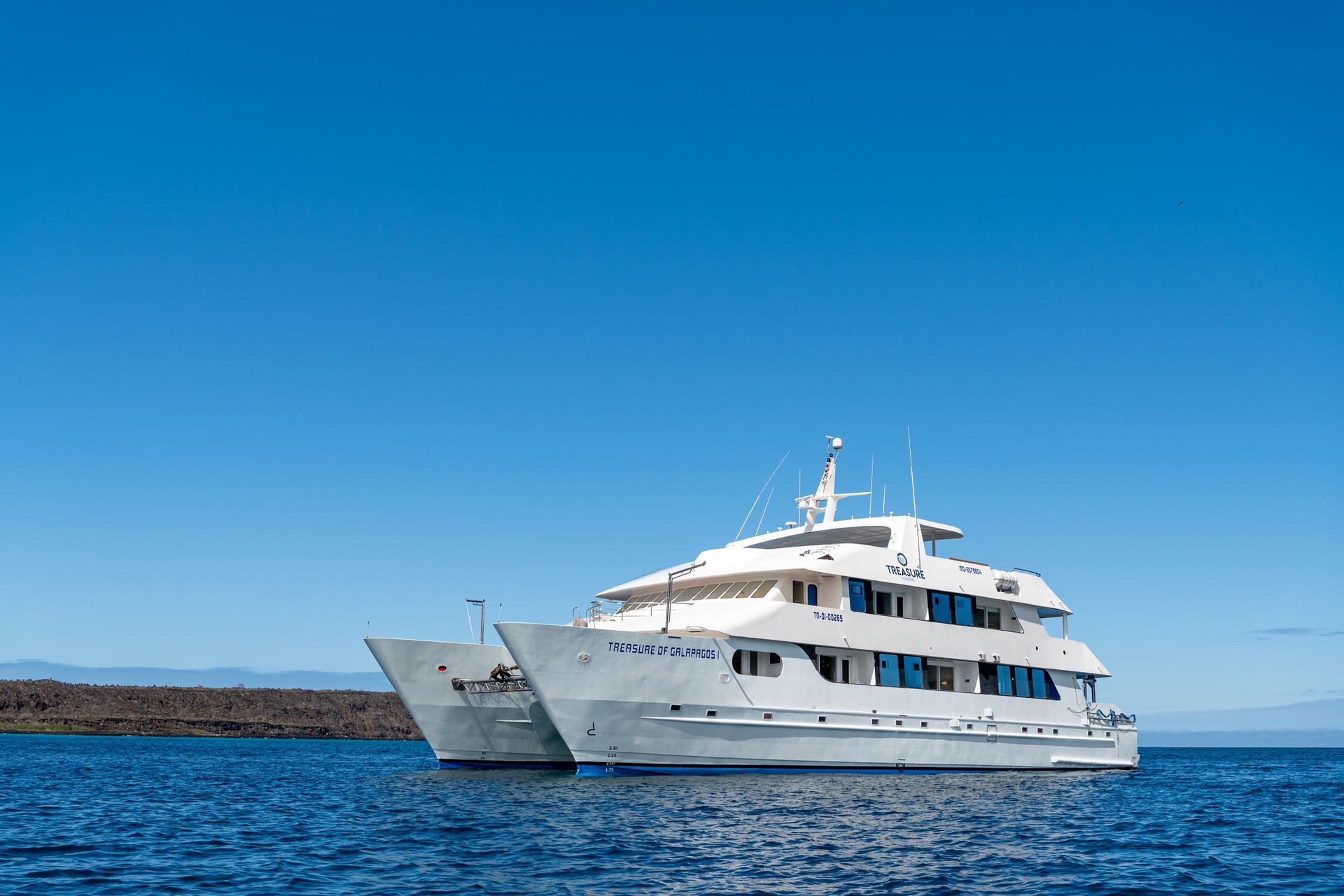 Treasure of GalapagosGalápagos