Deep South - Rocky & Zabargad Islands (Hamata - Hurghada)
Red Sea Aggressor V · Egypt · 9N
About this route
Embark on an exciting journey through the Deep South of the Red Sea, exploring remote and pristine dive regions. This itinerary promises dramatic offshore reefs, vibrant pelagic encounters, and diverse marine ecosystems. Guests will navigate through far-flung islands and reefs, discovering steep walls, colorful corals, and untouched formations. This adventure offers an immersive underwater experience, highlighted by the region's rich biodiversity.
Regions on this route
Highlights
Abu Galawa Kabeir
Abu Galawa Kabeir is an easy dive site suitable for beginners. It is known for its beautiful coral gardens, pinnacles, and shallow drift dives within the 15-meter range.
Dangerous Reef
Dangerous Reef, also known as the 'mother of St. John's reefs,' is a magnificent dive site offering diverse underwater topography. It features deep drop-offs and a variety of colorful soft corals. The area is ideal for observing invertebrates and offers excellent swim-throughs and small caves, providing a rich diving experience.
- Magnificent topography
- Deep drop-offs
- Soft corals
- Swim-throughs and caves
Habili Aly
Habili Aly is another incredibly popular dive site known for its abundant marine life. Reef predators such as jacks and grey reef sharks are commonly seen here. Hammerhead sharks and manta rays are also encountered, though less frequently. It is not unusual to see bottlenose dolphins on the surface. Butterflyfish, Red Sea bannerfish, angelfish, and bigeyes move through the shallows, and for those with sharp eyes, large dragons and purple basslets can be seen moving slowly over the walls. Overhangs and black corals are found in the south.
Habili Gaafar
Habili Gaafar is a smaller reef flat, approximately 30 meters at the surface, with a ledge running around it at 20-30 meters. This ledge hosts diverse marine life, including giant morays, barracuda, tuna, and reef sharks on the northern side. Small protrusions form at 40 meters. The shallow sections of the reef are dominated by pink clasping soft corals and fairy basslets. Schools of bigeyes mackerel can be seen across the reef top in search of food, while lionfish slowly stalk the shallows, waiting for an opportunity to strike unsuspecting prey.
Rocky Island
Rocky Island is an isolated pinnacle rising from the depths, characterized by healthy hard and soft corals. The surrounding waters are often clear, and the site is known for strong currents. Divers commonly sight oceanic whitetips, hammerheads, and grey reef sharks in this area.
- Pinnacle diving
- Strong currents
- Healthy corals
- Shark encounters
Zabargad Island
Zabargad Island is the largest natural marine park in Egypt's Red Sea, located approximately 5 kilometers southeast of Rocky Island. It is a haven for abundant reef fish, vibrant corals, and a variety of invertebrates. The island's sheltered bays and diverse topography support a rich ecosystem.
- Protected marine park
- Abundant reef fish
- Vibrant corals
- Sheltered bays
Requirements
- CertificationOpen Water
- Minimum logged dives1
- ExperienceDivers should have a minimum of 1 logged dive.
Good to know
- A 24-hour no-fly period is recommended after the last dive.
Day-by-day plan
Day 1: Embarkation – Hamata, Egypt
Guests board the vessel in Hamata, Egypt from 3:00 . After a welcome briefing, cabin assignment and dive-equipment check, the crew prepares for departure. No diving is scheduled on the first day; the evening is spent settling in on board before the first dives the following morning.
Day 2: Diving Adventures – Abu Galawa Kabeir & Sataya East Reef
Today begins with a dive at Abu Galawa Kabeir Reef, an excellent site known for its beautiful coral gardens, pinnacles, and vibrant drift dives. The day continues with a night dive at Sataya East Reef, an area where the underwater visibility is consistently good. These sites often feature diverse marine life and intricate reef structures.
Dive sites: Abu Galawa Kabeir Reef, Sataya East Reef
Day 3: Diving Adventures – Rocky Island & Zabargad Island
Divers will explore Rocky Island, an isolated pinnacle known for strong currents and pristine waters. This area is frequented by large pelagics. Following a short transfer, the day concludes with a night dive around Zabargad Island, providing an opportunity to observe nocturnal marine species.
Dive sites: Rocky Island, Zabargad Island
Day 4: Diving Adventures – Zabargad Island & Dangerous Reef
The day's diving focuses on Zabargad Island, a large island within Egypt's southern Red Sea. This protected marine park offers abundant reef fish, colorful corals, and diverse marine life. After a morning dive, a short journey leads to Dangerous Reef for the afternoon and evening dives, known for its dynamic underwater topography.
Dive sites: Zabargad Island, Dangerous Reef
Day 5: Diving Adventures – Habili Aly, Habili Gaafar & Um Arouk
Diving today includes sites like Habili Aly and Habili Gaafar, known for their vibrant biodiversity. These offshore reefs often feature strong currents and impressive coral formations. Later, an afternoon dive takes place at Um Arouk, followed by a night dive, offering a chance to encounter different marine species.
Dive sites: Habili Aly, Habili Gaafar, Um Arouk
Day 6: Diving Adventures – Small Goota & Paradise Reef, St. John Caves
The day begins with dives at Small Goota or Paradise Reef, areas celebrated for their diverse ecosystems. Later, the boat moves to St. John Caves, a unique formation with swim-throughs and caverns. This site is known for its intricate topography and the marine life that inhabits its sheltered areas.
Dive sites: Small Goota, Paradise Reef, St. John Caves
Day 7: Diving Adventures – Claudia Reef & Small Abu Galawa
The morning starts at Claudia Reef, an area that provides diverse underwater landscapes. After breakfast, guests can enjoy snorkeling with spinner dolphins, a common sight in this region. The second dive of the day is at Small Abu Galawa, before the boat begins its journey back towards Port Hamata.
Dive sites: Claudia Reef, Small Abu Galawa
Day 8: Diving Adventures – Last Day of Diving
Today marks the final day of diving for the trip, with activities planned around the itinerary's last diving area. Divers will have the opportunity for several more dives, soaking in the vibrant underwater world of the Deep South. The boat continues its return journey to Port Hamata.
Day 9: Disembarkation – Hurghada
After a final breakfast on board, guests will disembark in Hurghada. A 24-hour no-fly period is recommended before any flights, ensuring safety after the last dive.
Upcoming departures
All routes of this liveaboard
About the vessel
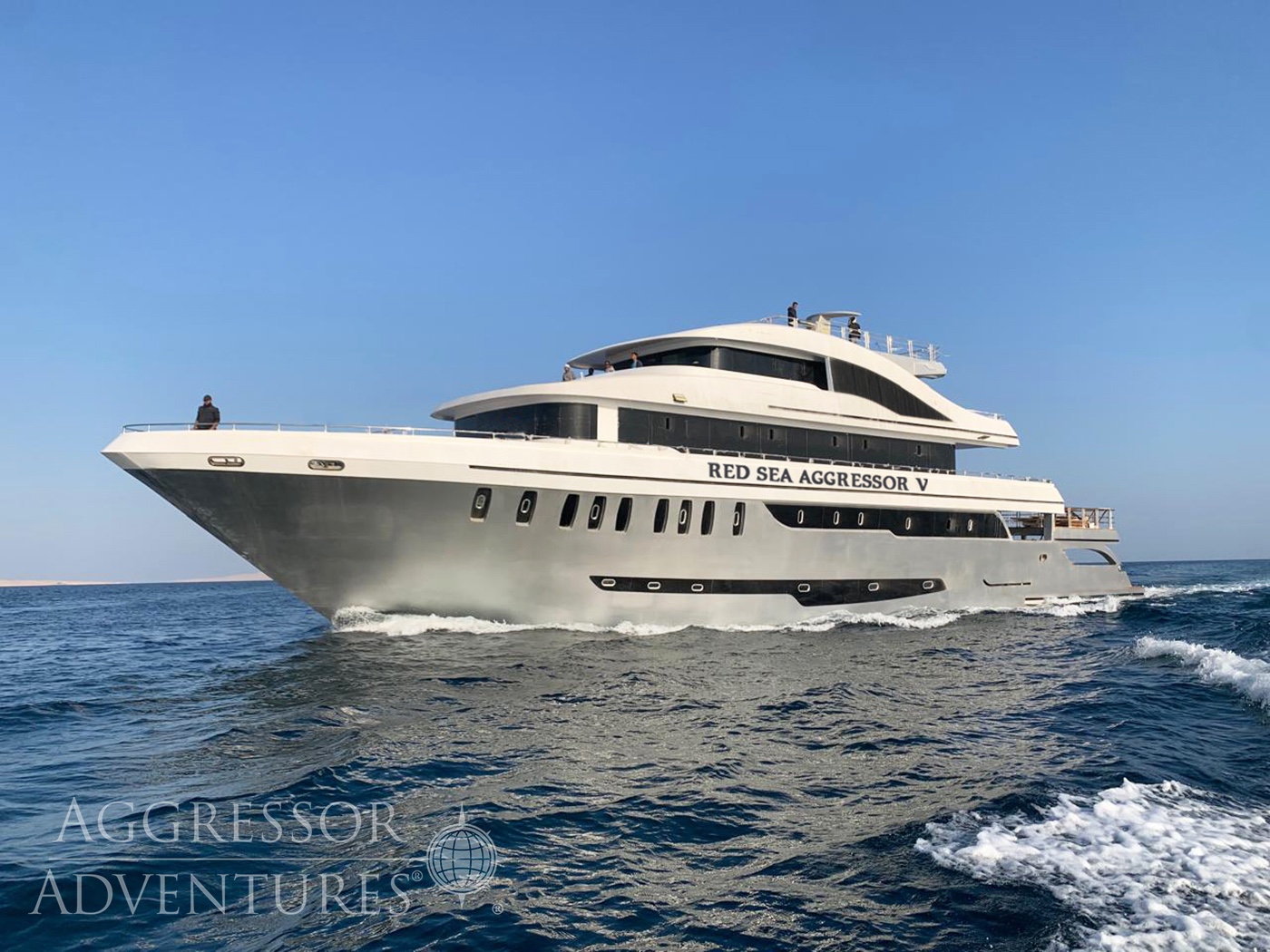 Red Sea Aggressor VEgypt