Archipielago de Revillagigedo / Socorro Island (10D9N)
Quino del Mar · Mexico · 10D9N
About this route
The Revillagigedo Archipelago — often simply called Socorro — is one of the planet's last truly wild pelagic frontiers. A UNESCO World Heritage Site 250 nautical miles off the southern tip of Baja California, this volcanic chain of four remote islands sits where the open Pacific meets a deep underwater seamount system. The result is a magnet for big animals: oceanic mantas, schooling hammerheads, silky and Galapagos sharks, dolphins, tuna, and — between January and April — humpback whales whose songs carry through every dive. What makes Socorro unique is not just the number of large animals, but their behaviour. The giant Pacific mantas here are famously curious and actively seek out divers, hovering centimetres above bubble streams. Bottlenose dolphins approach groups in pods. False killer whales and even tiger sharks appear regularly at the cleaning stations. There is no shore diving, no shallow reef garden — every dive is a deep-blue encounter from a panga, drift-style, with the chance of something massive emerging from the void at any moment. The itinerary covers the three main dive areas of the archipelago: **San Benedicto** (the volcanic island closest to the mainland, home to El Boiler and El Cañón — classic manta cleaning stations), **Roca Partida** (a tiny exposed pinnacle surrounded by 1,000 m of open ocean, where schooling hammerheads, yellowfin tuna and whitetip reef shark "shelves" are the rule), and **Socorro Island** itself (Cabo Pearce and Punta Tosca, known for mantas, dolphins and seasonal humpbacks). One full diving day is spent at each location with a check-in at the Mexican Naval Station on Socorro. Both Rocio del Mar and her sister vessel Quino del Mar are purpose-built for this crossing: ten en-suite cabins for a maximum of 20 divers, nitrox on board, two pangas for short surface intervals, and a crew that has been running Socorro charters for over a decade. Outside diving you can expect comfortable saloons, fresh Mexican cuisine and long, quiet ocean nights between island stops.
Day-by-day plan
Day 1: San José del Cabo
The liveaboard journey begins with embarkation in San José del Cabo. After a welcome briefing and dinner, the vessel departs on an extended overnight passage to the archipelago.
Good to know: Embark at 5:00 PM in the marina of San José del Cabo. Welcome briefing, cabin assignment and dinner on board at 7:00 PM. The vessel departs shortly afterwards for the 24-hour overnight crossing to the archipelago.
Day 2: At Sea — Crossing to Revillagigedo
This is a full day at sea, as Quino del Mar crosses towards Revillagigedo. Guests set up their gear, attend a check-out dive briefing, and learn about marine life and conservation. The crew keeps an eye out for pelagic birds, dolphins, and whale spouts along the way.
Good to know: Full day at sea. Time for gear set-up, a check-out dive briefing, marine life and conservation talks, and resting before the action begins. Pelagic birds, dolphins and the occasional whale spout often accompany the crossing.
Day 3: Isla San Benedicto
Day three brought four dives at Isla San Benedicto, marking the first diving day at the archipelago's signature volcanic island. Here, divers witnessed giant Pacific mantas, hammerheads, silky sharks, and bottlenose dolphins at cleaning stations like El Boiler and El Cañón. Expect close, prolonged interactions with these actively approaching mantas.
Good to know: First diving day at the archipelago's signature volcanic island. The famous cleaning stations **El Boiler** and **El Cañón** host giant Pacific mantas, hammerheads, silky sharks and bottlenose dolphins. Expect close, prolonged interactions with mantas that actively approach divers.
Day 4: Isla Roca Partida
After an overnight crossing, three dives are enjoyed today at Isla Roca Partida, a tiny exposed pinnacle far west of Socorro. Divers explore its sheer walls, commonly encountering whitetip reef sharks, schooling jacks, tuna, wahoo, and frequent visits from silky and Galapagos sharks at this pelagic site.
Good to know: Overnight crossing to Roca Partida — a tiny exposed pinnacle rising from 1,000 m of open ocean, 110 km west of Socorro. Sheer walls drop into the blue with whitetip reef shark ledges, schooling jacks, tuna, wahoo and frequent visits from silky and Galapagos sharks. The most pelagic site of the trip.
Day 5: Isla Roca Partida
Guests enjoy a second consecutive day of diving at Isla Roca Partida, completing three dives. This maximizes the opportunity to encounter schooling hammerheads, tuna, and whale sharks. Though there are strong currents, the rewards include cinematic big-animal diving.
Good to know: Second full day at Roca Partida to maximise chances of schooling hammerheads, yellowfin tuna and the occasional whale shark. Strong currents and deep-blue water demand attention but reward with some of the most cinematic big-animal diving in the Pacific.
Day 6: Isla Socorro
On day six, the vessel arrives at Isla Socorro for the required check-in at the naval station. Guests enjoy three dives at Cabo Pearce, a manta cleaning station, where they hope for dolphin encounters. From January to April, the songs of humpback whales often accompany every dive here.
Good to know: Arrival at the largest island of the chain and mandatory check-in with the Mexican Naval Station. Diving at **Cabo Pearce**, a long lava finger reaching into the blue — manta cleaning station, dolphin encounters, and from January to April the unmistakable songs of humpback whales accompany every dive.
Day 7: Isla Socorro
Today was a full day of diving at Isla Socorro, with four dives alternating between Cabo Pearce and Punta Tosca. These sites offered a thrilling combination of mantas, white-tip and Galapagos sharks, and regular dolphin pods. Keep an eye out for humpback whales between dives, as February to April offers the best chance of surface sightings.
Good to know: Full diving day at Socorro, alternating between Cabo Pearce and **Punta Tosca** on the south side. Both sites combine mantas, white-tip and Galapagos sharks with regular dolphin pods. February–April brings the highest probability of humpback surface sightings between dives.
Day 8: Isla San Benedicto
On day eight, the vessel returns to Isla San Benedicto for three final dives. There is another chance for manta encounters before the long crossing home. In certain months, whale sharks may also be spotted.
Good to know: Return to San Benedicto for a final round at El Boiler and El Cañón before the long crossing home. A last chance for repeat manta encounters and — in November, December and May — sightings of whale sharks transiting the archipelago.
Day 9: At Sea — Crossing to San José del Cabo
Today is a full day at sea, crossing back to San José del Cabo. Divers spend their time rinsing and packing gear, and reviewing images and videos from the trip, culminating in a farewell dinner with the crew. The mandatory 24-hour no-fly window begins today.
Good to know: Full day at sea on the return crossing. Gear rinsing and packing, image-and-video review, certification paperwork and a farewell dinner with the crew. Mandatory 24-hour no-fly window after the last dive begins on this day.
Day 10: San José del Cabo
After a final breakfast on board, guests settled any outstanding extras before disembarking Quino del Mar in San José del Cabo by mid-morning.
Good to know: Arrival at the marina of San José del Cabo around 8:30 AM. Breakfast on board, settle any extras, and disembarkation by mid-morning.
Upcoming departures
- 2026-11-30 – 2026-12-09from 4,195 USDBook
- 2026-12-10 – 2026-12-19from 4,195 USDBook
- 2026-12-28 – 2027-01-06from 4,195 USDBook
- 2027-01-07 – 2027-01-16from 4,295 USDBook
- 2027-01-17 – 2027-01-26from 4,295 USDBook
- 2027-01-27 – 2027-02-05from 4,295 USDBook
- 2027-02-06 – 2027-02-15from 4,295 USDBook
- 2027-03-02 – 2027-03-11from 4,295 USDBook
- 2027-03-12 – 2027-03-21from 4,295 USDBook
- 2027-03-22 – 2027-03-31from 4,295 USDBook
- 2027-04-01 – 2027-04-10from 4,295 USDBook
- 2027-04-11 – 2027-04-20from 4,295 USDBook
All routes of this liveaboard
- Sea of Cortez - Explore Baja · 11D/10N
- Sea of Cortez - Explore Baja (San Jose Del Cabo - Puerto Peñasco) · 12 nights
- Sea of Cortez - Southern Safari · 10D/9N
- Sea of Cortez - Midriff Islands (Puerto Peñasco - Puerto Peñasco) · 8D/7N
- Sea of Cortez - Southern Safari - Citizen Science · 11D/10N
- Sea of Cortez - Explore Baja · 14D/13N
- Sea of Cortez - Midriff Islands · 10D/9N
- Socorro Islands · 11D/10N
- Sea of Cortez - Explore Baja (Puerto Peñasco - San Jose Del Cabo) · 13D/12N
- Sea of Cortez - Explore Baja · 10 nights
- Socorro Islands · 14D/13N
- Sea of Cortez - Midriff Islands · 11D/10N
- Socorro Islands · 13D/12N
- Socorro Islands · 19D/18N
About the vessel
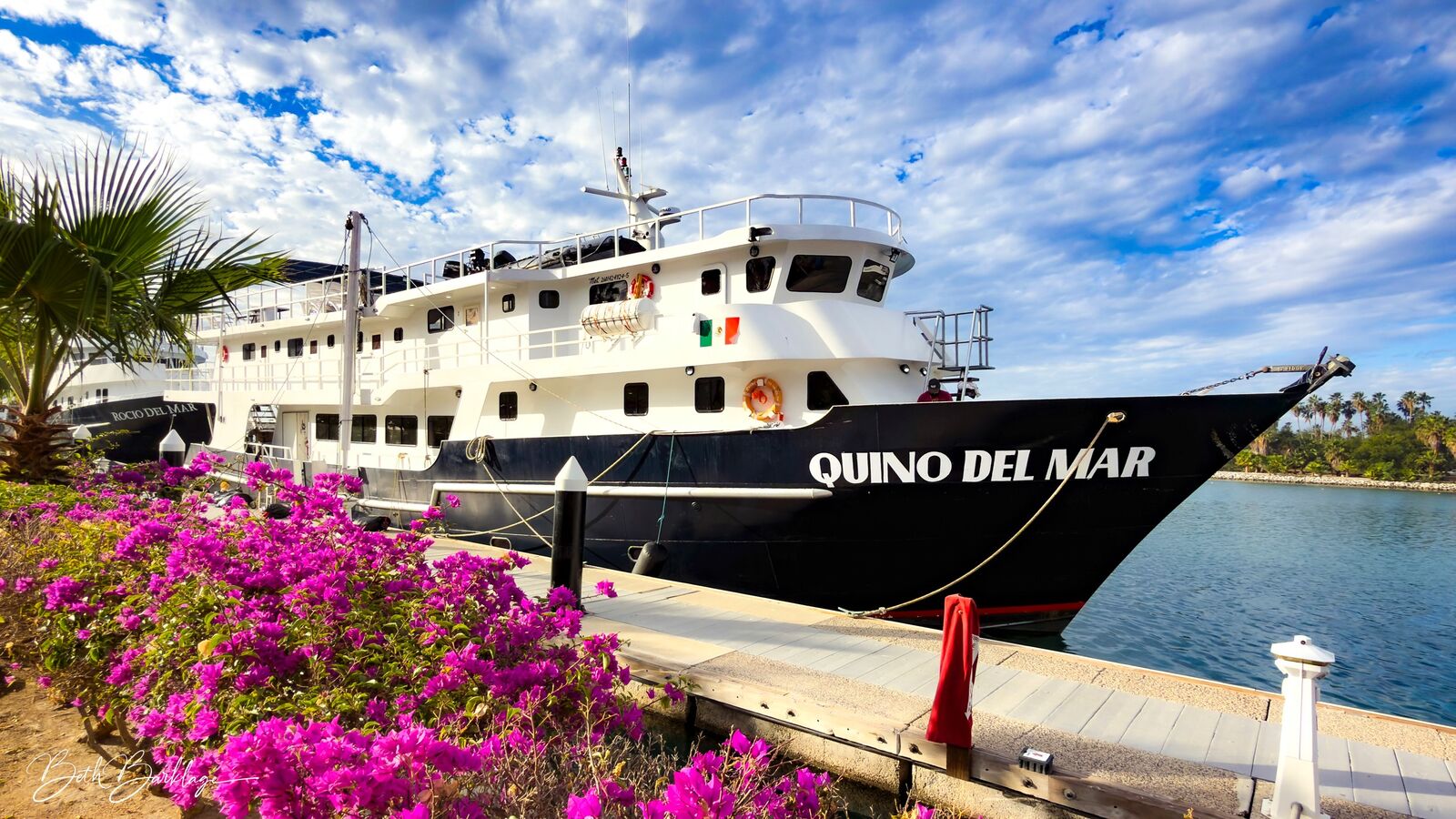 Quino del MarMexico