Raja Ampat and the Northern Banda Sea (Ambon - Sorong)
Ondina · Indonesia · 10 nights
About this route
Explore the captivating experience of diving among some of the world's most biodiverse marine environments, from the northern Banda Sea to Raja Ampat. This journey combines critter-rich muck diving in Ambon with pristine coral reefs, pelagic encounters, and historical explorations in the Banda Islands. Discover the stunning limestone karst formations and vibrant reef ecosystems of Misool, culminating in exploration of Sorong's diverse marine life.
Regions on this route
Highlights
Ambon
Ambon is widely recognized as a world-class destination for muck diving, particularly in its rich black volcanic sands. Divers here can discover a fascinating array of rare critters and unique underwater creatures, from pygmy seahorses and frogfish to various species of nudibranchs. The area also features diverse reef diving with rich coral formations.
- World-class muck diving
- Macro critters
- Black volcanic sands
- Diverse reef diving
Banda Islands
As part of the Banda Sea, the Banda Islands offer pristine coral reefs and diverse marine life, alongside a rich history. Dive sites like Batu Kapal and Hatta Island are known for vibrant coral gardens, pelagic species, and historical underwater artifacts. The region combines stunning natural beauty with cultural exploration of its colonial past.
- Pristine coral reefs
- Diverse marine life
- Underwater artifacts
- Historical sites
Banda Sea
The Banda Sea is a captivating region known for its pristine coral reefs and diverse marine life. It harbors a combination of historical significance, particularly around the Banda Islands, and spectacular diving. The area is characterized by vibrant coral gardens, pelagic species, and unique underwater artifacts from its past.
- Pristine coral reefs
- Diverse marine life
- Historical significance
- Pelagic encounters
Gunung Api
Gunung Api, or 'Fire Mountain', is an active volcano in the Banda Sea known for its unique underwater environment shaped by volcanic activity. The area features rapidly developed hard coral gardens that grew at an astounding speed after its last eruption. It is also famous for attracting sea snakes, making for fascinating and unique encounters.
- Volcanic underwater landscapes
- Rapidly growing hard corals
- Sea snake encounters
- Unique marine environment
Misool
Misool, located in the southern part of Raja Ampat, is famous for its stunning limestone karst formations and vibrant coral reefs. The region boasts an exceptional variety of marine ecosystems, from macro havens to sites known for larger pelagic species. Dive sites here often feature schooling fish, healthy soft corals, and unique critter encounters.
- Limestone karst formations
- Vibrant coral reefs
- Rich marine ecosystems
- Macro and pelagic life
Raja Ampat
Raja Ampat is renowned as a global epicenter of marine biodiversity, offering an unparalleled diving experience. Its stunning limestone karst formations create a dramatic backdrop for vibrant coral reefs, teeming with an incredible variety of fish and invertebrate species. The region is characterized by diverse dive sites, from shallow coral gardens to deep walls and exhilarating drift dives.
- World marine biodiversity hotspot
- Limestone karst formations
- Vibrant coral reefs
- Diverse dive sites
Sorong
Sorong serves as a vibrant gateway to Raja Ampat and is an endpoint of many journeys through this biodiverse region. The waters surrounding Sorong offer diverse diving opportunities, often featuring excellent visibility and a rich variety of marine species and coral formations. It's a great area to experience the transition into the full marine wonders of Raja Ampat.
- Gateway to Raja Ampat
- Diverse marine species
- Vibrant coral formations
- Good visibility
Requirements
- CertificationOpen Water
- Minimum logged dives50
- ExperienceDiving along this route caters to a range of experience levels, from beginner to advanced divers, with some sites potentially having strong currents or deeper dive profiles.
Shore excursions
- Cultural visit around Banda Neira, including Fort Rotterdam, the Governor's House, and a nutmeg plantation.
Good to know
- A 24-hour surface interval is recommended before flying after the last dive.
- Experience level for some sites may feature strong currents or deeper dive profiles.
Day-by-day plan
Day 1: Embarkation – Ambon
Guests will be picked up at Ambon airport and transferred to the liveaboard for check-in and cabin assignment. After a welcome drink and briefing, the first dive of the trip will take place in the afternoon at one of the local reefs surrounding Ambon. Ambon is known for its muck diving, where diverse critters and rare inhabitants thrive in the black volcanic sands.
Day 2: Banda Islands – Cultural and Historical Exploration
Today focuses on cultural exploration in the Banda Islands, visiting Banda Neira and its historical sites. Highlights include Fort Rotterdam, the Governor's House, and a nutmeg plantation, offering insight into the region's rich colonial past. An afternoon dive is planned around Batu Kapal and Pulau Soanggi, areas known for vibrant coral gardens, diverse pelagic species, and unique underwater artifacts.
Dive sites: Batu Kapal, Pulau Soanggi
Day 3: Banda Islands – Ai and Run Islands
Diving continues around the famous sites of Ai and Run Islands, characterized by sheer walls and excellent drift dives. These sites offer encounters with large barrel sponges, giant fans, and impressive schools of fish, with a good chance of seeing larger pelagic species. The afternoon features a stunning hard coral garden in the Lava Flows, which developed rapidly after Gunung Api's eruption in 1988.
Dive sites: Ai Island, Run Island, Lava Flows
Day 4: Banda Islands – Karang Hatta and Mandarin Fish Site
The day's diving explores the area around Karang Hatta and other sites within the Banda group. This region is renowned for its diverse marine life and pristine reefs. In the afternoon, the vessel anchors in Banda Neira, known as one of the most beautiful natural anchorages in Indonesia. The day concludes with a dusk dive at the dedicated Mandarin Fish site, offering opportunities to observe these colourful, elusive fish.
Dive sites: Karang Hatta, Mandarin Fish Site
Day 5: Pulau Koon – Eastern Archipelago Wonders
Today begins three days of diving around the very strategic eastern point of Pulau Koon. This area is characterized by walls on both sides of the island that converge into a deep trench, known for congregating large masses of schooling fish. The strong currents in the area often bring exciting pelagic sightings, making it a thrilling dive destination. Diving around the strategic eastern point of Pulau Koon continues. The final day of diving around the strategic eastern point of Pulau Koon.
Dive sites: Pulau Koon
Day 6: Pulau Koon – Eastern Archipelago Wonders
Today begins three days of diving around the very strategic eastern point of Pulau Koon. This area is characterized by walls on both sides of the island that converge into a deep trench, known for congregating large masses of schooling fish. The strong currents in the area often bring exciting pelagic sightings, making it a thrilling dive destination. Diving around the strategic eastern point of Pulau Koon continues. The final day of diving around the strategic eastern point of Pulau Koon.
Dive sites: Pulau Koon
Day 7: Pulau Koon – Eastern Archipelago Wonders
Today begins three days of diving around the very strategic eastern point of Pulau Koon. This area is characterized by walls on both sides of the island that converge into a deep trench, known for congregating large masses of schooling fish. The strong currents in the area often bring exciting pelagic sightings, making it a thrilling dive destination. Diving around the strategic eastern point of Pulau Koon continues. The final day of diving around the strategic eastern point of Pulau Koon.
Dive sites: Pulau Koon
Day 8: Fiabacet Group – Misool's Iconic Reefs
Today is dedicated to exploring the famous reefs of the Fiabacet group in Misool, one of Raja Ampat's most renowned diving areas. Sites such as Nudi Rock, Tank Rock, Whale Rock, and Shadow Reef (also known as Manta Mountain) offer spectacular marine biodiversity. The area is celebrated for its stunning limestone karst formations and vibrant coral reefs, often featuring encounters with manta rays and a rich array of reef fish.
Dive sites: Nudi Rock, Tank Rock, Whale Rock, Shadow Reef (Manta Mountain)
Day 9: Jamur Boo and Yilliet – Misool's Northern Gems
Two dives are planned for the day around Jamur Boo (Boo Rocks), an area known for its unique mushroom-shaped islands and diverse reef systems. These sites offer a mixture of vibrant corals and interesting topography. The day culminates with a night dive in Yilliet, providing an opportunity to observe nocturnal creatures and a different perspective on the reef's inhabitants.
Dive sites: Jamur Boo (Boo Rocks), Yilliet
Day 10: Sagof and Baby Rock – Raja Ampat North
The morning includes two dives in the Sagof area, known for its pristine reef formations and rich marine life. The afternoon is spent near Baby Rock, offering further exploration of Raja Ampat's diverse underwater landscapes. This day serves as preparation for departure, with the vessel positioning itself for easy access to Sorong for the following morning.
Dive sites: Sagof, Baby Rock
Day 11: Disembarkation – Sorong
After enjoying a final breakfast onboard, guests will transfer to Sorong airport for their onward flights. Divers are recommended to wait for 24 hours before flying after their last dive.
Upcoming departures
No departures scheduled for this route right now.
All routes of this liveaboard
- Togian Islands · 10 Days / 9 Nights
- Whalesharks & Wrecks · 11 Days / 10 Nights
- Raja Ampat, Halmahera & Lembeh (Sorong - Bitung) · 11 nights
- Raja Ampat & Kai Islands (Sorong - Tual) · 11 nights
- Raja Ampat & Kai Islands (Tual - Sorong) · 10 nights
- All Banda Sea (Kalabahi - Ambon) · 11 nights
- Whalesharks & Wrecks (Biak → Manokwari) · 10D9N
- Raja Ampat, Halmahera & Lembeh (Bitung - Sorong) · 10 nights
- Raja Ampat, Halmahera & Lembeh (Bitung - Sorong) · 12 Days / 11 Nights
- Raja Ampat Central - South (Sorong - Sorong) · 11 nights
- Raja Ampat & Kai Islands · 11 Days / 10 Nights
- Triton Bay & Kai Islands · 11 Days / 10 Nights
- Raja Ampat, Halmahera & Lembeh · 11 Days / 10 Nights
- Raja Ampat & North Banda Sea · 11 Days / 10 Nights
- Raja Ampat, Halmahera & Lembeh · 15 Days / 14 Nights
- Raja Ampat Central & South · 8 Days / 7 Nights
- Raja Ampat Central & South · 9 Days / 8 Nights
- Whalesharks & Wrecks (Manokwari → Biak) · 10D9N
- Raja Ampat Central & South · 11 Days / 10 Nights
- Togian Islands (Luwuk - Bitung) · 9 nights
- All Banda Sea (Ambon - Kalabahi) · 12 Days / 11 Nights
- Whale Sharks and Wrecks (Manokwari - Manokwari) · 9 nights
- Raja Ampat & Kai Islands (Tual - Sorong) · 9 nights
- Raja Ampat Central and North (Sorong - Sorong) · 10 Days / 9 Nights
- Whalesharks & Wrecks (Manokwari - Manokwari) · 9 Days / 8 Nights
- North Banda Sea & Kai Islands (Tual - Ambon) · 10 Days / 9 Nights
- North Banda Sea & Kai Islands (Ambon - Tual) · 10 Days / 9 Nights
- Whale Sharks and Wrecks (Manokwari - Manokwari) · 10 Days / 9 Nights
- Raja Ampat Central & South (Sorong - Sorong) · 10 Days / 9 Nights
About the vessel
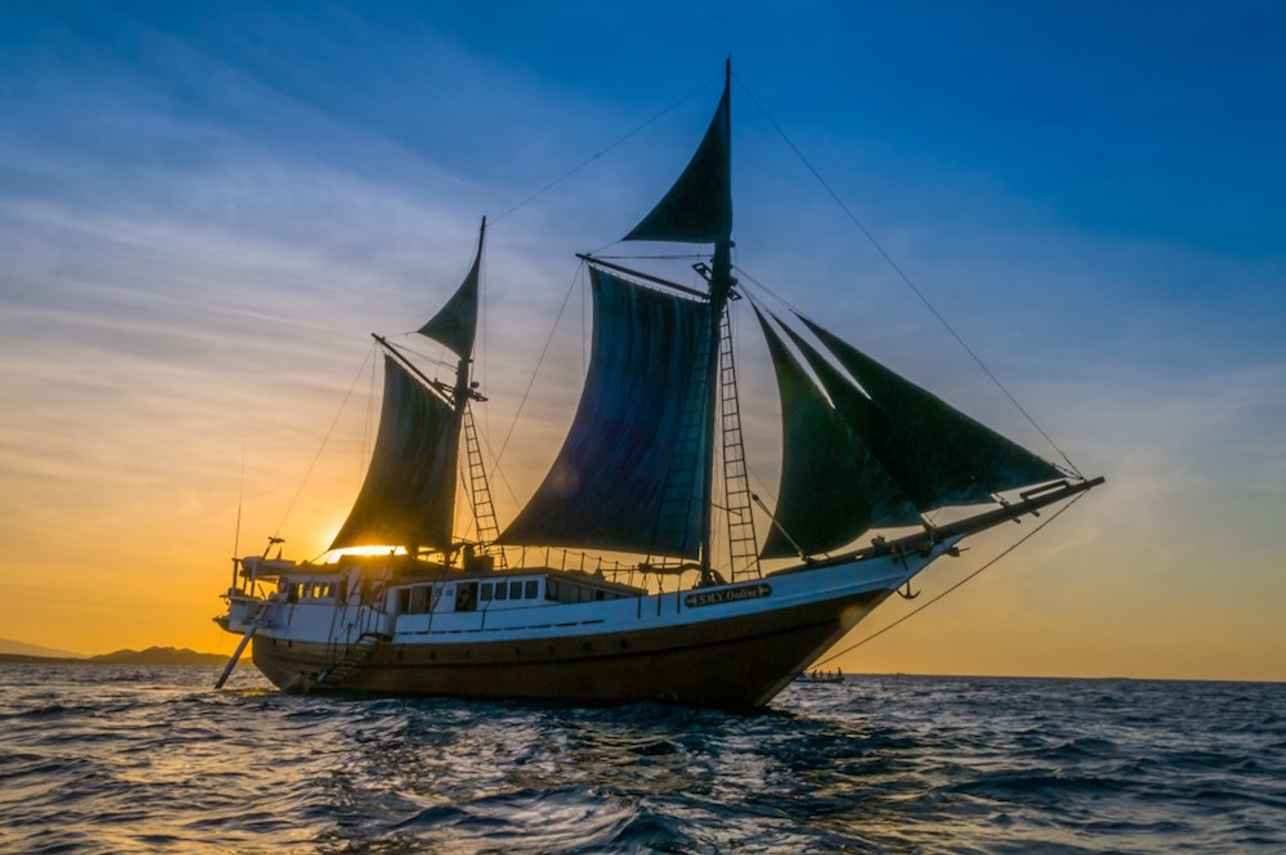 OndinaIndonesia