Best of Palau
Ocean Hunter 3 · Micronesia · 11D/10N
About this route
Pristine Palau is among the best dive destinations in the world, famous for its rich underwater environment, healthy hard and soft coral gardens, a vast amount of sea life, exciting World War II Wrecks, caves, and most importantly the protection of sharks. Palau not only created the world’s first Shark Sanctuary in 2009 and hence spiked a worldwide conservation effort, but Palau also declared a National Marine Sanctuary in October 2015. This is a 500.000 square kilometer NO-TAKING ZONE, which has many benefits including being home to 135 endangered or vulnerable species of sharks and rays. Pristine Reefs Exciting Caves 30+ World War II Wrecks Lots and Lots of Sharks Stunning Manta Dives Unique Spawning Dives with Thousands of Fish Amazing Macro Spots A Typical Day Aboard Ocean Hunter Palau 06:30 Wake up call through InterCom Gourmet Coffee / Tea and Sweet Rolls 07:00 First Morning Dive 08:30 Full Breakfast with freshly baked bread, cold cuts, cheese, eggs, fruits 10:00 Second Morning Dives 11:30 Some nice Snacks 11:45 Third Dive of the Day 13:00 Lunch Buffet 14:30 Fourth Dive of the Day 16:00 Fruit Smoothies and Cake 17:00 Fifth Dive of the Day Dusk Dive 19:00 Sixth Dive of the Day Night Dive 20:15 Dinner Buffet - can be served before night dive if requested Marine Life: On almost every dive you see sharks (grey reef, blacktip, white tip, and the occasional bull shark, leopard shark, and hammerhead) and turtles (hawksbill, green, olive ridley, leatherback, and loggerhead), often so many sightings that you lose count. We have bump head parrotfish and huge resident Napoleon wrasses that swim extremely close to divers. Experience close encounters with Palau's abundant population of manta rays, lionfish, and the usually rare, shy, and wildly colored mandarin fish. Other underwater highlights include cuttlefish, moray eels, lobsters, eagle rays, and dolphins, plus schools of barracudas, big-eye trevally (jacks), neon fusiliers, black snapper, and colorful anthias. Brightly colored clownfish in pulsating anemones, and large fish such as big-eye tuna and marlins are also common on dives. Palau is one of the last places in the world to spot a legendary and nearly extinct dugong (sea cow), a sea mammal, and seven of the nine species of endangered tridacna giant clams--larger than yourself and up to 100 years old! You can also find here saltwater crocodiles and sea snakes (non-aggressive). And of course, the biological wonder of Palau is Jellyfish Lake - take me there - filled with millions of Mastigias species of jellyfish that have no sting, pulsing in cloud-like hearts reflecting the sun's rays through their pink bodies. The dives are truly a sensual feast. The last dive will be on the penultimate day of the trip. Divers are recommended to wait for 24hours before flying after the last dive.
Day-by-day plan
Day 1: Embarkation in Koror
Koror, Palau
Welcome to Palau. Guests will be transferred to the vessel at Malakal Harbour for afternoon boarding, followed by a welcome brief and safety orientation as the boat prepares for its departure.
Good to know: No diving on the day of embarkation.
Day 2: Check Dives and Wrecks
Koror Area
The diving adventure begins with a check-out dive to ensure equipment is in order before exploring some of Palau's many historic WWII wrecks. One highlight is the Iro Maru, a large Japanese oiler now encrusted in coral and teeming with fish.
Dive sites: Checkout Dive, Iro Maru Wreck, Chandelier Caves
Day 3: Mantas and Blue Holes
Ngemelis Island
The day focuses on two of Palau's most famous sites. Divers will visit German Channel, a known manta ray cleaning station, and descend through the spectacular light-filled caverns of Blue Holes, which open onto a stunning reef wall.
Dive sites: German Channel, Blue Holes, New Drop Off
Day 4: Drifting Ulong and Siaes
Ulong & Siaes
Experience exhilarating drift dives through Ulong Channel, famous for its beautiful hard coral gardens and congregations of gray reef sharks. The vertical walls and rich marine life of Siaes Channel offer another perspective on Palau's dynamic underwater landscapes.
Dive sites: Ulong Channel, Siaes Corner, Siaes Tunnel
Day 5: The World-Famous Blue Corner
Ngemelis Island
Multiple dives are dedicated to the legendary Blue Corner. Using reef hooks, divers secure themselves on the plateau to watch a parade of sharks, Napoleon wrasse, and massive schools of jacks and barracuda in the strong currents.
Dive sites: Blue Corner, Big Drop Off, Blue Corner
Good to know: Number of dives at Blue Corner is dependent on tides and current conditions.
Day 6: Journey South to Peleliu
Peleliu Island
The vessel travels south to the historic island of Peleliu, the site of a major WWII battle. Dives at Peleliu Corner and Peleliu Cut are known for powerful currents that attract an array of large pelagic animals.
Dive sites: Peleliu Corner, Peleliu Cut, White Beach
Good to know: Dives in this area are for experienced divers due to strong and unpredictable currents.
Day 7: Exploring Peleliu's Reefs
Peleliu Island
A full day is spent exploring the intense and rewarding dive sites around Peleliu. Sites like Peleliu Expressway offer high-speed drift dives along deep walls patrolled by sharks, eagle rays, and tuna.
Dive sites: Peleliu Expressway, Orange Beach, Peleliu Pocket
Day 8: Rock Islands and Jellyfish Lake
Rock Islands Southern Lagoon
The itinerary moves back north to explore the Rock Islands. The day often includes a snorkeling excursion to the unique Jellyfish Lake, home to millions of non-stinging golden jellyfish, followed by dives at sites like Turtle Cove.
Dive sites: Turtle Cove, Barnum's Wall
Good to know: Includes a non-diving trip to Jellyfish Lake, provided it is open to visitors.
Day 9: Revisiting the Highlights
Central Palau
Depending on conditions and group preference, this day offers a chance to return to a favorite site. This could mean another opportunity to hook in at Blue Corner or wait for mantas at German Channel.
Dive sites: Blue Corner, German Channel, Dexter's Wall
Day 10: Final Dives and Return to Port
Near Koror
The last two dives of the trip are enjoyed in the morning at incredible sites closer to the main port. In the afternoon, the boat cruises back to Malakal Harbour for a final evening on board.
Dive sites: Ulong Channel, Sandy Paradise
Good to know: The afternoon is spent rinsing dive gear and preparing for disembarkation.
Day 11: Disembarkation in Koror
Koror, Palau
Following a final breakfast on the liveaboard, guests disembark in Koror. Staff will be on hand to assist with airport transfers or arrangements for onward travel.
Good to know: No diving on the day of disembarkation.
Upcoming departures
All routes of this liveaboard
- Best of Palau (Koror - Koror) · 8D/7N
- Palau Explorer Trip (Koror - Koror) · 8D/7N
- Best of Palau & New Moon Spawning (Koror - Koror) · 11D/10N
- Palau Explorer Trip (Koror - Koror) · 11D/10N
- Best of Palau & New Moon Spawning · 8D/7N
- Best of Palau & Full Moon Spawning · 8D/7N
- Best of Palau · 9D/8N
- Best of Palau & Full Moon Spawning (Koror - Koror) · 11D/10N
About the vessel
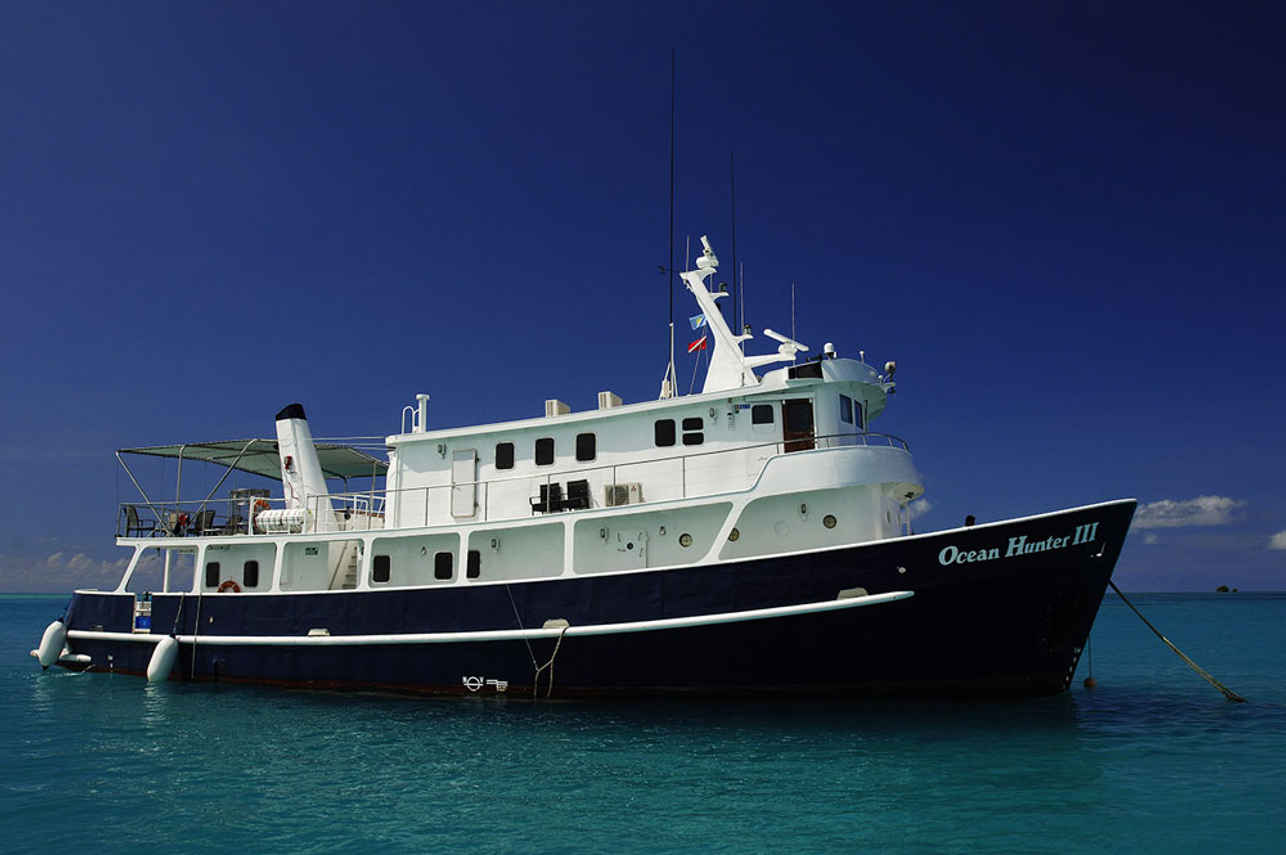 Ocean Hunter 3Micronesia