Ultimate Whale Sharks in the Sea of Cortez (Cabo San Lucas - La Paz)
Nautilus Explorer · Mexico · 7 nights
About this route
This premier liveaboard expedition through the Sea of Cortez offers a rare opportunity to swim with whale sharks in secluded, pristine bays. Assisted by spotter planes, the journey targets the legendary summer gatherings where dozens of gentle giants congregate in calm, warm waters. Beyond the whale sharks, the route explores remote islands and marine parks known for encounters with various cetaceans and vibrant bird colonies. It is a unique seasonal voyage combining specialized snorkeling experiences with traditional scuba diving in one of Mexico's most biodiverse regions.
Regions on this route
Highlights
Bahia de Los Angeles
A remote and pristine national park area that serves as a seasonal sanctuary for whale sharks. With low boat traffic, the sharks here often exhibit unique curiosity toward humans. Between 80 and 220 individuals are typically identified in these waters during the peak season.
- High whale shark density
- Pristine national park
- Curious wildlife behavior
Cabo San Lucas
The starting point of the journey, offering access to the famous Gordo Banks for those arriving early. The region is known for its dramatic rock formations and the meeting point of the Pacific Ocean and the Sea of Cortez.
- Gordo Banks access
- Deep water pinnacles
- Gateway to the Cortez
San Pedro Martir
A remote island in the mid-Cortez Sea known for its rugged underwater topography and significant bird populations. The waters surrounding the island are a hotspot for various whale species and large schools of fish.
- Blue-footed boobies
- Whale sightings
- Remote island diving
Requirements
- CertificationOpen-Water
- ExperienceNo minimum number of logged dives is required, but divers must possess basic buoyancy control and open water skills.
Shore excursions
- Complimentary photography and video workshops are available for guests arriving early in Cabo San Lucas.
- Observation of the world's largest colony of Blue-footed Boobies on a remote island.
Good to know
- Whale shark interactions are strictly for snorkeling; SCUBA diving with them is not permitted.
- A 5mm wetsuit is advised for July trips, while a 3mm suit is typically sufficient from August onwards.
- The final dive occurs on the penultimate day; allow 24 hours before flying.
- Night dives may be offered depending on local weather and sea conditions.
- Itinerary is flexible and subject to change by the Captain to optimize wildlife sightings.
Day-by-day plan
Day 1: Embarkation – Cabo San Lucas
Arrival and check-in take place at the SeeCreatures center in Cabo San Lucas by late afternoon. Guests are then transferred by bus to La Paz to board the vessel, where a welcome dinner is served as the ship begins its journey into the Sea of Cortez.
Day 2: Sea of Cortez – Expedition & Diving
The expedition navigates through the mid-region of the Cortez Sea, focusing on areas like Las Animas and Isla San Ildefonso where underwater pinnacles and rocky reefs prevail. Visibility is often excellent during the summer months, allowing for sightings of schooling fish and curious sea lions along the rugged island coastlines. The captain and guides adjust the daily plan to maximize wildlife encounters based on real-time spotter plane data. The final full day of the expedition is spent exploring a hidden marine hotspot near Mulegé. This area is frequently visited by pods of dolphins and pilot whales, offering spectacular opportunities for observing marine mammals in their natural habitat before the vessel returns south.
Dive sites: Las Animas, Isla San Ildefonso, San Pedro Martir, Bahia de Los Angeles, Mulegé region
Day 3: Sea of Cortez – Expedition & Diving
The expedition navigates through the mid-region of the Cortez Sea, focusing on areas like Las Animas and Isla San Ildefonso where underwater pinnacles and rocky reefs prevail. Visibility is often excellent during the summer months, allowing for sightings of schooling fish and curious sea lions along the rugged island coastlines. The captain and guides adjust the daily plan to maximize wildlife encounters based on real-time spotter plane data. The final full day of the expedition is spent exploring a hidden marine hotspot near Mulegé. This area is frequently visited by pods of dolphins and pilot whales, offering spectacular opportunities for observing marine mammals in their natural habitat before the vessel returns south.
Dive sites: Las Animas, Isla San Ildefonso, San Pedro Martir, Bahia de Los Angeles, Mulegé region
Day 4: Sea of Cortez – Expedition & Diving
The expedition navigates through the mid-region of the Cortez Sea, focusing on areas like Las Animas and Isla San Ildefonso where underwater pinnacles and rocky reefs prevail. Visibility is often excellent during the summer months, allowing for sightings of schooling fish and curious sea lions along the rugged island coastlines. The captain and guides adjust the daily plan to maximize wildlife encounters based on real-time spotter plane data. The final full day of the expedition is spent exploring a hidden marine hotspot near Mulegé. This area is frequently visited by pods of dolphins and pilot whales, offering spectacular opportunities for observing marine mammals in their natural habitat before the vessel returns south.
Dive sites: Las Animas, Isla San Ildefonso, San Pedro Martir, Bahia de Los Angeles, Mulegé region
Day 5: Sea of Cortez – Expedition & Diving
The expedition navigates through the mid-region of the Cortez Sea, focusing on areas like Las Animas and Isla San Ildefonso where underwater pinnacles and rocky reefs prevail. Visibility is often excellent during the summer months, allowing for sightings of schooling fish and curious sea lions along the rugged island coastlines. The captain and guides adjust the daily plan to maximize wildlife encounters based on real-time spotter plane data. The final full day of the expedition is spent exploring a hidden marine hotspot near Mulegé. This area is frequently visited by pods of dolphins and pilot whales, offering spectacular opportunities for observing marine mammals in their natural habitat before the vessel returns south.
Dive sites: Las Animas, Isla San Ildefonso, San Pedro Martir, Bahia de Los Angeles, Mulegé region
Day 6: Sea of Cortez – Expedition & Diving
The expedition navigates through the mid-region of the Cortez Sea, focusing on areas like Las Animas and Isla San Ildefonso where underwater pinnacles and rocky reefs prevail. Visibility is often excellent during the summer months, allowing for sightings of schooling fish and curious sea lions along the rugged island coastlines. The captain and guides adjust the daily plan to maximize wildlife encounters based on real-time spotter plane data. The final full day of the expedition is spent exploring a hidden marine hotspot near Mulegé. This area is frequently visited by pods of dolphins and pilot whales, offering spectacular opportunities for observing marine mammals in their natural habitat before the vessel returns south.
Dive sites: Las Animas, Isla San Ildefonso, San Pedro Martir, Bahia de Los Angeles, Mulegé region
Day 7: Sea of Cortez – Expedition & Diving
The expedition navigates through the mid-region of the Cortez Sea, focusing on areas like Las Animas and Isla San Ildefonso where underwater pinnacles and rocky reefs prevail. Visibility is often excellent during the summer months, allowing for sightings of schooling fish and curious sea lions along the rugged island coastlines. The captain and guides adjust the daily plan to maximize wildlife encounters based on real-time spotter plane data. The final full day of the expedition is spent exploring a hidden marine hotspot near Mulegé. This area is frequently visited by pods of dolphins and pilot whales, offering spectacular opportunities for observing marine mammals in their natural habitat before the vessel returns south.
Dive sites: Las Animas, Isla San Ildefonso, San Pedro Martir, Bahia de Los Angeles, Mulegé region
Day 8: Disembarkation – La Paz
After a final breakfast on board, guests disembark in La Paz at 08:30. A complimentary transfer service is provided back to the SeeCreatures center in Cabo San Lucas or directly to Los Cabos International Airport.
Upcoming departures
- 2027-07-05 – 2027-07-12from 2,787.3 USDBook
- 2027-08-02 – 2027-08-09from 2,837.65 USDBook
- 2027-09-06 – 2027-09-13from 2,787.3 USDBook
- 2027-09-13 – 2027-09-20from 2,787.3 USDBook
- 2027-09-20 – 2027-09-27from 2,787.3 USDBook
- 2027-09-27 – 2027-10-04from 2,787.3 USDBook
- 2027-10-04 – 2027-10-11from 2,787.3 USDBook
- 2028-07-04 – 2028-07-11from 2,887.05 USDBook
- 2028-08-01 – 2028-08-08from 2,887.05 USDBook
- 2028-09-05 – 2028-09-12from 2,887.05 USDBook
- 2028-09-12 – 2028-09-19from 2,887.05 USDBook
- 2028-09-19 – 2028-09-26from 2,887.05 USDBook
All routes of this liveaboard
- Ultimate Combo - Mobulas, Orcas and Whale Sharks (Cabo - La Paz) · 10 nights
- Sea of Cortez Get-Aways (Cabo - Cabo) · 5 nights
- Ultimate Combo - Mobulas, Orcas and Whale Sharks (Cabo - La Paz) · 10 nights
- Socorro Combo Expeditions (Cabo - Cabo) · 12 nights
- La Paz - Loreto great circle = Sea of Cortez (Cabo San Lucas, 8D7N) · 8D7N
- Whale Shark Ultimate in the Sea of Cortez (Cabo San Lucas → La Paz) · 8D7N
- Sea of Cortez Get-Aways (Cabo - Cabo) · 5 nights
- Sea of Cortez Get-Aways (Cabo - Cabo) · 5 nights
- Sea of Cortez Get-Aways (Cabo - Cabo) · 5 nights
- Ultimate Combo - Mobulas, Orcas and Whale Sharks (Cabo - La Paz) · 10 nights
- Socorro - Giant Mantas, Sharks and Dolphins · 9 Days / 8 Nights
- Sea of Cortez Get-Aways (Cabo - Cabo) · 5 nights
- Sea of Cortez – 8-Day La Paz North to Loreto (Cabo San Lucas - La Paz) · 7 nights
- Ultimate Whale Sharks in the Sea of Cortez (Cabo San Lucas - La Paz) · 8 nights
- La Paz - Loreto great circle = Sea of Cortez · 7 nights
- Ocean Safari: Whales, Mobulas, Orcas, and more! (Cabo San Lucas - La Paz) · 7 nights
- Sea of Cortez – La Paz North to Loreto (Cabo San Lucas - La Paz) · 7 nights
About the vessel
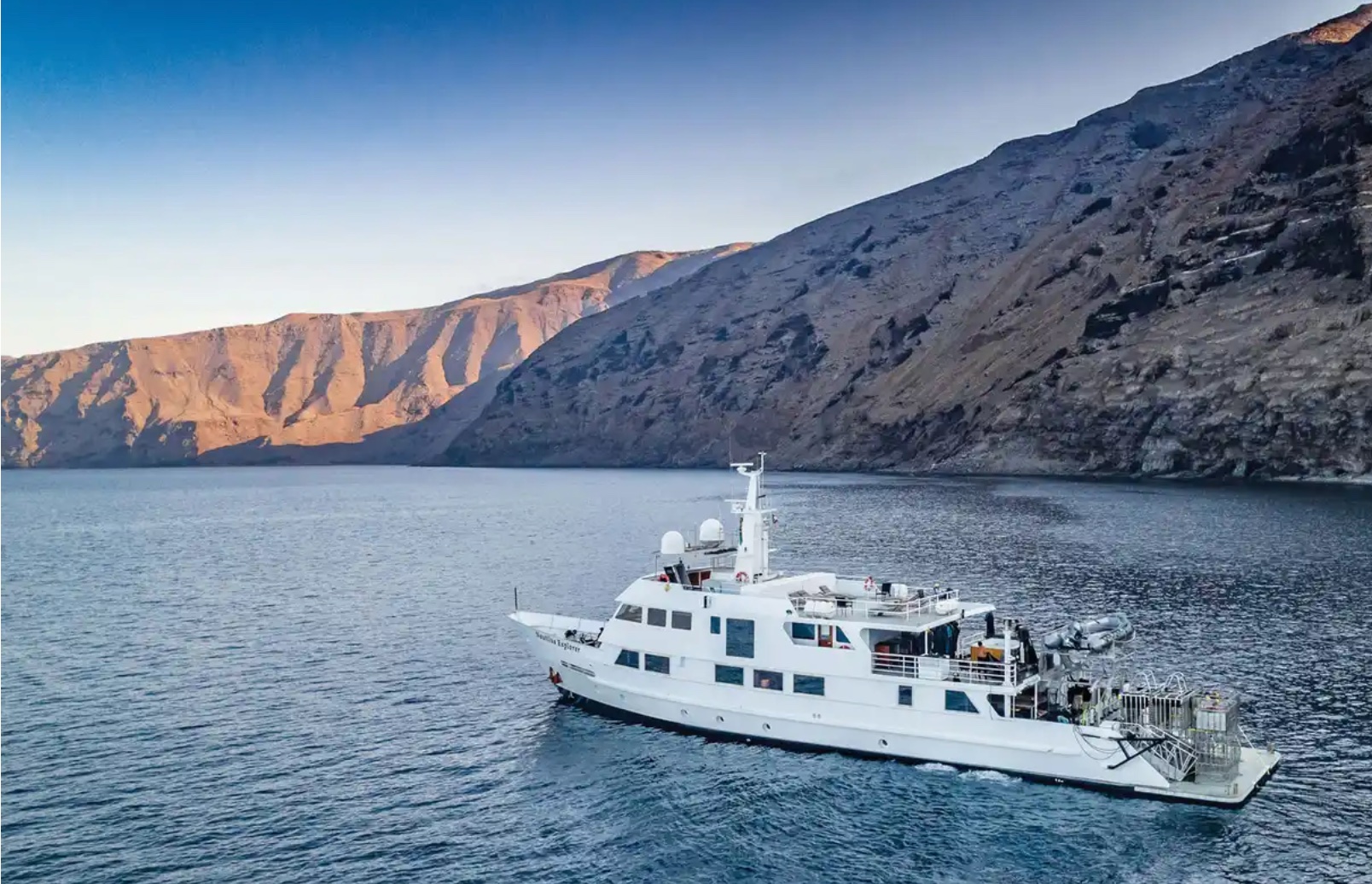 Nautilus ExplorerMexico