Triton Bay, Misool & Raja Ampat (Kaimana - Sorong)
Mari · Indonesia · 12N
About this route
Embark on a spectacular 12-day liveaboard journey aboard the Mari, combining the remote marine wilderness of Triton Bay with the world-renowned reefs of Misool and Raja Ampat. This expedition offers world-class diving throughout the Coral Triangle, featuring vibrant coral gardens, dramatic caves, and rich macro life. Explore renowned reefs of Misool and Raja Ampat, areas celebrated for their diverse ecosystems, with opportunities to encounter whale sharks and manta rays, making it a truly unforgettable experience.
Regions on this route
Highlights
Banda Sea
The Banda Sea is a deep-water basin known for its clear waters and as a migratory route for pelagic species. While crossing this sea, divers can anticipate sightings of larger marine life. It plays a crucial role in connecting the diverse ecosystems of the Indonesian archipelago, contributing to nutrient-rich waters.
- Clear deep waters
- Pelagic marine life migration
- Connecting diverse ecosystems
Misool
Misool, one of Raja Ampat's four major islands, is a cornerstone of the region's marine protected area. Its reefs are exceptionally rich, influenced by nutrient-laden deep waters from the Ceram Trough. Divers will discover stunning reef systems, dramatic walls, and an abundance of macro life and fish schools within its thriving ecosystem.
- Exceptional marine biodiversity
- Vibrant reef systems
- Dramatic underwater walls
- Macro and fish abundance
Papua
Papua, particularly the West Papua province, is home to some of the richest marine biodiversity on Earth. This vast region boasts vibrant coral reef ecosystems, dramatic underwater landscapes, and a plethora of marine species, making it a prime destination for world-class diving.
Raja Ampat
Raja Ampat, the heart of the Coral Triangle, is globally recognized for its unparalleled marine biodiversity and pristine coral reef ecosystems. This archipelago features diverse underwater landscapes, from vibrant coral gardens and dramatic walls to caves and swim-throughs. It is a hotspot for encountering reef manta rays, various shark species, and an incredible array of macro and critter life.
- Unparalleled biodiversity
- Pristine coral gardens
- Manta ray encounters
- Macro and critter diving
Triton Bay
Triton Bay is a jewel within the Coral Triangle, celebrated for its pristine hard and soft coral gardens, dramatic underwater terrain, and incredible biodiversity. The area is renowned for its potential whale shark encounters, pygmy seahorse sightings, and diverse fish populations. It also features unique swim-throughs and ancient rock paintings.
- Whale shark encounters
- Pygmy seahorse habitat
- Vibrant hard & soft corals
- Ancient rock paintings
Requirements
- CertificationOpen Water
- Minimum logged dives30
- ExperienceA minimum of 30 logged dives is required for this liveaboard trip.
Shore excursions
- Explore caves and swim-throughs in Goa Farondi.
- Visit the ancient rock paintings of Tomolol.
- Enjoy the beautiful sunsets in Kaimana, known for its vibrant colors.
- Discover the dramatic underwater landscapes and stunning reefs of Misool.
- Swim with the whale sharks of Triton Bay.
Good to know
- A minimum of 30 logged dives is required for this itinerary.
- Night dives are included in the schedule.
- Divers are recommended to wait 24 hours after their last dive before flying.
- Diving services may be limited to 1-2 dives on crossing days.
- The check-in time is between 12 pm and 2 pm on the day of departure.
- The itinerary may be modified based on local regulations, guest experience, weather, and logistics, at the Captain's discretion.
- Itinerary is subject to change based on local regulations, guest experience, weather, and logistics.
- A 24-hour no-fly period is recommended after the last dive for safety.
Day-by-day plan
Day 1: Embarkation – Kaimana, West Papua
Your arrival begins in Kaimana, West Papua province, where Mari will organize transfers from the airport or your hotel directly to the vessel. After settling into your cabin, a check-dive will commence near Kaimana. The boat will depart between 12 pm and 2 pm, followed by an overnight sail to Triton Bay, preparing for the underwater adventures ahead.
Day 2: Triton Bay – Whale Shark Encounters
Today begins the exploration of Triton Bay, a renowned region within the Coral Triangle lauded for its exceptional marine biodiversity. Divers can anticipate encountering vibrant hard and soft coral gardens, dramatic underwater landscapes, and healthy reef ecosystems. A highlight of this area is the potential for whale shark sightings and spotting pygmy seahorses, often featuring a mix of drift dives and exploration of pristine reef systems. The area is known for its incredible variety of marine life.
Day 3: Triton Bay – Caves and Caverns
Continuing to explore Triton Bay, this area is characterized by its unique underwater topography, including swim-throughs and caves. The region is known for its exceptional biodiversity, with an abundance of colorful reef fish and macro life. Visibility here can vary, but the vibrant corals and diverse marine species consistently offer rewarding dives. Explore ancient rock paintings of Tomolol during a shore excursion.
Day 4: Triton Bay – Reef Exploration
Today's dives focus on the extensive reef systems of Triton Bay, which are part of the Coral Triangle's rich marine environment. The area boasts healthy hard and soft coral formations, supporting a wide array of marine life. Currents can influence drift dives, revealing schooling fish and a variety of macro critters. The dramatic underwater terrain provides captivating backdrops for exploration.
Day 5: Banda Sea – Deep Water Crossing
A day dedicated to traversing the Banda Sea, known for its deep-water channels and pelagic encounters. While crossing, diving opportunities may be limited, but the journey itself offers a chance to observe open-ocean marine life. This area often features clear waters and is a migratory route for various pelagic species, adding to the anticipation of future dives. The night will be spent under the starry sky, sailing towards the next destination.
Day 6: Misool – Southern Raja Ampat
Misool, one of the four major islands in the Raja Ampat archipelago, is renowned for its exceptional marine biodiversity and stunning reef systems. The reefs are incredibly rich, influenced by the deep waters of the Ceram Trough and nutrient upwellings. Divers can expect vibrant coral formations, dramatic walls, and an abundance of reef fish. The area is known for its thriving ecosystem within the Marine Protected Area.
Day 7: Misool – Pristine Reefs and Macro Life
The exploration of Misool continues today, offering unparalleled opportunities for both wide-angle reef photography and macro critter hunting. The area's unspoiled hard and soft corals create a habitat for countless small marine species. Divers encounter diverse reef topography, from shallow coral gardens to deeper slopes, all teeming with life and benefiting from a healthy ecosystem.
Day 8: Misool – Northern MPA Exploration
Today focuses on the northern reaches of Misool, within the Raja Ampat Marine Protected Area. This area is celebrated for its incredibly healthy coral reefs and abundant fish life, benefiting from strong conservation efforts. Divers can expect rich pelagic action, with opportunities to spot larger marine species alongside vibrant reef ecosystems. The underwater terrain often features pinnacles and sloping reefs, providing diverse dive experiences.
Day 9: Raja Ampat – Central & Southern Sites
The vessel moves into Central and Southern Raja Ampat, where the diving continues to impress with its unparalleled marine biodiversity. The region is characterized by vibrant coral reefs, dramatic walls, and a profusion of marine species. Divers anticipate drift dives over healthy reef systems, with opportunities to encounter reef manta rays at renowned cleaning stations.
Day 10: Raja Ampat – Reef Manta Encounters
This day is dedicated to renowned Raja Ampat dive sites known for their manta ray aggregations. Divers will seek out cleaning stations where both reef and oceanic manta rays are frequently sighted. The area's nutrient-rich waters contribute to abundant plankton, attracting these majestic creatures. Besides mantas, the reefs themselves are spectacular, featuring diverse hard and soft corals and a rich variety of fish life.
Day 11: Raja Ampat – Northern Exploration
Exploring the northern reaches of Raja Ampat, often considered the heart of the world's coral reef biodiversity. This region is famous for its lush coral gardens, dramatic drop-offs, and an incredible array of marine species. Divers can expect to encounter diverse fish schools, various shark species, and vibrant macro life. The area's healthy ecosystem is supported by its protected status.
Day 12: Raja Ampat – Dampier Strait
The final diving day explores the nutrient-rich waters of the Dampier Strait, where strong currents support thriving coral reefs and dense schools of fish. Divers can expect colorful reef scenery, schooling fusiliers and snappers, and possible encounters with reef sharks, wobbegongs, and manta rays. After the last dives, Mari begins the short crossing toward Sorong, allowing ample time before flying the following day.
Day 13: Disembarkation – Sorong, West Papua
After breakfast, guests will check out and transfer to their flight, marking the end of this extraordinary liveaboard journey. Mari will assist with transfer arrangements to Sorong airport for your onward travel. Divers are recommended to wait 24 hours before flying after the last dive.
Upcoming departures
- 2027-11-28 – 2027-12-10from 4,385 EURBook
All routes of this liveaboard
- Triton Bay Expedition (Kaimana - Kaimana) · 9N
- Maumere - Banda Sea - Ambon Expedition (Maumere - Ambon) · 13N
- Raja Ampat - Misool - Banda Sea (Sorong - Ambon) · 12N
- Raja Ampat - Central | North (Sorong - Sorong) · 10 nights
- Bali - Komodo & Whale Sharks Expedition (Bali - Labuan Bajo) · 11N
- Raja Ampat - Misool (Sorong -Sorong) · 11N
- Triton Bay, The Ring of Fire & The Forgotten Islands (Saumlaki - Kaimana) · 12N
- Raja Ampat - Misool - Banda Sea (Sorong - Ambon) · 12N
- Komodo Expedition (Labuan Bajo - Labuan Bajo) · 7N
- Banda East | Forgotten Islands (Kaimana - Saumlaki) · 12N
- Raja Ampat - Misool (Sorong -Sorong) · 11N
- Banda Sea / Misool / Triton Bay - Hammerhead Special (Ambon - Kaimana) · 12N
- Raja Ampat - Misool (Sorong - Sorong) · 10N
- Komodo, Bali & Whale Sharks (Labuan Bajo - Bali) · 9N
- Bali - Whalesharks - Komodo - Maumere (Bali - Maumere) · 11N
- Banda Sea - Ring of Fire (Ambon - Saumlaki) · 12N
- Raja Ampat - Best of Central & Dampier Strait (Sorong - Sorong) · 7N
- Best of Komodo & Whale Sharks (Labuan Bajo - Sumbawa Besar) · 11 nights
- Triton Bay, Misool-Raja Ampat · 12 nights
- Best of Komodo & Whale Sharks · 9 nights
- Raja Ampat, Misool & Banda Sea · 12 nights
- Triton Bay, Misool-Raja Ampat · 12 nights
- Best of Komodo, Flores & Whale Sharks · 10 nights
About the vessel
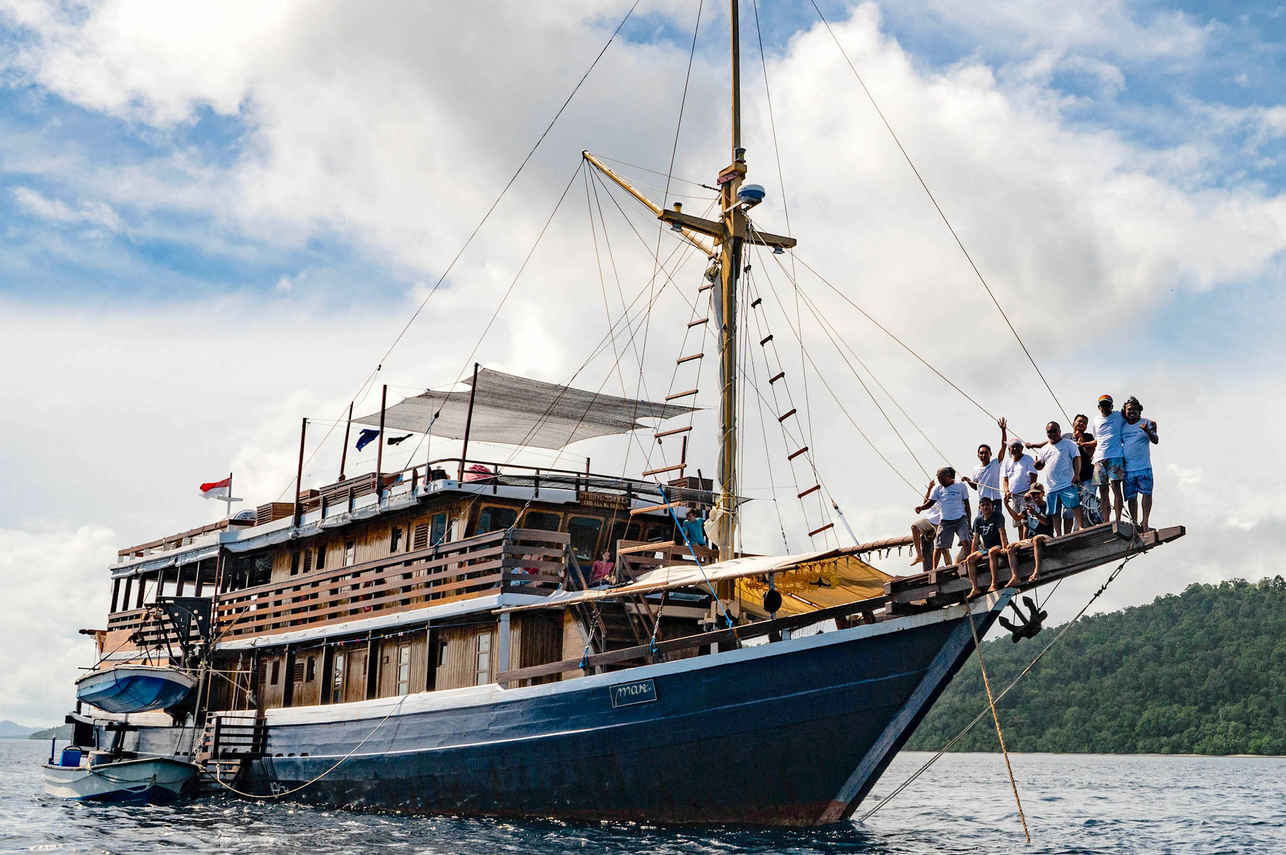 MariIndonesia