Galapagos Special Itinerary A (Baltra - Baltra)
Humboldt Explorer · Galápagos · 10 nights
About this route
Embark on a remarkable liveaboard diving adventure through the Galápagos Islands, renowned for their incredible marine biodiversity. This journey focuses on the remote Wolf and Darwin Islands, celebrated for their thrilling shark encounters. Expect to see a variety of shark species, including hammerheads, alongside marine turtles, schooling fish, and majestic whale sharks during their season. The diverse underwater landscapes also offer rich opportunities for macro photography enthusiasts. All islands visited are exceptional locations for capturing stunning underwater images.
Regions on this route
Highlights
Baltra Island
Baltra Island serves as the primary gateway to the Galápagos, housing the main airport for arriving guests. While mostly known for logistics, nearby waters offer initial dives that can showcase diverse marine life, such as rays and schools of fish, along with opportunities for land visits to see unique fauna.
- Gateway to Galapagos
- Initial dives
- Rays and fish schools
- North Seymour land visit
Cousins Rock
Cousin's Rock is known for its unique volcanic pinnacle formations and vibrant marine biodiversity. This site is excellent for both macro and wide-angle photography, featuring playful Galápagos sea lions and a rich variety of reef fish and invertebrates. Currents can be dynamic, enhancing the chances of spotting diverse species in a bustling underwater environment.
- Volcanic pinnacles
- Sea lion interactions
- Macro and wide-angle
- Rich reef biodiversity
Darwin Island
Darwin Island is globally celebrated as one of the best dive sites, particularly for encountering large pelagic species. Its iconic arch and surrounding waters are a magnet for schooling hammerhead sharks, Galápagos sharks, and seasonal whale sharks. Strong currents provide exhilarating drift dives, making it a prime location for unforgettable marine encounters.
- Iconic dive site
- Schooling hammerheads
- Whale shark sightings
- Strong currents
Wolf Island
Wolf Island is a remote and legendary dive destination in the Galápagos, famous for its abundant shark populations. Divers frequently encounter hammerheads, Galápagos sharks, and silky sharks, with seasonal whale shark sightings. The island's underwater topography often features deep walls and channels where strong currents attract a high concentration of marine life, offering thrilling dives.
- Shark diving hot spot
- Hammerheads and Galapagos sharks
- Deep walls and currents
- Remote pristine waters
Requirements
- CertificationAdvanced Open Water
- Minimum logged dives100
- ExperienceDivers are required to have a minimum of 100 logged dives to participate in this trip.
Shore excursions
- Visit North Seymour Island to see blue-footed boobies, frigate birds, sea lions, and marine iguanas.
- Transit by bus to the Santa Cruz Highlands to visit giant tortoises in their natural habitat.
- Explore the town of Puerto Ayora and the Darwin Centre on your own.
- Enjoy dinner on your own in Puerto Ayora.
Good to know
- A minimum of 100 logged dives is required for this trip.
- Divers are recommended to wait 24 hours after their last dive before flying.
- The exact route and sites are subject to change based on local regulations, guest experience, weather, and logistics at the Captain's discretion.
Day-by-day plan
Day 1: Baltra – Arrival and Boarding
Guests arrive in the Galápagos Islands from Mainland Ecuador, typically in the late morning. Dive guides will meet guests at the airport between 11:00 am and 12:00 pm, assisting with transfers to the vessel. Once aboard, guests can enjoy lunch, organize their dive equipment, and attend essential safety briefings before settling into their cabins.
Day 2: Baltra North – Land Visit and Reef Dives
The day begins with equipment checks, followed by two morning dives. Dive sites in the area often feature schools of fish and various rays. In the afternoon, a land visit to North Seymour Island provides an opportunity to observe large colonies of Blue-Footed Boobies and Frigate Birds. Sightings of sea lions and marine iguanas are also common.
Day 3: Wolf Island – Remote Diving Adventures
This day is dedicated to diving around Wolf Island, a remote and legendary dive site in the Galápagos. The area is globally renowned for its prolific shark populations, including hammerheads and Galápagos sharks. Whale sharks are often sighted here during their season. Night dives are also a possibility, offering unique encounters with nocturnal marine life.
Day 4: Wolf Island – Shark Encounters
Continuing the exploration of Wolf Island, divers can expect further exhilarating encounters with various shark species that frequent these waters. The powerful currents around the island bring nutrient-rich waters, attracting large schools of fish and their predators. Sightings of Galápagos sharks, silky sharks, and hammerheads are common, providing an immersive experience into the Galápagos' vibrant marine ecosystem. The remote location ensures pristine dive conditions.
Day 5: Darwin Island – Iconic Dive Site
Today's focus is on Darwin Island, home to some of the most iconic dive sites in the Galápagos. The area is globally recognized for its abundant marine life, particularly large pelagic species. Divers frequently encounter schooling hammerhead sharks, whale sharks (seasonally), and Galápagos sharks. The strong currents often found here enhance the chances of spectacular drift dives and close-up views of the resident marine fauna.
Day 6: Darwin Island – Pelagic Paradise
Another full day of diving at Darwin Island, offering more opportunities to experience its legendary pelagic action. Divers can anticipate exhilarating drift dives with strong currents, bringing close encounters with various shark species, including hammerheads, Galápagos sharks, and silky sharks. Maintaining good buoyancy control is essential here to fully enjoy the dynamic underwater environment and observe the rich biodiversity this remote location provides.
Day 7: Transit to Santa Cruz and Cousin's Rock
Following the incredible dives at Darwin Island, the vessel begins its transit back towards the central islands, including a long journey to Cousin's Rock. This transit can take upwards of 20 hours. While primarily a travel day, guests can enjoy the scenic views and prepare for the next diving and land-based activities. There may be opportunities for additional dives or shore excursions if conditions and time permit.
Day 8: Cousin's Rock – Pinnacles and Marine Life
The day focuses on diving at Cousin's Rock, a popular site known for its unique volcanic pinnacles and rich marine biodiversity. This area is celebrated for its diverse critter life and frequent sightings of Galápagos sea lions, which often playfully interact with divers. The currents can vary, creating dynamic conditions that attract a variety of reef fish and invertebrates, making it an excellent spot for both wide-angle and macro photography. The site is often bustling with activity, from small reef inhabitants to larger pelagics passing by.
Day 9: Santa Cruz – Giant Tortoises and Puerto Ayora
Today is dedicated to exploring Santa Cruz Island's terrestrial wonders. A bus trip into the Santa Cruz Highlands offers the chance to visit the magnificent giant tortoises in their natural habitat, a truly iconic Galápagos experience. Guests will also have free time to explore the town of Puerto Ayora, visit the renowned Darwin Centre, and enjoy dinner on their own. The day concludes with a return to the Humboldt Explorer in the evening, after a rich day of land-based adventures.
Day 10: Wolf Island – Final Dives and Transit
This day brings divers back to Wolf Island for some final dives, aiming to capture any marine life experiences that might have been missed or enjoyed again. The remote and pristine waters of Wolf Island continue to offer opportunities for close encounters with hammerheads, Galápagos sharks, and other pelagic species. After the last dives, the vessel will begin its transit towards Baltra, allowing guests to relax and reflect on their incredible journey. This marks the last diving day of the trip.
Day 11: Baltra – Disembarkation
On the final day, guests will disembark the vessel by 9:00 am. A transfer to the airport will be arranged for departure, concluding the Galápagos liveaboard experience. It is recommended that divers wait at least 24 hours after their last dive before flying.
Upcoming departures
- 2027-05-17 – 2027-05-27from 8,995 USDBook
- 2027-07-26 – 2027-08-05from 9,295 USDBook
- 2027-10-25 – 2027-11-04from 9,295 USDBook
- 2028-05-08 – 2028-05-18from 9,295 USDBook
- 2028-10-30 – 2028-11-09from 9,295 USDBook
- 2029-05-14 – 2029-05-24from 9,295 USDBook
- 2029-11-12 – 2029-11-22from 9,595 USDBook
- 2030-04-22 – 2030-05-02from 9,595 USDBook
- 2030-09-16 – 2030-09-26from 9,795 USDBook
- 2030-11-11 – 2030-11-21from 9,795 USDBook
All routes of this liveaboard
About the vessel
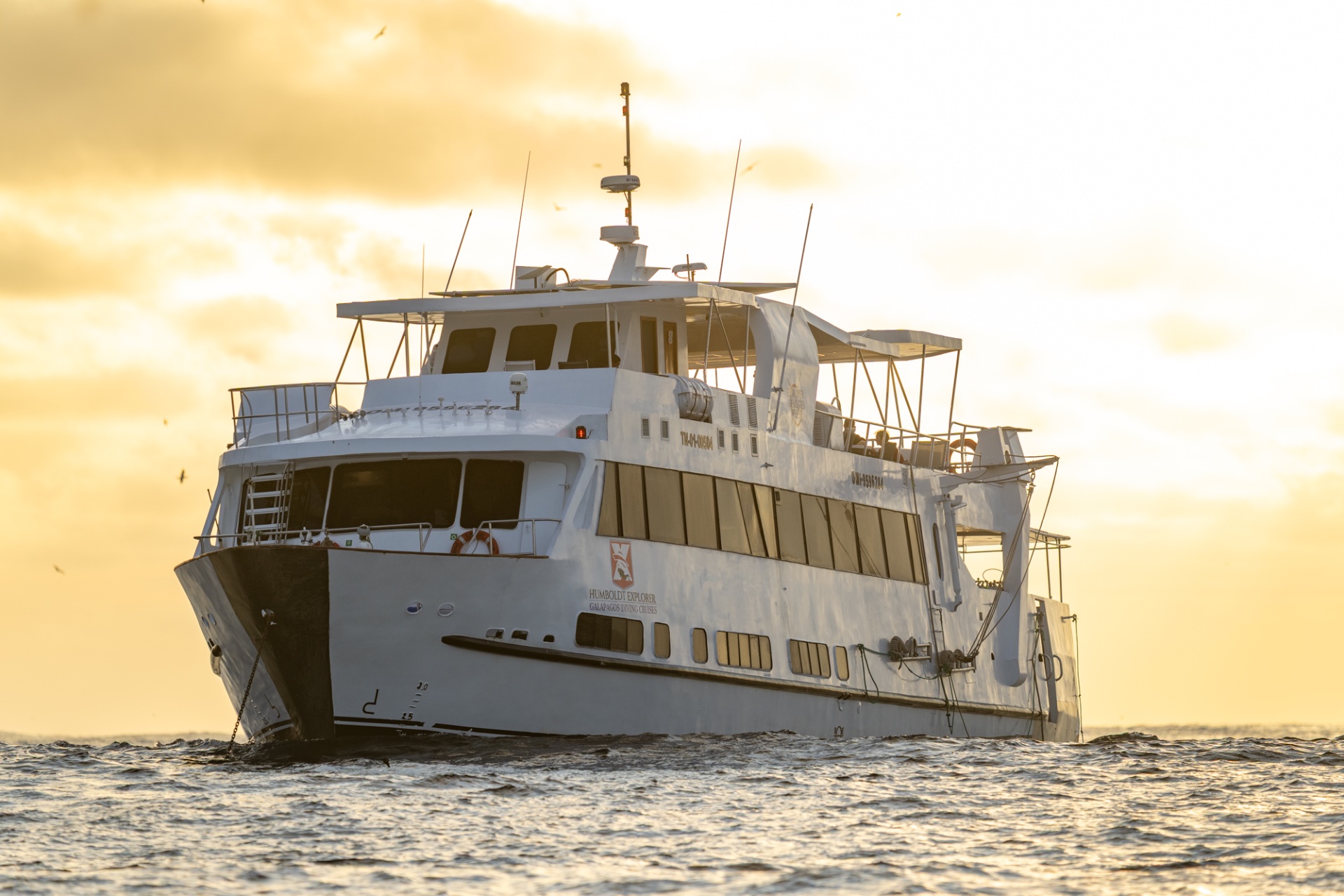 Humboldt ExplorerGalápagos