Itinerary A: Naturalist Cruise (San Cristobal - Santa Cruz)
Galaxy Orion · Galápagos · 3 nights
About this route
Discover the central and southern reaches of the Galapagos archipelago on this immersive naturalist expedition. Traveling from San Cristobal to Santa Cruz, the route explores iconic volcanic landscapes and rich coastal ecosystems. Guests enjoy daily guided hikes to observe endemic bird colonies and snorkeling sessions in nutrient-rich waters teeming with marine life. Expert naturalists provide deep insights into the unique evolutionary biology and conservation efforts that define these enchanted islands.
Regions on this route
Highlights
Espanola Island
One of the oldest islands in the chain, known for its high rate of endemism and dramatic cliffside bird colonies.
- Waved Albatross nesting
- Nazca boobies
- Marine iguanas
Floreana Island
An island rich in human history and volcanic features, including lava tunnels and submerged craters.
- Devil's Crown snorkeling
- Flamingo lagoons
- Historic mail barrel
Gardner Bay
A stunning white coral sand beach providing a peaceful setting for snorkeling and observing sea lions.
- Turquoise waters
- Sea lion interactions
- Endemic mockingbirds
San Cristobal
The gateway to the eastern archipelago, this island features diverse landscapes ranging from volcanic highlands to coastal scrub. It is a prime location for observing sea lion colonies and unique birdlife right at the water's edge.
- Sea lion colonies
- Coastal birding
- Volcanic vistas
Requirements
- ExperienceThis is a naturalist-focused adventure cruise emphasizing shore excursions and snorkeling rather than scuba diving.
Shore excursions
- Visit the historic Post Office Bay barrel to participate in the traditional whaler mail system.
- Hike the rocky trails of Suarez Point to witness the spectacular takeoff of waved albatrosses.
- Explore the Charles Darwin Research Station to see giant tortoise breeding programs.
- Walk along the green olivine sand beach at Cormorant Point to reach a flamingo-filled lagoon.
- Discover hidden lava tunnels on Floreana Island to understand the volcanic formation of the islands.
- Hike the rocky trails of Suarez Point to see the world's only waved albatross nesting colony.
- Explore the Charles Darwin Research Station to witness giant tortoise conservation in action.
- Walk along the olivine-crystal green sands and flour-white beaches of Floreana Island.
- Observe flamingo colonies in the saltwater lagoons of Cormorant Point.
Good to know
- Check-in and check-out times will be provided individually upon booking confirmation.
- The itinerary focuses on naturalist land walks and snorkeling rather than tank-based scuba diving.
- Hiking trails vary in difficulty from level 1 to level 3; sturdy walking shoes are recommended.
- Waved albatross sightings at Suarez Point are seasonal, typically occurring from April to January.
- Itinerary is subject to change based on Galapagos National Park regulations and weather conditions.
- Snorkeling equipment and naturalist guides are provided for all daily excursions.
- Transfers to Baltra airport are included on the final day.
Day-by-day plan
Day 1: Embarkation – San Cristobal & Lobos Island
Upon arrival at the airport, guests are met by a naturalist guide for transfer to the vessel. The afternoon visit to Lobos Island reveals a quiet sanctuary where sea lion pups play in shallow tide pools. The area is known for its nesting bird populations and calm waters that often feature green sea turtles and various ray species resting on the sandy bottom.
Dive sites: Lobos Island
Day 2: Española Exploration – Gardner Bay & Suarez Point
The morning begins on the coral-white sands of Gardner Bay, a renowned site for observing large colonies of resting sea lions and endemic mockingbirds. Later, the journey continues to Suarez Point, characterized by its rugged rocky terrain and high concentration of seabirds. This site is famous for the waved albatross nesting grounds and the spectacular sight of Nazca boobies along the cliffs.
Dive sites: Gardner Bay, Suarez Point
Day 3: Floreana Wonders – Post Office Bay & Cormorant Point
Step into history at Post Office Bay, where an 18th-century whaling mail system is still in use today. The afternoon is spent at Cormorant Point, featuring a large lagoon frequently visited by flamingos and a beach that serves as a nesting site for green sea turtles. Snorkeling at the nearby Devil's Crown, a partially eroded volcanic cone, offers some of the best underwater visibility and fish diversity in the region.
Dive sites: Post Office Bay, Cormorant Point, Devil's Crown
Day 4: Disembarkation – Charles Darwin Research Station
The final morning features a visit to the Charles Darwin Research Station to learn about giant tortoise breeding programs and island restoration. Following the tour, guests are transferred to Baltra for their departing flights.
Upcoming departures
- 2026-12-09 – 2026-12-12from 1,530 USDBook
- 2026-12-23 – 2026-12-26from 2,700 USDBook
- 2027-02-17 – 2027-02-20from 1,800 USDBook
- 2027-03-17 – 2027-03-20from 2,000 USDBook
- 2027-04-14 – 2027-04-17from 1,860 USDBook
- 2027-04-28 – 2027-05-01from 2,000 USDBook
- 2027-05-26 – 2027-05-29from 1,860 USDBook
- 2027-06-09 – 2027-06-12from 1,760 USDBook
- 2027-06-23 – 2027-06-26from 1,860 USDBook
All routes of this liveaboard
About the vessel
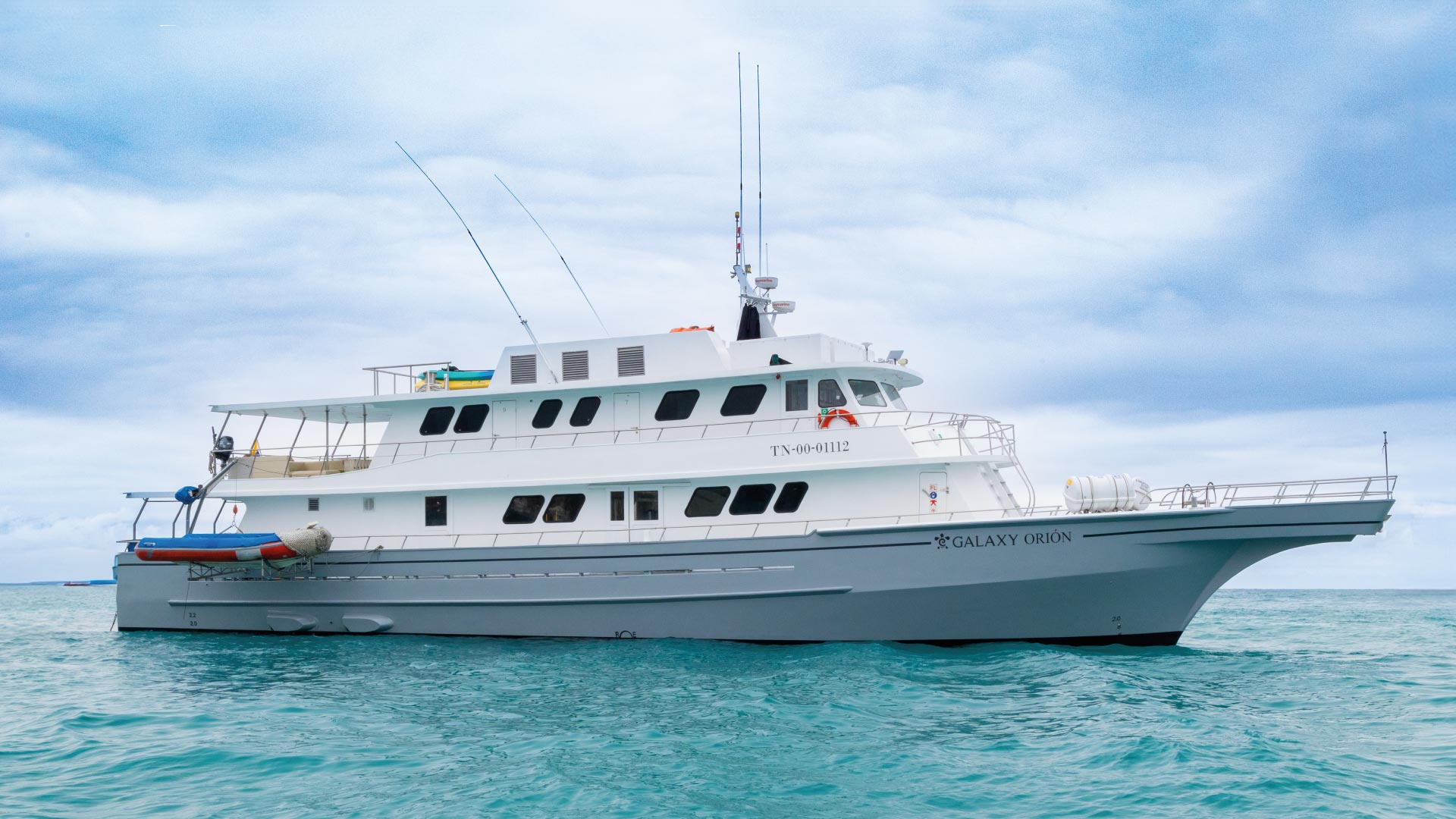 Galaxy OrionGalápagos