Diving Itinerary (Baltra - Santa Cruz)
Galaxy Diver II · Galápagos · 7 nights
About this route
Embark on a spectacular seven-night voyage through the Galapagos archipelago, starting and ending at Baltra. This route focuses on the world-renowned northern islands of Wolf and Darwin, where massive schools of hammerheads and seasonal whale sharks dominate the deep blue. Divers can expect diverse volcanic topographies, from sheer walls and caverns to current-swept pinnacles. The journey concludes with a visit to the Santa Cruz Highlands to see the islands' iconic giant tortoises.
Regions on this route
Highlights
Cabo Douglas
Located on the edge of Fernandina, this area is known for unique marine iguana encounters and flightless cormorants. The cold, nutrient-rich waters support a very different ecosystem compared to the north.
- Marine iguanas
- Flightless cormorants
- Cold water species
Cousins Rock
A striking rock pinnacle covered in black coral and gorgonian fans. It is renowned for its macro life, including seahorses and nudibranchs, as well as resting whitetip reef sharks.
- Pacific seahorses
- Black coral bushes
- Macro photography
Darwin Island
Famed for the Darwin's Pillars, this site offers world-class pelagic diving. It is a prime location for whale shark sightings between June and December and features intense current-driven action.
- Darwin's Pillars
- Whale shark sightings
- Intense pelagic action
Wolf Island
A remote volcanic outpost that serves as one of the most shark-rich environments on Earth. Divers can expect sheer cliffs and boulder slopes where hammerheads and Galapagos sharks gather in massive numbers.
- Hammerhead schools
- Galapagos sharks
- Eagle ray squadrons
Requirements
- CertificationAdvanced-Open-Water - minimum 50 geloggte Tauchgänge vorgeschrieben.
- Minimum logged dives50
- ExperienceA minimum of 50 logged dives is required for this expedition.
Shore excursions
- Visit a private reserve in the Santa Cruz Highlands to see Galapagos giant tortoises.
- Guided nature walk through the lush vegetation of the Santa Cruz interior.
- Birdwatching opportunities for endemic species like the Galapagos rail and vermilion flycatcher.
Good to know
- Nitrox certification is mandatory for all divers on this itinerary.
- Onboard Nitrox certification courses are available with advance payment.
- A 24-hour surface interval is recommended after the final dive before flying.
- Itineraries are subject to change based on park regulations and weather.
Day-by-day plan
Day 1: Embarkation – Baltra Island
Upon arrival at Baltra Airport, the crew welcomes you and assists with transfers to the Galaxy Diver II. The afternoon consists of a safety briefing, cabin orientation, and a mandatory check-dive to ensure all equipment is functioning correctly in local conditions. As the vessel prepares to set sail, guests enjoy their first dinner while observing the strict environmental guidelines that protect this unique national park.
Dive sites: Baltra
Day 2: Punta Carrion – Gateway to Wolf
The first morning of diving takes place at Punta Carrion, a site known for its boulder-strewn slopes and vibrant reef life. This area often features playful sea lions and schools of tropical fish such as parrotfish and king angelfish. After two morning immersions, the vessel begins a 14-hour navigation toward the remote northern reaches of the archipelago. The site is also a common spot for spotting elusive seahorses tucked into the rocky crevices.
Dive sites: Punta Carrion
Day 3: Wolf Island – Shark Bay & El Derrumbe
Today is dedicated to the legendary Wolf Island, starting with the high-energy waters of Shark Bay. Divers commonly encounter large schools of hammerheads and Galapagos sharks patrolling the steep drop-offs and rocky ledges. The afternoon dives at La Ventana Islet and El Derrumbe showcase the area's dramatic volcanic topography and rich invertebrate life. Expect moderate to strong currents that bring in large pelagic species and massive schools of eagle rays.
Dive sites: Shark Bay, La Banana, La Ventana Islet, El Derrumbe
Day 4: Darwin Island – The Iconic Pillars
We visit Darwin Island, home to the remains of the world-famous Darwin's Arch, now known as the Pillars. The underwater terrain is world-class, featuring depths between 46 and 121 feet with visibility often reaching 80 feet. This site is renowned for massive schools of hammerheads and the sheer abundance of fish life swarming around the rocky formations. The area is subject to powerful currents that attract the largest pelagics in the Galapagos.
Dive sites: El Arenal, Darwin's Pillars
Day 5: Darwin & Wolf – Pelagic Giants
Diving continues at the northern hotspots of El Arenal and Shark Bay, providing more opportunities to witness the 'shark highway'. Morning dives at Darwin offer potential sightings of bottlenose dolphins and seasonal whale sharks cruising the current. The afternoon return to Wolf Island's El Derrumbe focuses on the caves and underwater cliffs that house turtles and various ray species. Bull sharks are also known to frequent the shallower sandy areas of these remote outposts.
Dive sites: El Arenal, El Derrumbe, Shark Bay
Day 6: Cabo Marshall – Volcanic Walls
Cabo Marshall, located on the northeastern side of Isabela, is famous for its vertical volcanic walls that drop into the abyss. This area is a primary sanctuary for giant oceanic manta rays that come to feed and be cleaned in the nutrient-rich waters. The underwater landscape is characterized by black basaltic rock and large schools of chevron barracuda and snappers. Divers can often hover in the current to watch these majestic rays glide effortlessly past the reef.
Dive sites: Cabo Marshall
Day 7: Cousin Rock & Santa Cruz Highlands
The final morning of diving takes place at Cousin Rock, a triangular pinnacle known for its stunning soft corals and black coral bushes. The site is a macro enthusiast's dream, frequently revealing Pacific seahorses and various colorful nudibranchs hidden among the gorgonians. After the morning dives, the group travels to the Santa Cruz Highlands for a land excursion. This lush region is the best place to observe the Galapagos giant tortoises in their natural habitat.
Dive sites: Cousin Rock
Day 8: Disembarkation – Baltra Airport
Following a final breakfast on board, the crew assists with the transfer to Baltra Airport for your flight home. This concludes a week of incredible encounters in the enchanted islands.
Upcoming departures
- 2026-12-09 – 2026-12-16from 6,375 USDBook
- 2026-12-16 – 2026-12-23from 6,375 USDBook
- 2026-12-23 – 2026-12-30from 7,500 USDBook
- 2026-12-30 – 2027-01-06from 7,500 USDBook
- 2027-01-06 – 2027-01-13from 5,300 USDBook
- 2027-01-13 – 2027-01-20from 4,770 USDBook
- 2027-02-24 – 2027-03-03from 5,300 USDBook
- 2027-03-03 – 2027-03-10from 4,770 USDBook
- 2027-03-10 – 2027-03-17from 4,770 USDBook
- 2027-03-17 – 2027-03-24from 4,770 USDBook
- 2027-03-24 – 2027-03-31from 5,300 USDBook
- 2027-04-07 – 2027-04-14from 4,770 USDBook
About the vessel
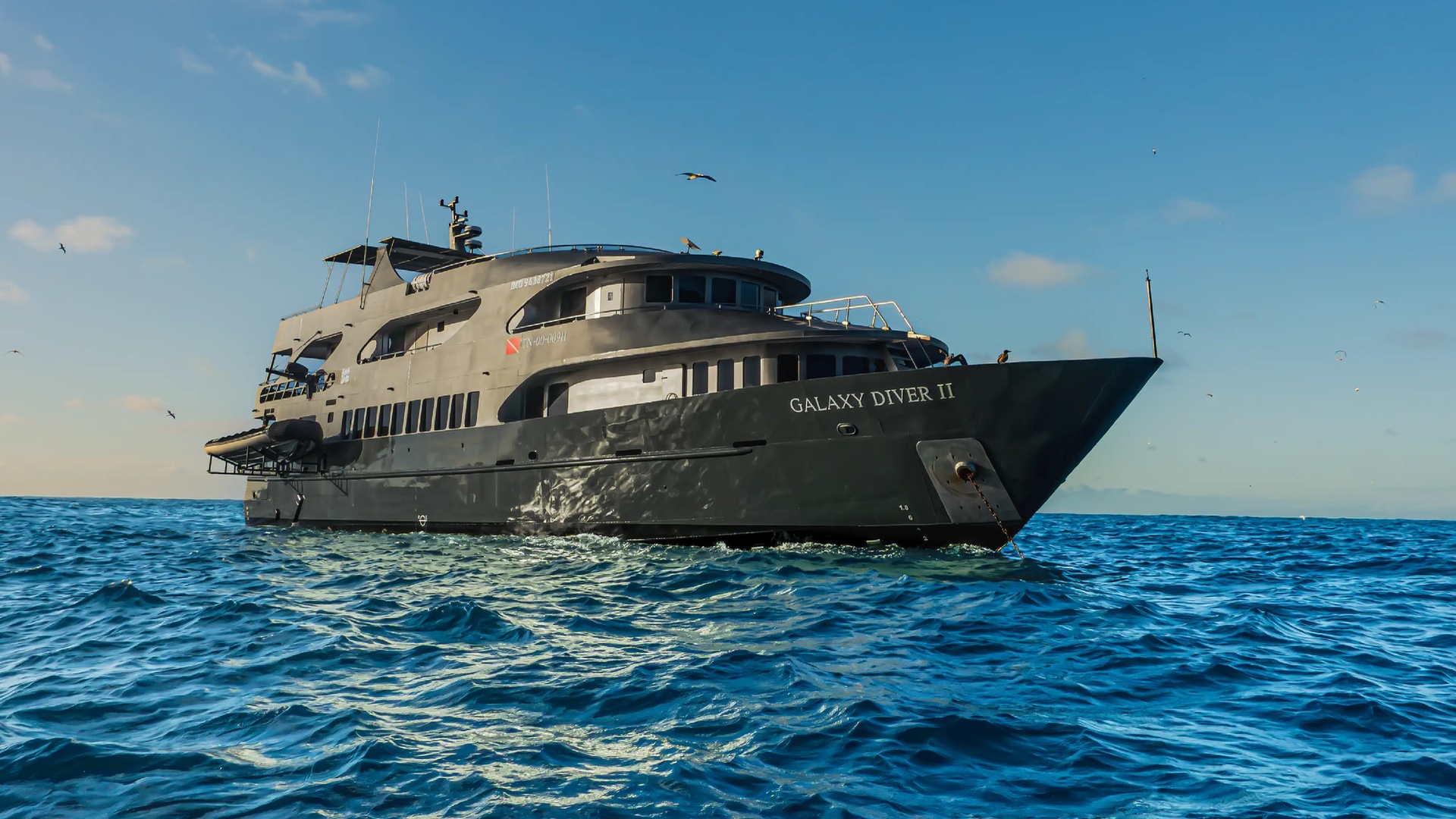 Galaxy Diver IIGalápagos