Treasures of the North (Hurghada - Hurghada)
Dolce Vita · Egypt · 8D/7N
About this route
This liveaboard adventure in the Northern Red Sea offers a delightful journey through various dive levels, exploring rich wreck sites and vibrant reefs. Departing from Hurghada, the route navigates through the Suez Canal between Gubal and Shadwan Islands. Divers will explore the famed Ras Mohammed Marine Park, known for its stunning vertically dropping walls that extend over 800 meters. The itinerary combines historical wrecks with diverse reef ecosystems, promising a comprehensive diving experience.
Regions on this route
Highlights
Carnatic
The Carnatic is a 90-meter sailing steamer that sank in 1869, making it one of the oldest wrecks in the Red Sea. Resting between 18 and 24 meters, its hull is adorned with vibrant corals, sponges, and alcionnaires. The wreck is famous for its incredible schools of glassfish that inhabit its structure, creating a stunning visual experience.
- Historic 1869 steamer
- Vibrant coral growth
- Glassfish schools
- Shallow wreck depth
Sha'ab Abu Nuhas
Sha'ab Abu Nuhas is famously known as the "graveyard of ships" in the Red Sea. Located near Gubal Island, this reef has claimed several vessels, creating an impressive collection of diveable wrecks. It is considered one of the best wreck diving areas in the world outside of Truk Lagoon and features a variety of wrecks lying at different depths.
- Ship graveyard
- Multiple wreck dives
- Gubal Island area
- Historical significance
Sha'ab El Erg
Sha'ab El Erg is a horseshoe-shaped reef well-known for its resident population of Spinner dolphins. This site provides excellent opportunities for dolphin encounters and is often characterized by gentle currents and clear waters. It is a vibrant reef ecosystem, frequently visited by snorkelers and divers seeking marine mammal interactions.
- Spinner dolphin encounters
- Horseshoe-shaped reef
- Clear waters
- Vibrant reef ecosystem
Shark and Yolanda
The Shark and Yolanda Reefs are part of Ras Mohammed National Park, recognized for their diverse marine ecosystems. Shark Reef is known for its strong currents and pelagic encounters, while Yolanda Reef is famous for its scattered cargo of toilets and bathtubs from the wreck of the Yolanda. Both sites offer spectacular wall dives and abundant fish life.
- Strong currents
- Pelagic encounters
- Yolanda wreck cargo
- Wall diving
The Chrisoula K
The Chrisoula K is a 100-meter cargo ship that sank in 1981 while carrying a load of floor tiles. It rests on its starboard side at 26 meters, offering unique photographic opportunities. The wreck is a popular site for its visible cargo and the marine life that has colonized its structure.
- 1981 cargo wreck
- Cargo of tiles
- Starboard side rest
- Photographic opportunities
The Ghiannis D
The Ghiannis D is a cargo ship that sank in 1983, lying on a background depth of 27 meters. This 100-meter long vessel, which previously transported timber, offers interesting penetration opportunities. Its structure is well-preserved, providing a fascinating exploration for wreck divers.
- 1983 cargo wreck
- Timber transport
- Penetration opportunities
- Well-preserved structure
The Kimon M
The Kimon M, a 3715-ton cargo ship, sank in December 1978 while carrying lentils, earning it the nickname "the wreck with lentils." Divers can explore its holds, where remnants of the cargo are still visible. The wreck provides a home for various marine creatures and is an interesting historical dive.
- 1978 cargo wreck
- Lentil cargo nickname
- Accessible holds
- Marine life habitat
The Rosalie Moller
The Rosalie Moller is a cargo ship that sank in 1941, similar to the Thistlegorm, and rests at a depth of 50 meters. The descent to the deck begins at 17 meters, revealing the impressive wreck gradually. It is known for attracting vast schools of silversides and offers an unforgettable diving experience, often with good visibility.
- 1941 cargo wreck
- Deep wreck at 50m
- Schools of silversides
- Good visibility
Thistlegorm
The SS Thistlegorm is one of the most famous wrecks in the world, a British armed merchant navy ship sunk in 1941. It lies at a depth of approximately 30 meters, with its cargo of vehicles, motorcycles, and military equipment largely intact. The Thistlegorm offers incredible penetration opportunities and is rich in history.
- Famous WWII wreck
- Intact cargo
- Penetration diving
- Rich in history
Requirements
- CertificationAdvanced Open Water
- Minimum logged dives10
- ExperienceA minimum of 10 logged dives is required for this trip.
Day-by-day plan
Day 1: Embarkation – Hurghada
Guests are invited to check-in at the boat in Hurghada from 5 pm up until 9 pm. After settling into cabins and receiving a welcome briefing, dinner will be served on board as the vessel prepares for departure.
Day 2: Northern & Central Red Sea – Reefs and Wrecks
The next several days are dedicated to exploring the stunning reefs and historic wrecks of the Northern and Central Red Sea. This region is renowned for its diverse underwater topography, including vibrant coral gardens, impressive walls, and significant WWII shipwrecks. Visibility is generally excellent, and currents can vary, offering exciting drift dives. Divers can expect to encounter an array of marine life and explore fascinating historical sites.
Day 3: Northern & Central Red Sea – Reefs and Wrecks
The next several days are dedicated to exploring the stunning reefs and historic wrecks of the Northern and Central Red Sea. This region is renowned for its diverse underwater topography, including vibrant coral gardens, impressive walls, and significant WWII shipwrecks. Visibility is generally excellent, and currents can vary, offering exciting drift dives. Divers can expect to encounter an array of marine life and explore fascinating historical sites.
Day 4: Northern & Central Red Sea – Reefs and Wrecks
The next several days are dedicated to exploring the stunning reefs and historic wrecks of the Northern and Central Red Sea. This region is renowned for its diverse underwater topography, including vibrant coral gardens, impressive walls, and significant WWII shipwrecks. Visibility is generally excellent, and currents can vary, offering exciting drift dives. Divers can expect to encounter an array of marine life and explore fascinating historical sites.
Day 5: Northern & Central Red Sea – Reefs and Wrecks
The next several days are dedicated to exploring the stunning reefs and historic wrecks of the Northern and Central Red Sea. This region is renowned for its diverse underwater topography, including vibrant coral gardens, impressive walls, and significant WWII shipwrecks. Visibility is generally excellent, and currents can vary, offering exciting drift dives. Divers can expect to encounter an array of marine life and explore fascinating historical sites.
Day 6: Northern & Central Red Sea – Reefs and Wrecks
The next several days are dedicated to exploring the stunning reefs and historic wrecks of the Northern and Central Red Sea. This region is renowned for its diverse underwater topography, including vibrant coral gardens, impressive walls, and significant WWII shipwrecks. Visibility is generally excellent, and currents can vary, offering exciting drift dives. Divers can expect to encounter an array of marine life and explore fascinating historical sites.
Day 7: Final Dives – Northern & Central Red Sea
The final day of diving continues exploring the incredible reefs and wrecks of the Northern and Central Red Sea. Dives are carefully planned according to the vessel's schedule to allow ample surface interval time before disembarkation. Guests can enjoy their last underwater adventures before returning to port.
Day 8: Disembarkation – Hurghada
Breakfast is served on board, and check-out is scheduled between 8 and 9 am. Guests will then transfer to the airport or their next destination, with arrangements depending on local flight schedules.
Upcoming departures
No departures scheduled for this route right now.
All routes of this liveaboard
- The Golden Loop: North - Brother - Safaga (Hurghada - Port Ghalib) · 7 nights
- Brothers - Daedalus - Elphinstone (Port Ghalib - Port Ghalib) · 7 nights
- Brothers, Daedalus, Elphinstone · 8D/7N
- Brothers - Daedalus - Elphinstone (Hurghada - Port Ghalib) · 7 nights
- Brothers - Daedalus - Elphinstone (Hurghada - Hurghada) · 7 nights
- The Golden Loop - North/Brother/Safaga · 8D/7N
- Fury Shoal (Port Ghalib - Port Ghalib) · 8D/7N
- Best of Tiran · 8D/7N
- Daedalus - Rocky - Zabargad - Elphinstone · 8D/7N
- Zabargad - Rocky - St John's - Elphinstone · 8D/7N
- Best of Dahab and Tiran · 8D/7N
About the vessel
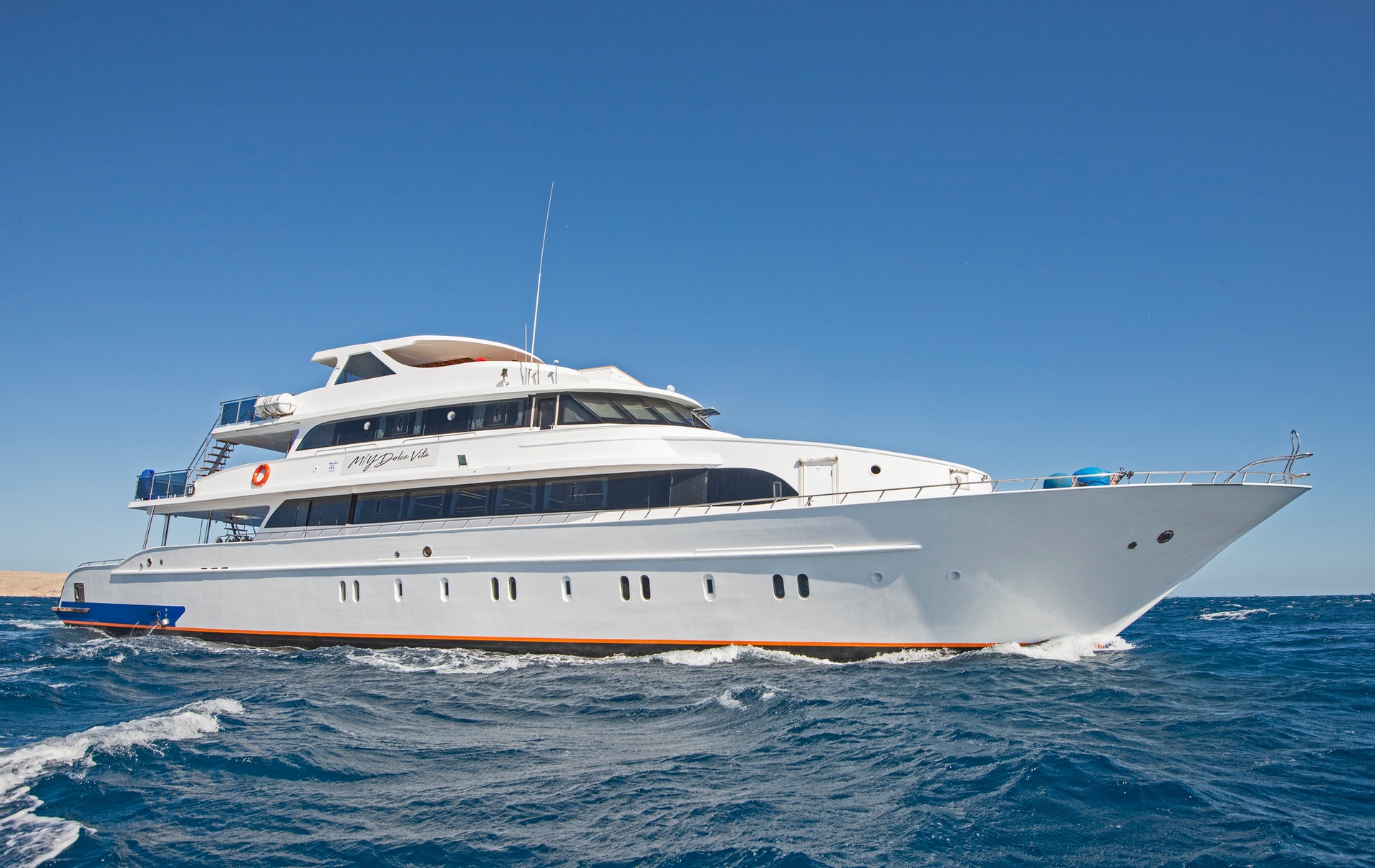 Dolce VitaEgypt