South Raja Ampat, Misool, the Bomberai Peninsula & Triton Bay (Sorong - Kaimana)
Dewi Nusantara · Indonesia · 11 nights
About this route
This expedition explores the rich marine biodiversity of South Raja Ampat, Misool, the Bomberai Peninsula, and Triton Bay. Divers can expect a stunning variety of dive sites, from vibrant soft coral gardens and sea fan forests to challenging hard coral formations, seagrass beds, and unique black sand environments. The region is renowned for its diverse ecosystems, supporting an incredible array of marine life, from pygmy seahorses to large pelagic predators. Triton Bay, part of the Kaimana Marine Protected Area, is particularly famous for its soft coral gardens and endemic species like the Triton Bay walking shark.
Regions on this route
Highlights
Misool
Misool is a renowned part of Raja Ampat, offering an extraordinary variety of dive sites. The region features diverse coral ecosystems, ranging from vibrant soft corals and sea fans to extensive hard coral gardens. Dive sites encompass a mixture of shallow reefs, steep walls, dramatic drop-offs, and caves. Misool's waters are teeming with marine life, including a broad spectrum of fish from small macro critters to large pelagic species.
- Vibrant soft corals
- Diverse coral reefs
- Abundant fish populations
- Macro to pelagic encounters
Raja Ampat
Raja Ampat is globally recognized for its unparalleled marine biodiversity and diverse dive experiences. The region showcases a spectrum of underwater landscapes, including soft coral forests, intricate sea fan fields, hard coral formations, seagrass beds, and unique black sand sites. Divers can explore various topographies such as shallow reefs, dramatic drop-offs, and mystical caves. Its waters are exceptionally rich, supporting an entire food chain from tiny pygmy seahorses to large apex predators, with brightly colored soft corals often thriving near the surface.
- Unparalleled biodiversity
- Diverse dive sites
- Pygmy seahorses
- Vibrant soft corals
Triton Bay
Triton Bay is a pristine marine protected area within the 6,000 sq km Kaimana region. It is celebrated for its spectacular soft coral gardens, including pinnacles, large boulder formations, and extensive black coral bushes. The area is a biodiversity hotspot supported by abundant nutrients, hosting numerous endemic species. A notable resident is the Triton Bay walking shark (Hemiscyllium henryi), often found resting in reefs or seagrass areas.
- Soft coral gardens
- Endemic marine life
- Triton Bay walking shark
- Pinnacle and boulder dives
Requirements
- CertificationOpen Water
- Minimum logged dives5
- ExperienceDivers should have Open Water certification and a minimum of 5 logged dives.
Good to know
- Guests are highly recommended to arrive in the embarkation town one day prior to the cruise and stay overnight in a hotel to accommodate potential flight delays.
- Divers are advised to wait 24 hours after their last dive before flying.
Day-by-day plan
Day 1: Embarkation – Sorong
Upon arrival at the airport in Sorong, guests will be met and transferred to the harbor to board the Dewi Nusantara. After settling into cabins and organizing dive gear, a mandatory safety briefing will take place, followed by a traditional Indonesian welcome dinner. The boat will prepare to sail for the next destination by evening.
Day 2: Raja Ampat & Misool Diving
These days are dedicated to exploring the vibrant waters of Raja Ampat and Misool. The region offers an incredible diversity of dive sites, including soft coral gardens, sea fan forests, hard coral formations, and seagrass beds. Divers can explore pinnacles, walls, and shallow reefs, encountering a wide array of marine life from macro critters to larger pelagics. The area is known for its spectacular corals and abundant fish populations.
Day 3: Raja Ampat & Misool Diving
These days are dedicated to exploring the vibrant waters of Raja Ampat and Misool. The region offers an incredible diversity of dive sites, including soft coral gardens, sea fan forests, hard coral formations, and seagrass beds. Divers can explore pinnacles, walls, and shallow reefs, encountering a wide array of marine life from macro critters to larger pelagics. The area is known for its spectacular corals and abundant fish populations.
Day 4: Raja Ampat & Misool Diving
These days are dedicated to exploring the vibrant waters of Raja Ampat and Misool. The region offers an incredible diversity of dive sites, including soft coral gardens, sea fan forests, hard coral formations, and seagrass beds. Divers can explore pinnacles, walls, and shallow reefs, encountering a wide array of marine life from macro critters to larger pelagics. The area is known for its spectacular corals and abundant fish populations.
Day 5: Raja Ampat & Misool Diving
These days are dedicated to exploring the vibrant waters of Raja Ampat and Misool. The region offers an incredible diversity of dive sites, including soft coral gardens, sea fan forests, hard coral formations, and seagrass beds. Divers can explore pinnacles, walls, and shallow reefs, encountering a wide array of marine life from macro critters to larger pelagics. The area is known for its spectacular corals and abundant fish populations.
Day 6: Raja Ampat & Misool Diving
These days are dedicated to exploring the vibrant waters of Raja Ampat and Misool. The region offers an incredible diversity of dive sites, including soft coral gardens, sea fan forests, hard coral formations, and seagrass beds. Divers can explore pinnacles, walls, and shallow reefs, encountering a wide array of marine life from macro critters to larger pelagics. The area is known for its spectacular corals and abundant fish populations.
Day 7: Raja Ampat & Misool Diving
These days are dedicated to exploring the vibrant waters of Raja Ampat and Misool. The region offers an incredible diversity of dive sites, including soft coral gardens, sea fan forests, hard coral formations, and seagrass beds. Divers can explore pinnacles, walls, and shallow reefs, encountering a wide array of marine life from macro critters to larger pelagics. The area is known for its spectacular corals and abundant fish populations.
Day 8: Raja Ampat & Misool Diving
These days are dedicated to exploring the vibrant waters of Raja Ampat and Misool. The region offers an incredible diversity of dive sites, including soft coral gardens, sea fan forests, hard coral formations, and seagrass beds. Divers can explore pinnacles, walls, and shallow reefs, encountering a wide array of marine life from macro critters to larger pelagics. The area is known for its spectacular corals and abundant fish populations.
Day 9: Raja Ampat & Misool Diving
These days are dedicated to exploring the vibrant waters of Raja Ampat and Misool. The region offers an incredible diversity of dive sites, including soft coral gardens, sea fan forests, hard coral formations, and seagrass beds. Divers can explore pinnacles, walls, and shallow reefs, encountering a wide array of marine life from macro critters to larger pelagics. The area is known for its spectacular corals and abundant fish populations.
Day 10: Raja Ampat & Misool Diving
These days are dedicated to exploring the vibrant waters of Raja Ampat and Misool. The region offers an incredible diversity of dive sites, including soft coral gardens, sea fan forests, hard coral formations, and seagrass beds. Divers can explore pinnacles, walls, and shallow reefs, encountering a wide array of marine life from macro critters to larger pelagics. The area is known for its spectacular corals and abundant fish populations.
Day 11: Triton Bay Diving – Final Dives
The final day of diving focuses on Triton Bay, a renowned part of the Kaimana Marine Protected Area, known for its exceptional soft coral gardens and unique endemic species. Divers will explore sites featuring pinnacles, large boulder formations, and extensive black coral bushes. This area is recognized for its immense biodiversity and nutrient-rich waters. One or two scheduled dives are planned before sailing back to the harbor.
Day 12: Disembarkation – Kaimana
Guests will depart in the morning from Kaimana after breakfast. Transfers will be arranged to the airport, where the Dewi Nusantara team will assist with check-in for connecting flights. Divers are advised to observe the recommended 24-hour no-fly period after their last dive.
Upcoming departures
All routes of this liveaboard
- Flores to Alor - Route I: Maumere Bay, Adonara, Lembata, Pantar, Alor (Maumere - Maumere) · 10 nights
- Cenderawasih Bay (Manokwari - Manokwari) · 10 nights
- All of Raja Ampat – Biodiversity Hot Spot (Sorong - Sorong) · 10 nights
- The Birdshead Peninsula & Cenderawasih Bay (Sorong - Manokwari) · 11 Days / 10 Nights
- Ambon, the Banda Islands, Koon & Misool, South Raja Ampat (Ambon → Sorong, 12D11N) · 12D11N
- Cenderawasih Bay & The Birdshead Peninsula (Manokwari - Sorong) · 10 nights
- All of Raja Ampat - Biodiversity Hotspot (Sorong - Sorong) · 9 nights
- Indonesia Oceania Route II – Triton Bay, The Bomberai Peninsula, Banda Islands & Ambon (Kaimana → Ambon) · 12D11N
- Alor & The Forgotten Islands - Pantar Strait, Damar, Dai, Dawera & Daweloor (Kalabahi - Saumlaki) · 10 nights
- Raja Ampat, Misool & South-West Halmahera (Sorong → Ternate) · 12D11N
- All of North Raja Ampat (Sorong - Sorong) · 12 Days / 11 Nights
- All of Raja Ampat - Biodiversity Hotspot (Sorong - Sorong) · 12 Days / 11 Nights
- South Raja Ampat, Misool, The Bomberai Peninsula & Central Raja Ampat (Sorong - Sorong) · 12 Days / 11 Nights
- Cenderawasih Bay (Manokwari - Manokwari) · 10 Days / 9 Nights
- South Raja Ampat, Misool, The Bomberai Peninsula & Triton Bay (Sorong - Kaimana) · 11 Days / 10 Nights
- Triton Bay-The Bomberai Peninsula-Misool & South Raja Ampat (Kaimana - Sorong) · 11 Days / 10 Nights
- West Halmahera - Teluk Loloda, Spice Islands, Ganone & Pantinti Strait (Ternate - Ternate) · 11 Days / 10 Nights
- Dragons & Volcanoes - Komodo & East Sumbawa (Labuan Bajo - Labuan Bajo) · 10 Days / 9 Nights
- Dragons, Volcanoes & Whale Sharks – Komodo & Sumbawa - Saleh Bay (Labuan Bajo - Bima) · 10 Days / 9 Nights
- Dragons, Volcanoes, & Whale Sharks - Saleh Bay - Sumbawa & Komodo (Bima - Labuan Bajo) · 10 Days / 9 Nights
- Flores to Alor - Route I: Maumere Bay, Adonara, Lembata, Pantar, Alor (Maumere - Maumere) · 10 Days / 9 Nights
- Flores to Alor - Route II: Maumere Bay, Adonara, Lembata, Pantar, Alor (Maumere - Kalabahi) · 11 Days / 10 Nights
- Alor to Flores: Alor, Pantar, Lembata, Adonara, Maumere Bay (Kalabahi - Maumere) · 12 Days / 11 Nights
- The Flores Sea Route I: Maumere Bay, Taka Bonerate, Selayar & South Sulawesi (Maumere - Makassar) · 12 Days / 11 Nights
- The Flores Sea Route II – The Bina Peninsula, Selayar, Taka Bonerate Atoll & Komodo (Makassar - Labuan Bajo) · 12 Days / 11 Nights
- Alor & The Forgotten Islands - Pantar Strait, Damar, Dai, Dawera & Daweloor (Kalabahi - Saumlaki) · 12 Days / 11 Nights
- The Forgotten Islands - Historic Banda & Ambon (Saumlaki - Ambon) · 11 Days / 10 Nights
- Ambon, Historic Banda, The Forgotten Islands & Alor (Ambon - Kalabahi) · 12 Days / 11 Nights
- All of Raja Ampat - Biodiversity Hotspot · 10 nights
About the vessel
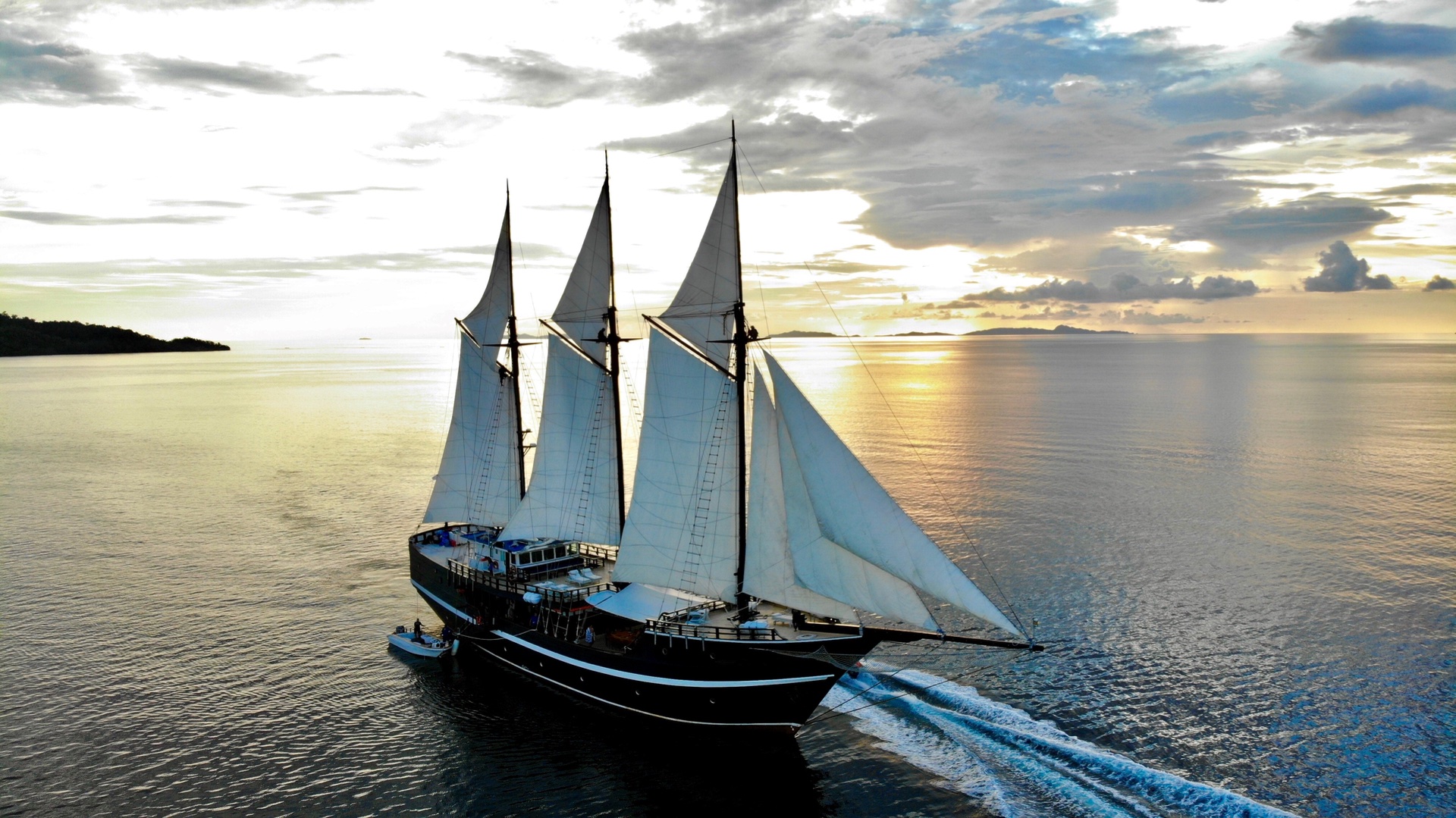 Dewi NusantaraIndonesia