Calipso Diving (San Cristobal - San Cristobal)
Calipso · Galápagos · 7 nights
About this route
Embark on an unforgettable 8-day liveaboard journey through the Galápagos Islands, one of the most iconic diving destinations on Earth. This trip allows guests to experience the unique beauty, wildlife, and underwater wonders that make the Galápagos truly extraordinary. From the moment you arrive in San Cristobal, you'll be immersed in a world teeming with incredible diversity, including hammerhead sharks, Galápagos sharks, and whale sharks. Discover thriving coral reefs, vibrant schools of tropical fish, and seasonal visits from mola molas, ensuring an unforgettable underwater experience.
Regions on this route
Highlights
Cabo (Cape) Douglas
Cabo Douglas is a distinct dive site located on the western side of Isabela Island. It is particularly famous as one of the few places where marine iguanas are commonly seen feeding underwater. The site can also offer rare sightings of Orcas, adding to its unique appeal.
- Underwater marine iguanas
- Potential Orca sightings
- Unique cold water species
Cousins Rock
Cousins Rock is a small, striking rock formation known for its vibrant reef ecosystem. The area features rich coral gardens and a wide variety of critters, making it an excellent site for macro photography. It offers wall dives and opportunities to spot unique marine life hidden in crevices.
- Coral gardens
- Macro photography
- Frogfish
- Octopuses
Darwin Island
Darwin Island is recognized globally as a premier pelagic dive site, featuring the famous Darwin's Arch (before its collapse). The area is a 'hot spot' for large marine animals, particularly hammerhead sharks and whale sharks during their migratory season. Strong currents are a characteristic, creating a dynamic environment for incredible drift dives.
- Hammerhead shark schools
- Whale shark encounters
- Pelagic action
- Drift diving
Isla Marchena
Isla Marchena is one of the northernmost islands in the Galápagos archipelago. While not a primary dive site on every itinerary, its surrounding waters are rich with marine life, including endemic species. The area's volcanic origins contribute to a diverse underwater topography.
- Endemic marine life
- Volcanic topography
- Rich biodiversity
Punta Carrión
Punta Carrión, situated off Santa Cruz Island, is a popular dive site known for its diverse shark population and mobula rays. The site features walls and channels where currents attract larger marine species. It serves as an excellent introduction to the pelagic wonders of the Galápagos.
- Mobula rays
- Whitetip reef sharks
- Galapagos sharks
- Pelagic encounters
Punta Vicente Roca
Punta Vicente Roca, located on Isabela Island, is renowned for its cold-water upwellings that attract abundant marine life, particularly mola mola (sunfish). The site's unique topography, with underwater caves and ledges, also supports seahorses and various macro critters, making it a diverse diving experience.
- Mola mola (sunfish)
- Seahorses
- Cold water species
- Underwater caves
San Cristobal
San Cristobal is the easternmost island in the Galápagos and a primary embarkation/disembarkation point. Its surrounding waters offer various dive sites, including Isla Lobos, known for sea lions and marine iguanas. The island serves as a gateway to the archipelago's unique terrestrial and marine life.
- Sea lion colonies
- Marine iguanas
- Gateway island
- Logistics hub
Wolf Island
Wolf Island is a renowned dive destination in the Galápagos, often considered a diver's bucket list item. It is celebrated for having the highest biomass of sharks in the world, with strong currents creating exhilarating drift dives. This remote island is a hotspot for large pelagic species and offers unparalleled shark encounters.
- Hammerhead schools
- Whale sharks (seasonal)
- Silky sharks
- Strong drift dives
Requirements
- CertificationAdvanced Open Water
- Minimum logged dives100
- ExperienceDivers should have Advanced Open Water certification and a minimum of 100 logged dives.
Shore excursions
- Visit the Galápagos Tortoise in their natural habitat in the Santa Cruz Highlands.
- Explore the Interpretation Center in San Cristobal.
- Wander around the port of San Cristobal.
- Visit the Charles Darwin Research Center in the Galápagos National Park or wander about town.
Good to know
- Dives are generally conducted in 12-hour days, including 4 dives (day and night).
- It is recommended that divers wait 24 hours before flying after the last dive.
- Itinerary is subject to change based on local regulations, guest experience, weather, and logistics at the Captain's discretion.
Day-by-day plan
Day 1: Embarkation – San Cristobal
Upon arrival at San Cristobal, you will be met by a Calipso representative and transferred to the yacht. After settling into your cabin, a welcome briefing will be held, followed by a check dive at Isla Lobos. Isla Lobos is known for its sea lion colony and marine iguanas, offering a gentle introduction to the unique marine life of the Galápagos.
Day 2: Punta Carrión & Seymour – Hammerhead Encounters
Today's dives focus on Punta Carrión, located on Santa Cruz Island, known for frequent sightings of mobulas, whitetip reef sharks, and Galápagos sharks. Seymour offers excellent opportunities to spot hammerhead sharks and various fish species. This area often features channels and walls where currents can be strong, attracting pelagic action.
Day 3: Wolf Island – Remote Pelagic Hotspot
Day 3 brings you to Wolf Island, one of the most remote and highly sought-after dive destinations in the Galápagos. This island is a diver's bucket list location, known for having the largest biomass of sharks globally. Strong currents are common here, making it a thrilling drift diving experience. Wolf Island is renowned for its large schools of hammerhead sharks, whale sharks (seasonally), Silky sharks, and other pelagic species.
Day 4: Darwin Island – Hammerhead Highway
Today's diving takes place at Darwin Island, known as the 'hot spot' in the Galápagos. This iconic site is famous for its platform, a natural arch that plunges into the blue, creating a highway for large pelagic species. Divers can expect to witness numerous hammerhead sharks and, during the season, pregnant whale sharks. The currents here can be significant, offering incredible drift dives and abundant marine life interactions.
Day 5: Wolf Island – Second Chance Encounters
Enjoy two more dives at Wolf Island in the morning, taking advantage of more opportunities to encounter its famous shark populations. The afternoon dive is scheduled at an anchorage site, which often features a sandy bottom where garden eels and red-lipped batfish can be observed. This blend of pelagic action and macro life offers a comprehensive diving experience.
Day 6: Isabela & Fernandina – Marine Iguanas & Mola Molas
Today offers diving experiences around Isabela and Fernandina islands. Cabo Marshall on Isabela's eastern side is known for giant mantas, large schools of barracudas, Galapagos sharks, and flightless cormorants. There are also two dives at Cabo Douglas, often featuring marine iguanas feeding underwater and possible orca sightings. Punta Vicente Roca is another highlight, where mola molas (sunfish) are frequently sighted, alongside seahorses and barracudas.
Day 7: Cousins Rock & Santa Cruz – Macro & Reef Life
The day begins with a visit to Cousins Rock, a small rock formation known for its vivid reef life and excellent opportunities for macro photography. The wall dives here reveal coral forests, frogfish, octopuses, turtles, and the elusive seahorse. Later, head back to Santa Cruz Highlands to see the iconic Galápagos Tortoise in its natural habitat, followed by disembarkation preparations.
Day 8: Disembarkation – San Cristobal
After breakfast, you will disembark in San Cristobal. Guests are free to visit the Interpretation Center or explore the port before proceeding to the airport for their departure. A farewell dinner will be held at a local restaurant in Puerto Ayora the previous evening.
Upcoming departures
No departures scheduled for this route right now.
All routes of this liveaboard
About the vessel
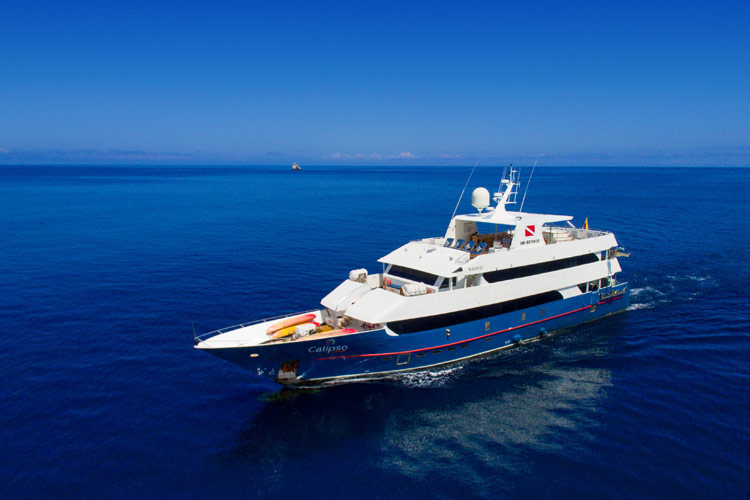 CalipsoGalápagos