Alor - Maumere - Komodo (Alor - Labuan Bajo)
Blue Manta · Indonesia · 10 nights
About this route
This expansive voyage traverses the East Nusa Tenggara archipelago, beginning in the critter-rich waters of Alor and concluding in the legendary Komodo National Park. Explorers will encounter a stunning variety of environments, from the nutrient-dense currents of the Pantar Strait to the volcanic sands of Maumere and the iconic pinnacles of North Komodo. The itinerary is designed to showcase Indonesia's immense biodiversity, featuring everything from rare macro life to schooling pelagics and majestic manta rays.
Regions on this route
Highlights
Alor
Known for exceptional visibility and cold-water upwellings that bring nutrient-rich waters to stunning walls and pristine coral reefs.
- World-class visibility
- Pristine soft corals
- Rare macro critters
Batu Balong
A small rock outcrop that acts as a magnet for marine life, featuring a vertical wall covered in orange cup corals and clouds of anthias.
- Vertical drop-offs
- Extreme fish density
- Vibrant reef colors
Castle Rock
Another legendary seamount nearby, famous for its resident grey reef sharks and high-energy current dives.
- Shark encounters
- Drift diving
- Action-packed reef
Crystal Rock
A submerged pinnacle in North Komodo that attracts massive schools of sweetlips, surgeonfish, and hunting trevally in clear water.
- Schooling predators
- Excellent visibility
- Submerged seamount
Komodo
A world-renowned national park offering a mix of high-voltage current dives and calm coral gardens, famous for its eponymous dragons and manta rays.
- Manta cleaning stations
- Komodo Dragons
- Pinnacle diving
Manta Alley
The premier spot in South Komodo for observing reef manta rays as they congregate at cleaning stations and feed in the currents.
- Manta ray aggregations
- Cleaning stations
- Southern Komodo icon
Requirements
- CertificationAdvanced-Open-Water
- Minimum logged dives30
- ExperienceDivers must have at least 30 logged dives and an Advanced Open Water certification to participate.
Shore excursions
- Guided trekking on a local island to search for the prehistoric Komodo Dragons.
- Visit to a traditional local village to experience regional culture and customs.
- Relaxing afternoon at the picturesque Pink Beach for swimming and photography.
- Scenic island walk on the wide side of the park for panoramic views.
Good to know
- A 24-hour surface interval is recommended after the final dive before flying.
- Itineraries are subject to change based on weather, sea conditions, and local regulations.
- Internal flights from Labuan Bajo to Bali or Jakarta should be booked in advance.
Day-by-day plan
Day 1: Embarkation – Alor, Kalabahi Port
Upon arrival at Mali Airport, guests are greeted and transferred to the vessel anchored in Kalabahi Harbor. After the initial welcome and safety briefing, a check-dive and a night dive are offered depending on the arrival schedule of the group.
Day 2: Alor & Pantar Strait – Wall and Drift Adventures
The day focuses on the islands of Kepa, Pura, and Ternate, where nutrient-rich currents fuel a vibrant ecosystem. Divers can expect spectacular wall formations and healthy coral gardens often visited by schooling fish. The area is highly regarded for its visibility and the sheer density of marine life found within the strait.
Dive sites: Kepa Island, Pura, Ternate, Buaya
Day 3: Alor & Pantar Strait – Wall and Drift Adventures
The day focuses on the islands of Kepa, Pura, and Ternate, where nutrient-rich currents fuel a vibrant ecosystem. Divers can expect spectacular wall formations and healthy coral gardens often visited by schooling fish. The area is highly regarded for its visibility and the sheer density of marine life found within the strait.
Dive sites: Kepa Island, Pura, Ternate, Buaya
Day 4: Maumere – Volcanic Slopes and Islands
Diving today takes place near Pulau Babi and Pulau Besar, areas known for their unique underwater topography shaped by volcanic activity. The sites often feature steep drop-offs and large sea fans, providing excellent habitats for both macro subjects and passing pelagics. Following the dives, the vessel begins the crossing toward the Komodo region.
Dive sites: Pulau Babi, Pulau Besar
Day 5: South Komodo – Manta Alley and Nusa Kode
The expedition enters the cooler, nutrient-laden waters of Southern Komodo, focusing on the famous cleaning stations at Manta Alley. The area is renowned for high-energy dives at sites like Cannibal Rock, a submerged pinnacle covered in colorful invertebrates. Visibility can vary, but the sheer biomass and the presence of numerous manta rays make this a world-class diving destination.
Dive sites: Manta Alley, Cannibal Rock, Torpedo Alley
Day 6: South Komodo – Padar Island Exploration
Padar Island offers a mix of dramatic landscapes both above and below the water, including sites like Three Sisters and Pillarsteen. These locations are known for their rugged rock formations, canyons, and diverse coral growth. Between dives, guests have the opportunity to visit the famous Pink Beach, one of the park's most visually striking coastal areas.
Dive sites: Three Sisters, Pillarsteen
Day 7: North Komodo – Action-Packed Pinnacles
Today features some of the park's most exhilarating sites, including Castle Rock and Crystal Rock near Gili Lawa Laut. These submerged mountains are famous for attracting large schools of predators, such as jacks and sharks, due to the strong currents that sweep across them. Dives here are often high-voltage and require careful timing to witness the full scale of the hunting action.
Dive sites: Castle Rock, Crystal Rock, Shotgun (Gili Lawa Laut)
Day 8: North Komodo – Coral Gardens and Night Dives
Exploration continues around Tatawa Besar and Siaba Kecil, areas celebrated for their lush soft coral gardens and prolific reef fish populations. The topography typically consists of sloping reefs and shallow plateaus, making them ideal for long, colorful dives. The day often concludes with a highly rated night dive at Wainilu, known for its rare and unusual nocturnal critters.
Dive sites: Tatawa Besar, Tatawa Kecil, Siaba Kecil, Wainilu
Day 9: North Komodo – Current-Swept Reefs
Diving at Batu Balong offers a look at a vertical wall teeming with life, where the sheer volume of fish can be overwhelming. The site is a small rock outcrop that drops into the depths, attracting everything from tiny nudibranchs to large pelagics. Later, the group visits Makassar Reef, a long gravelly channel often referred to as Manta Point due to the frequent sightings of rays gliding in the current.
Dive sites: Batu Balong, Makassar Reef (Manta Point)
Day 10: Komodo Dragon Trek – Siaba Bay to Labuan Bajo
The final diving morning takes place in Siaba Bay or at Mawan, offering relaxed conditions to wrap up the underwater portion of the trip. The afternoon is dedicated to a land excursion to see the legendary Komodo Dragons in their natural habitat. Afterward, the vessel sails toward Labuan Bajo for the final night, allowing time for gear cleaning and preparation for departure.
Dive sites: Siaba Bay, Mawan, Pengah
Day 11: Disembarkation – Labuan Bajo
After a final breakfast on board, guests bid farewell to the crew. Transfers are provided to local hotels or the airport in Labuan Bajo for flights back to Bali or Jakarta.
Upcoming departures
- 2028-05-11 – 2028-05-21from 5,900 USDBook
All routes of this liveaboard
- Raja Ampat-Misool (7N) · 8 Days / 7 Nights
- Raja Ampat-Misool (8N) · 9 Days / 8 Nights
- Komodo - North & South (Labuan Bajo - Labuan Bajo) · 7N
- Komodo - North & South (Labuan Bajo - Labuan Bajo) · 6N
- Raja Ampat-Misool (10N) · 11 Days / 10 Nights
- Ambon-Banda-Ambon (Ambon (AMQ) → Ambon (AMQ)) · 9D8N
- Ambon-Banda-Raja Ampat (Ambon (AMQ) → Sorong (SOQ)) · 10D9N
- Alor (Alor - Alor) · 8 Days / 7 Nights
- Komodo - Maumere - Alor (Labuan Bajo - Alor) · 11 Days / 10 Nights
- Alor - Banda - Ambon (Alor - Ambon) · 11 Days / 10 Nights
- Ambon - Banda - Ambon · 8 Days / 7 Nights
- Ambon - Banda - Ambon (Ambon - Ambon) · 6 nights
- Ambon - Banda - Raja Ampat (Ambon - Sorong) · 10 nights
- Alor - Ring - Banda - Ambon (Alor - Ambon) · 10 nights
About the vessel
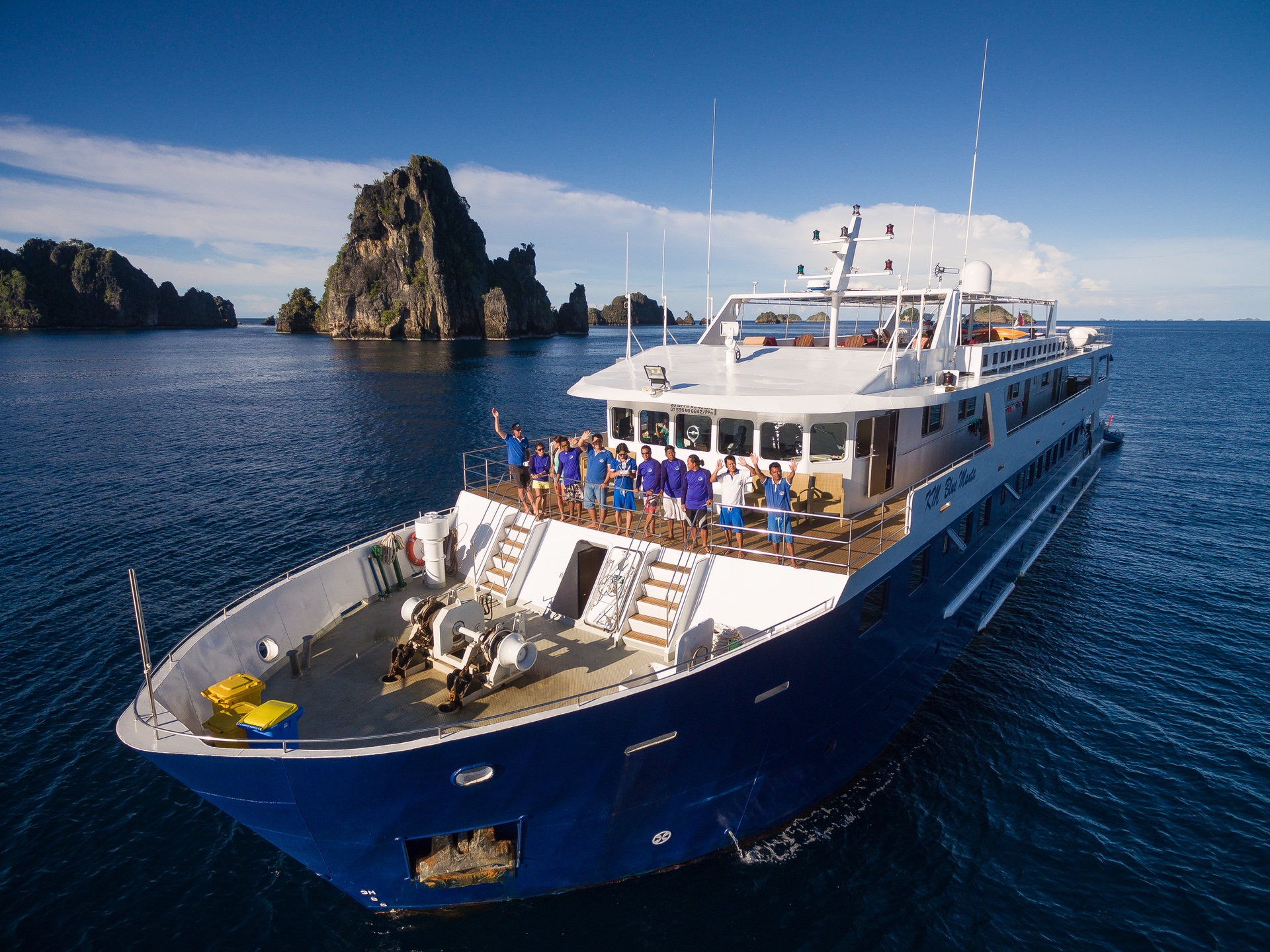 Blue MantaIndonesia