Itinerary A (Santa Cruz - Santa Cruz)
Alya · Galápagos · 4 nights
About this route
This five-day adventure cruise navigates the central and northern reaches of the Galapagos, beginning with the lush mangroves of Black Turtle Cove. The journey continues to the avian paradise of Genovesa Island, where towering cliffs host thousands of nesting seabirds and fur seal colonies. Travelers will explore iconic volcanic landscapes at Sullivan Bay and Bartolomé, encountering endemic penguins and reef sharks along the way. The trip concludes with a visit to the historic Charles Darwin Research Station to witness conservation efforts for the archipelago's giant tortoises.
Regions on this route
Highlights
Chinese Hat
A small islet named for its distinct volcanic shape, featuring lava tubes and a narrow channel teeming with marine life. It is a prime location for observing sea lions up close.
- Symmetrical volcanic cone
- Lava tube formations
- Sea lion nursery
Darwin Bay
A coral sand beach located inside a submerged crater, offering a symphony of seabird calls. The trail meanders through colonies of sea lions and marine iguanas.
- Seabird paradise
- Marine iguana colonies
- Graceful ray sightings
Genovesa Island
Known as Bird Island, this collapsed volcanic caldera is a haven for avian life and marine mammals. The site features dramatic cliffs and deep waters that attract fur seals and reef sharks.
- Massive seabird colonies
- Galapagos fur seals
- Shark snorkeling
Isla Bartolomé
Home to the iconic Pinnacle Rock, this island offers one of the most photographed landscapes in the Galapagos. The surrounding waters are excellent for spotting penguins and turtles.
- Pinnacle Rock views
- Galapagos penguin colony
- Diverse volcanic cones
North Seymour
This flat, uplifted island is a bustling hub for frigatebirds and blue-footed boobies. The trails lead through active nesting sites surrounded by palo santo trees.
- Frigatebird nesting
- Blue-footed booby dances
- Land iguana sightings
Rabida Island
Distinctive for its red volcanic beaches, this island is a unique stop for observing sea lions and various finch species. The red cliffs provide a stunning backdrop for photography.
- Red sand beaches
- Darwin's finches
- Sea lion lounging
Santa Cruz Island
The central hub of the Galapagos, featuring the Charles Darwin Research Station and high altitude forests. It is the best place to witness giant tortoises in a protected environment.
- Giant tortoise program
- Charles Darwin Station
- Endemic land iguanas
Sullivan Bay
A geological marvel showcasing relatively recent lava flows from the late 19th century. The dark, rippled Pahoehoe lava creates a stark contrast against the turquoise sea.
- Pahoehoe lava formations
- Pioneer plant species
- Coastal penguin sightings
Shore excursions
- Hike across the Pahoehoe lava fields at Sullivan Bay to study volcanic textures.
- Climb the stairs on Bartolomé Island for the most famous panoramic view of Pinnacle Rock.
- Walk through the colonies of nesting seabirds and sea lions on Genovesa Island.
- Visit the giant tortoise breeding center at the Charles Darwin Research Station.
- Explore the mangroves and tranquil water channels of Black Turtle Cove by panga.
Good to know
- Itineraries are subject to change based on local regulations and the Captain's discretion.
- Transfers to the airport follow the final visit to the Charles Darwin Research Station.
Day-by-day plan
Day 1: Embarkation – Arrival at Baltra Airport
Your exploration of the Galapagos begins upon arrival at Baltra Airport, where a certified naturalist guide meets you for transfer to the vessel. The afternoon is spent at Black Turtle Cove, a serene tidal lagoon reachable by panga, where red and black mangroves provide a vital nursery for marine life. The area is known for its calm, shallow water channels that often feature sightings of green sea turtles and various ray species.
Dive sites: Black Turtle Cove
Day 2: Genovesa Island – Darwin Bay & El Barranco
Spend the day exploring the volcanic wonders of Genovesa Island, starting with the white sand beaches of Darwin Bay. The region is famous for its staggering bird density, including nesting frigatebirds and boobies, while the snorkeling spots often feature playful sea lions and reef sharks. Later, visit El Barranco, also known as Prince Philip's Steps, where steep lava cliffs provide a unique ecosystem for storm petrels and short-eared owls.
Dive sites: Darwin Bay, El Barranco
Day 3: Sullivan Bay & Bartolomé – Volcanic Landscapes
Step onto the otherworldly Pahoehoe lava fields of Sullivan Bay to witness the raw geological power of Santiago Island. The shoreline here is a known habitat for Galapagos penguins, which can often be spotted darting through the clear water near the coral sand beach. The afternoon moves to Bartolomé Island, home to the iconic Pinnacle Rock, offering breathtaking panoramic views and snorkeling opportunities with vibrant reef fish and marine invertebrates.
Dive sites: Sullivan Bay, Bartolomé Island
Day 4: Chinese Hat & Mosquera – Islets and Inlets
Visit the perfectly formed volcanic cone of Chinese Hat, separated from Santiago by a narrow channel of turquoise water. This idyllic spot is a sanctuary for sea lions and offers excellent snorkeling where swift penguins are frequently seen hunting in the shallows. The day concludes at Mosquera, a low-lying sandbar located between Baltra and North Seymour, famous for its large population of sea lion pups and endemic lava gulls.
Dive sites: Chinese Hat, Mosquera
Day 5: Disembarkation – Charles Darwin Research Station
The final morning is dedicated to the Charles Darwin Research Station on Santa Cruz Island, a hub for scientific research and conservation. Here, you can observe the giant tortoise breeding program and learn about the initiatives to protect the archipelago's unique biodiversity before transferring to the airport for your flight home.
Upcoming departures
- 2026-11-19 – 2026-11-23from 4,140 USDBook
- 2026-12-03 – 2026-12-07from 4,370 USDBook
- 2026-12-17 – 2026-12-21from 4,600 USDBook
- 2026-12-31 – 2027-01-04from 6,900 USDBook
- 2027-01-14 – 2027-01-18from 5,200 USDBook
- 2027-01-28 – 2027-02-01from 4,420 USDBook
- 2027-02-11 – 2027-02-15from 4,680 USDBook
- 2027-02-25 – 2027-03-01from 4,420 USDBook
- 2027-03-11 – 2027-03-15from 4,835 USDBook
- 2027-04-08 – 2027-04-12from 4,835 USDBook
- 2027-05-06 – 2027-05-10from 5,200 USDBook
- 2027-06-03 – 2027-06-07from 4,575 USDBook
All routes of this liveaboard
About the vessel
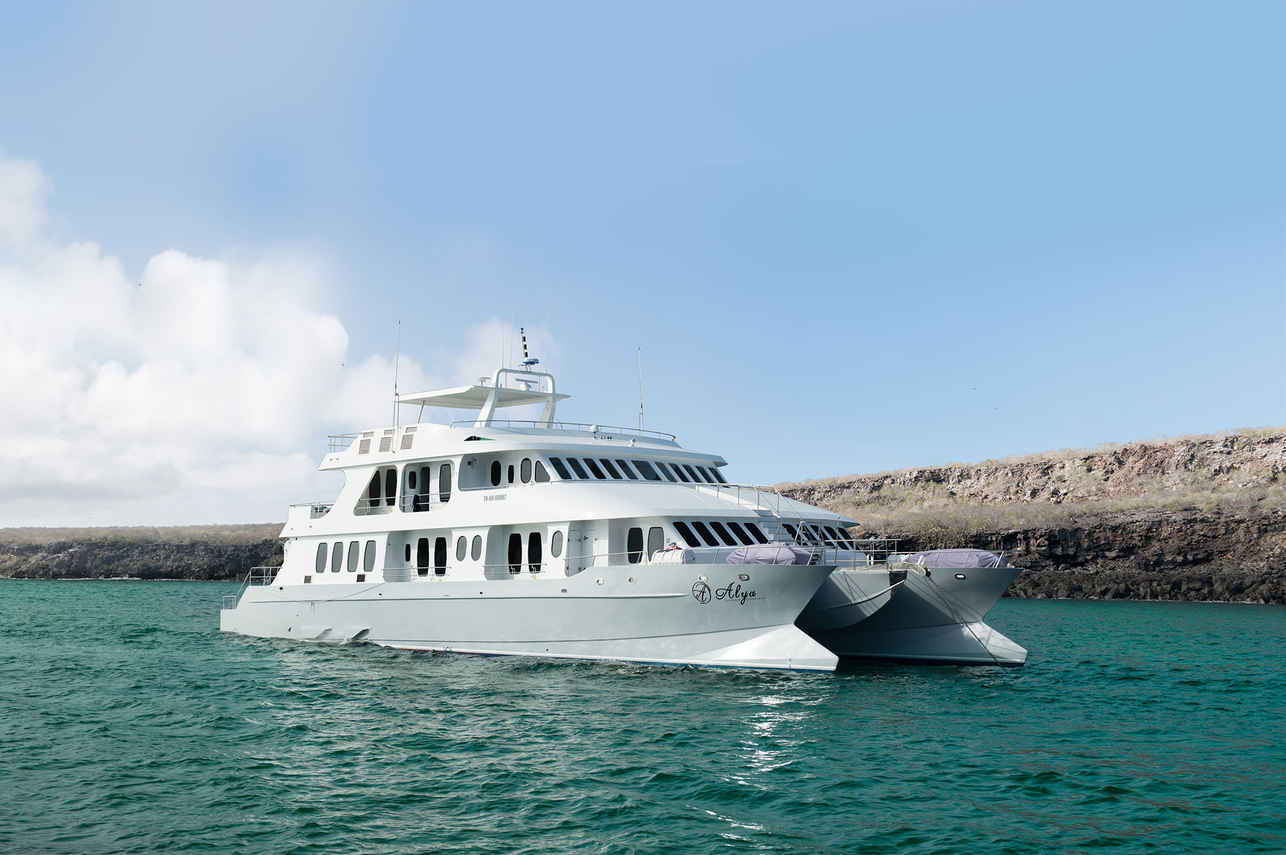 AlyaGalápagos