Raja Ampat & Triton Bay
Adelaar · Raja Ampat, Indonesia · 11D/10N
About this route
This comprehensive itinerary explores the biodiverse waters of Raja Ampat's Misool and the remote reefs of Triton Bay. Divers can anticipate significant currents, which bring forth schooling pelagics, vibrant soft coral gardens, and an abundance of macro life, including pygmy seahorses and wobbegong sharks. The journey transitions from Raja Ampat's iconic limestone karsts and critical current-swept passages to Triton Bay's pristine hard coral slopes and potential whale shark encounters. This extended expedition offers an immersive dive experience across two of West Papua's most significant marine ecosystems, showcasing a remarkable range of Indo-Pacific marine life encounters.
Regions on this route
Day-by-day plan
Day 1: Sorong
Guests are transferred from the airport or hotel to Adelaar. The first day is dedicated to crew introductions, settling in, and enjoying the vessel while sailing toward Raja Ampat. Depending on boarding time, a check dive may occur.
Day 2: Misool – Wagmab
It is difficult not to be too overwhelmed by the kaleidoscope of colours created by the dense soft and black coral growth around Wagmab to notice the equally colourful critters hiding within, such as nudibranchs, frogfish, boxer crabs, blue ringed octopi and others. They are also amongst the best sites to find Raja’s endemic walking shark on night dives. There are several lagoon and cavern systems waiting to be explored by speedboat, and snorkellers can immerse themselves in marine lakes inhabited by stingless jellyfish. 3 day dives, 1 night dive
Day 3: Misool - Fiabacet
The healthy reef systems beneath the karst islands of Fiabacet have often been described as the world’s most complex and richest. A place where it is possible to see a bit of ‘everything’ from small to large. Several sites are reliable for sightings of mantas at cleaning stations. From time to time the stunning reefs are completely invaded by huge bait-balls of silversides, tiny fish that in turn attract squadrons of mobula rays, as well as hunting trevallies and barracudas. 3 day dives, 1 night dive
Day 4: Misool – Wayilbatan
Wayilbatan’s seamounts and limestone outcroppings count amongst Raja ’s finest and most diverse dive sites. Already spectacular from both a topographical as well as coral coverage point of view, they are also rich in fish life as well as smaller critters. Larger pelagic animals are attracted to its more oceanic sites. 3 day dives
Day 5: Misool - Balbulol
Exploring the Balbulol Lagoon, known for its dramatic limestone formations. Dives at sites such as Two Tree Island, Plateau, No Contest, and Love Potion, featuring impressive drop-offs, schooling fish, and stunning coral formations. A scenic boat tour of the Balbulol Lagoon, showcasing its unique karst formations and turquoise waters. 2 day dives
Day 6: Pisang
The vessel stops over in the Pisang archipelago off the Fakfak coast before reaching Raja Ampat. Its ridges, seamounts, and walls attract schooling batfish, reef sharks, leopard sharks, and eagle rays. Just after the last afternoon dive, the sails are raised, and the final crossing to Raja Ampat begins. 3-day dives
Day 7: Momon
The Momon Area of New Guinea is without a doubt one of the highlights for photographers. The very photogenic Kiti Kiti waterfall falls directly out of the vibrant jungle and into a turquoise sea. For those who are up for a land excursion, there are opportunities to venture into the forest a jungle trek. But first, there will be dives along the seamounts off the coast, known for their big schools of big eye trevallies, sharks, pelagic fish and oceanic manta rays. 3-day dives
Day 8: Namatote
If the trip occurs around a new moon, the day is spent in the north of Namatote island. Guests visit traditional outrigger fishing platforms regularly visited by 'mothers of fish,' which are majestic whalesharks. Closer to a full moon, there are no fishermen, and whaleshark sightings are rare. During such times, diving concentrates on sites south of Namatote with pinnacles, caverns, swim-throughs, and black coral forests. On one special rock cliff, visible only by boat, prehistoric rock art is observed, evidence of the region’s earlier human inhabitants. After Namatote, the vessel departs the Triton Bay area and begins its journey north. 3-day dives
Day 9: Triton Bay
Diving in Triton Bay is unique, as small islands act as fish magnets and feature exquisite coral growth of both hard and soft corals. The bay is home to a plethora of critters such as pygmy seahorses, leopard and tiger shrimps, endemic flasher wrasses, or rare cephalopods. On night dives in this bay, divers look for Triton Bay’s endemic walking shark. A structure resembling a huge underwater coral caldera is one of the topographic features of this area. Another topside highlight is a speedboat tour through the maze of the large Triton Bay lagoon with its countless hidden bays and channels surrounded by unique karst rock formations. 3-day dives, 1-night dive
Day 10: Aiduma
The along the coast of the karst island of Aiduma in the Aru Sea there are numerous little coves, islets and underwater formations with unique topography that are covered in dense soft coral growth. Fish life is profuse and features schools of snappers, sweetlips and fusiliers as well as napoleon wrasses, large groupers and wobbegong sharks. 2-Day Dives
Day 11: – Kaimana & Farewell
Early morning arrival in Sorong. After breakfast, the crew assists with airport transfers or hotel drop-off. (Itinerary may vary depending on weather and sea conditions)
Upcoming departures
No departures scheduled for this route right now.
All routes of this liveaboard
- Banda Sea & Alor · 11D/10N
- Komodo Extended & Whale Sharks | Komodo - Bali (Labuan Bajo - Bali) · 8D/7N
- Beyond Komodo & Whale Sharks (Bali - Maumere) · 11D/10N
- Komodo Extended & Whale Sharks (Bali - Labuan Bajo) · 11D/10N
- Beyond Komodo & Whale Sharks (Maumere - Bali) · 11D/10N
- Komodo National Park · 11D/10N
- Komodo Extended & Whale Sharks | Bali - Komodo (Bali - Labuan Bajo) · 8D/7N
- Triton Bay and Misool · 12D/11N
- Raja Ampat Central & South · 8D/7N
- Raja Ampat & Banda Sea · 11D/10N
- Raja Ampat Central & South · 9D/8N
- Raja Ampat Central & South · 7D/6N
- Banda Sea & Alor · 10D/9N
- Raja Ampat & Banda Sea · 10D/9N
- Raja Ampat Central & South · 10D/9N
- Total Raja Ampat · 11D/10N
- Raja Ampat & Banda Sea · 11D/10N
- Banda Sea & Alor · 9D/8N
About the vessel
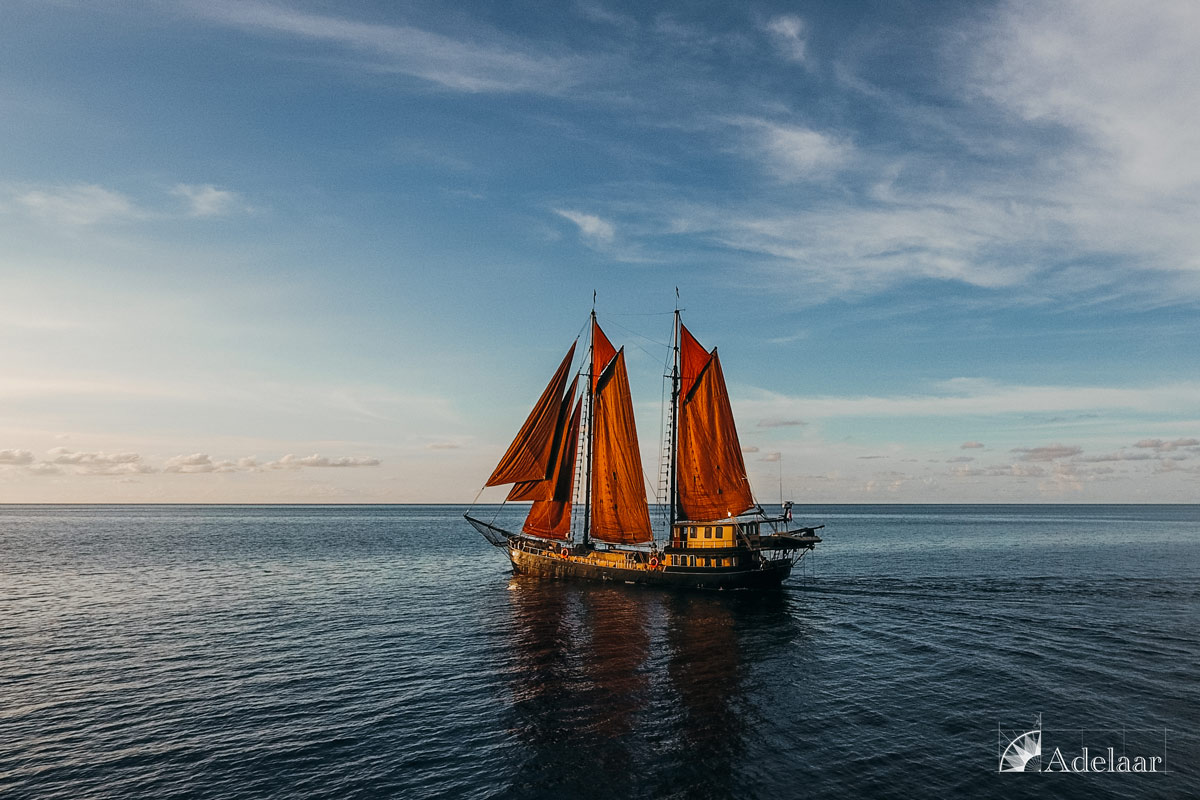 AdelaarRaja Ampat, Indonesia