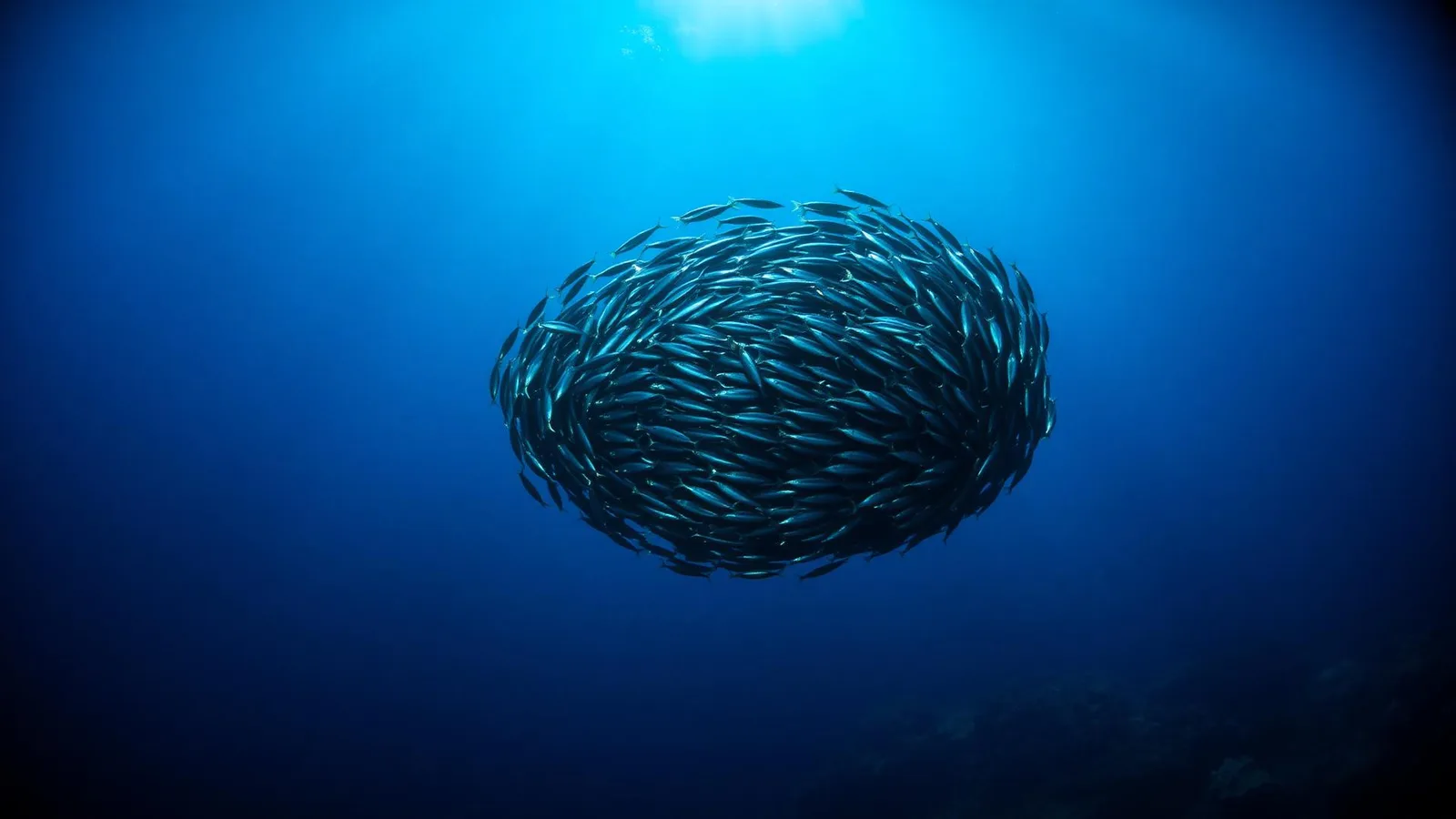
This article is being expanded into a full, peer-reviewed 2,000–2,500-word long-read. Below is the current outline and the key studies that will anchor it. Full 2,000–2,500-word peer-reviewed long-read incoming for Shark Population Recovery Case Studies. This placeholder shows the outline and confirms the topic is scoped.
In January 2021, a study published in *Nature* delivered a figure that should have commanded front pages worldwide: oceanic shark and ray populations had declined by 71 percent between 1970 and 2018, with the steepest declines — exceeding 80 percent — recorded for the most commercially targeted species [1]. The authors, led by Nathan Pacoureau, calculated that three-quarters of oceanic shark and ray species are now classified as threatened with extinction under IUCN criteria, making elasmobranchs among the most extinction-vulnerable vertebrate groups on earth [1]. The primary driver is unambiguous: overfishing, whether intentional targeting for shark fin products and meat, or incidental bycatch in longline fisheries targeting tuna and swordfish.
Against this bleak backdrop, a small number of carefully studied case studies provide genuine evidence that shark populations can recover when meaningful protections are implemented and enforced. These cases — the Bahamas, Palau, and the broader shark sanctuary movement — reward detailed examination both for what they reveal about shark ecology and for the governance lessons they carry.
The Global Collapse in Context
To appreciate what recovery looks like, it is necessary to grasp what decline means for shark populations specifically. Sharks are among the most reproductively conservative vertebrates on earth. Most large species reach sexual maturity only after a decade or more of life, carry small litters — the oceanic whitetip (*Carcharhinus longimanus*) typically produces five to fifteen pups per litter — and have gestation periods of nine to twelve months. Intrinsic population growth rates for oceanic species are typically below five percent per year, meaning that populations that have been fished to a fraction of their historical abundance require decades to recover even under complete fishing prohibition.
Pacoureau et al. found that the oceanic whitetip, once described by Jacques Cousteau as the most dangerous shark in open water due to its sheer abundance, declined by approximately 98 percent over the study period [1]. The scalloped hammerhead (*Sphyrna lewini*) declined by 92 percent; the shortfin mako (*Isurus oxyrinchus*) by 76 percent. These are not statistical artefacts — they represent the near-total removal of apex predators from the open ocean over a timeframe of approximately two human generations.
A complementary study in 2020 by MacNeil and colleagues, drawing on standardised underwater survey data from more than 370 reefs across 58 countries, found that reef sharks were functionally absent from nearly 20 percent of the world's coral reefs, and that their abundance was tightly correlated with the regulatory environment and governance quality of adjacent coastal nations [2]. Reefs adjacent to countries with strong governance, low levels of corruption, and effective fisheries management retained significantly higher shark populations than those in weak-governance contexts — a finding that frames shark recovery fundamentally as a political and institutional challenge as much as a biological one [2].
The Bahamas: A Quarter-Century of Protection
The Bahamas represents one of the oldest and best-documented examples of shark recovery through legislative protection. In 1993, the Bahamian government prohibited all commercial shark fishing throughout its Exclusive Economic Zone (EEZ), covering approximately 630,000 km² of Caribbean and Atlantic waters. The ban was not initially driven by conservation science but by the economic logic of the nascent shark dive tourism industry: operators at sites including Tiger Beach and Stuart Cove's Dive Bahamas recognised that a living shark could generate tourism revenue indefinitely, while a dead shark could be sold once.
Over the subsequent 25 years, the economic and biological consequences of that decision were documented by Barreto and colleagues in a 2017 *Biological Conservation* study [3]. The Bahamas now hosts some of the most naturally dense shark populations of any Caribbean nation, with reef shark biomass at dive sites substantially exceeding regional averages. The archipelago's elasmobranch-based tourism industry generates an estimated USD 110 million annually, representing a return on conservation that comfortably exceeds the historical value of the commercial shark fishery that was sacrificed [3].
The Bahamian case illustrates several general principles. First, charismatic megafauna that are commercially valuable alive create self-reinforcing economic incentives for their protection — operators, hotels, and the broader tourism economy become stakeholders in shark conservation without requiring government coercion. Second, enforcement is more tractable in a touristic economy because illegal fishing is visible to and reported by a large community of recreational divers. Third, the archipelagic geography of the Bahamas — relatively isolated from heavily fished open-ocean areas by distance and deep-water channels — provides partial protection against the immigration of already-depleted neighbouring populations, allowing local abundance to build.
Limitations are real, however. The ban applies only to commercial fishing, leaving artisanal and recreational fishing partially unregulated. Species with ranges that extend far beyond Bahamian waters — oceanic sharks undertaking trans-Atlantic migrations — benefit only partially from national-level protection. The 1993 ban also predates high-resolution population monitoring, making pre-ban baseline estimates uncertain.
Palau: The World's First Shark Sanctuary
In 2009, the Republic of Palau became the world's first country to declare a shark sanctuary, banning shark fishing across its entire EEZ of approximately 600,000 km². The declaration was accompanied by strong rhetoric but faced immediate questions about enforcement capacity — Palau's maritime surveillance resources are limited relative to the expanse of water nominally under protection.
A 2016 study by Vianna, Meekan, and colleagues in *Coral Reefs* examined whether fishing mortality indicators on reef sharks had declined in Palau following the sanctuary designation [4]. The results were sobering: despite the ban, indicators including the frequency of hook-related injuries on surveyed sharks and the proportion of mature individuals in the population showed patterns consistent with continued, if reduced, fishing pressure. The authors concluded that the sanctuary had reduced — but not eliminated — shark fishing mortality, and called for increased surveillance and enforcement investment as the critical bottleneck [4].
The economic valuation developed for Palau's reef sharks is frequently cited in sanctuary advocacy: a single reef shark in Palau was estimated to generate approximately USD 179,000 in tourism revenue over its lifetime, compared to approximately USD 108 as a one-time catch — the widely quoted claim that sharks are worth more alive than dead. This figure is real but context-dependent: it reflects the dense, high-spending dive tourism concentration in Palau and does not generalise mechanically to remote sanctuaries where ecotourism infrastructure is absent [4].
A broader assessment of the global economic value of shark ecotourism by Cisneros-Montemayor and colleagues in 2013 estimated that shark diving worldwide generated approximately USD 314 million annually across 83 locations, supporting roughly 10,000 jobs [5]. The authors noted that modest investment in enforcement and sanctuary establishment could substantially increase this figure by recovering populations at sites where sharks had already been depleted — a genuine economic case for conservation that transcends sentimentality [5].
Shark Sanctuaries: A Global Assessment
By 2020, fifteen nations had declared shark sanctuaries covering a combined EEZ area of approximately 17 million km². A comprehensive 2017 evaluation in *Global Environmental Change* by Dulvy and colleagues assessed the structural adequacy of these sanctuaries against criteria including enforcement capacity, domestic shark fishing history, and international compliance incentives [6].
The findings were mixed. Several sanctuaries — particularly those declared by small Pacific island nations with limited domestic shark fishing industries and strong economic incentives from dive tourism — represented genuine conservation gains. Others, particularly those declared by nations with substantial domestic shark-fishing industries and weak enforcement records, showed few signs of translating legal protection into reduced fishing mortality. The study identified enforcement funding, governance quality, and the existence of genuine economic alternatives to fishing as the three most powerful predictors of sanctuary effectiveness — echoing the findings of Edgar et al. in the broader MPA literature [6].
Raja Ampat, in the Indonesian province of West Papua, represents an instructive parallel case. Not a formal shark sanctuary in the national legal sense, Raja Ampat's extraordinary marine biodiversity — including consistently high reef shark densities — is maintained through a combination of local *sasi* customary management, the regulatory authority of the provincial government, and the economic leverage of a premium dive tourism industry that has directly funded patrol vessels and ranger training. Population surveys conducted over the past decade show stable to increasing reef shark populations in core areas, particularly around the Dampier Strait and around Misool, where community-based no-take zones complement the provincial regulatory framework.
Biological Recovery: What the Science Shows
Reef shark recovery following protection follows predictable ecological dynamics. Population modelling suggests that for species with moderate intrinsic growth rates — whitetip reef sharks (*Triaenodon obesus*), grey reef sharks (*Carcharhinus amblyrhynchos*) — populations can approach functional recovery within 15–25 years of near-complete fishing cessation, assuming prey communities recover in parallel. For larger, slower-reproducing species such as bull sharks (*Carcharhinus leucas*) and tiger sharks (*Galeocerdo cuvier*), recovery timescales extend to 30–50 years under the most optimistic scenarios [2].
The trophic consequences of shark recovery are ecologically significant. Dense apex predator populations exert top-down control on mesopredator populations, creating the conditions for trophic cascade effects that ultimately benefit reef herbivores and — through increased grazing — reef coral cover. Long-term monitoring at the Bahamian dive sites has documented this cascade: the presence of large sharks correlates with suppressed populations of smaller predatory fish, higher herbivore biomass, and healthier coral recruitment rates relative to adjacent unprotected areas [3].
What Recovery Requires
The case studies reviewed here converge on a consistent set of enabling conditions for shark population recovery. First, prohibitions must be genuine: nominal bans without enforcement deliver negligible biological benefit, as the early Palau data clearly demonstrated [4]. Second, economic alternatives to shark fishing must exist or be created — whether through dive tourism, alternative livelihood programmes, or direct conservation payments. Third, international coordination is essential for wide-ranging oceanic species: national-level protection is geographically incomplete for species that migrate across multiple EEZs. The ongoing failure of CITES appendix listings and Regional Fisheries Management Organisation (RFMO) management to adequately control international shark trade represents the largest current gap in the conservation architecture.
The 71 percent decline documented by Pacoureau et al. is not a sentence [1]. It is a measurement of what has been lost under one policy regime. The Bahamas, Palau, and a handful of other jurisdictions demonstrate that a different policy regime produces different outcomes. The biological potential for recovery exists. What has been consistently lacking is the political will and institutional capacity to protect it.
References
- [1] Pacoureau, N. et al. (2021). Half a century of global decline in oceanic sharks and rays. Nature, 589, 567–571. doi:10.1038/s41586-020-03173-9
- [2] MacNeil, M. A. et al. (2020). Global status and conservation potential of reef sharks. Nature, 583, 801–806. doi:10.1038/s41586-020-2519-y
- [3] Barreto, R. et al. (2017). The contemporary economic value of elasmobranchs in The Bahamas: reaping the rewards of 25 years of stewardship and conservation. Biological Conservation, 207, 55–63. doi:10.1016/j.biocon.2017.01.007
- [4] Vianna, G. M. S. et al. (2016). Indicators of fishing mortality on reef-shark populations in the world's first shark sanctuary: the need for surveillance and enforcement. Coral Reefs, 35, 973–977. doi:10.1007/s00338-016-1437-9
- [5] Cisneros-Montemayor, A. M. et al. (2013). Global economic value of shark ecotourism: implications for conservation. Oryx, 47(3), 381–388. doi:10.1017/s0030605312001718
- [6] Dulvy, N. K. et al. (2017). Global evaluation of shark sanctuaries. Global Environmental Change, 47, 111–122. doi:10.1016/j.gloenvcha.2017.09.005
