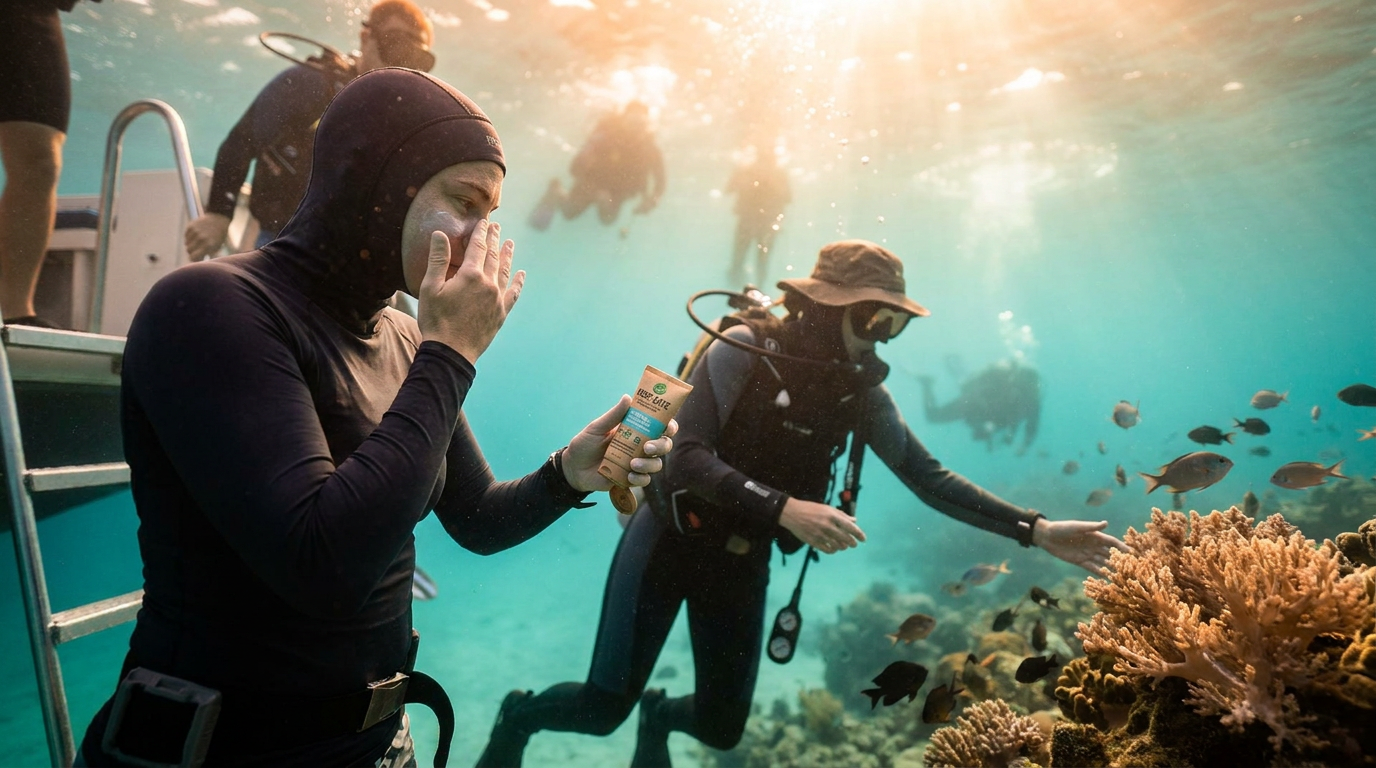
Why reef-safe matters: the science
Oxybenzone and octinoxate (the two most common chemical UV filters) cause coral bleaching and disrupt larval coral development at concentrations as low as 62 parts per trillion. With thousands of divers daily on popular reefs, the buildup is real. Hawaii, Mexico's Yucatán, Palau, and Bonaire have banned them. Even where legal, ethical divers don't use them.
Mineral vs chemical sunscreen
MINERAL (zinc oxide, titanium dioxide): non-nano (particle size >100nm) is reef-safe and the gold standard. Sits on top of skin, works immediately, leaves a slight white cast. CHEMICAL (oxybenzone, octinoxate, avobenzone): absorbs UV, invisible on skin, but most are reef-toxic. SAFE CHEMICAL ALTERNATIVES: Tinosorb S/M, Mexoryl SX/XL — non-toxic but harder to find in US/UK brands.
Top reef-safe sunscreens (tested by divers)
Stream2Sea Sport Zinc Sunscreen (SPF 30, mineral, reef-tested certified). Thinksport SPF 50 (mineral, water-resistant 80 min). Badger Reef-Safe Sunscreen (mineral, baby-safe). All Good Sport Sunscreen (mineral, EWG verified). Stream2Sea is the only brand explicitly tested for marine biocompatibility.
Rash guards beat sunscreen, every time
A UPF 50 long-sleeve rash guard blocks 98% of UV with zero chemicals, dries fast, doesn't wash off, lasts years. Wear it under your wetsuit AND on the boat between dives. Cressi, Mares, ScubaPro, BARE all make excellent ones. Add a UPF hood/balaclava for extreme sun (Egypt, Galápagos noon).
The 'face & lips' problem
Most divers cover everything except face and lips, then fry both. Use mineral SPF 30+ on face (after coffee, before breakfast), reapply after every dive. Lips: SPF 30 lip balm with zinc — NOT regular Chapstick. Avoid eye area (stings, runs into eyes underwater) — use an oversized hat instead.
After-sun care for week-long trips
Aloe vera (pure, no fragrance) for sunburns. Hyaluronic acid serum for dehydrated skin. Saltwater + sun = leather face by day 5 — moisturise nightly. Skip retinol and AHAs during a sun-heavy week (increases burn risk). Keep sunscreen in the shade — heat degrades active ingredients within hours.