Cabin sharing vs single supplement
Most boats charge a 'single supplement' (50–100% extra) if you want a cabin to yourself. The cheaper option: opt into cabin sharing — the boat pairs you with another solo of the same gender. If they can't find a match, you usually get the cabin solo at the shared rate. Always confirm in writing.
Best boats for solo divers
Look for: rotating buddy assignments (so you don't dive with the same person all week), open dining (no reserved tables), 8–16 guest capacity (small enough to know everyone, big enough to find your tribe). Mid-range Maldives, Indonesia (Komodo, Raja Ampat) and Red Sea boats are the most solo-friendly.
How to find your dive buddy
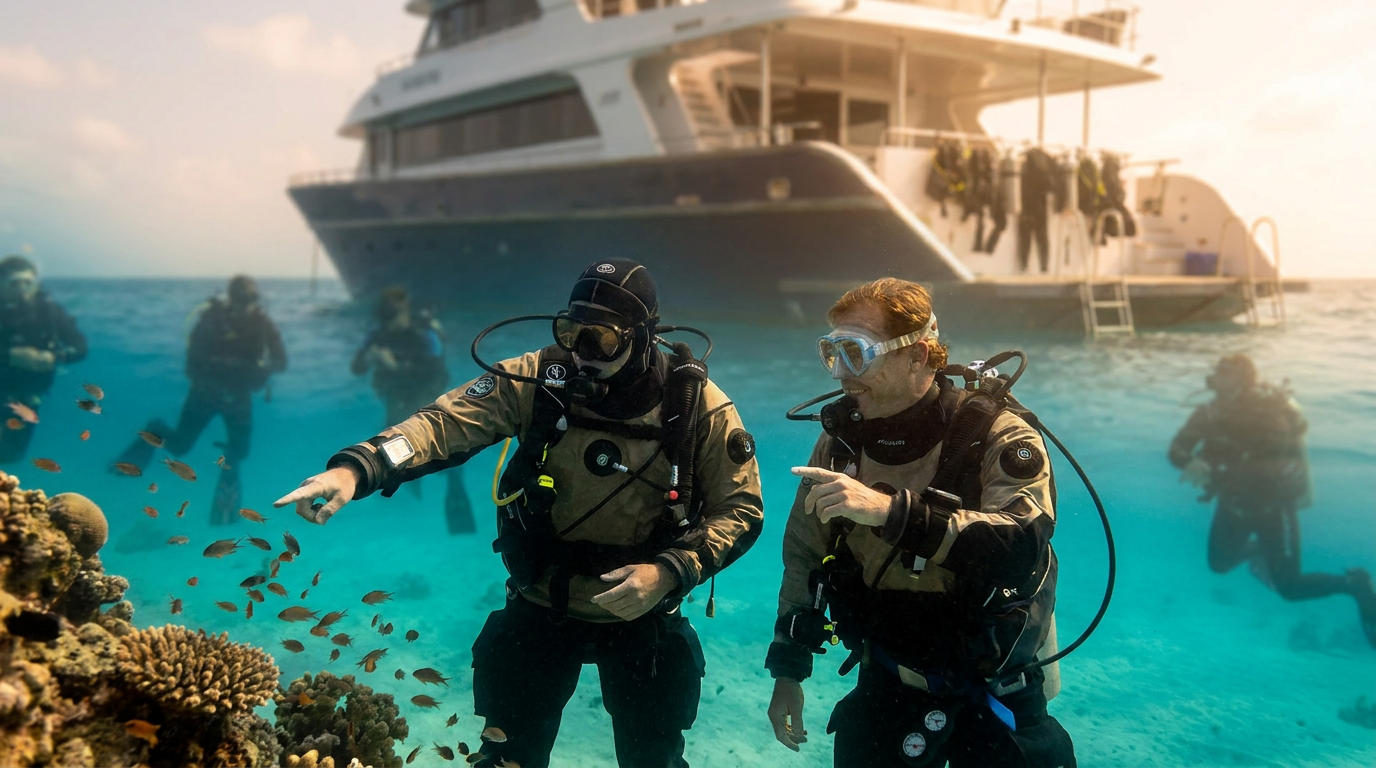
Most boats assign buddies based on skill level on day 1. Be honest about your experience — saying you've done 50 dives when you've done 15 means you'll be paired with an over-confident diver. Ask the dive guide on day 2 if you'd prefer a different buddy; they'll rotate without drama.
Making friends without forcing it
Sit in the lounge between dives. Eat at communal tables. Help newer divers with kit — instant connection. Avoid permanent headphones. By day 3 you'll have a 'boat family' — and most divers swap contacts on the last night.
Safety as a solo female diver
Liveaboards are statistically very safe. Pick boats with established crews (long tenure = less turnover) and read recent reviews specifically from solo female divers. Prefer boats where the dive deck is clearly visible from public areas.
Dive insurance and emergency contacts
Always travel with DAN (Divers Alert Network) or equivalent. Leave a copy of your itinerary + emergency contacts with someone at home. Boats have satellite phones for emergencies, but coverage is limited — hence the extra insurance.
