About The Indians
The Indians are a group of jagged rock pinnacles rising out of the water near Norman Island, and they are among the most popular dive and snorkel sites in the British Virgin Islands. Below the surface the rocks continue as a dramatic landscape of canyons, arches and swim-throughs covered in colorful sponges and soft corals. The site is shallow and sheltered, which makes it ideal for newer divers, yet the topography keeps experienced divers entertained as well. Reef fish are everywhere here, from sergeant majors and parrotfish to angelfish, with turtles and rays passing through regularly. The pinnacles sit in clear water with excellent light, so the site is also a favorite for underwater photography. Its easy conditions and scenery make it a classic stop on BVI liveaboard routes.
Highlights
Rock pinnacles with canyons, arches and swim-throughs, colorful sponges and soft corals, turtles and rays, excellent for photography
Season calendar
Best months to dive here
Jan
Feb
Mar
Apr
May
Jun
Jul
Aug
Sep
Oct
Nov
Dec
Excellent
Good
Off-Season
Dive site facts: The Indians
- Depth
- 3–15 m
- Current
- No current
- Entry
- Liveaboard only
- Level
- Beginner
- Dive type
- Reef
- Region / port
- British Virgin Islands
- Coordinates
- 18.3303° N, 64.6262° W
Conditions & Currents
Currents are generally weak and visibility is often 20 to 30 meters. The shallow, sheltered setting makes this one of the easiest and most relaxed dives in the BVI. Dive profiles here run between roughly 3 and 15 metres, so plan your gas and no-decompression limits around the deeper part of the site. It is usually briefed as a dive for beginner divers. The site is reached by liveaboard, so entries are run from the tender or straight off the back deck. Tide, wind and season all shift the picture from day to day, so the crew's briefing on the boat always overrides any general description.
Why dive The Indians from a liveaboard?
The Indians is one of British Virgin Islands's signature dive sites. A liveaboard sleeps you on the water and puts you in the water for three to four guided dives per day, including dawn and night dives that day-boat operators rarely offer. You skip the daily commute back to port and reach quieter, less-crowded sites in the same region on a single trip.
Below are the liveaboards that include The Indians on their British Virgin Islands itineraries.
Liveaboards diving The Indians
These liveaboards may visit The Indians on selected itineraries — the exact dive sites depend on departure, weather and conditions.
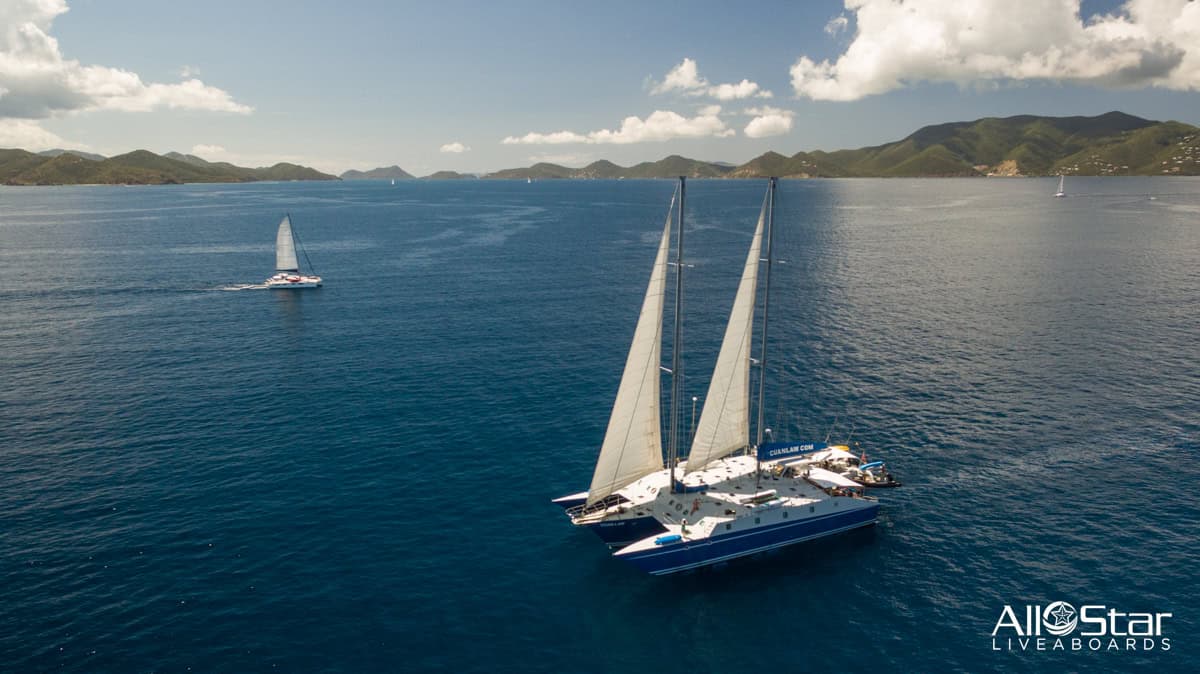
All Star Cuan Law
Virgin Islands
20 guests31.8 m
$564/day
Dive sites similar to The Indians
Same character, same waters — six more sites divers love for the exact same reasons.Compare seasons, access and liveaboard routes — then pick the site that fits your trip best.
© Esri — Maxar, Earthstar, GIS
Santa Monica Rock
British Virgin Islands
Santa Monica Rock is an exposed offshore seamount south of Norman Island that rises from deep water to within about 10 meters of the surface.
- Suitable for
- Advanced
- Current
- Strong
- Access
- Liveaboard only
- Depth
- 10–30 m
- Theme
- Pinnacle / Reef
© Esri — Maxar, Earthstar, GIS
Spyglass Wall
British Virgin Islands
Spyglass Wall drops along the northwest corner of Norman Island, the island said to have inspired Treasure Island.
- Suitable for
- Intermediate
- Current
- Mild
- Access
- Liveaboard only
- Depth
- 8–30 m
- Theme
- Wall / Reef