Imagine a dive site so packed with life, so vibrant, it practically pulses. A place where the sheer density of marine creatures defies belief, where every glance reveals another marvel, and where encounters with the ocean's gentle giants aren't just possible, but practically expected. This isn't a fantasy; it's Richelieu Rock, and it's calling your name.
Why Richelieu Rock Belongs on Your Bucket List
Richelieu Rock isn't just a dive site; it's a phenomenon. This isolated pinnacle, rising from the depths of the Andaman Sea, is consistently ranked as Thailand’s number one dive location, and for very good reason. Shaped like a horseshoe, this underwater island acts like a magnet for marine life, creating an ecosystem so rich it feels almost surreal. What makes it globally unique is its sheer biodiversity concentrated in a relatively small area, coupled with its reputation as a prime spot for pelagic encounters during the peak season. It's a grand spectacle of nature's abundance, a truly "wow" factor destination that will leave even the most seasoned diver speechless.
This experience is tailor-made for divers seeking jaw-dropping macro opportunities alongside thrilling chances to see iconic large marine animals. Whether you're a passionate underwater photographer hoping for that perfect wide-angle shot of a manta ray gracefully gliding overhead, or a macro enthusiast eager to discover a flamboyant cuttlefish camouflaged against the vibrant soft corals, Richelieu delivers. It's also an ideal destination for those looking to expand their dive horizons, offering a taste of exhilarating drift dives in crystal-clear waters brimming with life. If your dive log still has a blank space next to "whale shark," this could very well be where you fill it.
What You'll See and Do
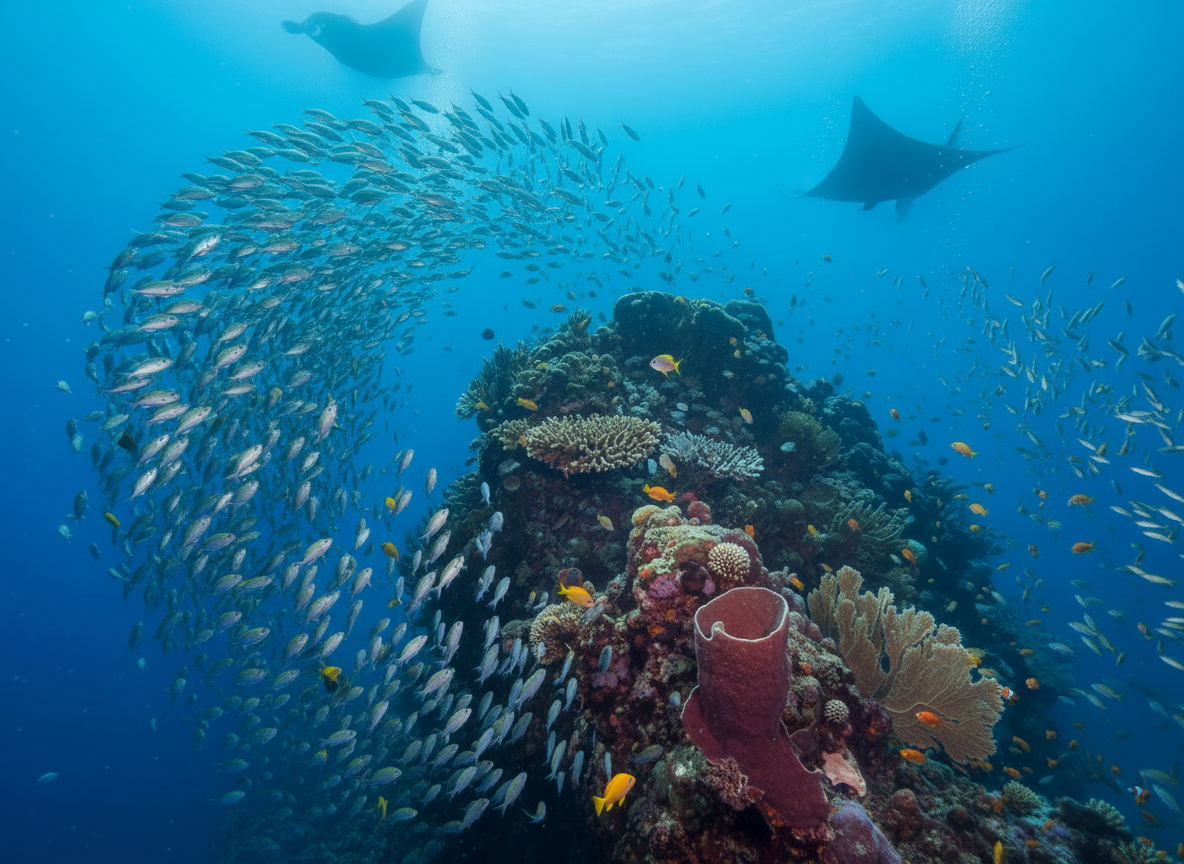
Diving Richelieu Rock is like entering an underwater kaleidoscope. The entire pinnacle is blanketed in a breathtaking tapestry of purple, pink, and orange soft corals, swaying gently with the currents, providing shelter and sustenance for an explosion of marine life. You’ll spend much of your dive slowly circumnavigating the rock, allowing the gentle surge to carry you along as you absorb the sheer volume of life. The shallowest sections are adorned with anemones teeming with resident clownfish, while deeper crevices hide moray eels, lionfish, and a plethora of nudibranchs, seahorses, and pipefish.
But it's not just the riot of colour and macro life that defines Richelieu. The jewel in its crown is undoubtedly the frequent visits from pelagic giants. During the right season, you stand an excellent chance of encountering majestic manta rays gliding effortlessly through the water column, often circling the pinnacle's cleaning stations. Even more thrilling is the possibility of a momentous encounter with a whale shark – the largest fish in the ocean – gracefully cruising by, a truly humbling experience. You’ll also spot schooling barracuda, trevally, and fusiliers, which often form swirling bait balls, attracting predatory tuna and king mackerel. Keep an eye on the blue for eagle rays and reef sharks, too.
Richelieu Rock's diverse topography means there’s always something new to discover. Depths typically range from 5 metres down to around 30 metres, making it suitable for a wide range of certified divers. Depending on the conditions and the dive plan, you might be performing a gentle pinnacle dive, slowly spiralling around the rock, or a mild drift dive if the currents are flowing, allowing you to cover more ground with less effort. Multiple dives on Richelieu are a must; each dive reveals something new, a different behaviour, or a new species hiding in plain sight.
Best Time to Go
The optimal time to experience the wonders of Richelieu Rock is during the dry season, which runs from February to May. This period offers the best weather conditions, calm seas, and crucially, significantly increases your chances of spotting the pelagic superstars – whale sharks and manta rays – as they follow rich plankton blooms into the area. While sightings are never guaranteed, the peak season definitely stacks the odds in your favour.
During these months, water temperatures are wonderfully warm, typically ranging from 28°C to 30°C (82°F to 86°F), meaning many divers are comfortable in a 3mm shorty or even just a rash guard for protection. Visibility is generally excellent, often exceeding 20-30 metres, providing crystal-clear views of the vibrant seascape. Currents can vary from mild to moderate, especially around the pinnacle itself, which is why some level of drift diving experience can be beneficial. Outside of this peak window, particularly during the monsoon season from May to October, many liveaboards cease operations in the Similan and Surin Islands due to stronger winds and rougher seas.
How to Dive Richelieu Rock
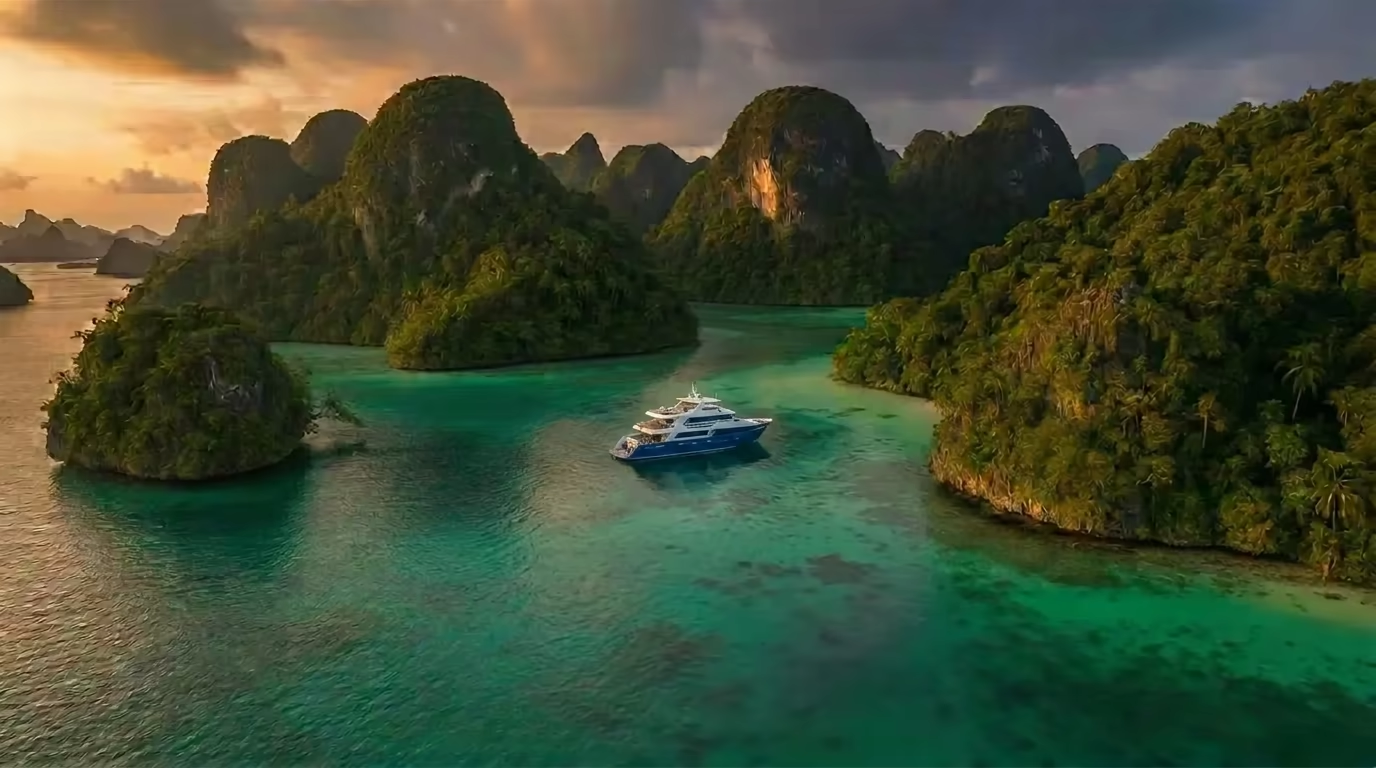
Accessing Richelieu Rock is predominantly done via liveaboard cruises, most of which depart from Khao Lak or Phuket, cruising through the Similan and Surin Islands archipelago. A liveaboard offers the distinct advantage of multiple dives on Richelieu, often including dawn or sunset dives when the site can feel particularly magical and teeming with activity. While some day trips to the Surin Islands may include a single dive at Richelieu, a liveaboard is highly recommended to truly do justice to this world-class site and maximise your chances of encounters. The nearest land-based diving operations are often several hours away by boat, making day trips long and less comfortable.
To safely and fully enjoy Richelieu Rock, an Open Water Diver certification is the minimum requirement, but we strongly recommend at least an Advanced Open Water certification due to the potential depths and varying currents. Having at least 30-50 logged dives will also enhance your comfort and enjoyment in what can be a busy and dynamic dive environment. Taking a Drift Diver Specialty course before your trip would be a wise investment, as would a Nitrox certification; enriched air Nitrox extends your bottom time, allowing you to spend more precious minutes observing the incredible life at this site. A 3mm wetsuit or shorty is usually sufficient for warmth, though some divers prefer a full 3mm suit for added protection against minor scrapes or stings. Remember to bring your own dive computer and safety sausage (DSMB) as a minimum; a reef hook can also be useful for holding position against currents without damaging the coral, although responsible use is paramount.
Conservation and Responsible Diving
As with all exceptional dive sites, protecting Richelieu Rock for future generations is a shared responsibility. The Surin Islands, including Richelieu Rock, are part of a protected national park, and strict rules are in place to preserve its delicate ecosystem. Always adhere to responsible diving practices: maintain excellent buoyancy control to avoid contact with the fragile corals, never touch any marine life, and certainly never take souvenirs from the ocean. Be mindful of your fins and equipment, and contribute to keeping the site pristine by not leaving any litter. For underwater photographers, practice ethical photography – avoid stressing marine animals with excessive flash or pursuing them for a shot. Your respectful behaviour ensures that encounters with whale sharks and mantas remain a positive, non-intrusive experience for these magnificent creatures.
Plan Your Trip
Richelieu Rock offers an unparalleled underwater adventure, a vibrant tapestry of marine life, and the thrilling possibility of encountering some of the ocean's most iconic creatures. It's a dive experience that will remain etched in your memory long after you've surfaced. If you're ready to cross this incredible destination off your bucket list, Blue Rides offers a curated selection of premium liveaboard experiences departing for the Similan and Surin Islands, providing the perfect platform to explore Richelieu Rock. Browse our itineraries and find your ultimate dive adventure today.