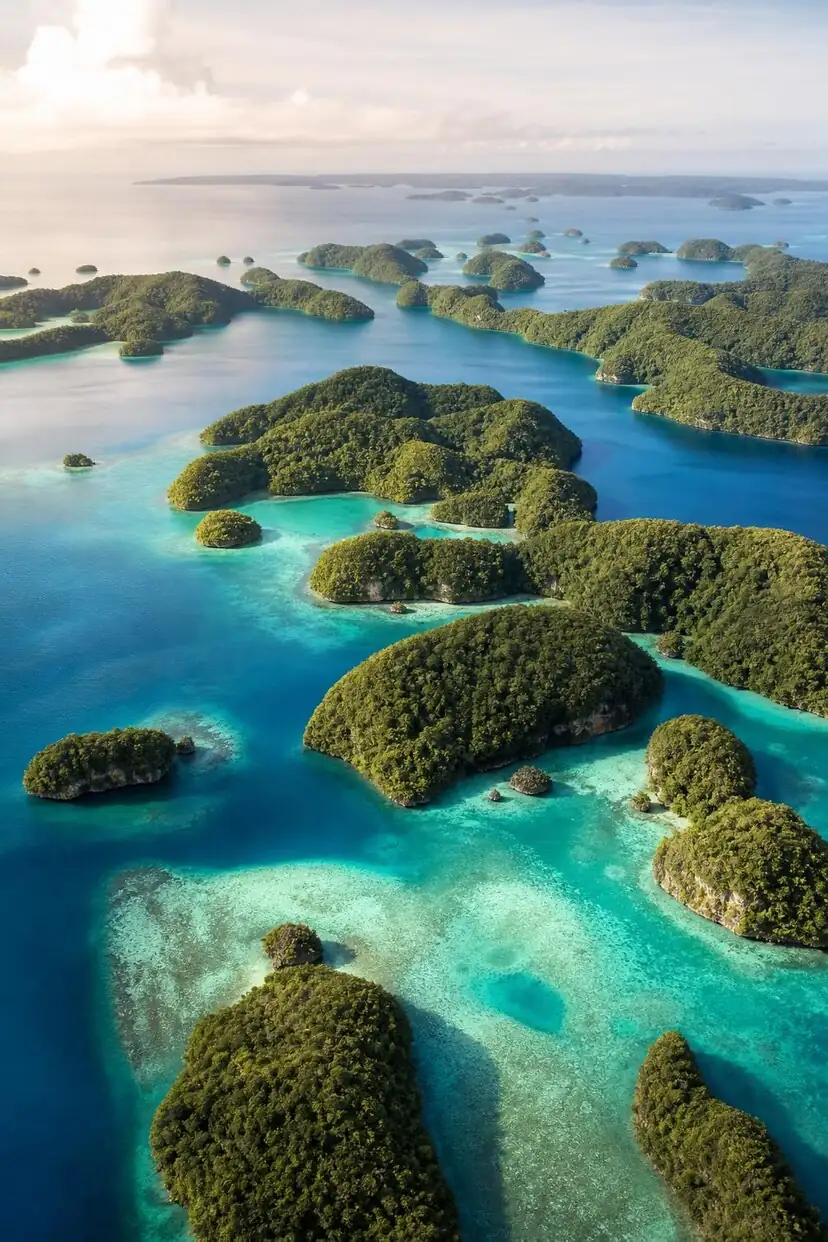
French Polynesia Liveaboard Diving
Where Ocean Meets Paradise

About French Polynesia
French Polynesia offers crystal-clear lagoons, thrilling shark dives, and seasonal humpback whale encounters across 118 islands of pure tropical beauty.
**French Polynesia** spreads across more than 5 million square kilometers of the South Pacific — an area the size of Western Europe — yet contains only 4,000 square kilometers of land scattered across 118 islands and atolls. This vastness, combined with strict French marine protections and the convergence of warm equatorial and cooler southern currents, has produced some of the densest concentrations of large marine life left on the planet.
**Fakarava**, a UNESCO Biosphere Reserve in the Tuamotu archipelago, is home to the famous **Wall of Sharks** at the southern Tumakohua Pass. Between 250 and 700 grey reef sharks gather in the channel year-round, joined by silvertips and whitetips during the June–July grouper spawning aggregations — one of the largest predator gatherings ever filmed underwater. The northern Garuae Pass, the largest in French Polynesia, drifts divers past schooling barracuda, eagle rays, and Napoleon wrasse.
**Rangiroa**, the world's second-largest atoll, is famous for the **Tiputa Pass** where bottlenose dolphins surf the incoming tide and play with divers in the current. Hammerhead sharks visit between December and March, and silvertip sharks patrol the deeper edges of the channel year-round. The lagoon itself is so vast that the horizon disappears beyond its inner waters.
**Tikehau** and **Toau**, less visited atolls in the Tuamotus, offer manta ray cleaning stations and pristine coral gardens with hard coral cover above 80 percent. These remote sites attract liveaboard expeditions seeking the original Polynesian reef before any human pressure.
The **Society Islands** — Tahiti, Moorea, and Bora Bora — are better known for their lagoons, but offer remarkable encounters with **humpback whales** between July and October. Moorea is one of the few places in the world where in-water humpback observation is possible under strict regulation, including witnessing mother-calf pairs and singing males.
The **Marquesas Islands**, far north and rarely dived, offer a unique encounter with melon-headed whales, tiger sharks, and dense schools of scalloped hammerheads at sites like Ekamako Cave and Hatutu. With water temperatures of 26–29°C, visibility consistently above 30 meters, and Polynesian culture interwoven into every itinerary, French Polynesia offers a diving experience that is as much about the people and the islands as it is about the reef.
Liveaboard Vessels in French Polynesia
- Aqua Tiki III — 4.8/5 stars, from €66/day
- Aqua Tiki II — 4.6/5 stars, from €470/day
Top Dive Sites in French Polynesia
- Tiputa Pass — advanced (10-35m)
- Avatoru Pass — advanced (8-30m)
- South Pass - Fakarava — advanced (10-35m)
- North Pass - Fakarava — intermediate (8-25m)
- The Valley of Sharks — expert (15-25m)
- Moorea - Tiki Point — beginner (5-20m)
- Moorea - The Roses — beginner (3-15m)
- Bora Bora - Tapu — intermediate (8-25m)
- Bora Bora - Anau — intermediate (6-20m)
- Tikehau - Tuheiava Pass — intermediate (6-35m)
- Tahiti - The Aquarium — beginner (3-12m)
- Tahiti - The Source — intermediate (8-22m)
- Toau - Anse Amyot — advanced (8-25m)
- Ahe Atoll — advanced (5-22m)
- Makemo - Arikitamiro Pass — advanced (10-30m)
- Rurutu - Whale Encounters — intermediate (5-15m)
- Manihi - Tairapa Pass — intermediate (8-25m)
- Huahine - Avapeihi Pass — intermediate (8-25m)
- Raiatea - Nordby Wreck — intermediate (18-29m)
- Tetamanu - Grouper Wall — advanced (10-30m)