
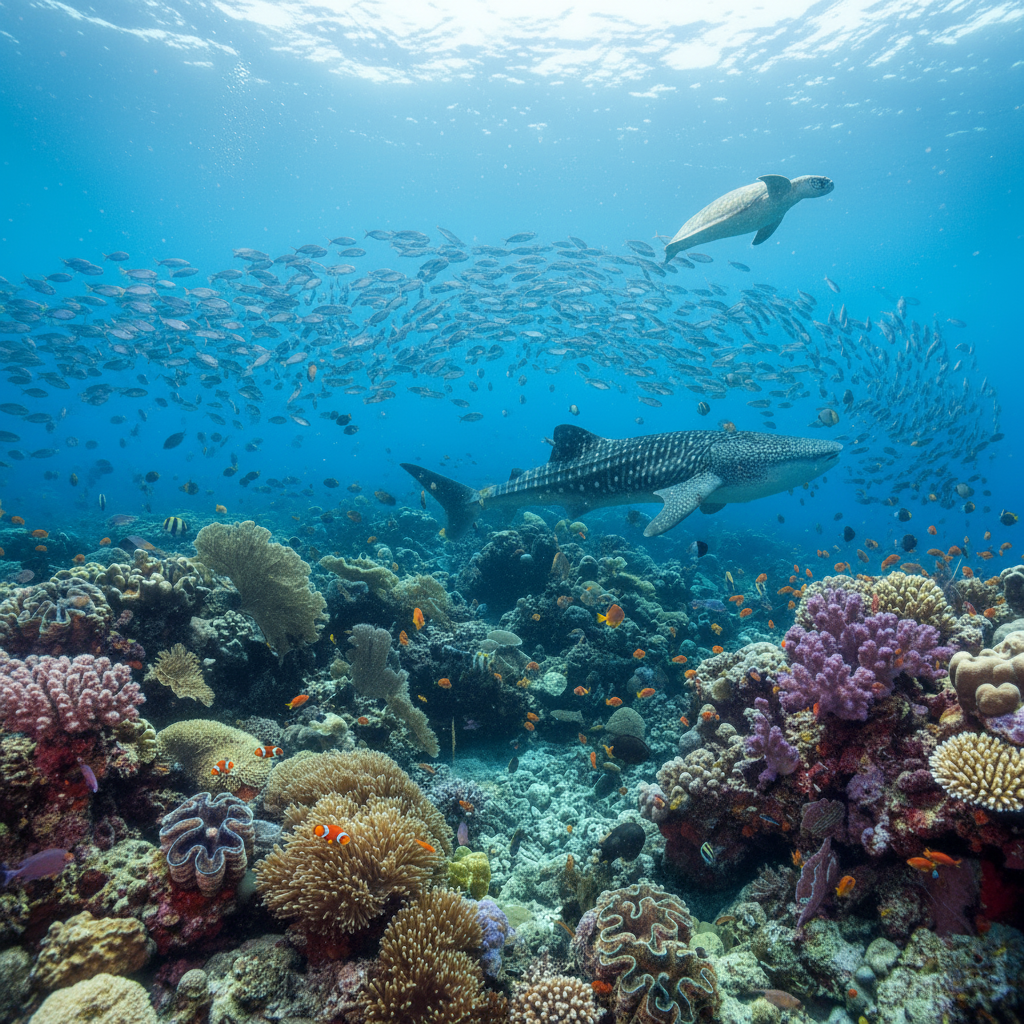
Have you ever dreamt of a dive so rich, so vibrant, so utterly teeming with life that it recalibrates your understanding of the ocean? Forget your standard reef; we’re talking about an experience that is quite literally the global cradle of marine diversity. The Coral Triangle isn't just a location; it's a living, breathing testament to the power and magic of nature, and at its heart lies Papua New Guinea's Kimbe Bay.
Why Coral Triangle Biodiversity Belongs on Your Bucket List
Imagine dropping into water where every single square metre of reef could reasonably host more species of coral and fish than the entire Caribbean. That’s the "WOW" factor of the Coral Triangle, and Kimbe Bay is its undisputed jewel. This isn't just a claim; it’s scientific fact. Tucked away in a relatively sheltered corner, Kimbe Bay has benefited from its unique geographical position, acting as both a crossroads and a sanctuary for marine life evolution. It's a place where multiple ocean currents converge, bringing with them a constant influx of plankton and nutrients that fuel an unparalleled ecosystem.
What makes this experience globally unique is not just the sheer number of species, but the density and health of the populations. You're not just hoping to spot a rare fish; you're immersed in a thriving, bustling metropolis beneath the waves. The reefs here are kaleidoscopic gardens, sprawling across vast areas, creating habitats for an astronomical array of invertebrates, fish, and pelagics. This expedition suits anyone with a genuine passion for marine life, from the seasoned diver who thought they'd seen it all to the nature enthusiast eager to witness a truly pristine and biodiverse environment. If your diving goals include experiencing the pinnacle of underwater life, then pack your bags.
What You'll See and Do
Prepare to be overwhelmed in the best possible way. Diving in Kimbe Bay is an assault on the senses, in the most spectacular fashion. The sheer variety of hard and soft corals is breathtaking – expect to see monumental Porites bombies, delicate Acropora tables, vibrant Dendronephthya forests, and the bizarre, intricate patterns of brain corals. These formations are home to legions of reef fish, from the tiniest gobies and blennies to schools of fusiliers, bannerfish, and snappers. Look closely for pygmy seahorses camouflaged on Muricella gorgonian fans or flamboyant cuttlefish parading across the sandy bottom. You might also encounter several species of clownfish hosting in their anemone homes, parrotfish in every shade imaginable, and the ever-present damselfish tending their algal gardens.
But it's not all about the micro. Kimbe Bay delivers on the larger scale too. Keep an eye out for patrolling reef sharks – grey reef sharks, whitetip reef sharks, and blacktip reef sharks are common sightings. You'll likely encounter green sea turtles and hawksbill sea turtles cruising the reefs. Pelagic encounters are also a highlight, with barracuda schooling in impressive numbers, trevally hunting on the reef edge, and the occasional majestic manta ray gliding past. Dive sites like "Bradford Shoals" offer stunning coral formations and abundant reef fish, while "Inglis Shoal" is renowned for its diverse pelagic action. "Susan's Reef" promises vibrant soft corals and thriving macro life, perfect for photographers.
Depths typically range from shallow reef tops at 5-10 metres, perfect for safety stops and longer bottom times, to reef edges dropping to 30 metres or more. Dive styles are predominantly drift dives along magnificent walls and channels, or leisurely exploration of pinnacles and bommies. The relatively calm waters of Kimbe Bay generally offer comfortable conditions, making it accessible for a wide range of dive preferences.
Best Time to Go
One of the many benefits of choosing Kimbe Bay for your bucket list dive is its year-round accessibility and consistently excellent conditions. Papua New Guinea, and particularly this region, experiences a tropical climate without extreme variations often found elsewhere.
While diving is possible every month, the primary drier season for much of PNG generally runs from May to November. However, Kimbe Bay's unique geography protects it, meaning favourable conditions persist throughout the year. Water temperatures are remarkably stable, typically hovering around 28-30°C (82-86°F), offering warm, comfortable diving. Visibility is almost always outstanding, frequently exceeding 25-30 metres and often pushing to 40+ metres on a good day. Currents can range from mild to moderate, especially around deeper channels and shoals, making for exhilarating drift dives that uncover new sections of reef with minimal effort. While the region does experience tropical rain, it tends to be brief afternoon showers that have little impact on underwater conditions. The protected nature of the bay means surfaces are generally calm; cyclones are rare in this specific equatorial band.
How to Dive Coral Triangle Biodiversity
Accessing the pristine dive sites of Kimbe Bay is predominantly done via liveaboard. While there are a few land-based resorts that offer day trips, a liveaboard experience is truly the optimal way to immerse yourself in the sheer scale of diving available. Liveaboards provide unparalleled access to the most remote and untouched reefs, allowing for multiple dives per day, including night dives, and covering a wider geographical range, ensuring you hit all the best spots from Bradford Shoals to Inglis Shoal and beyond. They offer the convenience of diving, eating, and sleeping all in one place, maximising your time underwater and minimising travel logistics.
This is a destination that rewards experience, but it’s not exclusively for the ultra-advanced. While divers should ideally hold at least an Open Water certification, we highly recommend an Advanced Open Water certification to fully explore the diverse depths and varied dive sites. A minimum of 50 logged dives is suggested to be comfortable with current conditions and to get the most out of the experience, though proficiency and confidence are more important than a strict number. Given the potential for deeper profiles and the desire for longer bottom times, Nitrox certification is very highly recommended and will significantly enhance your diving experience. For those who enjoy the thrill of gliding along walls, a Drift Diver specialty is also beneficial. For protection against minor scrapes and a slight chill on repetitive dives, a 3mm shorty or full wetsuit is usually ample, given the consistently warm waters. Bring your own mask and computer, and ensure your dive gear is in good working order for this once-in-a-lifetime adventure.
Conservation and Responsible Diving
Diving in the Coral Triangle is a privilege, and with that comes a responsibility to protect this irreplaceable ecosystem. The local communities in Papua New Guinea are deeply intertwined with the health of their marine environment, and many initiatives are in place to ensure its long-term viability. As divers, our role is crucial. Practise exemplary buoyancy control to avoid any contact with the delicate corals – no touching, standing, or collecting of any marine life. Maintain a respectful distance from all creatures, observing their natural behaviours without interference. For photographers, be mindful of your strobes and equipment; avoid silting up the reef or stressing marine animals for that perfect shot. Leave nothing but bubbles, take nothing but photographs, and be an ambassador for responsible diving practices.
Plan Your Trip
Is your dive heart pounding? Are you ready to witness the unparalleled biodiversity of Kimbe Bay and the Coral Triangle? Blue Rides offers a curated selection of premium liveaboards perfectly positioned to deliver this bucket list experience. Browse our options today and let us help you plan the dive adventure of a lifetime.