About
An archipelago built on submerged volcanic mountains, the Maldives offers a diving landscape unlike any other. Its atolls are defined by deep channels, or kandus, that funnel nutrient-rich water from the open Indian Ocean, creating a haven…
About
An archipelago built on submerged volcanic mountains, the Maldives offers a diving landscape unlike any other. Its atolls are defined by deep channels, or kandus, that funnel nutrient-rich water from the open Indian Ocean, creating a haven…
Available Liveaboards
Explore our handpicked fleet of liveaboards operating in this region
Loading vessels...
Why Dive Here
World-famous cleaning stations with dozens of mantas at once
Year-round whale shark sightings in South Ari Atoll
Pristine waters with visibility often exceeding 30 metres
Endless variety across 1,190 islands and countless dive sites
Dive Season
Plan your trip around the best conditions for diving, visibility, and marine encounters
Best visibility up to 40m, calm seas, manta rays on the eastern atolls, whale sharks in South Ari Atoll.
Changing conditions, good value, mantas moving between atolls, occasional rain showers.
Marine Life
Explore the incredible species that call these waters home
Seasonal Calendar
Plan your trip around the marine life you want to encounter most


Only in
Extraordinary natural events that make Maldives a once-in-a-lifetime diving destination

Baa Atoll
Encounter hundreds of reef and oceanic manta rays at Hanifaru Bay, one of the world's largest manta feeding aggregations, with up to 200 mantas in a single dive.
Read more
South Ari Atoll
Swim alongside gentle whale sharks in South Ari Atoll, where year-round sightings make the Maldives one of the most reliable destinations for these ocean giants.
Read more
North Malé Atoll
Experience thrilling night dives where tawny nurse sharks, giant stingrays, and bioluminescent plankton create a magical underwater spectacle.
Read more
Rasdhoo Atoll
Dive the deep channels of the northern atolls at dawn to witness schools of scalloped hammerhead sharks cruising through the blue – a bucket-list experience.
Read moreExplore
The Skipjack 1 & 2 dive site consists of two distinct shipwrecks situated within the Lhaviyani Atoll in the Maldives. These vessels have rested on the seabed since the 1980s, gradually transforming into flourishing artificial reefs. This process offers divers a compelling example of nature's reclamation of man-made structures. While specific marine life details for these particular wrecks are not extensively documented, older wrecks typically attract a variety of reef fish and invertebrates, providing shelter and feeding grounds. The broader Lhaviyani Atoll region is notable for its manta ray population, particularly between May and November, suggesting rich marine biodiversity in the area. Diver exploration focuses on the remnants of the ships themselves. The site is generally considered suitable for intermediate divers. Diving here involves navigating moderate currents, which means planning for drift entries and maintaining close proximity to your group is essential for a safe and enjoyable experience. Liveaboards often include this site in their itineraries, allowing for multiple dives over several days and accessing quieter, less crowded conditions.
The Kudimaa Wreck is a compelling dive site in the Maldives, offering a fascinating artificial reef environment. This sunken vessel has become a vibrant home for numerous species, providing divers with an engaging exploration of both its structure and the marine ecosystem it supports. Its presence adds a unique dimension to the natural reef formations common in the region, drawing in a variety of pelagic and reef fish alike. While the exact topography around the wreck is influenced by the surrounding seabed, the ship itself provides complex structures and crevices for marine inhabitants. The depth range allows for various levels of exploration, from shallower sections suitable for extended bottom times to deeper areas where unique encounters may occur. Divers can navigate the exterior, observing the coral growth and fish life that has taken hold. Throughout the year, divers can encounter species such as schools of curious batfish, which are known to approach divers. The wreck also attracts larger predators like nurse sharks and giant trevally, offering exciting encounters. Sightings of stonefish, frogfish, and stingrays are also possible, making each dive a potential treasure hunt for diverse creatures. Access to the Kudimaa Wreck is typically via liveaboard, integrating it into itineraries that explore various atolls. Divers often conduct a comprehensive tour of the wreck, observing its details and the marine life thriving within and around it. The dive offers a rewarding experience for those interested in wreck diving combined with rich Maldivian biodiversity.
Kuramathi Reef is an expansive dive site situated on the western side of the Alif Alif Atoll, easily accessible by boat just beyond a sandbank. This unique location features four distinct zones: Ori Faru, Three Palms, Bodu Gaa, and Kuramathi Caves. Its topography is characterized by spectacular coral formations, broad underwater overhangs, and two main swim-through caverns, making it a compelling destination for various diving levels. Depth profiles range from a vibrant shallow reef top to deeper cave systems, with one cavern at 18 to 20 meters and another extending from 28 to 30 meters. These varied environments support an exceptionally rich marine ecosystem. While the caves and overhangs are a primary draw, the surrounding reef bursts with life, hosting families of rays, diverse shark species, and intricate macro life. Visibility here is generally excellent, typically ranging from 15 to 30 meters, allowing clear views of the intricate structures and marine inhabitants. Currents can vary from moderate to strong, particularly near the deeper sections and cave entrances, attracting a rich array of pelagic life. Divers need strong buoyancy control for navigating the overhead environments and should be prepared for drift diving conditions, making it an engaging experience for those seeking adventure and diverse encounters.
Hammerhead Point is a renowned dive site located in the Rasdhoo Atoll of the Maldives, famed for its predictable encounters with hammerhead sharks. Rising from the ocean depths, this small atoll is a prime destination for divers seeking large pelagic species, including various shark types, manta rays, and schooling fish. The dive typically begins with an early morning descent to a cleaning station, a shallow seamount where hammerheads gather. Divers usually drop to around 22 to 24 meters and position themselves on a ledge to observe the sharks patrolling above at approximately 18 meters. The site is characterized by an expansive sandy bowl and a horseshoe-shaped ridge, also frequented by grey reef sharks and whitetip sharks, along with schools of eagle rays. Whiptail and marble rays, as well as garden eels, inhabit the sandy areas, while large barracuda schools add to the pelagic spectacle. While hammerhead sightings are the primary draw, marine life also includes manta rays, which can be seen at a cleaning station between November and April. Divers can watch these gentle giants as cleaner wrasse tend to them. Due to the early start times required to encounter hammerheads, often as early as 5:30 AM, this site is best suited for experienced divers who are comfortable with potential currents and the specific approach required for these unique interactions. Dawn dives are standard, with groups typically small, often capped at six divers to minimize disturbance.
Beyond Diving
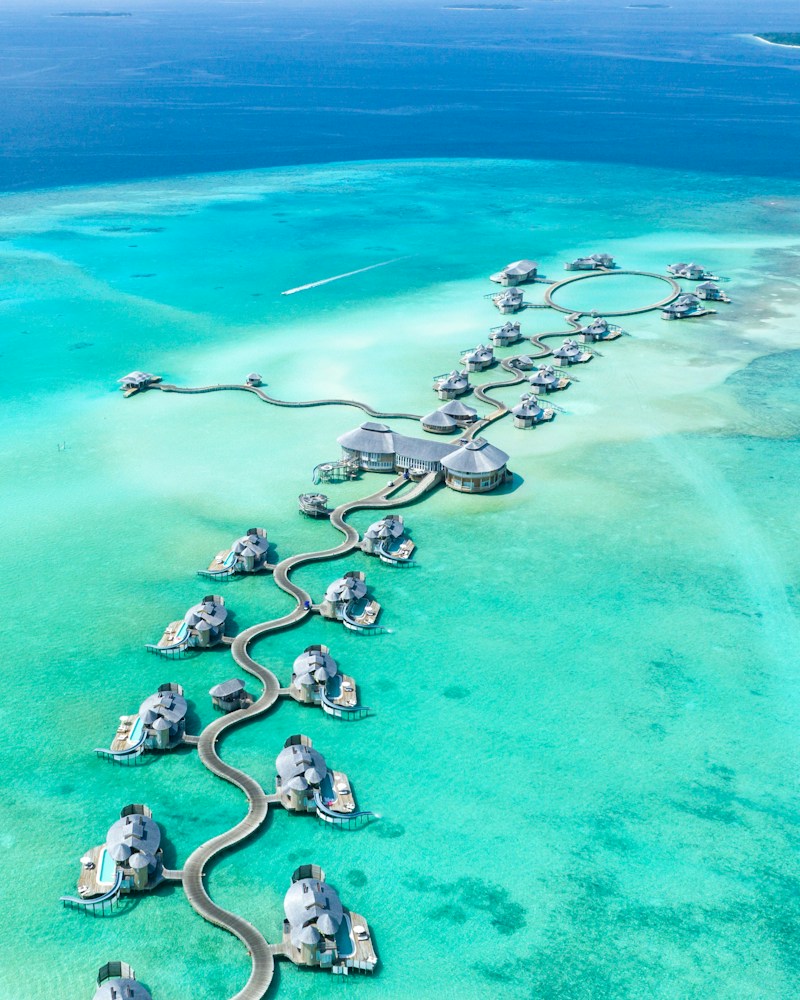
Stay in iconic overwater bungalows with glass floors, private decks, and direct lagoon access. Wake up to turquoise views and watch marine life swim beneath you.

Spot spinner dolphins performing acrobatic displays in the golden evening light. Most resorts and liveaboards offer daily dolphin-watching excursions.

Escape to a private sandbank surrounded by nothing but turquoise ocean. Enjoy champagne, fresh seafood, and pristine solitude on your own private island for the day.

Dine surrounded by tropical fish at Ithaa or SEA. These submerged restaurants offer 180-degree views of the reef while you enjoy world-class cuisine.
Budget
How Maldives compares to other diving destinations worldwide.
$250–$450
per day liveaboard
$80–$150
per 2-tank dive trip
$150–$1,000
hotel per night
Prices reflect typical costs for mid-range to premium options. Budget alternatives may be available.
Lower visibility but peak season for marine encounters — manta aggregations at Hanifaru Bay (Aug–Nov), tiger sharks year-round in Fuvahmulah, and whale sharks still present. Southern atolls shine.
Changing conditions, good value, mantas moving between atolls, occasional rain showers.
Best visibility up to 40m, calm seas, manta rays on the eastern atolls, whale sharks in South Ari Atoll.
Book liveaboards 6+ months in advance for early-bird discounts of up to 20%.
Visit during shoulder season (May, November) for 15-25% lower prices with still excellent diving conditions.
Local island guesthouses on inhabited islands offer budget accommodation from $50-100/night vs $500+ at resorts.
Choose safari boats over luxury liveaboards—same dive sites, half the price.
Bring your own dive gear to avoid rental fees of $30-50/day.
Combine a liveaboard trip with a few nights on a local island to extend your stay affordably.
Travel
Velana International Airport
Malé (Hulhulé Island) • MLE
Main gateway, direct flights from Europe, Middle East, Asia
Gan International Airport
Addu Atoll • GAN
Southern gateway, connects to Colombo
Free 30-day visa on arrival for most nationalities. Passport must be valid for 6 months.
This information is provided without guarantee. Please visit the official website for the latest entry requirements.
Official Immigration Information →Plan Your Trip
Good to know
Compare
Honest, in-depth comparisons to help you decide between destinations, certifications, equipment and dive styles.
Choosing between a Maldives liveaboard and a Red Sea safari is one of the most common dilemmas for divers planning their next big trip. Both destinations sit at the very top of the global liveaboard rankings — yet they offer radically different underwater experiences, travel logistics, costs and onboard cultures. The Maldives delivers warm, gin-clear water across more than 1,000 islands and 26 atolls, with manta rays, whale sharks and reef sharks gracing nearly every channel dive. The Red Sea, by contrast, packs world-class wrecks, vertical reef walls and pelagic shark action into a single sea, all reachable from Hurghada or Marsa Alam in a few hours' flight from Europe. For European divers, the Red Sea wins on convenience and price: short flights, no jet lag, week-long itineraries from around €1,200 and the chance to combine the SS Thistlegorm wreck with reef diving on the same trip. The Maldives wins on wildlife: drift dives through atoll channels routinely produce grey reef shark schools, eagle ray squadrons and night feedings of nurse sharks, while the southern atolls (Huvadhoo, Addu, Fuvahmulah) are now established hotspots for tiger sharks and oceanic mantas. The Red Sea also has stronger photo-friendly visibility in the north (often 30 m+), while the Maldives can drop to 15-20 m during plankton-rich manta season — which is precisely why the mantas turn up. This guide breaks down every meaningful difference: marine life by season, average liveaboard prices, certification requirements, the best itineraries on each side, and which type of diver should pick which destination. By the end you'll know whether your next week is better spent crossing Maldivian channels or descending to a Red Sea wreck deck.
Read comparisonChoosing between a liveaboard and a land-based dive trip is the most fundamental decision divers face when planning a serious diving holiday. The right answer depends on your priorities: maximum dive count and access to remote sites favor liveaboards; beach time, family flexibility and lower cost favor land-based resorts. Both formats have evolved significantly in the last decade, and the line between them has blurred — luxury dive resorts now offer multi-day expedition trips, while many liveaboards include topside excursions and even spa days. This guide compares the two formats across every meaningful dimension: cost per day, dives per day, marine life access, comfort, social dynamics, family-friendliness, and travel logistics. We'll also cover the hybrid models (resort + day-charter, or 'safari boat' itineraries) that try to capture the best of both worlds. If you're certified, in love with diving and want to maximize bottom time, a liveaboard is almost always the better choice — you can clock 25+ dives in a week and reach sites no day boat can. If you're traveling with non-divers, prefer land-based comfort, or want flexibility to take days off, a resort wins. We'll get into all the nuances below.
Read comparisonChoosing between the Maldives and Indonesia for a liveaboard diving trip is a delightful dilemma for any avid diver. Both destinations offer unparalleled underwater experiences, but they cater to different preferences and skill levels. The Maldives, an archipelago of 26 atolls, is renowned for its consistent pelagic encounters, crystal-clear visibility, and luxurious liveaboard options, often making it a top choice for those seeking a relaxed yet thrilling dive holiday. Indonesia, a vast maritime nation spanning thousands of islands, presents a staggering diversity of dive sites, from the vibrant coral gardens of Raja Ampat to the macro wonders of Lembeh Strait. Its sheer scale means a wider range of experiences, from challenging currents to tranquil muck dives, appealing to divers looking for adventure and unique biodiversity. This comparison will help you navigate the nuances of each destination, ensuring you pick the perfect liveaboard adventure for your diving aspirations.
Read comparisonExplore our expedition vessels and find your perfect trip to Maldives