
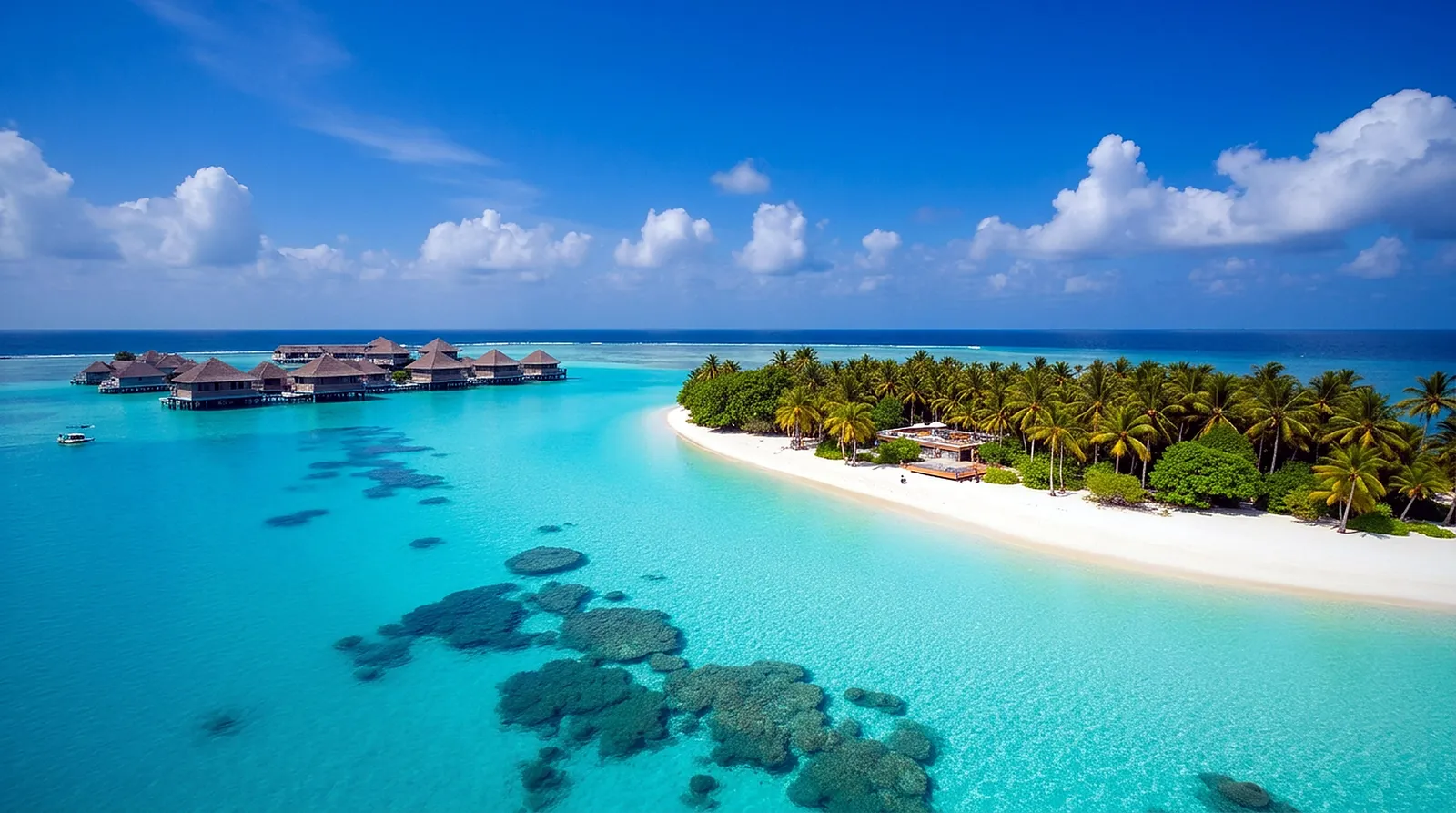
Manta rays, whale sharks and channel diving across 26 atolls
The Maldives is a 1,200-island archipelago strung along the Indian Ocean equator like a string of coral pearls, and the only practical way to dive its outer atolls is by liveaboard. While resort-based diving is excellent on the inner reefs, the legendary action — manta cleaning stations, whale shark encounters, hammerhead schools, grey reef shark walls and tiger shark dives — happens on the outer channels (kandus) and remote atolls that no day boat can reach. A Maldivian liveaboard is a uniquely civilized experience: traditional dhonis follow the mothership and serve as dedicated dive platforms, the food is excellent, the cabins are typically more spacious than Red Sea equivalents, and the sun rises over a different palm-fringed atoll every morning. With water temperatures of 27-30°C all year, visibility regularly exceeding 30 meters, and the option to combine three or four atolls in a single safari, the Maldives delivers the most consistent big-animal action in the Indian Ocean.
The Maldives sits on the equator, so it has only two seasons — both diveable, but each tells a different story. The dry north-east monsoon (December to April) brings the calmest seas, blue skies and the best visibility (often 30+ m), with the eastern sides of the atolls offering crystalline conditions; this is peak tourist season and the best time for general diving and photography. The wet south-west monsoon (May to November) flips the script: visibility drops on the eastern channels but explodes with plankton, attracting mantas and whale sharks in unprecedented numbers to the western sides — Hanifaru Bay in Baa Atoll (Aug-Oct) sees daily aggregations of 100+ feeding mantas, the largest such gathering on Earth. The shoulder months of April-May and November-December offer the best of both: warm water, decent visibility and active pelagics, often at lower prices and with less boat traffic. Tiger shark dives at Fuvahmulah run year-round.
Almost every Maldivian liveaboard departs from Velana International Airport (MLE) in Malé, served by direct flights from major hubs across Europe (London, Paris, Frankfurt, Milan, Madrid, Istanbul typically 9-10 hours), the Middle East (Dubai, Doha, Abu Dhabi 4 hours) and Asia (Singapore, Bangkok, Colombo, Kuala Lumpur 4-5 hours). Tourist visas are free on arrival for 30 days for most nationalities — you simply need a confirmed onward ticket and accommodation (your liveaboard booking suffices). Transfer from the airport to the boat is usually a 10-30 minute speedboat or dhoni ride directly from the marina opposite the terminal, included in the package. For the southernmost itineraries (Deep South, Equator, Huvadhoo) some operators include a domestic flight to Kooddoo or Gan; budget extra 2-4 hours and around $200-350 for the round-trip air transfer.
All major Maldivian liveaboards depart from Malé (Hulhumalé jetty, a five-minute boat ride from the international airport) or directly from a tender at Velana International Airport. A handful of southern itineraries — Equator and Deep South — embark in Kooddoo, Gan or Fuvahmulah after a domestic flight. The Malé marina has fuel, customs and immigration facilities; embarkation is typically smooth, with dive briefings starting on day one and the first dive often the next morning at a check-dive site within a few hours' steaming.
North and South Malé Atolls are the historic heart of Maldivian diving: thila pinnacles like Maaya Thila and Fish Head host grey reef shark and tuna action plus night dives with hunting white-tips. Ari Atoll is famous for whale shark encounters in the south (year-round but best August-November), manta cleaning stations at Madivaru, and the dramatic Maaya, Fish Head and Kandooma Thilas. Baa Atoll's Hanifaru Bay (UNESCO Biosphere Reserve) sees the planet's largest manta feeding aggregations from June to October — snorkel-only inside the bay, but full dives at surrounding cleaning stations. The Central Atolls (Vaavu, Meemu, Thaa, Laamu) deliver wild-feeling channel dives with night-tiger shark action at Alimatha, schooling hammerheads at Fotteyo Kandu, and uncrowded reefs. The Deep South (Huvadhoo, Fuvahmulah, Addu) is the frontier — schooling hammerheads, oceanic mantas, and the world's most reliable tiger shark dive at Fuvahmulah's Tiger Zoo.
The Maldives is a Muslim country but liveaboards are licensed for alcohol — all bar tabs are settled at the end of the trip in USD or by card. Tipping is appreciated and pooled: $80-150 per guest per week is standard, paid in cash to the captain at the final dinner. Bring a 3mm wetsuit (some prefer 5mm in Dec-Feb when water dips to 27°C). A surface marker buoy, reef hook and dive computer are essential — Maldivian channel diving means strong drift and frequent open-water surface intervals. Nitrox is available on most boats for $80-150 per week. UV protection (rashguard, reef-safe sunscreen, hat) is critical: equatorial sun is intense even on cloudy days. Bring small bills (USD or EUR) for crew tips and for occasional island visits; cards work on board for everything else.
Maldivian dhoni-supported diving means you don't carry tanks: the dhoni meets you at each site, your kit is set up by the crew, and you simply step off the platform. Most boats run three dives per day plus a night dive 2-3 times per week. Check-dives are mandatory on day one for safety briefings on hand signals, drift procedures and emergency protocols. Hyperbaric chambers are located in Bandos and Kuredu (north) and Kooddoo (south); evacuation is by speedboat or seaplane. Wi-Fi is increasingly common on board (often free, sometimes via Starlink), but signal can be slow during transits. Vegetarian and special diets are easily accommodated with advance notice — Maldivian cuisine is fish-heavy by default but boats stock plenty of vegetables, fruit and rice.
Most Maldivian itineraries require Advanced Open Water plus a minimum of 30-50 logged dives; some southern hammerhead and tiger shark trips require 100+ dives and prior experience with strong currents. Channel dives can be powerful — currents of 2-3 knots are common, occasionally more. The Maldives is generally safe and politically stable, but it is a strict Muslim country: alcohol and pork are forbidden ashore (legal on liveaboards), and modest dress is required when visiting local islands. Seasickness is rarely an issue inside the atolls but the open-ocean crossing to the southern atolls and Fuvahmulah can be lumpy — bring medication. Climate change is a real concern: bleaching events in 2016 and 2024 damaged some shallow reefs, but the deep walls and channels remain spectacular.
Compare every liveaboard, every itinerary, every cabin — book direct with the operator at the best price.