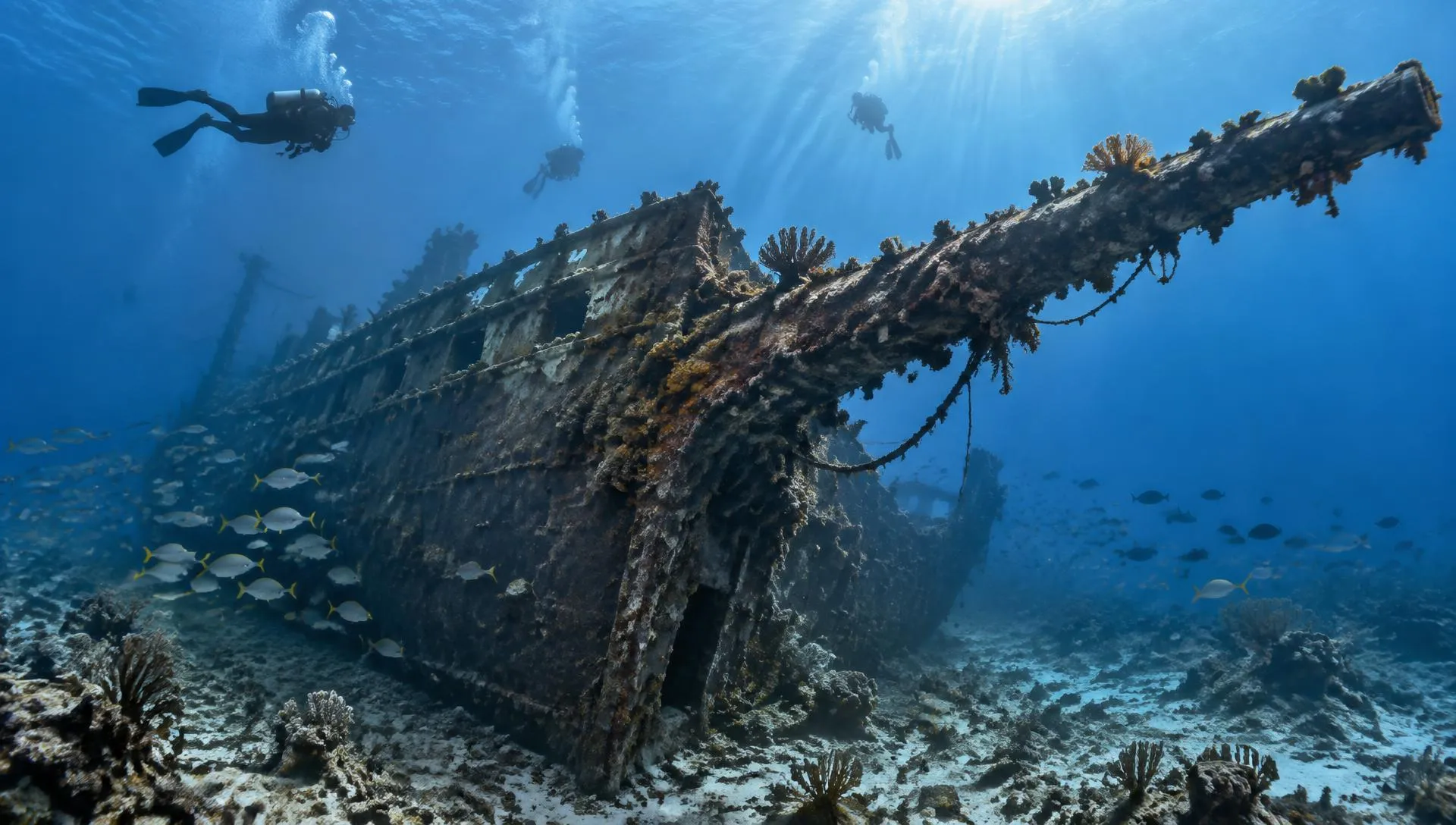
Imagine descending into history, where the currents of time have sculpted an enduring monument beneath the waves. Not just any shipwreck, but a vessel steeped in maritime lore, a witness to the raw power of nature, now a vibrant sanctuary for marine life. We’re talking about a dive experience that transcends the ordinary, a journey into the heart of an aquatic legend. Prepare to plunge into the story of the RMS Rhone.
Why RMS Rhone Wreck Belongs on Your Bucket List
The RMS Rhone isn't merely a shipwreck; it's a living, breathing museum, a testament to both human endeavour and the inexorable force of the ocean. Sunk in a devastating hurricane in 1867 off the coast of Salt Island in the British Virgin Islands, this Royal Mail Steamer has since transformed into one of the world's most celebrated wreck dives. Its allure lies not just in its dramatic demise, but in its remarkable state of preservation and the thriving ecosystem it now supports. For divers seeking that profound connection with history, a palpable sense of exploration, and the thrill of discovery, the Rhone offers an unparalleled experience.
What sets the Rhone apart globally is its unique blend of accessibility, historical significance, and ecological richness. Unlike many deep or technically demanding wreck dives, the Rhone's substantial remains are scattered across a relatively shallow depth range, making it enjoyable for a wide spectrum of certified divers. Yet, its sheer scale and the sheer amount of detail still discernible – from its mighty bow section to the intact stern and propeller – provide endless opportunities for exploration, even over multiple dives. This isn't just about spotting fish; it's about swimming through history, tracing the lines of a vessel that once connected continents, now overgrown with spectacular corals and sponges.
This dive is perfect for history buffs, underwater photographers, and marine enthusiasts alike. Whether you're captivated by the romance of the Victorian era, keen to capture stunning wide-angle shots of a colossal wreck, or simply wish to immerse yourself in an environment teeming with life, the Rhone delivers. It appeals to those who crave adventure but appreciate a dive site that respects various skill levels, offering both dramatic swim-throughs and peaceful observation points. It’s an experience that leaves a lasting impression, etching itself into your memory as a dive site of extraordinary calibre, consistently ranked amongst the very best in the Caribbean and beyond.
What You'll See and Do
Diving the RMS Rhone is an immersive journey through a tapestry of history and marine biology. The wreck is largely broken into two main sections: the bow and the stern, with debris scattered between, covering an extensive area. Your descent usually begins over the intact bow section, where you'll be immediately struck by the sheer scale of the vessel. The bow, complete with its mast and anchor chain, is heavily encrusted with vibrant orange cup corals, purple tube sponges, and gorgonians, creating a kaleidoscope of colour. Schools of grunts and snapper often congregate here, darting amongst the structural elements. Keep an eye out for inquisitive Nassau groupers patrolling their territory and the occasional barracuda lurking in the deeper shadows.
As you navigate towards the mid-section, you'll encounter remnants of the ship's infrastructure, including parts of the engine room and the infamous "lucky porthole" – a popular swim-through spot. This area is shallower, allowing for longer bottom times and excellent light penetration, illuminating the intricate coral growth. You might spot cleaner shrimp diligently tending to their "clients," or a shy garden eel peeking out from the sandy patches adjacent to the wreck. Moray eels, including the green moray and spotted moray, are frequently observed peering from crevices, while lobsters and crabs find refuge within the wreck's many nooks and crannies. The wreck's scattered debris creates a fascinating artificial reef, offering shelter and hunting grounds for countless species.
The stern section, lying in approximately 24 metres (80 feet) of water, is arguably the most dramatic. Here, the colossal propeller, still largely intact, provides an iconic backdrop for underwater photography. This deeper section often hosts larger pelagic species, such as Caribbean reef sharks cruising in the blue, or eagle rays gliding gracefully overhead. Turtles, particularly green turtles and hawksbill turtles, are frequent visitors to the Rhone, often found resting on the wreck or foraging on nearby reefs. The sheer density of life, from tiny nudibranchs camouflaged on the corals to large schooling fish, ensures that every square metre of the Rhone holds a new discovery. Divers often spend two or more dives to fully appreciate the wreck's entirety, with each dive revealing fresh perspectives and new marine encounters.
Best Time to Go
One of the many appealing aspects of diving the RMS Rhone and the British Virgin Islands, in general, is its year-round accessibility. Unlike many tropical destinations, the BVI does not experience extreme seasonal variations that might render diving impractical. The water temperature is consistently warm, ranging from 26-29°C (79-84°F) throughout the year, making for comfortable diving conditions regardless of when you visit. Visibility is generally excellent, often exceeding 20-30 metres (65-100 feet), allowing for breathtaking panoramic views of the colossal wreck and its surrounding marine ecosystem.
While diving is possible year-round, the peak season typically runs from December to May. During these months, the weather is often drier, with less chance of rain, and steady trade winds contribute to calmer surface conditions. However, this is also when the islands see more visitors. The off-peak months, from June to November, coincide with the Atlantic hurricane season, and while direct hits are rare, there is an increased chance of tropical storms or depressions, which can lead to rougher seas and potentially affect liveaboard schedules. Currents around the Rhone are generally mild, but can occasionally be moderate, especially on the deeper stern section, providing gentle drift opportunities.
How to Dive RMS Rhone Wreck
Diving the RMS Rhone is an experience best savoured, and there are two primary ways to access this iconic site: via a liveaboard or through day-boat charters. Liveaboards offer the ultimate convenience, typically providing multiple dives on the Rhone over several days as part of a broader itinerary exploring the best of the BVI. This allows for diverse lighting conditions and the opportunity to truly explore different sections of the wreck at a relaxed pace. Day-boat operations, on the other hand, cater to land-based travellers, offering one or two dives on the Rhone before returning to shore, usually from Tortola or Virgin Gorda. For the full, immersive experience, a liveaboard is highly recommended, allowing you to maximise your time underwater and enjoy the flexibility to dive the Rhone at optimal times.
To dive the RMS Rhone, a minimum Open Water Diver certification is required due to its relatively shallow average depth. However, given the potential for deeper exploration down to 24 metres (80 feet) and the desire to fully appreciate the wreck, an Advanced Open Water Diver certification is highly recommended. This will allow you to confidently explore the deeper stern section and manage longer bottom times. For those planning multiple dives on the Rhone, or simply wishing to maximise their no-decompression limits, a Nitrox certification is a significant advantage, extending your underwater enjoyment. While currents are generally mild, a drift diving specialisation can be beneficial for comfort. A 3mm wetsuit or shorty is usually sufficient given the warm water temperatures, though some divers might prefer a 5mm for longer or multiple dives. Always ensure your gear is well-maintained, and consider bringing a dive light to illuminate the wreck's interior and reveal the vibrant colours of the corals.
Conservation and Responsible Diving
The RMS Rhone is not just a dive site; it's a protected marine park and an integral part of the British Virgin Islands' natural and historical heritage. As such, responsible diving practices are paramount to preserving this incredible site for future generations. Divers are strictly prohibited from touching or collecting any part of the wreck, marine life, or corals. The "no touch, no take" rule is enforced to protect the delicate ecosystem that has flourished on the Rhone and to preserve its archaeological integrity. Maintain excellent buoyancy control to avoid accidental contact with the wreck or stirring up sediment, which can reduce visibility for others and stress marine life. When taking photographs, be mindful of your fin kicks and respect the space of any marine creatures you encounter, never disturbing their natural behaviour. Your dive operator will provide a thorough briefing on site-specific etiquette, ensuring your experience contributes to the ongoing conservation efforts.
Plan Your Trip
The RMS Rhone represents the pinnacle of wreck diving, a blend of historical intrigue and vibrant marine life that truly earns its place on any diver's bucket list. With its year-round appeal and accommodating depths, it promises an unforgettable adventure beneath the waves. Ready to explore this iconic underwater monument? Browse our selection of premium liveaboards departing for the British Virgin Islands and begin planning your extraordinary journey to the RMS Rhone with Blue Rides.