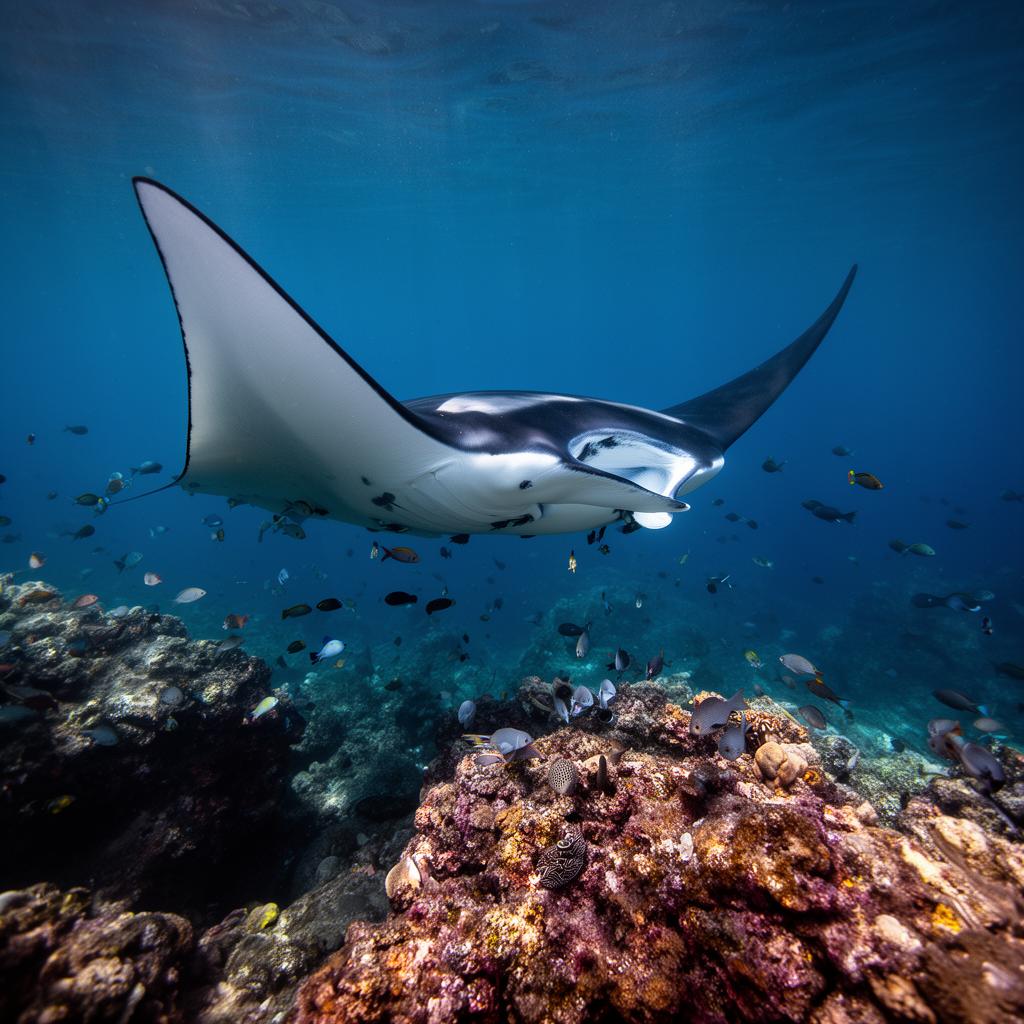
Imagine a ballet beneath the waves, where colossal creatures glide in silent harmony, their movements both powerful and graceful. Picture yourself suspended in crystalline waters, a silent observer to one of nature's most magnificent spectacles. This isn't a dream; it's an invitation to Manta Point, Nusa Penida, an underwater pilgrimage that promises to redefine your understanding of marine encounters.
Why Manta Point Belongs on Your Bucket List
There are dive sites, and then there are dive sites that etch themselves into your very soul. Manta Point, nestled off the dramatic coast of Nusa Penida in Bali, is unequivocally the latter. This isn't just about spotting a manta ray; it's about being immersed in their world, witnessing their behaviour at a world-renowned cleaning station. What makes this experience truly globally unique is the sheer reliability of encounters. Unlike many other locations where manta sightings can be a game of chance, Manta Point offers an extraordinarily high probability of intimate interactions with these gentle giants, often in significant numbers. You're not just hoping to see one; you're often surrounded by them.
The "wow" factor here is multifaceted. It's the moment a manta, with an often-astounding 4-meter wingspan, glides effortlessly overhead, blotting out the sun for a fleeting instant. It's the hypnotic sight of dozens of mantas circling the cleaning station, seemingly posing for your awe-struck gaze. This is a dive for anyone who cherishes wild marine life, for photographers seeking that iconic shot, and for those who simply want to feel the humbling presence of nature's majesty. It suits experienced divers looking for a profound animal encounter, as well as those with fewer logged dives who are comfortable in open water and keen to tick off an unparalleled bucket-list experience.
Beyond the mantas themselves, the dramatic backdrop of Nusa Penida's towering cliffs and the vibrant health of the surrounding reefs add another layer to its allure. It’s an accessible yet utterly wild experience, offering an incredible contrast to Bali’s bustling mainland. The combination of easy accessibility, consistent encounters, and the sheer scale of the creatures makes Manta Point an irresistible draw for divers worldwide.
What You'll See and Do
At Manta Point, the objective is singularly focused: reef manta rays (Mobula alfredi). These magnificent cartilaginous fish are the undisputed stars of the show. You'll primarily encounter them at a natural cleaning station, a shallow, rocky plateau typically between 10 to 15 metres deep. Here, smaller fish, such as wrasse and butterflyfish, diligently pick parasites from the mantas' skin, gills, and mouths. Observing this symbiotic relationship unfold before your eyes is endlessly fascinating.
The standard dive profile involves descending to this plateau, finding a designated viewing spot (often dictated by the dive guide to minimise disturbance), and simply waiting. It’s a passive experience, allowing the mantas to come to you. They are curious and generally unafraid, often circling divers for extended periods. You can expect to see groups ranging from 5 to 20 individuals on a good day, with impressive individuals boasting wingspans up to 4 metres. While reef mantas are the main attraction, you might also spot various reef fish, moray eels lurking in crevices, and occasionally, bamboo sharks or blue-spotted rays on the seafloor.
Beyond the mantas, the surrounding healthy coral gardens of Nusa Penida are home to rich biodiversity. Dive sites such as Crystal Bay, with its vibrant soft corals, or SD Point, offering exhilarating drift dives, provide a perfect complement to the Manta Point experience. These sites introduce you to an array of macro life, colourful reef fish like parrotfish and angelfish, barracuda, and even occasional sightings of tuna or ocean sunfish (Mola mola) during the cooler months.
Best Time to Go
One of the most appealing aspects of Manta Point is its year-round accessibility for manta ray encounters. Unlike some seasonal aggregations, reef mantas are resident in these waters, making regular visits to the cleaning stations regardless of the calendar month. However, there are subtle differences in conditions that might influence your preferred travel time.
The dry season, typically from April to October, offers the most consistently calm surface conditions and sunnier weather. During this period, water temperatures generally range from a comfortable 26 to 28°C (79 to 82°F). Visibility at Manta Point can vary, but generally hovers around 15 to 25 metres on good days. Currents at Manta Point itself are usually mild to moderate around the cleaning station, as the rays prefer calmer waters for their grooming. Slightly stronger currents might be encountered on the journey to or from the site, or at nearby dive sites like Crystal Bay or Toyapakeh, which are renowned for drift diving. The wet season, from November to March, brings higher chances of rain and choppier surface conditions, but the mantas remain present. Water temperature can sometimes dip slightly to 25°C (77°F) during the wet season, particularly if strong winds stir up cooler thermoclines from deeper waters, but can also remain at 27-28°C (81-82°F).
How to Dive Manta Point
Accessing Manta Point is primarily done via day-boat trips from Bali's mainland (Sanur, Padang Bai, or Candidasa), or more conveniently, from Nusa Penida itself. While liveaboards operating in the Komodo/Raja Ampat region occasionally include Bali and Nusa Penida in their itineraries, the majority of dive trips to Manta Point are full or half-day excursions. Given its proximity to shore and the relatively shallow depth of the cleaning station, Manta Point is suitable for certified Open Water divers.
However, we recommend divers have at least 20-30 logged dives, as buoyancy control is paramount to avoid disturbing the mantas or damaging the reef. An Advanced Open Water certification is beneficial, particularly for managing deeper dives at other sites in Nusa Penida, and provides valuable experience in varied conditions. For maximising your bottom time and reducing nitrogen build-up, especially if doing multiple dives in the area, a Nitrox certification is highly recommended. Drifting can be encountered at other sites in the Nusa Penida region, so experience with drift diving or taking a Drift Diver specialty course would be advantageous for a comprehensive experience.
A 3mm or 5mm full-length wetsuit is generally sufficient given the water temperatures, with a hood or a thicker suit preferred by those who chill easily, especially during longer dives or multiple dives in cooler thermoclines. While specific gear isn't mandatory beyond standard recreational dive equipment, a dive computer is essential, and an underwater camera is almost a necessity for capturing these incredible encounters. Ensure your buoyancy compensator (BC) and reg set are well-serviced for reliability.
Conservation and Responsible Diving
Manta rays are magnificent, yet vulnerable, creatures. Revered globally, reef mantas are listed as 'Vulnerable' by the IUCN, making responsible diving practices at Manta Point not just a recommendation, but a crucial imperative. As divers, we are privileged guests in their home. The primary rule is simple: no touching, feeding, or chasing the mantas. Maintain a respectful distance, typically 3-5 metres, and allow them to approach you on their terms. Sudden movements can startle them, causing them to leave the cleaning station.
Buoyancy control is paramount to avoid kicking up sediment or accidentally contacting the reef, which could damage the delicate ecosystem the mantas rely on. When photographing, avoid using strobes directly at the mantas' eyes or gills, as this can disorient them during their cleaning process. Remember to keep your fins off the reef and ensure all equipment is secured to prevent accidental dragging. Supporting operators committed to sustainable tourism and marine conservation efforts further contributes to the long-term protection of these incredible animals and their habitat. Your presence at Manta Point is a testament to its wonder; let it also be a testament to your commitment to its preservation.
Plan Your Trip
The allure of Manta Point is undeniable, a truly unparalleled bucket-list experience that consistently delivers on its promise of intimate encounters with magnificent reef manta rays. This incredible site, with its reliable sightings and stunning Bali backdrop, is waiting for you to discover its wonders. Embark on this unforgettable journey and create memories that will last a lifetime. Browse our exceptional selection of liveaboards that visit the vibrant waters surrounding Nusa Penida and Bali, offering seamless access to Manta Point and myriad other world-class dive sites.