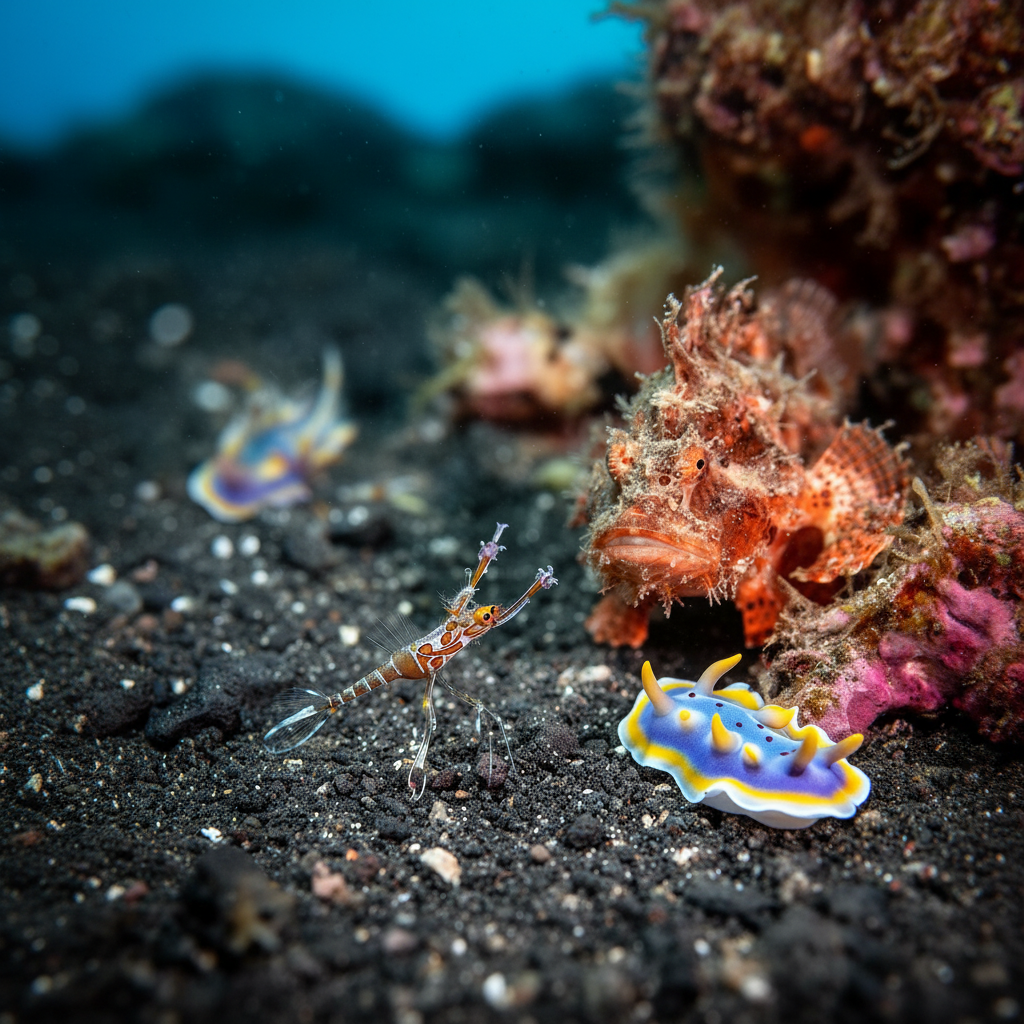
There are some dive experiences that promise majestic giants, vibrant reefscapes, and heart-pounding drift dives. Then there are those that offer something entirely different, a more intimate, almost microscopic universe where patience is rewarded with astonishing discovery. If your dive logs are starting to feel a little too predictable, it’s time to recalibrate your compass and set a course for the extraordinary.
Why Muck Diving Paradise Belongs on Your Bucket List
Imagine slopes of volcanic black sand, seemingly barren at first glance, that then burst into life as your eyes adjust. This isn't just diving; it's an underwater treasure hunt, a macroscopic exploration of the bizarre and the beautiful. Alor’s "Muck Diving Paradise," particularly within the Alor Strait, isn't merely another dive site; it’s a global epicentre for the world’s most sought-after and elusive critters, providing unparalleled photographic opportunities and truly unique encounters.
What makes this corner of Indonesia so singularly special? It's the unique confluence of nutrient-rich currents, volcanic sediment, and diverse macrohabitats that creates a perfect storm for biodiversity. You're not just observing marine life here; you're peering into the intricate dramas of creatures typically hidden from plain sight. It’s a dive experience that suits the quiet observer, the avid underwater photographer, and anyone who derives immense satisfaction from finding the rare and the unusual. If the thought of a Blue-Ringed Octopus flashing its iridescent warnings or a Rhinopias camouflaged against the seabed sends a thrill down your spine, then this is unequivocally your next great adventure.
What You'll See and Do
The sheer density and diversity of rare critters in Alor are what set it apart. Dive sites like Batang Air, appropriately named "The Highway," and the renowned "Clown Valley" are teeming with life. As you meticulously explore the black sand and rubble, your keen-eyed dive guide will point out masterpieces of camouflage: the venomous, yet mesmerising, Blue-Ringed Octopus, often seen hunting or displaying its vivid colours. Flamboyant Cuttlefish, with their constantly shifting patterns and deliberate movements, are a common and utterly captivating sight. The mimic octopus, a master of deception, will astound you with its ability to impersonate other marine animals.
Beyond these iconic creatures, the underwater landscape reveals a parade of other extraordinary inhabitants. Keep an eye out for various species of Rhinopias (scorpionfish), especially the Paddle-Flap and Weedy varieties, which are expert at blending into their surroundings. You might also encounter ornate ghost pipefish, various frogfish species (from painted to hairy), and a dizzying array of nudibranchs in every imaginable shape and colour. These dives are typically shallow to medium, often ranging from 5 to 25 metres, allowing for ample bottom time to patiently observe and photograph these incredible behaviours, from symbiotic relationships to predatory strikes. The style of diving is slow and deliberate, often involving careful hovering and meticulous examination of small patches of seafloor, truly rewarding the patient and observant diver.
Best Time to Go
One of the many appeals of Alor’s Muck Diving Paradise is its accessibility year-round. Unlike some dive destinations with strict seasons, Alor generally offers excellent conditions regardless of the month, making it a highly flexible destination for planning your dive holiday.
That said, the "drier" season, roughly from April to November, often sees slightly calmer seas and more consistently sunny weather, which can be a bonus for surface intervals and topside excursions. Water temperatures in the Alor Strait are consistently warm, generally ranging between 26°C and 30°C (79°F to 86°F), meaning a 3mm or 5mm wetsuit is usually more than sufficient. Visibility can vary, as is often the case with muck diving, but typically ranges from 10 to 25 metres. While there can be strong currents in the Alor Strait due to the deep, narrow channels, muck dives are specifically chosen for their sheltered locations or planned during slack tide to maximise observation time. Experienced dive guides are adept at identifying the prime conditions for these specialised dives.
How to Dive Muck Diving Paradise
Accessing the best muck diving sites in Alor is predominantly via liveaboard. While there are a handful of shore-based resorts that offer day trips, a liveaboard provides unparalleled access to the most remote and pristine sites across the entire Alor Strait and beyond. It allows for multiple dives daily, including twilight and night dives which are often the most productive for finding nocturnal critters. Liveaboards also provide the convenience of diving multiple distinct areas without the daily travel logistics, maximising your time underwater. Selecting a liveaboard that specifically caters to macro photographers or offers dedicated muck diving itineraries will significantly enhance your experience, as their guides are often experts in spotting the minutiae.
For muck diving in Alor, an Open Water Diver certification is the minimum requirement, but to truly make the most of the diverse conditions and depths, an Advanced Open Water certification is highly recommended. Drifting through nutrient-rich currents to reach a sheltered muck site is common, so a Drift Diver Speciality can also be very beneficial. Given the often longer bottom times and patience required, Nitrox certification is almost a prerequisite, allowing you to extend your no-decompression limits and maximise your critter-hunting efforts. A 3mm full-length wetsuit is generally comfortable for the water temperatures and provides good protection against minor abrasions on sandy or rubble bottoms. For gear, a good macro lens for photographers is essential, and a focusing light can be invaluable. Always bring a pointer stick (for stability and signalling, not touching) and be mindful of your buoyancy control to avoid disturbing the delicate habitat.
Conservation and Responsible Diving
The very nature of muck diving in Alor, focusing on small, often vulnerable creatures, demands the utmost respect and responsible diving practices. Alor’s exceptional biodiversity is a delicate ecosystem. It's imperative to maintain impeccable buoyancy control to avoid making contact with the seabed, which can easily stir up sediment, reduce visibility for others, and harm fragile organisms. Absolutely no touching, harassing, or collecting of marine life is permitted. For photographers, ethical practices mean avoiding excessive use of strobes, not ‘herding’ animals for a shot, and being conscious of your fin kicks to prevent damaging the environment or disturbing other divers. By adhering to these principles, we ensure that Alor's Muck Diving Paradise remains pristine and abundant for future generations of divers and, most importantly, for its extraordinary inhabitants.
Plan Your Trip
Ready to trade the familiar for the fantastical? Alor's Muck Diving Paradise is waiting to reveal its hidden depths and miniature marvels. Browse our curated selection of premium liveaboards departing for Alor and let Blue Rides help you embark on an unforgettable journey into the heart of Indonesia's critter kingdom.
