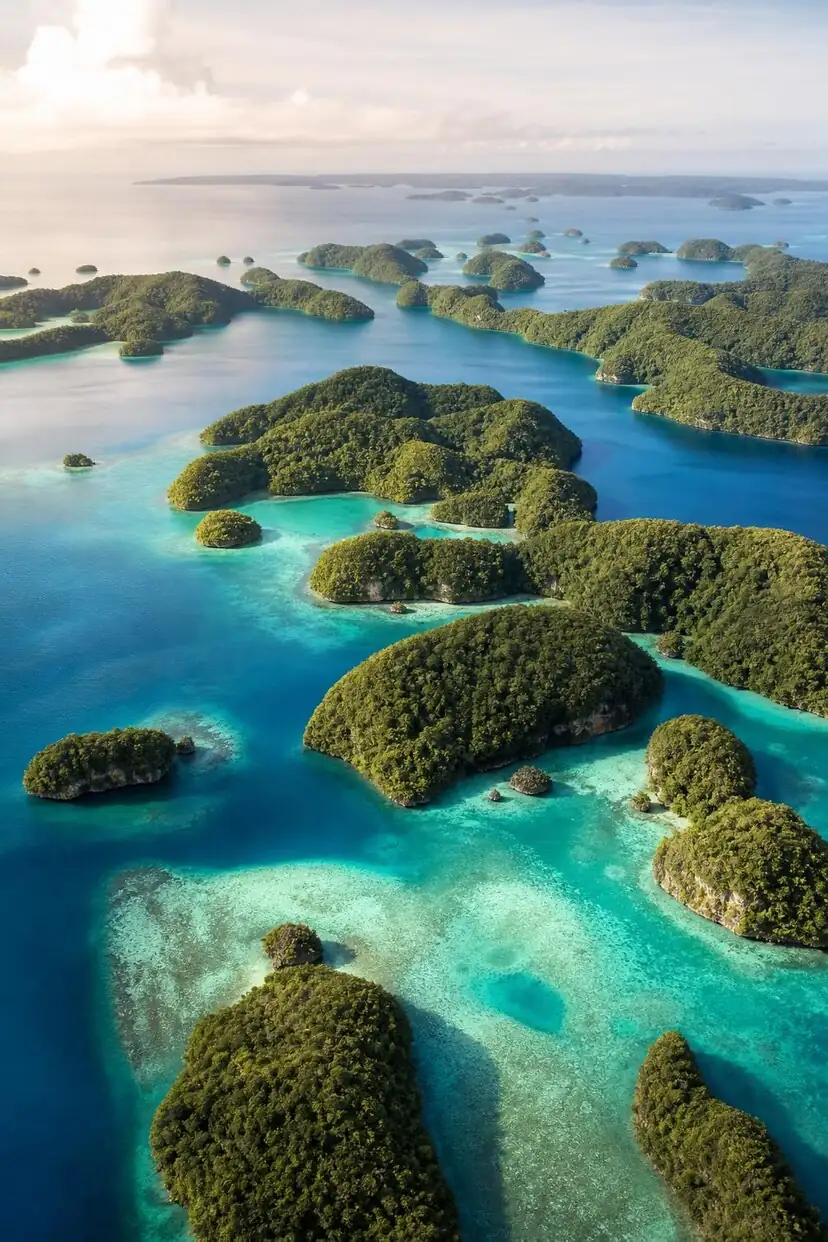
Banda Sea Liveaboard Diving
Indonesia's Last Frontier — Where History Meets the Abyss

About Banda Sea
The Banda Sea in eastern Indonesia is one of the last true frontier diving destinations — a vast, deep ocean basin surrounded by volcanic islands, pristine coral reefs, and legendary pelagic encounters including hammerhead schools, whale sharks, and massive pods of dolphins.
For divers who believe the greatest rewards lie beyond the beaten path, the Banda Sea represents one of the last true frontiers. This vast, deep oceanic basin in eastern Indonesia is a realm of volcanic islands, nutrient-rich upwellings, and legendary pelagic encounters. A Banda Sea liveaboard is less a vacation and more an expedition, crossing open waters to reach isolated pinnacles and walls that plunge into the abyss. The region's sheer remoteness and volcanic geology have preserved its pristine coral ecosystems and created a thriving marine environment, making it a pilgrimage for those seeking raw, untamed underwater wilderness.
The sheer scale of marine life is what defines Banda Sea diving. Journeys often focus on the "Ring of Fire," where encounters with schooling scalloped hammerhead sharks are the main event, particularly around the remote island of Manuk, which is also famous for its incredible congregations of sea snakes. The best dive sites in the Banda Sea offer a stunning variety, from the current-swept walls patrolled by giant trevally and dogtooth tuna to the vibrant coral gardens of the Banda Islands themselves. Many itineraries begin or end in Ambon, providing a perfect contrast with its world-renowned muck diving and rare critters, showcasing the incredible biodiversity of the region.
Timing is critical for navigating this expansive area. The prime seasons for a Banda Sea liveaboard are the brief inter-monsoon windows from September to November and again from March to April. During these months, the seas are at their calmest, allowing for safe and comfortable crossings between islands. These periods also bring the best underwater conditions, with water temperatures averaging a pleasant 27-30°C and visibility that frequently exceeds 30 meters, offering crystal-clear views of the dramatic underwater landscapes and the pelagic life that congregates here.
A journey through the Banda Sea is best suited for the experienced, adventurous diver. Due to the open-ocean crossings, deep dive profiles, and potential for strong, unpredictable currents, an Advanced Open Water certification with a minimum of 50 logged dives is strongly recommended. This is a destination for those comfortable with challenging conditions and who are driven by the thrill of exploration and the pursuit of big animal encounters. If you're looking to witness pelagic action on a grand scale and dive sites that few have ever seen, this is an expedition that delivers.
Top Dive Sites in Banda Sea
- Hatta Island Wall — advanced (10-40m)
- Gunung Api Lava Flow — beginner (3-25m)
- Batu Kapal — advanced (8-35m)
- Banda Neira Jetty — beginner (2-12m)
- Ai Island Reef — beginner (3-30m)
- Run Island Wall — advanced (5-40m)
- Nil Desperandum — advanced (15-40m)
- Nusa Laut Corner — advanced (12-35m)
- Rhun Drift — advanced (5-30m)
- Karaka Reef — intermediate (5-25m)
- Sonegat Channel — intermediate (8-25m)
- Banda Besar South Wall — intermediate (5-40m)
- Pulau Pisang — beginner (3-20m)
- Lucipara Atoll — advanced (5-35m)
- Serua Island — advanced (8-40m)
- Banda Api North — intermediate (5-30m)
- Pohon Miring — beginner (3-20m)
- Forgotten Wreck — intermediate (20-35m)