
Blacktip Reef Shark
Carcharhinus melanopterus
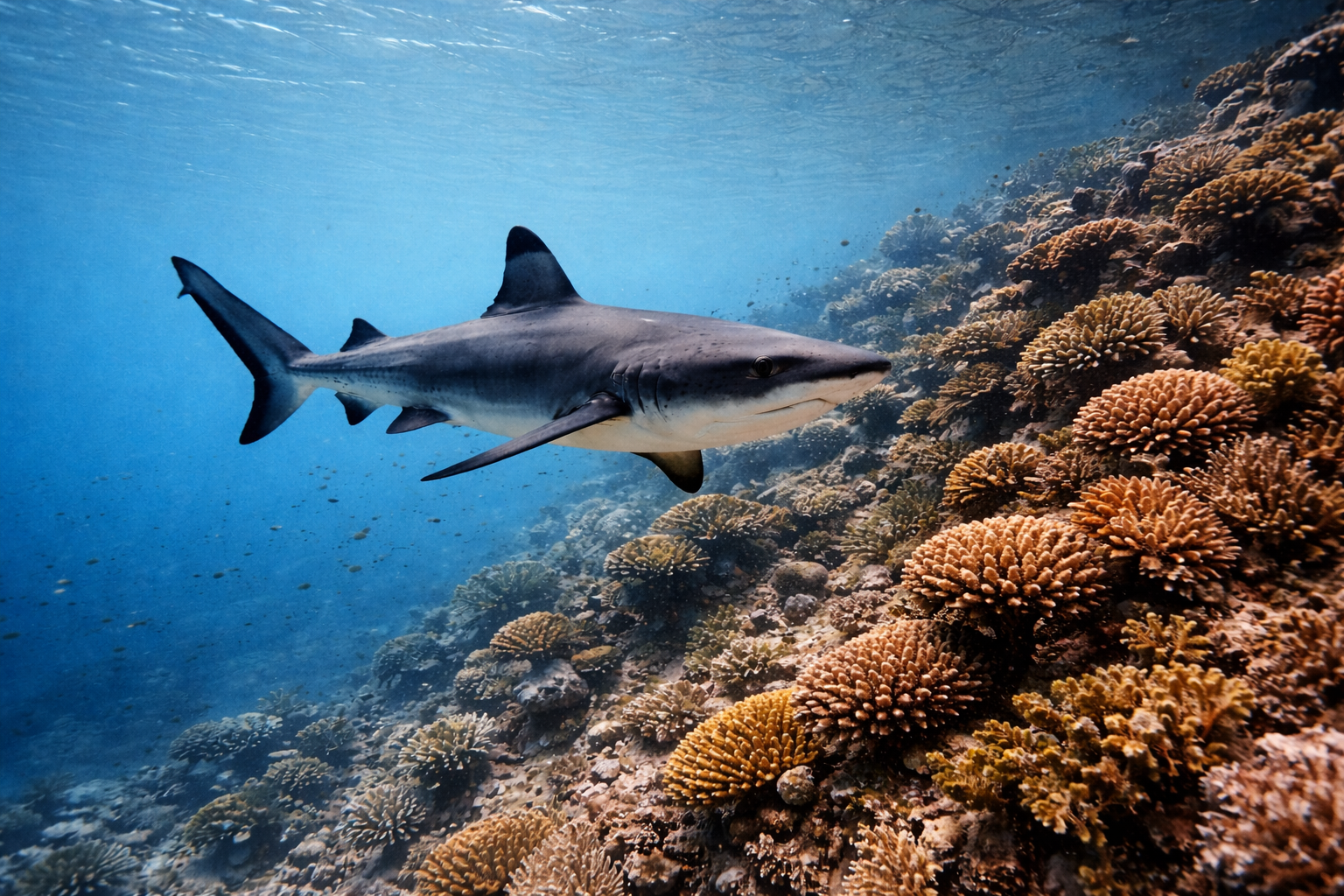
About Blacktip Reef Shark
The blacktip reef shark is one of the most commonly encountered shark species in Thai waters. Recognizable by the distinctive black tips on their fins, these elegant predators patrol shallow reef areas and are frequently seen at dive sites throughout the Andaman Sea and Gulf of Thailand.
Quick Facts
- Habitat: The Blacktip Reef Shark, *Carcharhinus melanopterus*, is a common inhabitant of **shallow, tropical waters** across the Indo-Pacific, from the Red Sea and East Africa to Hawaii and the Marquesas Islands. These opportunistic predators are strongly associated with **coral reefs, lagoons, and mangroves**, rarely venturing into waters deeper than 75 meters. They are frequently observed cruising over sandy flats, along the reef crest, and within passes and channels. Juvenile sharks often seek refuge in extremely shallow areas, such as **mangrove estuaries** and **intertidal zones**, which offer protection from larger predators. Notable dive destinations where these sharks are consistently found include the **Maldives**, particularly in atoll lagoons; **Palau's inner reefs**; and the **Great Barrier Reef** in shallow bays. Their territorial nature means they often frequent the same areas, making them a reliable sight for divers in their preferred habitats.
- Diet: Blacktip Reef Sharks are active and efficient predators, primarily feeding on **small reef fish**. Their diet commonly includes damselfish, mullet, wrasse, and small groupers. They also opportunistically consume cephalopods such as **octopus and squid**, and occasionally crustaceans. Their hunting strategy often involves **solitary patrols** of reef edges and sandy bottoms. When prey is detected, they may perform a **rapid, agile pursuit**, sometimes swerving to herd fish into confined spaces before striking. Group hunting is rare but can occur, particularly when targeting schooling fish. Their feeding behavior is generally diurnal, making them a common sight during daytime dives. They possess **sharp, serrated teeth** well-suited for grasping and tearing their prey.
- Best season: Encounters with Blacktip Reef Sharks are possible **year-round** in much of their tropical range due to their preference for warm, stable waters. However, specific seasons can offer heightened visibility or increased shark activity. In the **Maldives**, sharks are consistently present, but the **dry season from December to May** generally offers the best visibility due to calmer seas. For **Palau**, shark encounters are reliable throughout the year, with **July to October** sometimes seeing increased activity as other marine life aggregates. In the **Great Barrier Reef**, sightings are common during the **dry season, from May to November**, when rainfall is lowest, and water clarity is optimal. During **monsoon seasons** in certain regions, increased freshwater runoff can reduce visibility within shallow lagoons and coastal areas, though sharks do not necessarily migrate away. Generally, the **warmest months** with **calmest ocean conditions** provide the most comfortable and rewarding diving opportunities for observing these sharks.
Fun Facts
They can survive in water so shallow their dorsal fin breaks the surface,Blacktips are viviparous — mothers give birth to 2–5 live pups,They are one of the few shark species known to leap fully out of the water,Individual blacktip reef sharks often patrol the same section of reef for years
Diving Tips
When diving with Blacktip Reef Sharks, maintaining a **calm and respectful demeanor** is paramount. These sharks are generally shy and will avoid divers if they feel threatened. Always maintain a **safe and non-intrusive distance**, avoiding sudden movements or attempts to chase them, which can stress the animals and alter their natural behavior. Look for them cruising along **reef edges, over sandy patches**, and within shallow lagoons, often in small groups or singly. Their distinctive **black tips on all fins**, particularly the first dorsal, make them easily identifiable. They are commonly seen in areas with **healthy coral reefs and abundant fish life**. While generally considered **harmless to divers**, always remember they are wild predators. Avoid diving with any **visible fish bait or spearfishing equipment**, as this can attract unwanted attention and trigger a feeding response. **Never feed sharks** or participate in shark feeding dives unless conducted by highly experienced and regulated operations, as this can habituate them to humans and alter their natural hunting behaviors. Always adhere to **local diving regulations** and follow your dive guide's instructions. Ethical viewing practices ensure these magnificent creatures can be enjoyed for generations.