
Walking Shark
Hemiscyllium species
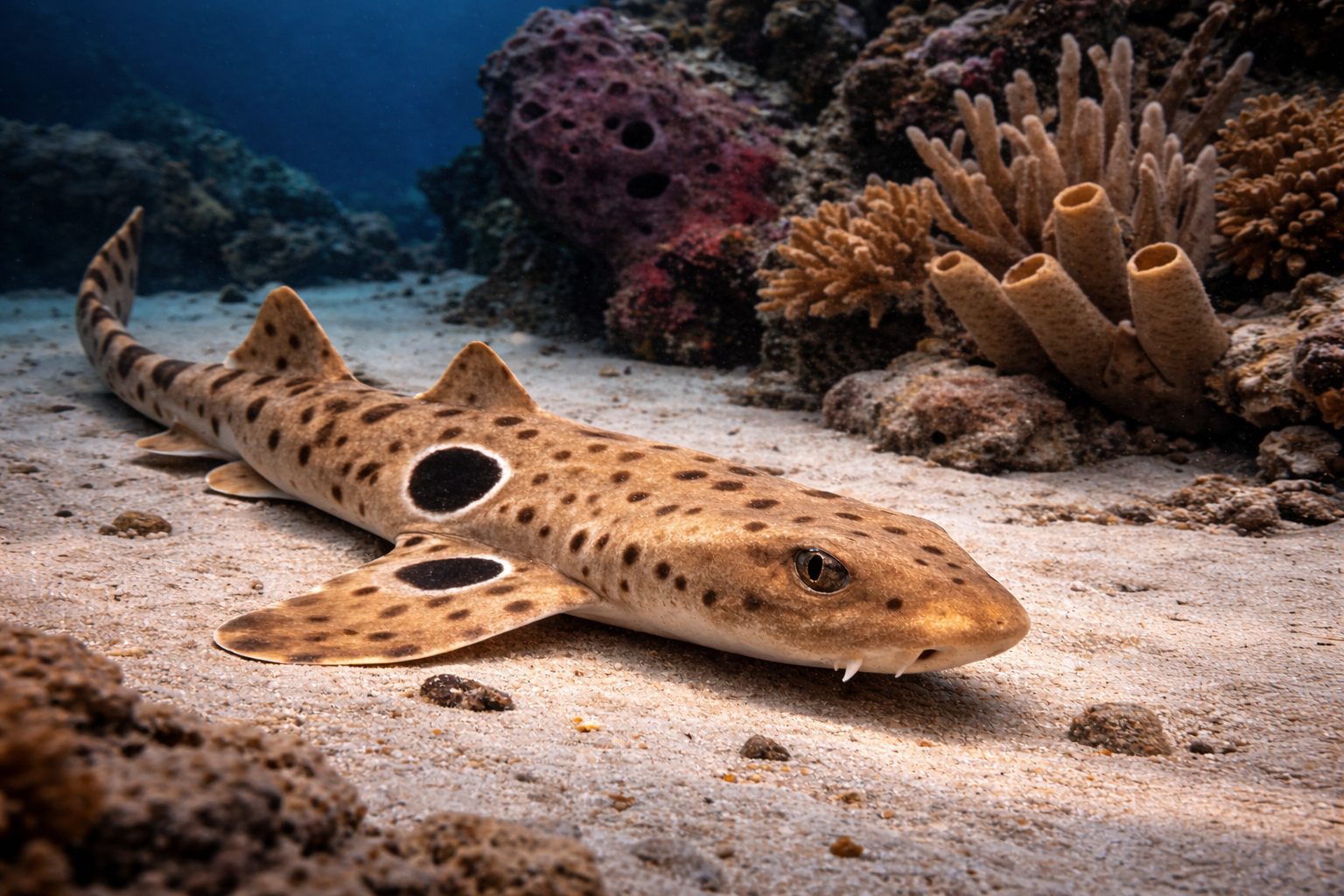
About Walking Shark
Walking sharks, or epaulette sharks, are extraordinary creatures that can 'walk' across the reef using their pectoral and pelvic fins. Several species are endemic to Raja Ampat and Papua.
Quick Facts
- Habitat: Walking sharks, comprising several species within the genus *Hemiscyllium*, are fascinating bottom-dwellers primarily found in the **tropical Indo-Pacific waters**. These small, nocturnal sharks inhabit **shallow coral reefs**, seagrass beds, and rubble areas, typically at depths of less than 30 meters, though some species may go deeper. Their distribution spans from **Northern Australia** (e.g., Great Barrier Reef, Coral Sea) and **Papua New Guinea** to Indonesia (e.g., Raja Ampat, Komodo) and the Solomon Islands. Each species often has a relatively **restricted geographic range**, making certain locations renowned for specific *Hemiscyllium* sightings. For instance, the **Epaulette Shark** (*Hemiscyllium ocellatum*) is prevalent along the northern coast of Australia and Papua New Guinea, while the **Hooded Carpetshark** (*Hemiscyllium michaeli*) is found primarily around Papua New Guinea. They are highly adapted to their benthopelagic lifestyle, using their muscular, paddle-like pectoral fins to literally 'walk' along the seafloor, navigating complex reef structures and foraging. This unique locomotion is particularly observable in areas with **high reef complexity** and abundant shelter.
- Diet: Walking sharks are **opportunistic benthic predators**, feeding primarily on a variety of small invertebrates and fishes found within their reef habitats. Their diet typically includes **crustaceans** like crabs and shrimp, as well as small **worms and mollusks**. They also consume small **bony fish**, particularly those that are slow-moving or reside close to the substratum. These sharks are **nocturnal hunters**, using their highly developed senses of smell and electroreception to locate prey hidden in the sand, under coral rubble, or within crevices. Their unique 'walking' ability is not just for locomotion; it also aids in foraging, allowing them to systematically comb the seafloor and access tight spaces where prey might be hiding. They will often **probe sand and rubble** with their snouts to uncover hidden food sources. Given their small size and specialized hunting technique, they play an important role in the **reef's micro-ecosystem**, helping to control populations of smaller invertebrates.
- Best season: Encounters with walking sharks can be quite consistent throughout the year in their primary habitats due to their **sedentary nature** and preference for **stable tropical waters**. However, for optimal diving conditions and increased chances of spotting them, the **dry season** in many Indo-Pacific regions often presents the best opportunities. For areas like **Raja Ampat, Indonesia**, and **Papua New Guinea**, the months from **October to April** generally offer calmer seas, better visibility, and consistent warm water temperatures, making diving more enjoyable and successful. In **Northern Australia**, particularly along the **Great Barrier Reef** and Coral Sea, visibility tends to be excellent from **May to October**, when cyclone season has passed and the waters are typically clearer. While they are present year-round, their **nocturnal habits** mean that they are most active and therefore most likely to be seen during **night dives**. During the day, they often shelter under coral ledges or in crevices, making them harder to spot. Targeting dive sites known for their healthy coral ecosystems and **abundance of reef structure** will increase the likelihood of an encounter, regardless of the specific month.
Fun Facts
They can survive for up to an hour with virtually no oxygen by shutting down non-essential brain functions,At least nine species have been identified, with new species still being discovered,They can 'walk' between isolated tide pools during low tide,New species are still being discovered in Indonesian waters
Diving Tips
When diving for walking sharks, **patience and keen observation** are paramount due to their cryptic nature and excellent camouflage. These sharks are primarily **nocturnal**, so **night dives** offer the best chance of witnessing their unique 'walking' behavior and active foraging. During the day, look for them **resting quietly** under coral bommies, in small caves, or nestled within reef crevices. Their flattened bodies and patterned skin allow them to blend seamlessly with the reef. Diver behavior should be **calm and deliberate**; avoid sudden movements or loud noises that could disturb them. Maintain a **safe and respectful distance** to observe their natural behavior without causing stress. **Buoyancy control is critical** to avoid contact with the delicate coral habitat they inhabit, and to prevent stirring up sediment that could obscure views. When on night dives, use your dive light responsibly, employing **red light filters** if possible, or dimming your beam to avoid startling them. Focus your search in **shallow reef areas**, typically between 5 to 20 meters, carefully scanning along the sandy patches, rubble zones, and the base of coral heads. While generally **harmless to humans**, like all marine life, do not attempt to touch, chase, or harass the sharks, as this is **detrimental to their well-being** and can be illegal in marine protected areas. Always dive **within your certification limits** and consider a local guide who knows specific resting or hunting grounds for these fascinating creatures. Report any unusual sightings or behaviors to your dive operator or local marine authorities.