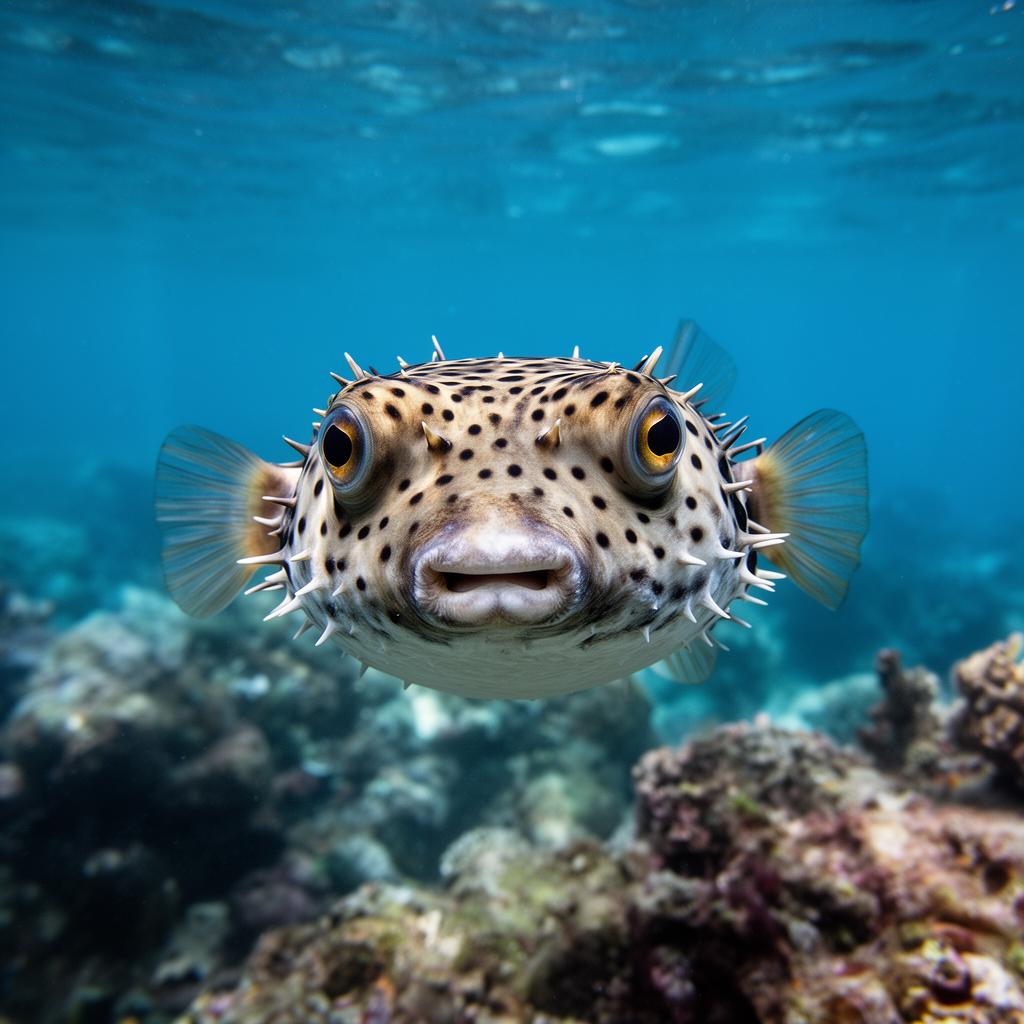
Pufferfish
Tetraodontidae
About Pufferfish
Adorable inflatable fish that puffs up to deter predators
Quick Facts
- Habitat: Pufferfish, belonging to the family Tetraodontidae, are a diverse group found predominantly in **tropical and subtropical marine waters** globally. Their preferred habitats vary significantly by species, but a common thread is their association with **reefs, seagrass beds, and estuaries**. In the Indo-Pacific, divers frequently encounter them among the vibrant coral formations of the **Coral Triangle**, including renowned sites like **Raja Ampat** in Indonesia, the **Philippines**, and the **Great Barrier Reef** in Australia. Species such as the impressive Starfish Puffer (Arothron meleagris) or the smaller Black-spotted Puffer (Arothron nigropunctatus) are often seen **cruising over reef flats** or hiding within crevices. In the Caribbean, species like the Bandtail Puffer (Sphoeroides spengleri) thrive in shallower, more protected environments like the **mangrove-fringed lagoons** of Belize and the Florida Keys, while the infamous Southern Puffer (Sphoeroides nephelus) can be found in a broader range from sandy bottoms to rocky reefs around the **Cayman Islands and Bahamas**. Some species are also adapted to **brackish waters**, venturing into river mouths and estuaries, demonstrating their remarkable adaptability. Their presence is generally **consistent year-round** in their respective tropical habitats, although specific populations might show slight shifts in distribution based on breeding cycles or food availability. They are ubiquitous residents of healthy reef ecosystems.
- Diet: Pufferfish are largely **carnivorous or omnivorous**, with a diet primarily consisting of **hard-shelled invertebrates**. Their powerful, beak-like fused teeth are perfectly adapted for **crushing the shells** of crabs, shrimp, mollusks like snails and clams, and even sea urchins. This specialized dentition allows them to effectively exploit niches where other fish cannot access food. Many species are observed **nibbling on coral polyps** or scraping algae from rocks, indicating an opportunistic or supplemental component to their diet. Juvenile pufferfish often consume smaller crustaceans and worms. Their feeding strategy is typically one of **slow, deliberate foraging**, often seen methodically exploring the reef or sandy bottoms, using their pectoral fins for precise maneuvering. They are not fast pursuers but rather rely on **ambush or direct attack** on their often slow-moving prey. Some species, like the Bandtail Puffer, are known to **root around in soft sediments** to unearth buried invertebrates, while others may target the tube feet of sea urchins, flipping them to access the softer underside. This varied diet underscores their role as important **benthic predators** in marine ecosystems, helping to regulate populations of their prey items.
- Best season: Pufferfish are generally present year-round in their tropical and subtropical habitats, making them a consistent sighting for divers. However, certain seasons might offer slightly better viewing opportunities or denser populations due to breeding cycles or calmer waters. For the **Indo-Pacific**, including popular destinations like **Indonesia (Raja Ampat, Komodo), the Philippines, and Malaysia**, the **dry season from April to October** often brings the best visibility and calmest sea conditions, making it easier to spot these often camouflaged fish. While they are always present, this period is ideal for extensive reef explorations. In the **Caribbean**, the prime diving season typically runs from **December to May**, offering exceptionally clear waters and cooler temperatures, although pufferfish are a **staple year-round** resident of reefs in locations such as the **Bahamas, Cayman Islands, and Belize**. The warmer months outside of hurricane season (roughly June to November) can also be excellent, but divers should be mindful of potential tropical storms. In regions like the **Galapagos Islands**, pufferfish are observable **all year**, but the warmer water period from **December to June** may see slightly higher activity due to increased metabolic rates. Essentially, the **best time to see pufferfish is whenever you can dive** in their tropical ranges, as they are not migratory in a seasonal sense like some pelagic species. However, planning dives during periods of **optimal diving conditions** (calm seas, good visibility) will always enhance your chances of observing them in their natural habitat.
Fun Facts
Pufferfish contain tetrodotoxin, one of the most potent toxins in nature,They inflate by swallowing water, increasing their size up to three times,Male pufferfish create elaborate sand art on the seafloor to attract mates
Diving Tips
When diving with pufferfish, remember that they are generally **docile and slow-moving**, making them excellent subjects for observation and photography. Spotting them often involves looking for **distinctive patterns and body shapes** on the reef or over sandy bottoms; many species have unique spots, stripes, or reticulated patterns. Their large, often **bulbous eyes** can also be a giveaway. Pufferfish typically cruise slowly, using their pectoral fins for propulsion, or rest in crevices. Maintain a **respectful distance**, allowing them ample space. Under **no circumstances should divers provoke or attempt to touch a pufferfish**. Their famous ability to inflate into a ball-like shape is a **defense mechanism** against predators and is highly stressful for the fish, potentially causing injury or even death due to exhaustion. This is an **ethical imperative** and a crucial aspect of responsible diving. Pufferfish contain **tetrodotoxin**, a potent neurotoxin concentrated in their skin, liver, and ovaries, making them **extremely poisonous** if ingested. While not a direct threat to divers in the water unless consumed, it underscores the importance of a **hands-off approach** to marine life. Avoid chasing them or blocking their path. Pay attention to their natural behavior; watching them forage for crustaceans or delicately pick at algae can be incredibly rewarding. If you spot one partially hidden in the sand, approach slowly and with minimal disturbance to observe it without scaring it further into hiding. Good **buoyancy control** is paramount to avoid damaging the reef or stirring up sediment, which could stress the fish and obscure your view. These fascinating creatures are a highlight of many dives, and observing them responsibly ensures both their well-being and a rewarding experience for you.