Scorpionfish
Scorpaenidae
About Scorpionfish
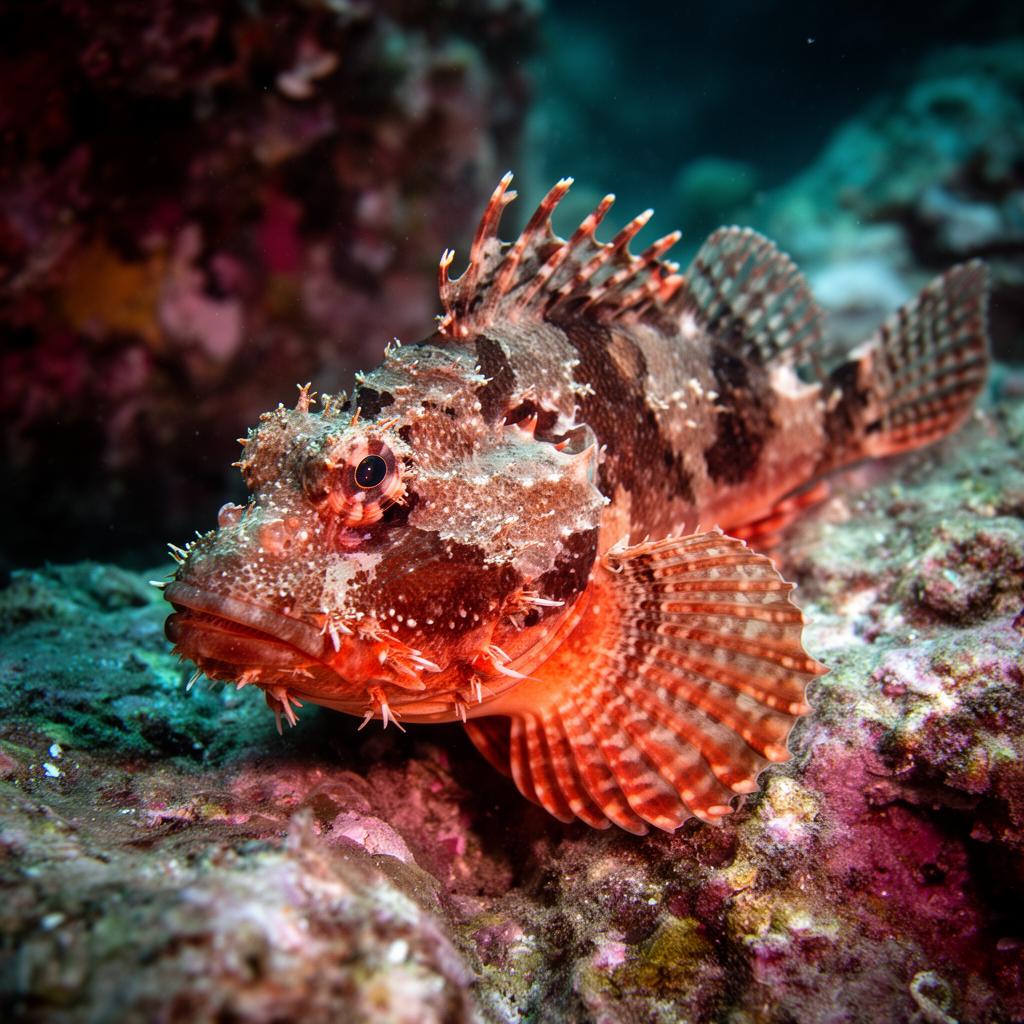
Venomous ambush predator perfectly camouflaged on the reef
Quick Facts
- Habitat: Scorpionfish, belonging to the family Scorpaenidae, are cosmopolitan bottom-dwellers found in all tropical and temperate seas, inhabiting depths from the **intertidal zone** down to over 800 meters. These masters of **camouflage** are typically found on rocky reefs, coral formations, rubble fields, and seagrass beds, where their **cryptic coloration** and highly textured skin allow them to blend seamlessly with their surroundings. Divers can encounter various species across the globe; for instance, the Pterois species (lionfish) are abundant in the **Indo-Pacific**, including popular dive destinations like **Raja Ampat, Indonesia**, and the **Philippines**, though unfortunately, they are an invasive species in the Caribbean. Temperate species, such as those in the genus Scorpaena, are common in the **Mediterranean Sea**, around the Canary Islands, and along the Californian coast. They prefer areas with **plenty of cover** where they can lie in ambush, often perching on sponges, under ledges, or half-buried in sand or detritus. Their widespread distribution means divers are likely to encounter some form of scorpionfish in almost any marine environment that offers appropriate substrate for their **ambush hunting strategy**.
- Diet: Scorpionfish are **apex predators** in their micro-environments, primarily carnivorous and feeding on a diet of smaller fish, crustaceans, and other invertebrates. Their hunting strategy is one of **pure ambush**; they remain perfectly still, relying entirely on their **expert camouflage** to become virtually invisible to unsuspecting prey. When a suitable meal, such as a small reef fish, crab, or shrimp, ventures within striking distance, the scorpionfish executes a **lightning-fast lunge**, engulfing the prey whole with its large, protrusible mouth. They are **opportunistic feeders**, consuming almost anything they can overpower and swallow. Some more agile species, like the lionfish, may employ herding tactics with their pectoral fins to corner prey, but the majority of scorpionfish subspecies are content to **lie in wait**. This diet sustains them in diverse habitats, making them a crucial link in the food web by controlling populations of smaller organisms in their respective ecosystems.
- Best season: The best season to encounter scorpionfish largely depends on the specific species and their geographic location, as they are found in a vast range of environments. In **tropical Indo-Pacific** regions, such as **Thailand**, **Malaysia**, and the **Great Barrier Reef**, scorpionfish can be reliably found year-round due to the stable warm water temperatures. However, during the **drier months** (typically **May to October**), visibility often improves, making spotting these camouflaged creatures slightly easier. For temperate species in locations like the **Mediterranean Sea** or off the coast of **California**, the **warmer summer and autumn months** (**June to November**) often bring an increase in marine activity and allow for more comfortable diving conditions to spot them. During these times, their prey species are often more abundant, which can cause higher densities of scorpionfish in particular areas. Monitoring local water temperatures and prey availability can sometimes predict better viewing opportunities, but their **sedentary, cryptic nature** means they are generally present throughout most dive seasons in suitable habitats.
Fun Facts
Scorpionfish can remain motionless for hours waiting for prey,Their venomous spines are purely defensive,Some species shed their skin regularly like snakes
Diving Tips
Encountering scorpionfish requires a keen eye and respectful diving practices. When diving, look for subtle outlines or textures that seem out of place on rocks, corals, or rubble – their **camouflage is exceptional**. Common species in areas like **Egypt's Red Sea** and **Indonesia** often perch motionless on coral heads. Maintain **excellent buoyancy control** at all times, as scorpionfish are highly venomous. Their dorsal spines can deliver a painful sting if stepped on or touched inadvertently, even through wetsuits. **Never touch or harass** any marine life, especially scorpionfish, as their sting can cause severe pain, swelling, and in rare cases, systemic reactions. If stung, seek **immediate medical attention**. **Observe from a safe distance**, allowing these fascinating creatures to continue their natural behaviors undisturbed. For photographers, approach slowly and avoid casting shadows, using natural light or careful strobes to capture their intricate patterns. Always remember the **'look but don't touch'** mantra, essential for both your safety and the well-being of the marine environment. Be particularly observant when navigating **shallow reef areas** or anywhere you might place a hand or knee for stability, as scorpionfish blend seamlessly with their surroundings and are masters of remaining perfectly still.