Octopus
Octopus vulgaris
About Octopus
Intelligent masters of camouflage
Quick Facts
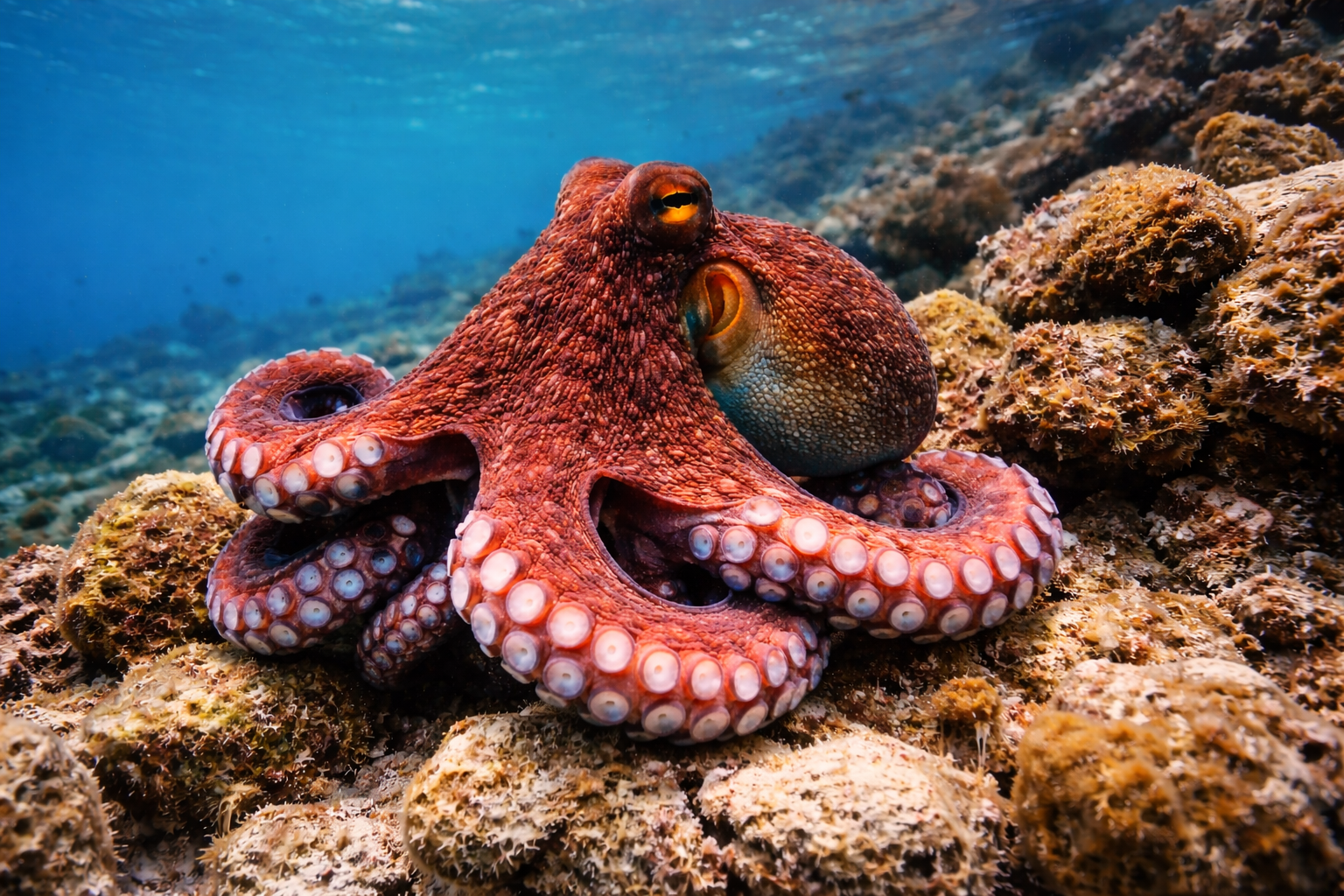
- Habitat: The common octopus, *Octopus vulgaris*, is a highly adaptable invertebrate found in a **wide range of marine environments** across tropical, subtropical, and temperate waters globally. These intelligent cephalopods prefer **rocky crevices, coral reefs, and sea grass beds** from the intertidal zone down to depths of around 200 meters, though they can be found deeper. Their distribution is extensive, encompassing the Atlantic Ocean, including the **Mediterranean Sea**, the coastlines of West Africa, and the eastern seaboard of North and South America. In the Indo-Pacific, they are common throughout the **Red Sea**, across Southeast Asia to Australia, and in the Western Pacific. Divers can frequently spot them among the vibrant reefs of destinations like the **Great Barrier Reef** in Australia, around the numerous islands of the **Philippines**, within the sheltered bays of the **Galapagos Islands**, and throughout the Caribbean on islands such as **Bonaire** and Grand Cayman. They are typically **solitary creatures**, establishing temporary dens that they frequently relocate, often evidenced by accumulations of discarded shells and crab carapaces nearby. Their ability to change color and texture instantaneously allows them to **blend seamlessly** with their surroundings, making them masters of camouflage against rocks, sand, and corals.
- Diet: The common octopus is a **highly effective and opportunistic predator**, with a diet primarily consisting of crustaceans and molluscs. Their favored prey includes **crabs, prawns, lobsters, and various bivalves** like clams and mussels, as well as gastropods. They hunt by first stealthily approaching their prey, often camouflaged, before pouncing. Octopuses are known for their **remarkable problem-solving abilities** when hunting; they can use their powerful beaks to crack open shells, or, more ingeniously, drill a small hole into the shells of molluscs using a specialized radula and inject a **paralytic venom** to subdue their meal before consuming the soft tissues. They also manipulate their prey with their eight strong arms, which are lined with suckers, allowing them to **grasp and control** even struggling crustaceans. Divers might observe signs of their feeding activity near dens, marked by **piles of empty shells** and discarded crustacean exoskeletons, revealing a recent successful hunt.
- Best season: Encounters with *Octopus vulgaris* can occur year-round in many of their preferred habitats due to their **wide distribution and adaptability**. However, certain seasons offer **more consistent sightings** or conditions favorable for observing their behavior. In the Mediterranean Sea, the period from **late spring to early autumn (May to October)** often provides warmer waters and excellent visibility, increasing the likelihood of spotting octopuses as they are more active. Similarly, in the Caribbean and Central American Pacific coasts, the **dry season (roughly December to May)**, characterized by calm seas and good visibility, is generally considered optimal for diving and thus for octopus encounters. For dive sites in the Indo-Pacific, such as those in the **Philippines or Indonesia**, the warmer, calmer months typically between **April and November** are ideal. In temperate regions, such as the coasts of Southern California or parts of Australia, octopus activity can be high during the **late spring and summer months (October to April in the Southern Hemisphere)** when water temperatures are milder. Breeding season can also influence sightings, as octopuses may be **more visible during courtship**, though they become highly secretive when brooding eggs. Overall, focusing on seasons with good diving conditions and **peak marine activity** will improve your chances of observing these fascinating cephalopods.
Fun Facts
Octopuses have three hearts and blue blood,They can squeeze through any gap larger than their beak,They have been observed using tools like coconut shells for shelter,Females die shortly after their eggs hatch, having guarded them without eating
Diving Tips
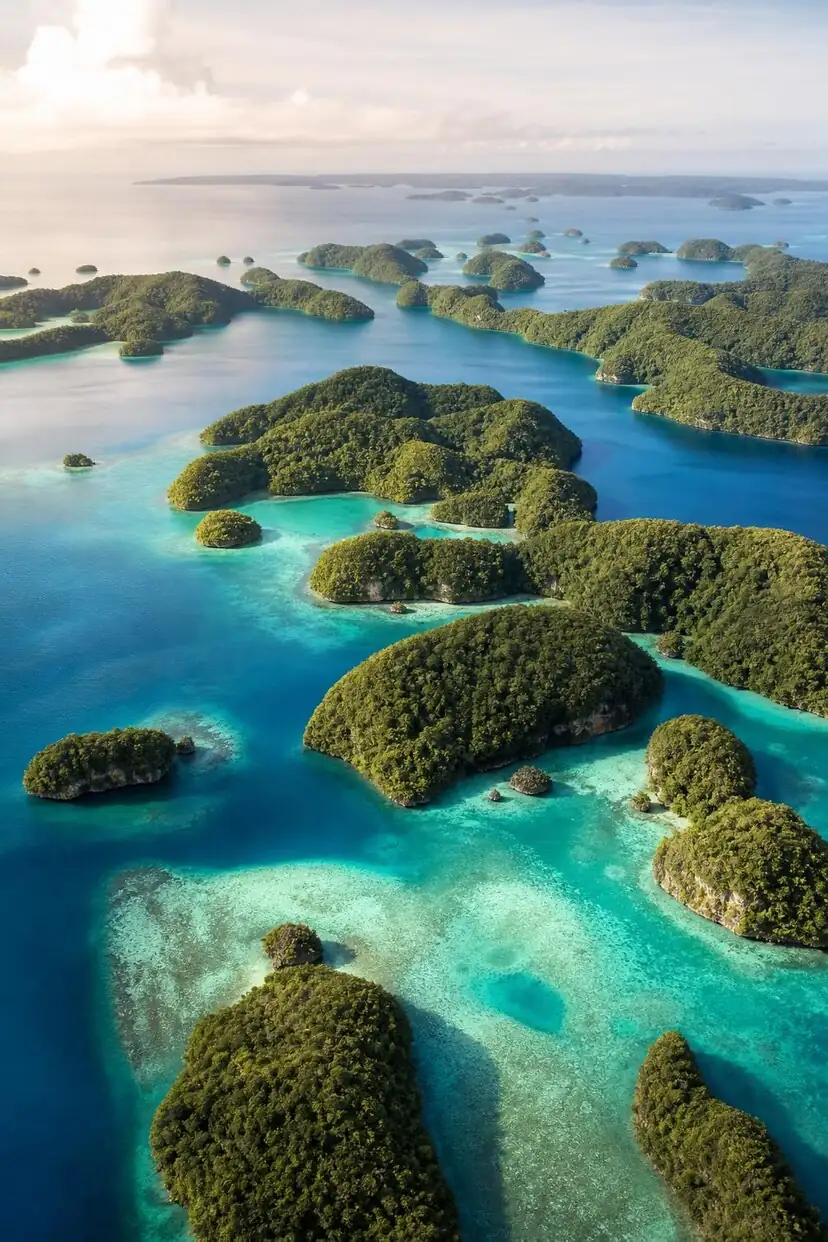
When diving with octopuses, **patience and careful observation** are paramount. These creatures are masters of camouflage, so divers should develop a **keen eye for subtle movements** or unusual textures on rocks and corals. Look for tell-tale signs such as **piles of discarded shells** near crevices, indicating a possible den. When you spot an octopus, maintain a **respectful distance** to avoid stressing the animal; sudden movements or close proximity can cause them to retreat quickly. **Never touch or harass** an octopus or any marine life; this is crucial for their well-being and to avoid potential defensive bites, which, though rarely dangerous from *Octopus vulgaris*, can be painful. Observe their **natural behaviors**, such as hunting, feeding, or changing color, which are far more rewarding than a forced interaction. Dive sites like **Roatan in Honduras**, the **Palau archipelago**, and the **southern coast of Portugal** are renowned for octopus encounters. Remember that responsible diving practices include **buoyancy control** to prevent accidental damage to their fragile habitats like coral and sea grass beds. Always follow local regulations and **marine park guidelines**, which often prohibit touching or collecting marine specimens. By adhering to these guidelines, divers can enjoy a **safe and enriching encounter** with these intelligent and elusive cephalopods without disturbing their natural environment.