Reef Manta Ray
Mobula alfredi
About Reef Manta Ray
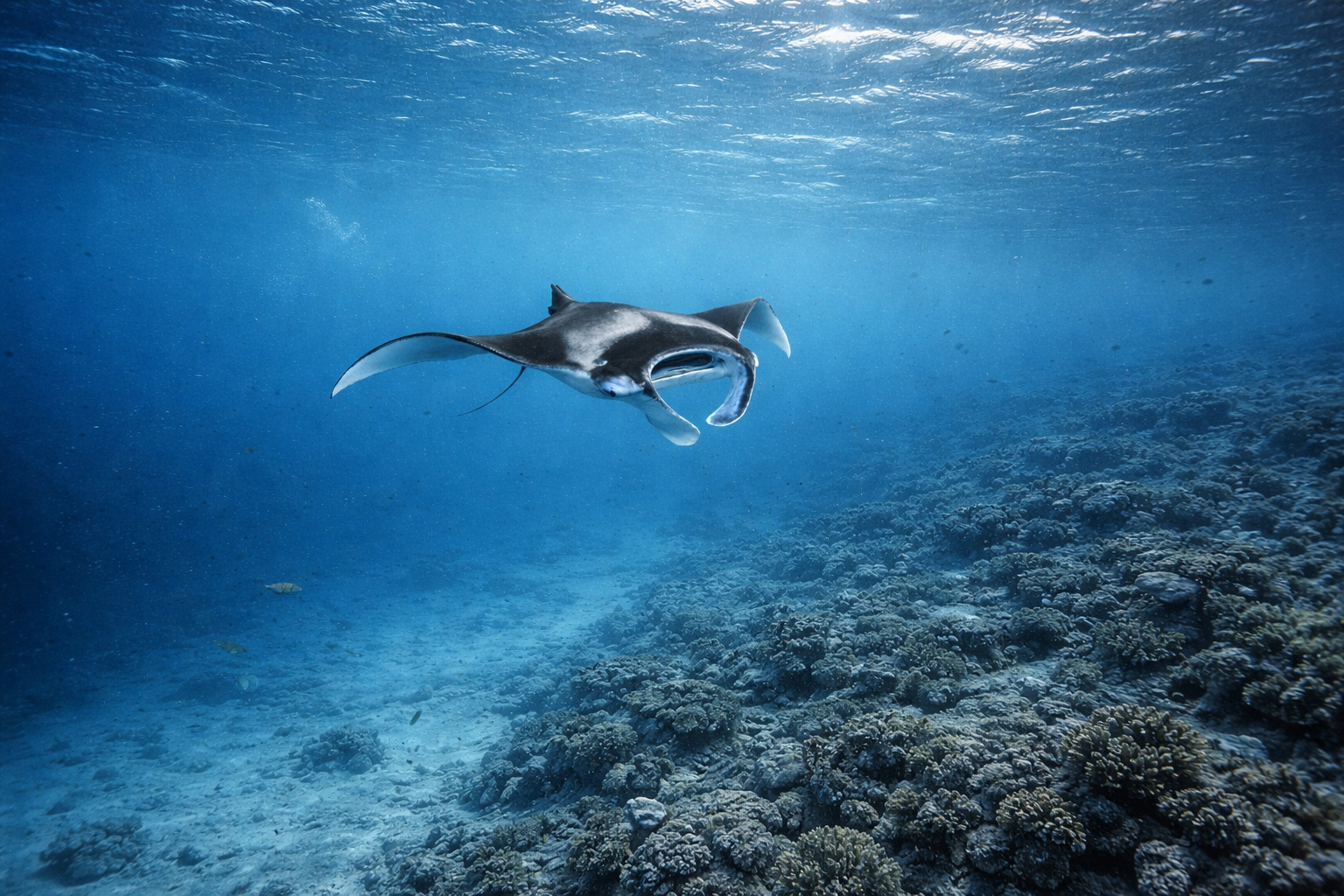
The reef manta ray is the smaller of the two manta species, with a wingspan up to 5.5 metres. Found at coral reef cleaning stations where small fish remove parasites, reef mantas are resident species that stay in relatively localized areas. Each individual has a unique belly pattern used for identification. They are remarkably intelligent with the largest brain-to-body ratio of any fish.
Quick Facts
- Habitat: The Reef Manta Ray, *Mobula alfredi*, inhabits **tropical and subtropical waters** of the Indo-Pacific and Atlantic Oceans, predominantly in coastal areas. They are frequently observed around **continental shelves**, **offshore reefs**, and **atolls**, preferring shallower depths compared to their pelagic oceanic counterparts. **Cleaning stations** on prominent coral bommies or reef structures are crucial habitats, where smaller fish remove parasites from their skin, gills, and mouths. Iconic locations for consistent encounters include **Raja Ampat**, Indonesia, particularly around Misool and Dampier Strait, where nutrient-rich currents fuel vibrant ecosystems. In the Indian Ocean, **Ari Atoll** in the Maldives is renowned for its Manta-rich channels and lagoons. In Melanesia, **Fiji's Kadavu Group** and **Yap, Micronesia**, offer reliable sightings. These rays exhibit certain site fidelity, often returning to specific feeding and cleaning grounds. Their habitat is closely linked to **currents and upwellings** that concentrate their primary food source. They can traverse considerable distances between these important sites, utilizing channels and open water. Understanding the local topography and current patterns is key to predicting their presence.
- Diet: Reef Manta Rays are **filter feeders**, consuming vast quantities of microscopic organisms, primarily **zooplankton**. Their feeding strategy involves swimming with their **mouths wide open**, directing water into their buccal cavity using two large, fleshy cephalic lobes that unfurl from their head. These lobes act like funnels, guiding the water and suspended plankton towards their gill rakers. The gill rakers then filter out the plankton, while the water passes over the gills and exits through the gill slits. They often engage in various feeding behaviors, including **barrel-rolling** through dense plankton clouds or performing **chain feeding**, where multiple mantas line up head-to-tail to maximize their efficiency in collecting food from a plankton-rich current. In locations like the **Maldives or Komodo National Park**, plankton blooms triggered by monsoonal shifts create rich feeding grounds. Their diet is entirely comprised of these tiny crustaceans, copepods, and larval stages of marine life, making them **harmless to humans**. They are crucial for marine ecosystems, acting as important indicators of ocean health and plankton abundance.
- Best season: Optimal seasons to encounter Reef Manta Rays vary significantly by location, driven by **monsoon patterns** and associated plankton blooms. In **Raja Ampat, Indonesia**, the prime season typically runs from **October to May**, with peak sightings during the **northeast monsoon**, when nutrient-rich waters concentrate zooplankton. Similarly, **Komodo National Park** experiences excellent manta encounters from **December to February** during the wet season, and also from **June to September** with the dry season bringing plankton-rich currents to different sites. The **Maldives** offers highly reliable sightings, with the **northeast monsoon (December to May)** favoring the western atolls like Ari Atoll, while the **southwest monsoon (June to November)** brings mantas to the eastern atolls, specifically Hanifaru Bay in Baa Atoll, renowned for its **mass feeding aggregations** during full and new moon phases. In **Fiji's Kadavu Group**, mantas are generally present year-round, but sightings are most consistent from **May to October**, coinciding with cooler, plankton-rich waters. For **Yap, Micronesia**, the period from **November to May** is considered best, offering calmer seas and good visibility for manta encounters.
Fun Facts
Reef mantas can be individually identified by their unique belly markings — like fingerprints,They visit the same cleaning stations daily, forming relationships with specific cleaner fish,Their brain-to-body ratio is the highest of any cold-blooded fish,Hanifaru Bay in the Maldives hosts the world's largest known feeding aggregation with up to 200 reef mantas
Diving Tips
When diving with Reef Manta Rays, maintaining **respectful distance** and practicing **passive interaction** is paramount to minimize disturbance. Approach them slowly and calmly, avoiding sudden movements that might startle them. Never chase, touch, or impede their natural behavior. Position yourself to allow them to approach you on their terms, often by remaining still and observant near **cleaning stations** or feeding areas. Spotting cues include observing groups of divers waiting patiently, or noticing other marine life, like pilot fish, indicating a manta's presence. In areas with strong currents, like **Komodo's Manta Point**, utilize a reef hook if permitted and necessary, ensuring it's secured to a dead coral or rock to avoid damaging live corals, and always maintain proper buoyancy. Pay attention to your **air consumption** and **no-decompression limits**, as manta encounters can be captivating and make time fly. Adhere strictly to **local regulations and guidelines** set by dive operators and marine parks, as many sites have specific rules concerning group size, distance, and duration of encounters. For instance, in **Hanifaru Bay, Maldives**, snorkeling is usually permitted, but scuba diving is restricted to protect the mantas during mass feeding events. Responsible diving ensures these magnificent creatures can continue their vital ecological roles undisturbed for future generations; always prioritize the **welfare of the animal** above your desire for a close encounter.