Mandarin Fish
Synchiropus splendidus
About Mandarin Fish
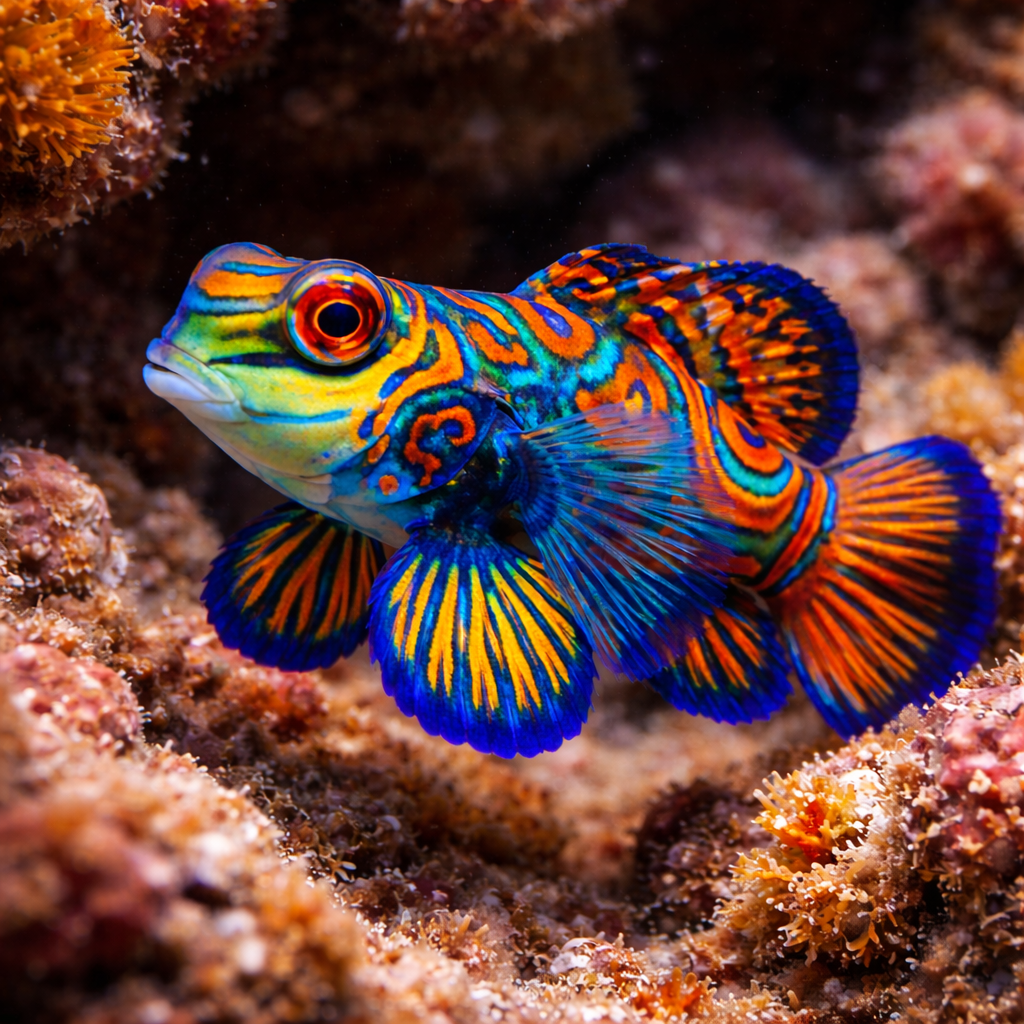
One of the most beautiful fish in the ocean with psychedelic blue and orange patterns. Famous for their twilight mating dances.
Quick Facts
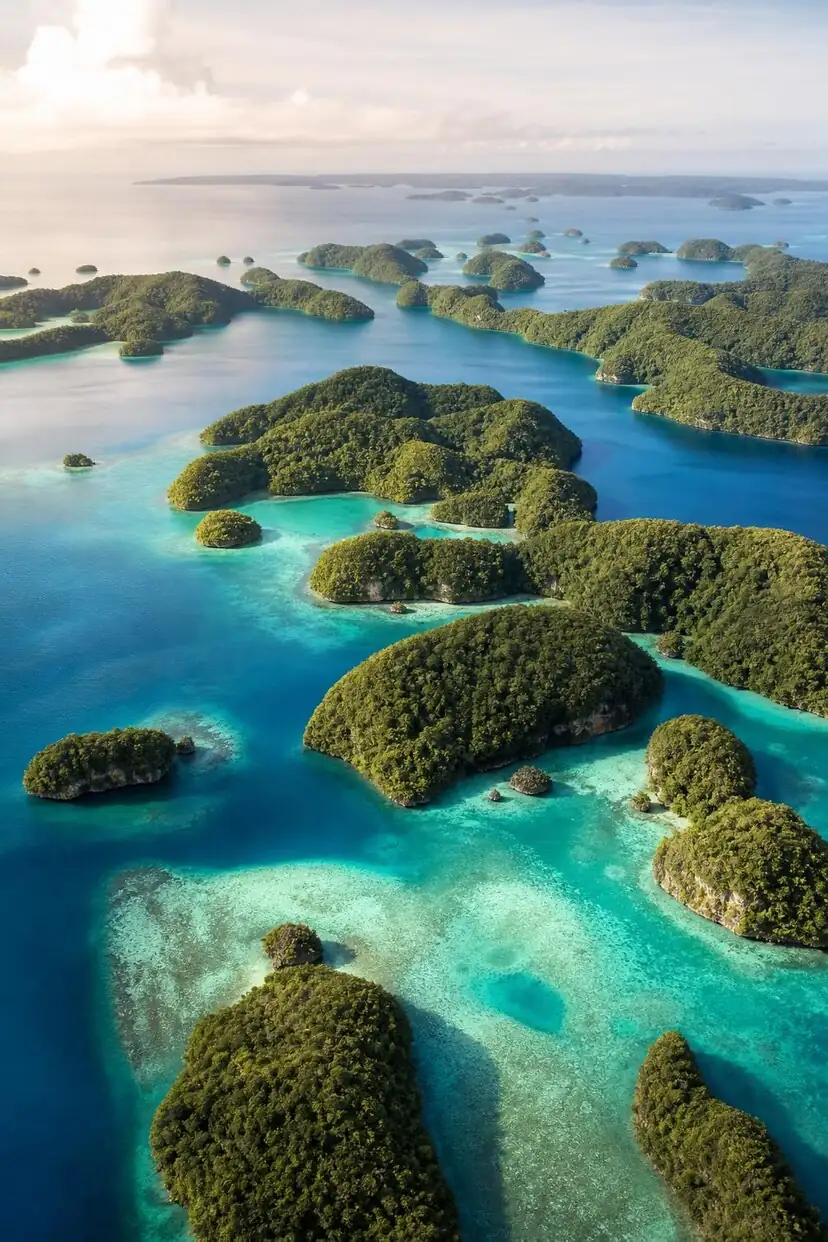
- Habitat: The Mandarin fish, *Synchiropus splendidus*, is a stunning reef dweller found across the **western Pacific Ocean**. Its range extends from the Ryukyu Islands of southern Japan, south to Australia, and across to various islands in Micronesia. These vibrantly colored fish typically inhabit **sheltered, shallow reefs** in depths ranging from 1 to about 18 meters, although they can sometimes be found deeper. They prefer areas with **rubble, dead coral, or sandy patches** close to live coral structures, providing ample hiding spots and feeding grounds. You'll often find them lurking amongst the branches of **Acropora corals** or nestled within the crevices of rocky substrates, making them somewhat difficult to spot during the day. Specific renowned locations for observing Mandarin fish include **Lembeh Strait in Indonesia**, particularly around **Tanjung Kumbang** and **Nudi Retreat**, and various sites in the **Philippines**, such as the dive areas of **Anilao** and **Moalboal**. They are also commonly sighted in **Papua New Guinea**, around **Kimbe Bay**, and in parts of the **Great Barrier Reef** in Australia, often requiring a keen eye to distinguish them from their surroundings.
- Diet: Mandarin fish are fascinating micro-predators, primarily feeding on **small benthic invertebrates**. Their diet largely consists of **copepods, tiny crustaceans**, and other minute organisms that live within the sand and rubble or among the detritus on the reef floor. They are not active hunters in the traditional sense; instead, they employ a **'browse and peck' foraging strategy**. Divers can often observe them slowly moving along the substrate, meticulously inspecting every crevice and grain of sand. They use their **small, protrusible mouths** to suction up prey items, often sifting through sand or picking individual organisms off rocks and corals. This specialized feeding behavior means they require an environment rich in these small food sources. Their reliance on these **micro-habitats** makes them particularly vulnerable to sedimentation and habitat degradation, as their food supply can be easily disrupted. They feed throughout the day, though their more active, visible feeding coincides with their **crepuscular mating rituals**.
- Best season: The best season to encounter Mandarin fish, particularly to witness their famed **mating dance**, generally aligns with the **warmer, calmer months** in their respective regions. In **Southeast Asia**, including prime locations like the **Philippines (Anilao, Moalboal)** and **Indonesia (Lembeh Strait, Raja Ampat)**, the dry season from **April to October** often offers the most consistent conditions for diving. During these months, the waters are usually clearer and calmer, enhancing visibility for both daytime observation and the more critical dusk dives. However, Mandarin fish can be found year-round in these equatorial regions due to the stable water temperatures. For regions like **Southern Japan (Ryukyu Islands)**, their peak season might be slightly later, from **May through November**, coinciding with warmer water temperatures. The key for observing their mating ritual is not so much a specific month but rather the **daily timing**: they consistently engage in their courtship and spawning activity **just before total darkness**, typically within a 30-60 minute window **shortly after sunset**. This makes dusk diving the absolute best time, regardless of the calendar month, to witness this spectacular natural event across their entire range.
Fun Facts
Their vibrant colours come from pigment cells unique in the fish world,They produce a toxic, foul-tasting mucus instead of having scales,Males perform an elaborate dance to attract females each evening at sunset,They are one of only two vertebrates to produce blue pigment rather than reflecting blue structurally
Diving Tips
Observing Mandarin fish requires **patience and good buoyancy control**. These incredibly shy and small fish (typically 6-8 cm) are best seen during **dusk dives**, as this is when they emerge from their hiding spots for their spectacular **mating ritual**. Arrive at the dive site **30-45 minutes before sunset** and position yourself calmly near a known Mandarin fish habitat, often areas with **rubble, small corals, or sandy patches adjacent to larger reef structures**. Maintain a **neutral buoyancy** completely off the bottom to avoid disturbing their environment or stirring up sediment, which can obscure visibility for fellow divers and the fish themselves. **Avoid shining bright lights directly** at them, especially during their mating dance, as this can interrupt their natural behavior. Use a **red light filter** if possible, or limit your white light usage to quick bursts for identification. Look for pairs or small groups emerging, often performing a **characteristic 'hovering' dance** as they slowly ascend before releasing gametes. Be aware of the **finitude of their mating window**, usually lasting only about 15-20 minutes. It's crucial to respect the fish's space; **do not chase or touch them**, and ensure your gear is tucked away to prevent accidental contact. Many dive operators specifically cater to Mandarin fish dives, often providing experienced guides who know their favorite hangouts and can help spot them without undue disturbance. **Photography requires extra care**; use minimal flash and avoid multiple flashes on the same fish. Always follow the **instructions of your dive guide**, as they are familiar with local conditions and behaviors to ensure an **ethical and rewarding encounter** for everyone involved.