Hawksbill Turtle
Eretmochelys imbricata
About Hawksbill Turtle
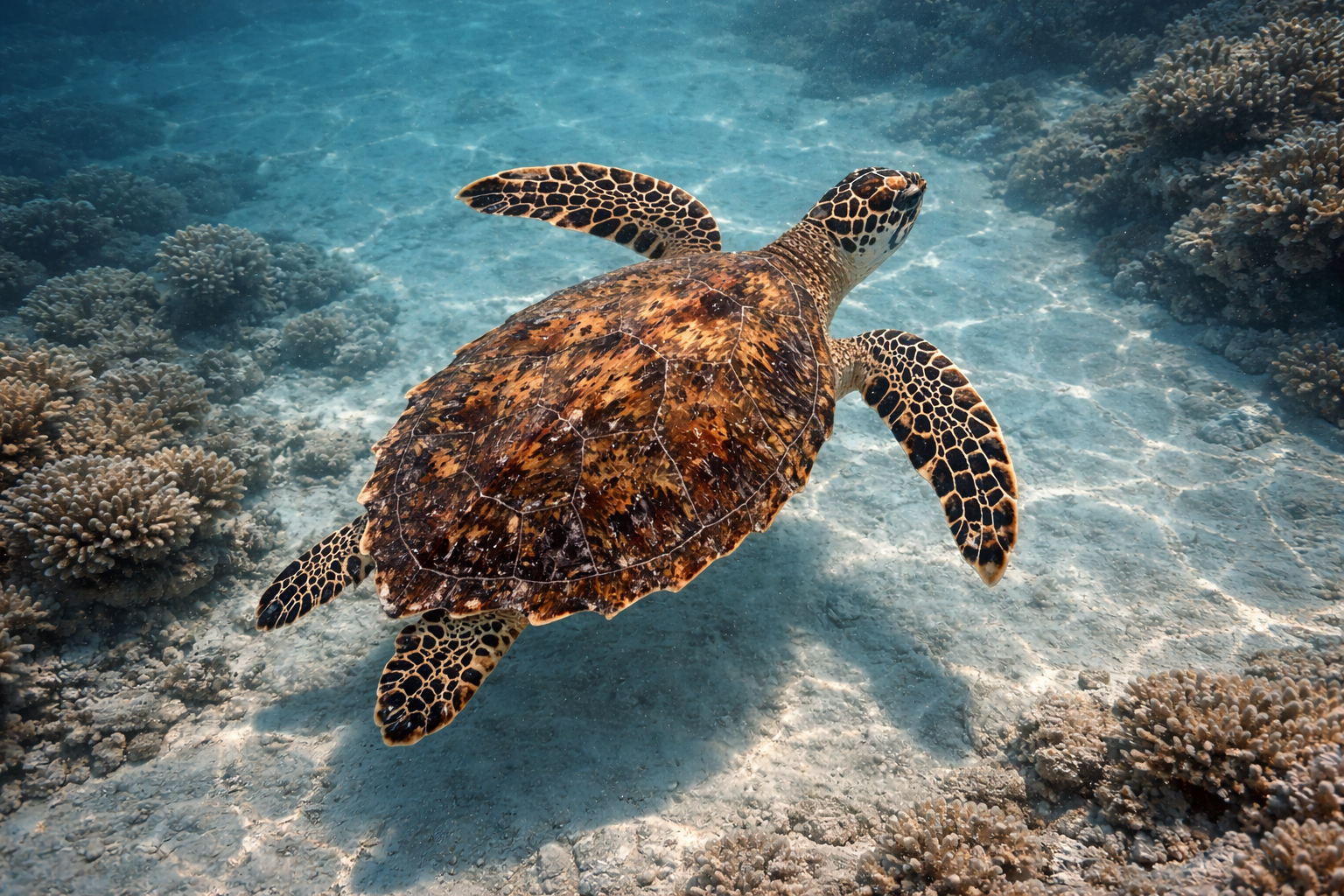
A critically endangered coral reef specialist recognizable by its pointed beak and beautifully patterned shell. Feeds primarily on sponges, playing a vital role in reef health. Smaller than the green turtle but equally captivating for divers.
Quick Facts
- Habitat: Hawksbill turtles (**Eretmochelys imbricata**) are globally distributed but predominantly found in **tropical and subtropical waters** of the Atlantic, Pacific, and Indian Oceans. They favor shallow coastal habitats, particularly **coral reefs**, rocky areas, and estuaries, due to their specialized diet and foraging behavior. Juveniles often inhabit **mangrove estuaries** and shallow lagoons, seeking protection and abundant food sources. As they mature, they move to deeper reef environments. Notable dive locations for encounters include the **Great Barrier Reef** in Australia, the Mesoamerican Barrier Reef in the **Caribbean** (e.g., Belize, Mexico's Yucatán Peninsula), and various sites across Southeast Asia, such as **Indonesia's Raja Ampat** and the Philippines. These turtles are rarely seen in open ocean pelagic zones, preferring the structural complexity of reef systems which provide both food and shelter. They are **site-faithful**, often returning to the same foraging and nesting areas.
- Diet: Hawksbill turtles are uniquely adapted **omnivores**, with a highly specialized diet centered around **sponges**. Their narrow, pointed beak, resembling a bird's, is perfectly suited for extracting sponges from crevices on coral reefs and rocky substrates. While sponges form the bulk of their diet, they are not exclusively spongeo-vores; they also consume other benthic invertebrates, including **sea anemones, jellyfish, and mollusks**, and occasionally algae. This selective feeding on sponges, many of which are toxic to other animals, makes them crucial for **coral reef health**, as they help prevent sponges from outcompeting corals. Their diet varies regionally based on the availability of preferred sponge species. They typically forage during the day, systematically exploring reef structures for their next meal, often displaying **repeated feeding patterns** in specific reef sections.
- Best season: Encounters with Hawksbill turtles are possible year-round in many tropical locations, but certain seasons offer more consistent sightings, often correlating with foraging and nesting patterns. In the **Caribbean**, such as in the **Cayman Islands** or **Bonaire**, the **drier months from December to May** often provide excellent visibility alongside frequent turtle sightings as they actively forage. For places like the **Philippines** (e.g., Apo Island, Malapascua) or **Indonesia** (e.g., Komodo, Raja Ampat), the **dry season from April to October** is generally considered prime time for diving and turtle encounters due to calm seas and clear waters. During nesting season, typically from **late spring to early fall** in many regions (e.g., **June to November in the Caribbean**), females may be seen more frequently in shallow coastal waters near nesting beaches, though direct interaction with nesting turtles is discouraged and often regulated. **Seasonal plankton blooms** can sometimes reduce visibility but do not typically deter these turtles, which are mainly benthic feeders.
Fun Facts
Hawksbills are one of the few animals that can eat toxic sponges without ill effect,Their overlapping shell scutes are unique among sea turtles,They help maintain reef health by eating sponges,A single hawksbill can consume over 500 kg of sponge per year
Diving Tips
When encountering Hawksbill turtles, divers should always maintain a **respectful distance**, ideally several meters, to avoid causing any stress or altering their natural behavior. Never chase, touch, or attempt to feed a turtle; **interaction is strictly prohibited** and can be harmful to the animal. Adopt a **calm and slow approach**, minimizing sudden movements or loud noises that could startle them. Look for turtles foraging on **coral bommies or rocky outcrops**, as their distinctive beak helps them pull sponges from crevices. Their **camouflage** can make them difficult to spot, so pay close attention to irregularly shaped shadows or movements near the reef. Observe their **feeding behavior**; they often spend extended periods in one area, allowing for good observational opportunities. Be mindful of your buoyancy control to avoid accidentally touching the reef or stirring up sediment, which can obscure views and damage the delicate ecosystem. Remember that Hawksbill turtles are **critically endangered**, and their protection is paramount, so report any signs of injury or entanglement to local authorities. **Photography is permissible** but should be done without flash or intrusive movements. Adhere to all local regulations regarding marine life encounters.