
Whitetip Reef Shark
Triaenodon obesus
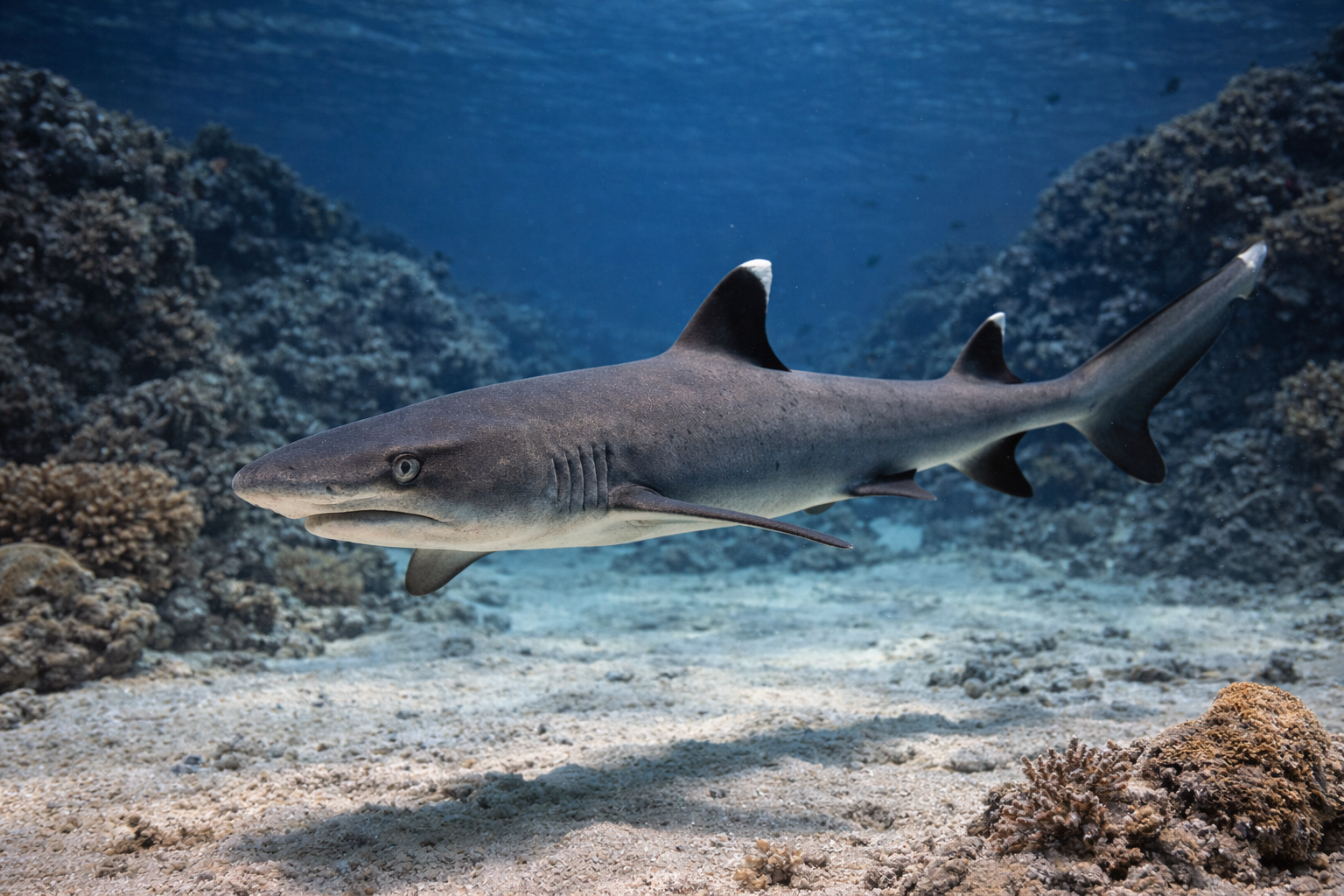
About Whitetip Reef Shark
Distinctive slender shark with white-tipped dorsal and tail fins. Often found resting in caves during the day, becoming active hunters at night.
Quick Facts
- Habitat: The whitetip reef shark, *Triaenodon obesus*, is a ubiquitous resident of the **Indo-Pacific's warm tropical waters**, preferring shallow coral reef environments. These sharks are commonly found in and around coral gardens, lagoons, and reef drop-offs, typically at depths ranging from **5 to 40 meters**. They are particularly notable for their habit of resting motionlessly on the seabed or inside caves and crevices during the day, a behavior distinct from many other shark species that require constant movement to breathe. Prime locations for encounters include the **Great Barrier Reef** in Australia, the atolls of the Maldives, Fiji's vibrant reefs, and the numerous islands of Indonesia, such as those in Raja Ampat and Komodo. Divers can often spot them sheltering under coral ledges or within small caves, particularly in areas with good coral cover and healthy reef ecosystems. While they are present year-round in these tropical regions, their presence is linked to the overall health and structure of **complex reef habitats**, which provide both shelter and abundant prey.
- Diet: Whitetip reef sharks are **nocturnal hunters**, primarily preying on **reef fish, crustaceans, and cephalopods**. Their slender bodies and ability to maneuver through tight spaces allow them to effectively pursue prey in reef crevices and under ledges. Unlike many larger shark species, they do not rely on ram ventilation and can pump water over their gills, enabling them to rest on the seafloor without suffocating. This adaptation is crucial for their hunting strategy, as they often flush out prey from intricate reef structures. Common dietary items include **eels, small groupers, parrotfish, octopus, and crabs**. They hunt individually or in small groups, occasionally engaging in cooperative hunting by blocking off escape routes for their prey within the reef. Their **small, serrated teeth** are well-suited for gripping slippery prey rather than tearing large chunks.
- Best season: Encounters with whitetip reef sharks are generally possible **year-round** across their extensive Indo-Pacific range, thanks to the stable warm water temperatures. However, certain periods might offer slightly better or more predictable sightings. For locations like the **Maldives and Palau**, the **dry season from November to April** offers clearer waters and calmer conditions, making shark spotting more consistent. Similarly, in **Australia's Great Barrier Reef**, the **cooler, drier months from May to October** are often favored by divers due to optimal visibility and pleasant weather. In Indonesia, particularly Raja Ampat and Komodo, the sharks are present throughout the year, but the **May to October period** generally avoids the rainy season's potential impact on visibility. During these peak seasons, reef activity is often at its highest, providing more opportunities for divers to observe these sharks during their daytime resting periods or, with careful planning, during **night dives** when they are most active and hunting.
Fun Facts
They are one of the few shark species that can rest motionless on the seabed,Whitetips hunt cooperatively at night, flushing prey from coral crevices as a team,They can squeeze into tight reef spaces that other sharks cannot access,Their slender body allows them to squeeze into tight reef crevices
Diving Tips
When encountering whitetip reef sharks, divers should maintain a **calm and respectful distance**. These sharks are generally **not aggressive towards humans** and are quite accustomed to diver presence. Avoid sudden movements or chasing, as this can disturb their natural behavior or cause them to retreat. Whitetips are often found resting in **gullies, under ledges, or inside small caves** during the day; look for their distinctive **white-tipped dorsal and caudal fins**. During night dives, they become more active hunters, and observing them in their natural hunting behavior can be a truly **mesmerizing experience**, but always ensure you have a good dive light and maintain situational awareness. It's crucial to resist the urge to touch or interfere with marine life, ensuring compliance with **ethical diving practices** and local regulations. Always carry **proper dive safety equipment**, including a signaling device, and dive with a reputable dive operator. Pay close attention to your **buoyancy control** to avoid damaging the delicate coral reefs where these sharks reside, and never block the entrance or exit of a cave if a shark is resting within. Enjoy observing these **graceful reef inhabitants** in their natural environment.