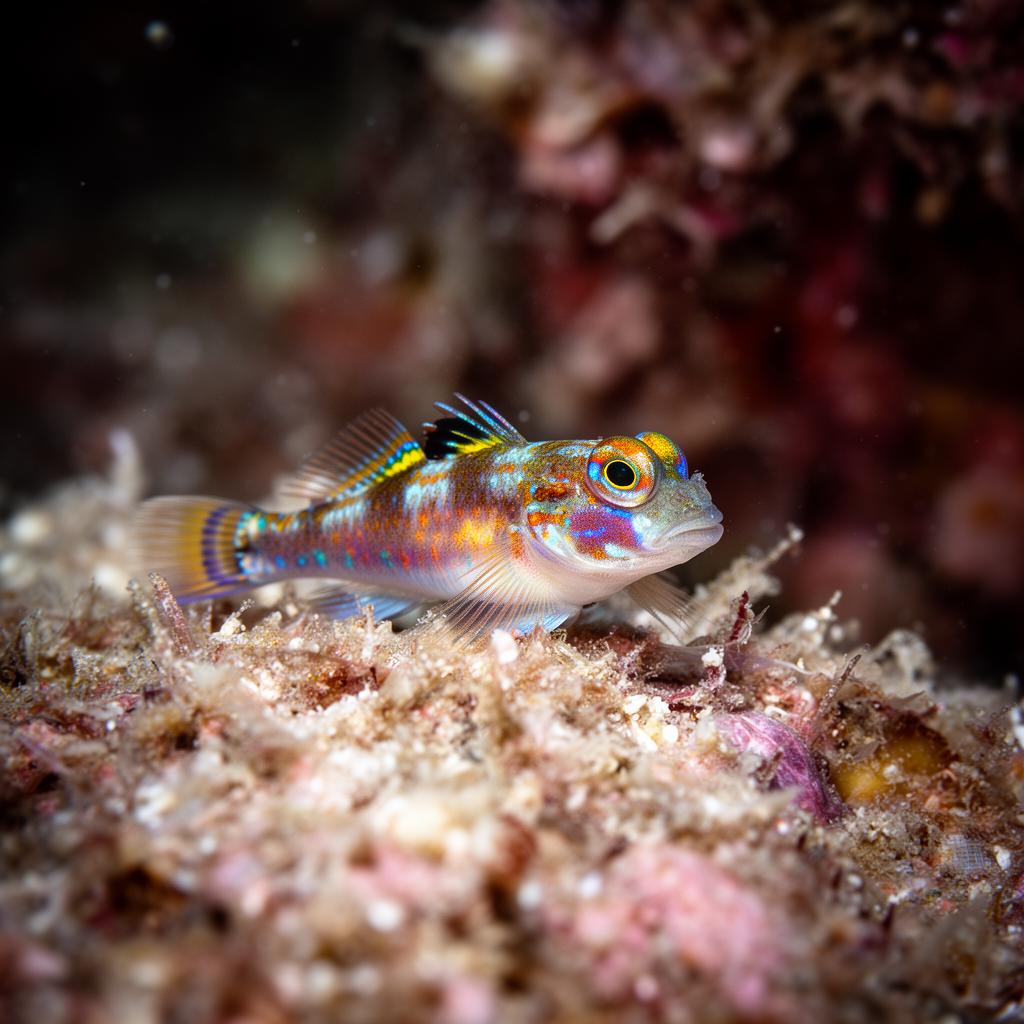
Goby
Gobiidae
About Goby
Tiny bottom-dwelling fish often found sharing burrows with shrimp
Quick Facts
- Habitat: Gobies, belonging to the family Gobiidae, are an incredibly diverse group of fish, making them one of the largest families of marine fish. They inhabit a vast array of aquatic environments globally, from **tropical coral reefs** to **temperate rocky shores** and even **freshwater systems**. Many species are found in **shallow, coastal waters**, preferring sandy or silty bottoms where they can burrow or seek refuge among rubble and crevices. For instance, in the **Indo-Pacific**, you can find numerous species like the diverse shrimp gobies forming symbiotic relationships with alpheid shrimp on sand flats in places like **Mabul Island** or the **Raja Ampat archipelago**. In the **Caribbean**, species such as the neon goby (Elacatinus oceanops) are abundant on coral heads, offering cleaning services to larger fish. Temperate gobies thrive in rocky environments, often sheltering under stones or in nooks and crannies along the coastlines of the **Mediterranean Sea** or the **California Channel Islands**. Their small size and cryptic coloration allow them to blend seamlessly into their surroundings, making them a common, yet often overlooked, part of almost any dive site worldwide. They typically prefer **benthic zones**, rarely venturing into open water, and are often associated with specific substrata depending on the species – some preferring soft sediments, others rocky structures, and many others living directly on corals.
- Diet: Gobies are primarily **carnivorous micro-predators**, preying on a variety of small invertebrates. Their diet largely consists of **tiny crustaceans**, such as copepods, amphipods, and ostracods, which they expertly pluck from the water column or ambush from their perch. Many species also consume **polychaete worms**, small insect larvae, and other benthic invertebrates found within the sand or amongst detritus. Some gobies have developed specialized feeding strategies; for example, the cleaner gobies of the Caribbean, such as the neon goby, derive their nutrition by feeding on **parasites and dead skin** removed from the bodies of larger fish. The well-known **shrimp gobies** (Amblyeleotris spp. and Cryptocentrus spp.) forage near the entrance of the burrows they share with their alpheid shrimp partners, snapping up passing plankton or small detritus. Their hunting technique typically involves a combination of **ambush predation** and opportunistic foraging; they wait patiently, often partially concealed, and then dart out with remarkable speed to capture their unsuspecting prey.
- Best season: The **best season to observe gobies** generally aligns with the active diving season for a particular region, as their presence is consistent year-round due to their territorial nature and relatively short lifespans. However, their visibility and activity can be heightened during certain periods. In **tropical regions** like the **Philippines**, **Indonesia**, and the **Great Barrier Reef**, gobies are reliably seen year-round, but the **dry season (typically May to October)** often offers the best diving conditions with calmer seas and better visibility, making it easier to spot these tiny creatures. For **temperate areas**, such as the **Mediterranean**, summer months **(June to September)** provide warmer water temperatures and increased invertebrate activity, which can lead to more active gobies. In destinations like the **Red Sea**, gobies are a **constant presence**, with excellent visibility allowing for detailed observation almost any month, though the winter months **(November to March)** can offer cooler air temperatures for surface intervals. Spawning activity for many goby species often peaks during **warmer water periods**, which can lead to increased territorial displays and parental care behaviors, providing unique photographic opportunities for observant divers.
Fun Facts
Some gobies form symbiotic partnerships with pistol shrimp—the shrimp digs the burrow while the goby stands guard,Gobies are the largest family of marine fish with over 2,000 species,Some species can change sex during their lifetime
Diving Tips
Observing gobies requires **patience and a keen eye**, as these small, often camouflaged fish can be easily overlooked. When diving, move **slowly and deliberately** near sandy flats, rubble patches, or coral heads. Look for **subtle movements** or changes in texture on the seafloor; many gobies will sit motionless, blending perfectly with their surroundings. To spot **shrimp gobies**, pay attention to small, perfectly round burrows in sandy areas, often identifiable by the accompanying shrimp diligently excavating sediment. Position yourself quietly and wait; the goby will usually emerge, often with its shrimp partner. For **cleaner gobies** in the Caribbean, observe cleaning stations on coral heads where larger fish often congregate. Approach them **calmly and without sudden movements** to avoid startling them. When taking photos, use a macro lens and ensure your buoyancy is **absolutely perfect** to avoid contact with the delicate environment. **Never touch, prod, or attempt to manipulate** gobies or their environment; disturbing them can disrupt their feeding, territorial defense, or symbiotic relationships. Remember that gobies are very **site-attached** and easily stressed, so maintain a respectful distance. Adhere to **local dive regulations** regarding marine life interaction, which universally prohibit harassment of marine animals. Enjoy the challenge and reward of discovering these fascinating, miniature residents of the underwater world.