
Caribbean Reef Shark
Carcharhinus perezi
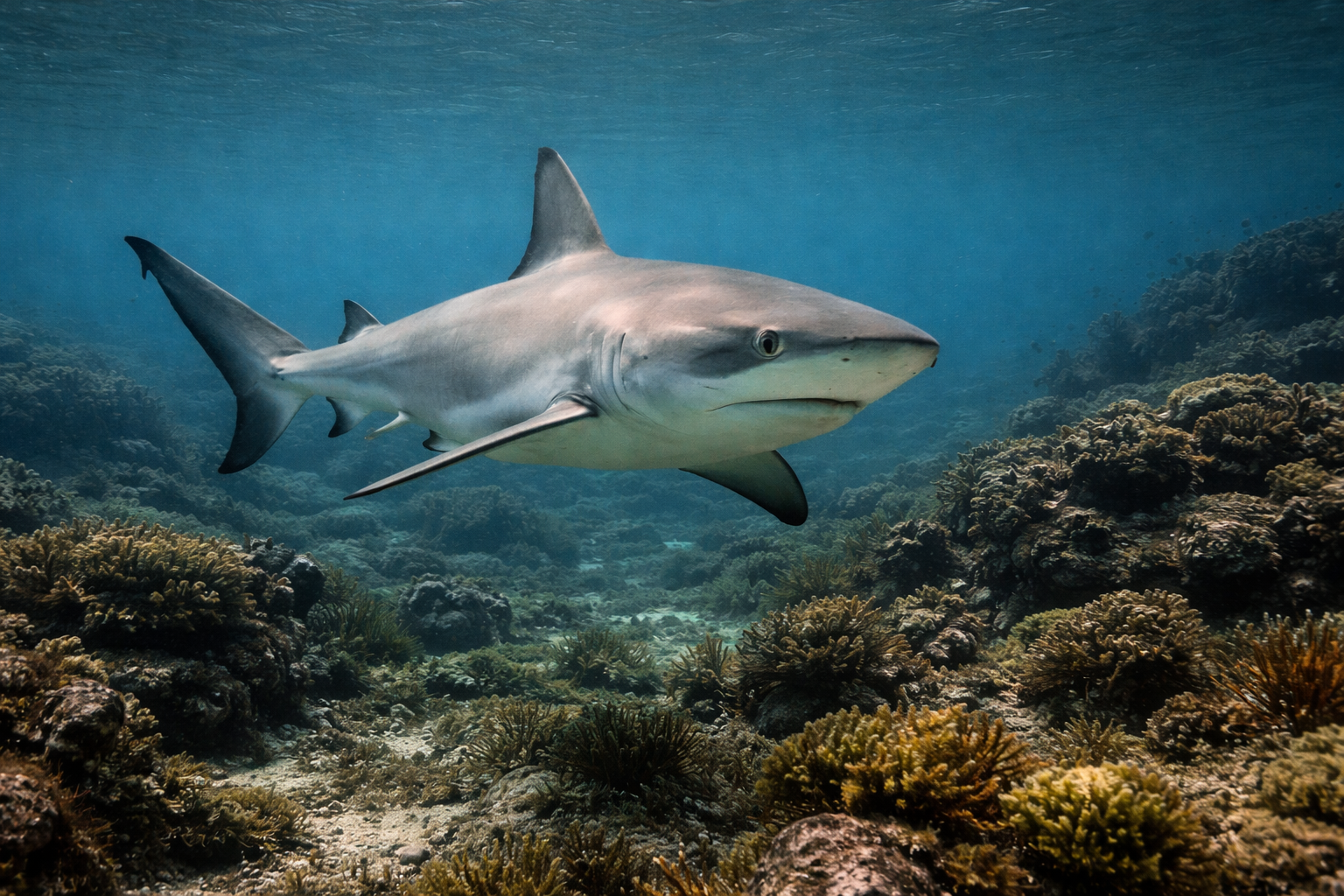
About Caribbean Reef Shark
Patrolling every reef
Quick Facts
- Habitat: The Caribbean Reef Shark (**Carcharhinus perezi**) is a common and dominant apex predator thriving in the tropical and subtropical waters of the **western Atlantic Ocean**, specifically throughout the Caribbean Sea, the Gulf of Mexico, and along the northern coast of South America, extending south to Brazil. This species is predominantly found in **shallow coastal waters**, typically around **coral reefs, sandy flats**, and occasionally in deeper drop-offs or offshore banks. They are frequently observed patrolling reef edges, channels, and sometimes within lagoons where prey is abundant. Their preferred habitats feature clear water and structured environments providing ambush opportunities and shelter for juvenile sharks. Notable dive locations include the **Cayman Islands'** famous 'Shark Ray City' or 'Stingray City' areas, the **Bahamas** (especially Bimini, Tiger Beach, and Eleuthera), **Cuba's Gardens of the Queen (Jardines de la Reina)**, and the **Turks and Caicos Islands**. They are generally non-migratory but may exhibit localized movements in response to prey availability or reproductive cycles. While often seen at depths of 10-30 meters, they can range from the surface down to at least 375 meters, demonstrating their adaptability to various depth profiles within their range. Divers commonly encounter them around reef formations and during drift dives along walls.
- Diet: Caribbean Reef Sharks are **opportunistic, active predators** at the top of their food chain, primarily feeding on a diverse range of **reef-associated bony fishes** and **cephalopods**. Their diet commonly includes parrotfish, wrasse, groupers, grunts, jacks, and various squid and octopuses. They employ a **strategic hunting technique**, often patrolling reef edges and using their keen sense of smell and lateral line system to detect struggling or injured prey. When hunting, they are known to perform **circling maneuvers** before making a swift, powerful strike. They are also known to scavenge, taking advantage of accessible food sources. While adult sharks are formidable hunters, juveniles feed on smaller fish and invertebrates until they grow large enough to tackle more substantial prey. Their efficient predatory behavior plays a **crucial role in maintaining the health** and balance of the coral reef ecosystem, helping to control fish populations and remove sick or weak individuals. Divers may observe them investigating potential food sources or scavenging during planned baiting dives, but in natural encounters, they are typically seen actively cruising the reef.
- Best season: Encounters with Caribbean Reef Sharks are possible **year-round** throughout their range, given their non-migratory nature and preference for stable tropical waters. However, certain seasons and locations offer **peak visibility and shark activity**. In the **Bahamas**, particularly around Bimini and Tiger Beach, excellent encounters are consistent from **October through May**, when water temperatures are slightly cooler, leading to increased shark activity and clearer water conditions. This period avoids the main hurricane season, ensuring more consistent dive operations. Similarly, in the **Cayman Islands** and the **Turks and Caicos**, the **winter months (November to April)** provide ideal diving conditions with minimal rainfall, excellent visibility, and a high likelihood of shark sightings along reef walls and channels. For **Cuba's Jardines de la Reina**, the **dry season from November to June** offers the best opportunity for consistent encounters, with calm seas and exceptional visibility. While the **summer months (June to September)** may bring warmer water in some areas, potentially less active sharks, and the risk of tropical storms, they are still present and can be encountered. Generally, aiming for the **cooler, drier months** across the Caribbean increases the chances of clear water and active shark behavior, making these periods the **prime time for shark diving** with this species.
Fun Facts
They can enter a trance-like state when flipped upside down,Reef sharks rest in caves during the day and hunt at night,They can detect one drop of fish blood in 25 gallons of water,Female reef sharks return to the same pupping grounds each year
Diving Tips
When diving with Caribbean Reef Sharks, maintaining **calm, controlled movements** is paramount. These sharks are generally curious but not inherently aggressive towards divers. Avoid any sudden, jerky motions which could be perceived as threatening or mimic distress signals. Keep your hands close to your body and avoid touching or harassing the sharks, as this can stress them and is unethical. **Spotting cues** include looking around reef edges, along drop-offs, and in channels, as they often patrol these areas in search of prey. Their **sleek, grey bodies** are well-camouflaged against the reef, so scanning the perimeter of your vision frequently can help. Pay attention to other fish behavior; a sudden scattering of schooling fish can indicate a predator nearby. For safety, always dive with a reputable operator experienced in shark encounters. If participating in a baited shark dive (often called a 'shark feed'), **always follow the dive master's instructions rigorously**. Maintain your designated position, typically kneeling on the sandy bottom, and keep all limbs tucked in. Never attempt to feed sharks yourself. These are **wild animals**, and while generally benign, they are powerful predators. Divers should be aware of a shark's **body language**; an arched back, lowered pectoral fins, and exaggerated swimming motions can signal agitation and should prompt a slow, controlled ascent if observed at close range. Respect local regulations regarding wildlife interaction; in many areas, touching marine life is prohibited. Enjoy the privilege of observing these magnificent creatures in their natural habitat, and remember your role is that of a **respectful observer**, not an active participant in their world.