Scalloped Hammerhead
Sphyrna lewini
About Scalloped Hammerhead
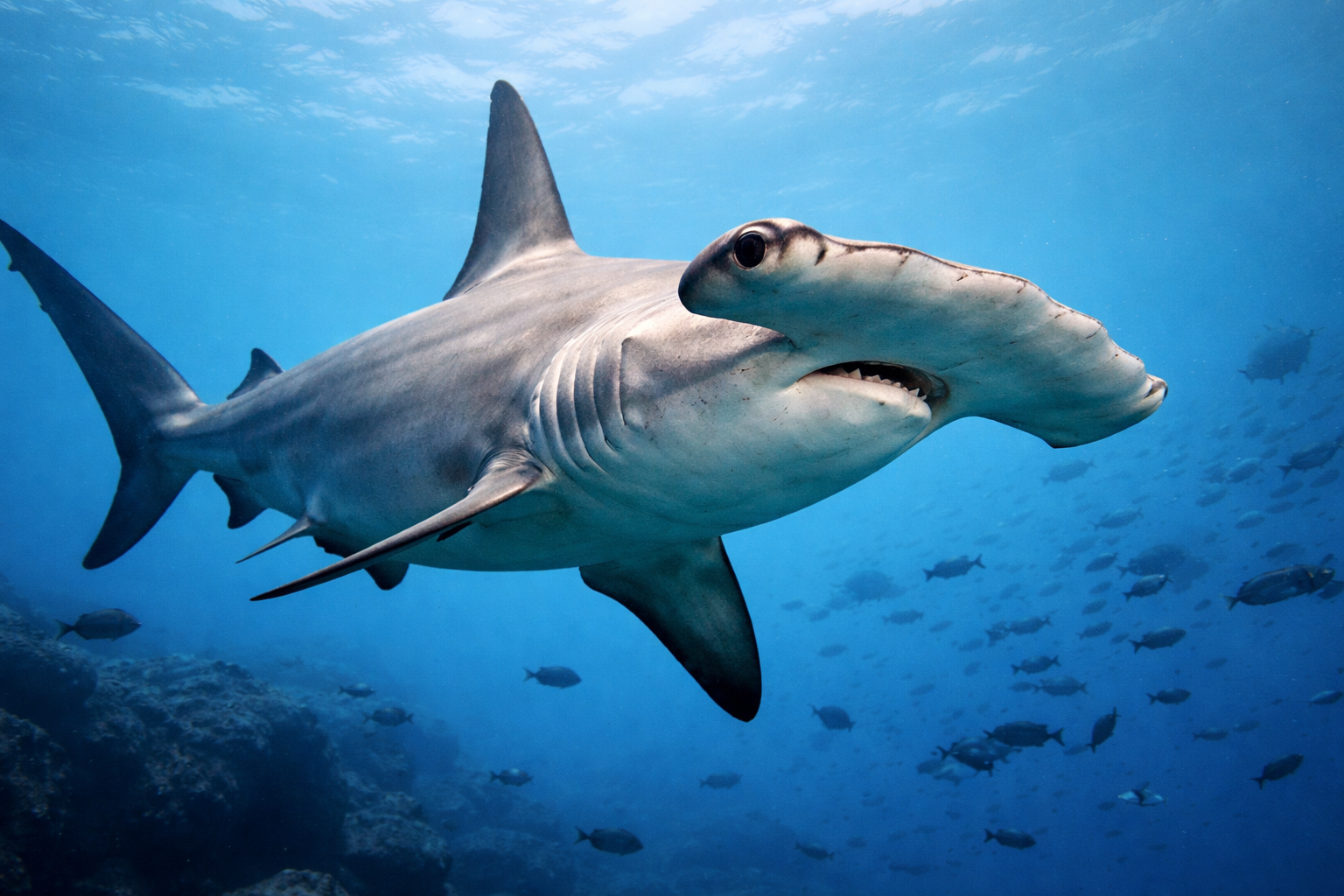
Forming massive schools of hundreds at certain seamounts and islands, the scalloped hammerhead is one of diving's most spectacular encounters.
Quick Facts
- Habitat: The Scalloped Hammerhead, *Sphyrna lewini*, is a **cosmopolitan species** found in warm temperate and tropical waters worldwide. These sharks prefer **coastal areas** and continental shelves, often seen near islands and offshore seamounts. They are known for forming **large, dense schools**, especially off oceanic islands like the **Galapagos Archipelago**, Cocos Island (Costa Rica), Malpelo Island (Colombia), and Layang Layang (Malaysia). Juvenile hammerheads inhabit **shallower coastal nurseries**, such as bays and estuaries, before moving to deeper water as they mature. Adults undertake **vertical migrations** daily, spending their days in deeper, cooler waters (down to 200m or more) before moving to shallower waters at night to feed. Their preferred habitats feature **strong currents** and upwellings that bring nutrient-rich water, supporting the diverse prey they hunt. While typically offshore, they can occasionally be seen closer to shore in areas with **steep drop-offs** or deep channels.
- Diet: Scalloped Hammerheads are active predators with a diverse diet dominated by **cephalopods and bony fish**. Their unique cephalic lobe, or 'hammer,' is not just for sensory perception but also aids in hunting. They are known to **pin stingrays** to the seabed with their heads before delivering a fatal bite, though rays typically form a smaller portion of their diet compared to other hammerhead species. Common prey items include various species of **sardines, herring, mackerel, tuna, and small reef fish**. They also consume **squid and octopus**, often by ambushing them in open water or near the seafloor. Juveniles typically feed on smaller fish and crustaceans in their nursery grounds. Hammerheads are **opportunistic feeders**, and their hunting strategy often involves using their wide head to sweep for electrical signals from prey buried in the sand or hidden in crevices, giving them a significant advantage in locating elusive meals.
- Best season: Optimal encounters with Scalloped Hammerheads are highly **location-dependent**. In the **Galapagos Islands**, the best season is generally from **June to November**, aligning with the cooler, nutrient-rich waters that attract large schools of sharks, particularly around Darwin and Wolf Islands. At **Cocos Island, Costa Rica**, sightings are consistently good year-round, but the **dry season from December to May** often offers better visibility, making for more spectacular encounters. Similarly, **Malpelo Island, Colombia**, boasts year-round hammerhead activity, with the **drier months of January to May and July to September** providing clearer conditions. For divers seeking massive schooling events, the months when **upwellings are strongest** and water temperatures are slightly cooler tend to yield the best results globally. These periods concentrate their prey, leading to the formation of the **iconic hammerhead aggregations** that divers travel great distances to witness. Always check specific dive operator calendars for the most **up-to-date regional information**.
Fun Facts
Schools of over 500 scalloped hammerheads have been documented at Cocos Island,Their wide head acts like a metal detector,They are one of the few shark species that school in large numbers,Populations have declined by over 80% due to the shark fin trade
Diving Tips
Encountering Scalloped Hammerheads can be a **lifelong dream for many divers**. When diving with these sharks, **maintain a calm demeanor and slow movements** to avoid startling them; sudden actions can cause them to disperse. Pay close attention to your dive guide, who will often position the group strategically in areas with known currents or cleaning stations. **Strong currents** are common in hammerhead habitats, so practice good buoyancy control and streamlined diving. Look for their distinctive **'scalloped' head shape** and schooling behavior, often seen in large numbers **swimming in formation** above seamounts or along drop-offs. While generally not considered aggressive towards divers, **respect their space** and never attempt to touch or feed them; this is disruptive and illegal in many protected areas. **Stay with your group** and avoid venturing off solo. In locations like the Galapagos or Cocos Island, **diving from liveaboards** is the norm, offering access to remote sites where these sharks are most prevalent. Always ensure your camera strobes are not overly bright or continuously flashing, as this can disturb marine life. Report any concerning or abnormal behavior to your dive leader. Contributing to **citizen science projects** by sharing your sightings can help conservation efforts for this **endangered species**.