

01 · Coastal landscapes
Staffa
Basalt columns and sea-cave scenery. Landings depend on swell and safe access.
Check access, activity level and inclusion on your confirmed itinerary.
Newsletter
Adventure cruise offers, last-minute deals and trip inspiration.
Free, unsubscribe anytime. Details: Privacy Policy
Partner with Blue Rides
Recommend adventure cruises and earn commission on every confirmed booking.
Share. Track. Earn.

Hebridean islands and wild Atlantic shores
Small ships
Personal, guided voyages
Choose your season
May – Aug
Shore experiences
On your confirmed itinerary
Nature & wildlife
Coasts, trails & island habitats
Hebridean islands and wild Atlantic shores

A journey through Staffa and the surrounding region brings the landscape into focus. Your ship connects the coastal places while guided excursions reveal the details that are easy to miss from the deck.
Choose the actual stops on the programme, not just the destination name. Routes that include Iona can offer a different balance of nature and culture from those centred on Tobermory. Activities, permits and walking demands vary by voyage.
When to go
Long days for island hopping: puffin colonies, standing stones, whisky distilleries and Highland walks.
Quieter months with changeable weather and good light for photography.
Short, stormy winter days; most expedition sailings stop.
Typical patterns for planning shore excursions; weather varies year to year and is never guaranteed.
Long days for island hopping: puffin colonies, standing stones, whisky distilleries and Highland walks.
Quieter months with changeable weather and good light for photography.
| Typical pattern | Jan | Feb | Mar | Apr | May | Jun | Jul | Aug | Sep | Oct | Nov | Dec |
|---|---|---|---|---|---|---|---|---|---|---|---|---|
| Shore conditions | Limited | Limited | Limited | Variable | Peak | Peak | Peak | Peak | Variable | Limited | Limited | Limited |
| Rain / snow · mm | 232 | 229 | 180 | 96 | 121 | 138 | 161 | 202 | 186 | 245 | 210 | 270 |
| Cruises | Limited | Limited | Limited | Seasonal | Seasonal | Seasonal | Seasonal | Seasonal | Seasonal | Limited | Limited | Limited |
Local conditions differ between coastlines and islands. The chart represents Oban, not every stop on a voyage. Cruise operation depends on the published itinerary, not the weather rating.
Oban · 2015–2024. Monthly averages calculated from ERA5 daily values via Open-Meteo; rounded for planning, not a forecast or a local station measurement. Rainfall includes water-equivalent snowfall where relevant.
Wildlife on land & along the coast
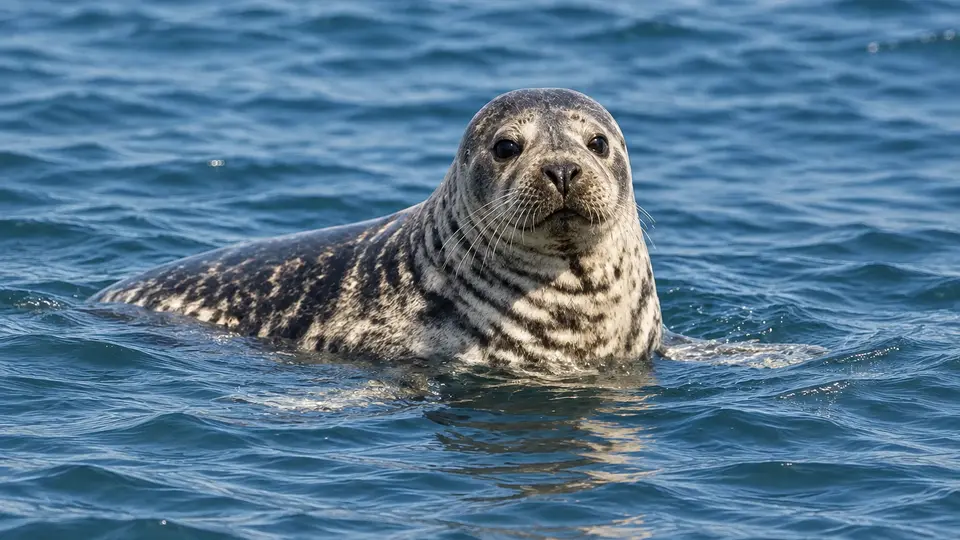
This window combines accessible spring-summer watching with autumn pupping at some sites; local closures and tides take precedence.
Rocky headlands, island shores and designated coastal viewpoints can overlook resting seals.
The grey seal is a large North Atlantic marine mammal with a long muzzle and pronounced differences between males and females.
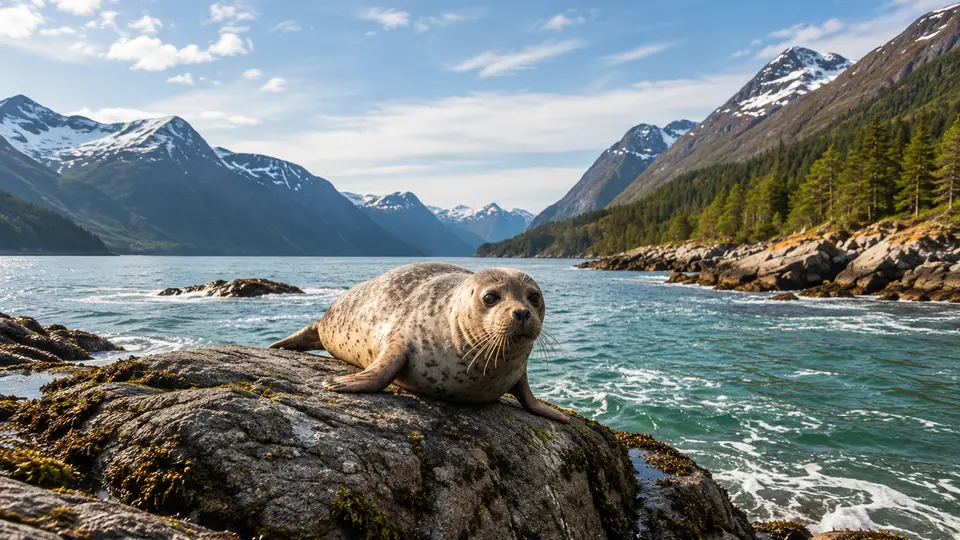
A broad practical shore-observation window; year-round presence occurs locally, with tides and disturbance strongly affecting visibility.
Sea-loch shores, estuary viewpoints and sheltered island coasts offer potential distant viewing.
Also called the common seal, the harbour seal inhabits sheltered and exposed coasts around Norway and Scotland.
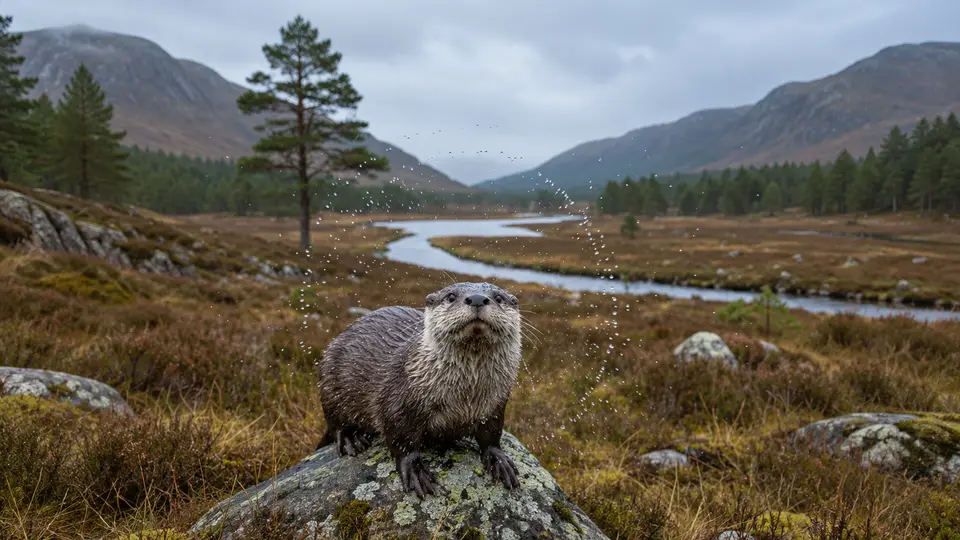
Year-round presence supports observation in any month, but winter daylight, wind and sea conditions limit practical opportunities; this is not a breeding calendar.
Sheltered rocky coasts, sea-loch margins and freshwater outlets offer credible shore-watching habitat.
The Eurasian otter is a semiaquatic predator found along rivers, wetlands and some rocky coasts across a vast Eurasian range.
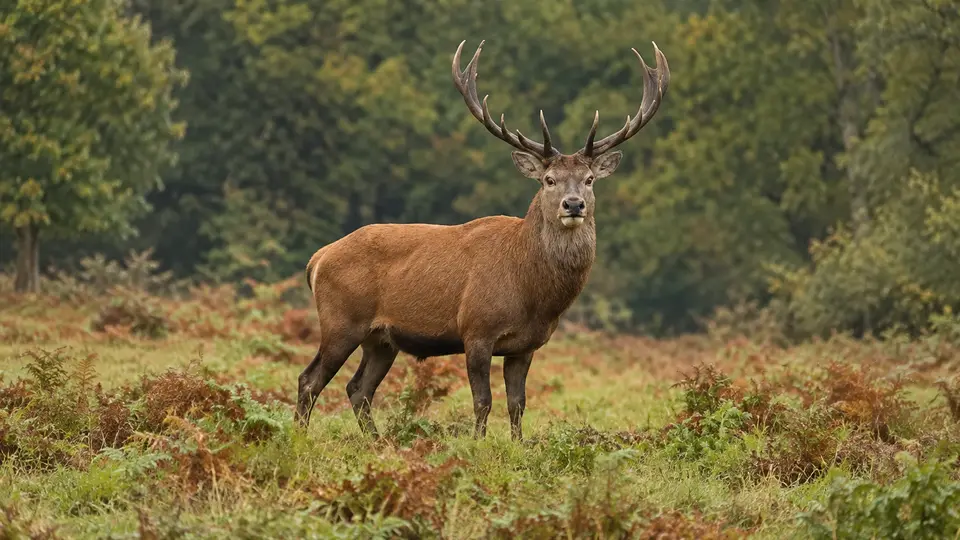
Resident year-round; autumn rutting activity is seasonal, while winter travel and visibility depend strongly on weather.
Coastal Highland grasslands, sea-loch margins and nearby moorland can offer viewing from roads or established paths.
Red deer are Scotland's largest native land mammals, with long legs, broad ears and coats that change from reddish summer tones to thicker grey-brown winter fur.

These months offer long evenings and possible daylight foraging, not a fixed viewing season; pine martens are resident and can remain unseen even at occupied sites.
Coastal woodland edges and mature Highland forests provide suitable habitat, but sightings are uncommon.
The European pine marten is a slender woodland carnivore with rounded ears, a bushy tail and a pale throat bib.
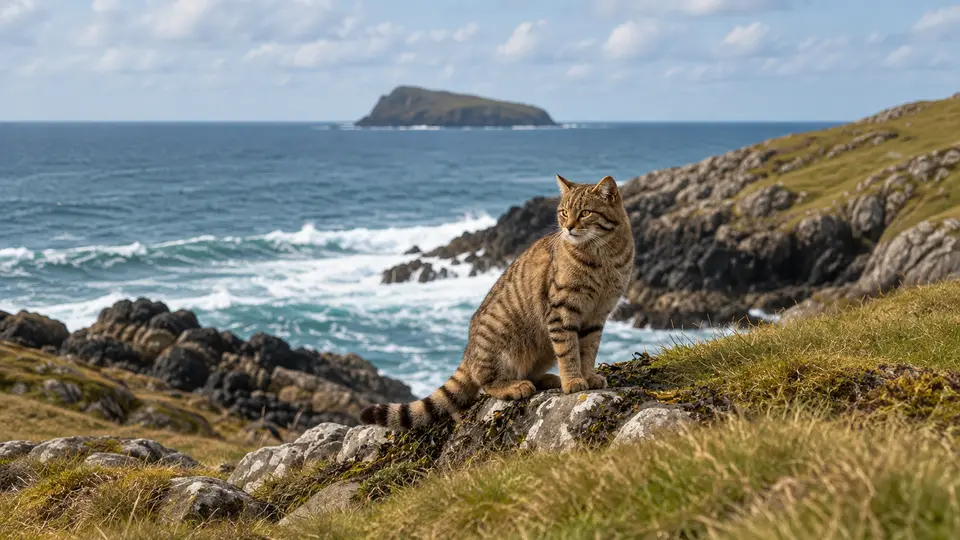
No supported seasonal window offers dependable wild viewing; public access, conservation restrictions and individual movements outweigh general travel-season considerations.
Highland woodland edges and rough grassland provide suitable habitat, but an inland excursion is required and genuine sightings are exceptionally rare.
The Scottish wildcat is the Scottish population of the European wildcat, not a separate species with a secure independent global assessment.
Wildlife is wild: sightings, courtship displays and nesting activity cannot be guaranteed. Species occur in different parts of the region, not at every landing.
Show all other animalsEvery shore tells a different story
01 · Coastal landscapes
Basalt columns and sea-cave scenery. Landings depend on swell and safe access.
Check access, activity level and inclusion on your confirmed itinerary.
02 · Local heritage
An island known for its abbey, sandy shores and long cultural history.
Check access, activity level and inclusion on your confirmed itinerary.
03 · Guided exploration
Mountain and coastal scenery with walks of varied difficulty
Check access, activity level and inclusion on your confirmed itinerary.
04 · Nature ashore
transfers depend on the port.
Check access, activity level and inclusion on your confirmed itinerary.
05 · Island experiences
A remote UNESCO-listed archipelago with major seabird colonies. Access is weather-dependent and never assured.
Check access, activity level and inclusion on your confirmed itinerary.
06 · Route highlights
Mull’s colourful harbour town provides a community visit between wilder coastlines.
Check access, activity level and inclusion on your confirmed itinerary.
Volcanic basalt, glacial valleys and Atlantic erosion produce strikingly varied island scenery.

Coastal machair, heather moorland and wet woodland support distinct plants and birds.

Remote islands and seabird colonies have strict visitor guidance. Respect community land and biosecurity checks.
Choose places before cabins

Oban-based routes may combine Mull, Iona and nearby islands.

Longer western voyages can reach remote islands, with flexible weather plans.

Orkney and Shetland need a different route rather than being assumed additions.
Your base between shore days
Loading Scotland cruise ships…
Flights & arrival
Flight gateway
West coast ports such as Oban are a 2.5–3 h drive or train from Glasgow. Confirm the onward flight or harbour transfer from Glasgow Airport with your operator before booking.
Flight gateway
West coast ports such as Oban are a 2.5–3 h drive or train from Glasgow. Confirm the onward flight or harbour transfer from Edinburgh Airport with your operator before booking.
Flight gateway
West coast ports such as Oban are a 2.5–3 h drive or train from Glasgow. Confirm the onward flight or harbour transfer from Inverness Airport with your operator before booking.
Onward journey
West coast ports such as Oban are a 2.5–3 h drive or train from Glasgow.
Before departure
Plan a night in the embarkation town.
We recommend reaching the embarkation town at least one day before departure. Allow more time for remote destinations, separate flights, ferries or long transfers, and follow any earlier arrival or briefing required by your operator.
Flight schedules and entry requirements change. Confirm current arrangements with your operator before booking.
Before you set sail
Discuss health, mobility and dietary needs before choosing a route. Remote areas may have limited medical facilities; travel insurance should cover your activities and any necessary evacuation.
Good to know
Find the ship, route and travel dates that suit you.