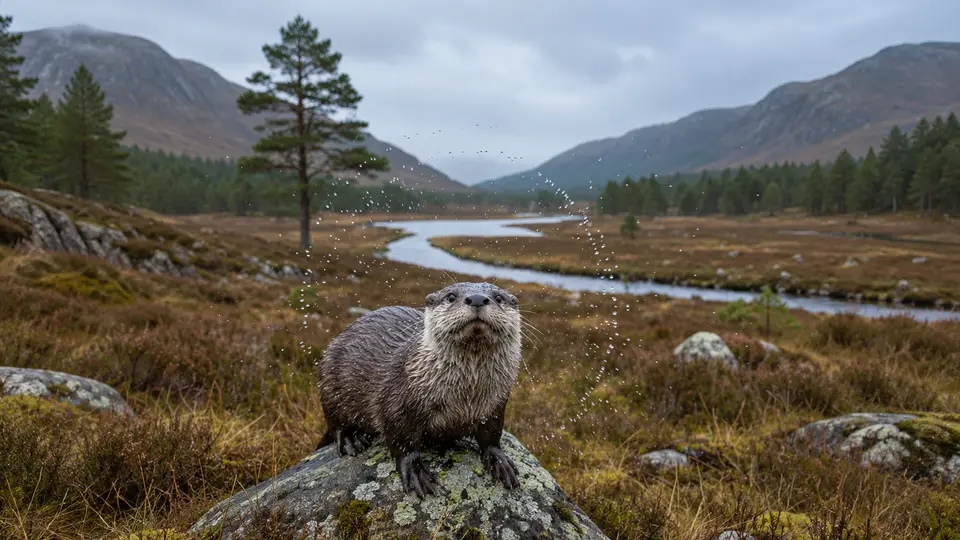
Eurasian Otter in its natural habitatAI-modified

Eurasian OtterLutra lutraWhere and when to see them

Eurasian Otter at a glance

The Eurasian otter is a semiaquatic predator found along rivers, wetlands and some rocky coasts across a vast Eurasian range. Its streamlined body, muscular tail and dense fur suit a life divided between water and land. Scottish coastal animals can sometimes be watched in daylight, whereas many freshwater populations are more secretive. Even otters feeding at sea depend on freshwater access and secure resting places, so apparently wild shorelines may contain essential but inconspicuous habitat.

Behaviour & reproduction

Size
90-140 cm (35.4-55.1 in) total length
Weight
5-12 kg (11-26.5 lb)
Lifespan
Up to 18.2 years in captivity (record)
Status
Near Threatened

Most adults live largely alone, although females remain with dependent young for many months. Individuals travel through linear territories and leave scent marks on prominent rocks, banks and crossing points. Activity changes with disturbance, prey and local conditions rather than following one universal daily schedule. Coastal otters alternate feeding bouts with grooming and rest, maintaining the insulating structure of their fur. Sheltered holts and resting couches are important, and repeated disturbance can displace an animal. They are predominantly nocturnal or crepuscular, especially in areas with human disturbance, but can be active during the day in undisturbed coastal regions. Otters have a sophisticated communication system, using a variety of chirps, whistles and snarls. Their playful nature, often seen sliding down banks or playing with prey, is a characteristic trait.

Top wildlife locations

Scotland wildlife habitatAI-modified

Scotland

Sheltered rocky coasts, sea-loch margins and freshwater outlets offer credible shore-watching habitat. Otters remain elusive, and suitable stretches may be remote or inaccessible without substantial walking on designated routes.

Turkey wildlife habitatAI-modified

Turkey

River mouths, reed-fringed lagoons and undisturbed stream banks are plausible habitat, but sightings are rare. An inland wetland excursion and local expertise are often needed rather than casual harbour observation.

Destinations describe the species' habitat, not guaranteed cruise stops. Some animals require an optional inland excursion or are found in restricted reserves.

Fun facts about the Eurasian Otter

  • Dense fur, rather than a thick blubber layer, provides its principal insulation.
  • Otter scent marks are commonly called spraints.
  • Whiskers help detect prey movement in murky conditions.
  • In suitable coastal habitat, breeding need not follow a single sharply defined season.

Best time to see the Eurasian Otter

Scottish coastal otters can be watched throughout the year, with calm weather and usable daylight improving observation. Turkey has no dependable nationwide otter-viewing season. Spring and autumn can suit wetland visits, but local knowledge and disturbance levels matter more than a broad travel calendar. In Scotland, late spring and early summer offer longer daylight hours and calmer seas, improving viewing conditions significantly. Winter sightings are possible but require more resilience to cold and shorter days. For Turkey's wetlands, early morning and late afternoon in spring and autumn often yield the best results.

Eurasian Otter: season matrix by destination

Travel and observation windows vary by region. Highlighted months are an orientation for planning, not confirmed sightings or a guarantee of access.

Scotland

Year-round presence supports observation in any month, but winter daylight, wind and sea conditions limit practical opportunities; this is not a breeding calendar.

JanFebMarAprMayJunJulAugSepOctNovDec
Cruise ships in Scotland

Turkey

The species is resident, but locality-specific visibility and access are insufficiently predictable to assign a reliable national shore-observation window.

JanFebMarAprMayJunJulAugSepOctNovDec
Cruise ships in Turkey

Where the Eurasian Otter lives

Clean rivers, lakes, marshes and sheltered rocky shores support otters where prey and bankside cover remain available. Coastal populations need nearby freshwater for washing and drinking. Reedbeds, tree roots, boulders and undisturbed banks provide refuge, while busy exposed beaches are usually less suitable. They are highly adaptable and can be found from sea level up to mountainous regions, provided there is sufficient clean water and food. Otters are excellent bioindicators; their presence signifies a healthy aquatic environment. In Scotland, their coastal habitats often include sea lochs and island archipelagos.

What the Eurasian Otter eats

Fish form the principal food in many populations, but otters also eat crustaceans, amphibians and other locally available prey. Coastal animals may take crabs and small nearshore fish. Diet varies seasonally and geographically, reflecting what can be captured efficiently rather than a fixed menu. In freshwater environments, frogs, newts and even small birds or mammals can supplement their fish-heavy diet. Their opportunistic feeding habits are a key to their survival across diverse landscapes. European eels and various salmonid species are common prey where available.

Species at a glance

Common name
Eurasian Otter
Scientific name
Lutra lutra
Animal group
Mammals
Size
90-140 cm (35.4-55.1 in) total length
Weight
5-12 kg (11-26.5 lb)
Lifespan
Up to 18.2 years in captivity (record)
Status
Near Threatened
Identification
Its broad muzzle, substantial tapered tail and larger body distinguish it from the smaller American mink, which has a narrower face and a more slender, relatively bushier tail. Beyond facial features, look for the otter's distinctly muscular, tapered tail that can be up to two thirds the length of its body. Its sleek, dark brown fur appears almost black when wet and often shows a paler, creamy chest and throat. The Eurasian otter is significantly larger than a polecat or stoat, often mistaken for it from a distance.

Eurasian Otter: frequently asked questions

Where can I see the Eurasian Otter?
Scotland, Turkey. Wait quietly above a sheltered shoreline or riverbank and use binoculars. Never approach a holt, block an animal's route to water or follow a family; keep dogs leashed and avoid disclosing sensitive resting sites. Look for characteristic V-shaped ripples on the water surface, which can betray an otter swimming or diving. Maintain a respectful distance to avoid causing stress or altering their natural routines. Binoculars or a spotting scope are essential for detailed observation without disturbing the animal.
When is the best time to see the Eurasian Otter?
Scottish coastal otters can be watched throughout the year, with calm weather and usable daylight improving observation. Turkey has no dependable nationwide otter-viewing season. Spring and autumn can suit wetland visits, but local knowledge and disturbance levels matter more than a broad travel calendar. In Scotland, late spring and early summer offer longer daylight hours and calmer seas, improving viewing conditions significantly. Winter sightings are possible but require more resilience to cold and shorter days. For Turkey's wetlands, early morning and late afternoon in spring and autumn often yield the best results.
How big does the Eurasian Otter get?
90-140 cm (35.4-55.1 in) total length. Adult weight: 5-12 kg (11-26.5 lb). Size varies with age, sex and population.
How should I behave around the Eurasian Otter?
Wait quietly above a sheltered shoreline or riverbank and use binoculars. Never approach a holt, block an animal's route to water or follow a family; keep dogs leashed and avoid disclosing sensitive resting sites. Look for characteristic V-shaped ripples on the water surface, which can betray an otter swimming or diving. Maintain a respectful distance to avoid causing stress or altering their natural routines. Binoculars or a spotting scope are essential for detailed observation without disturbing the animal.
What does the Eurasian Otter eat?
Fish form the principal food in many populations, but otters also eat crustaceans, amphibians and other locally available prey. Coastal animals may take crabs and small nearshore fish. Diet varies seasonally and geographically, reflecting what can be captured efficiently rather than a fixed menu. In freshwater environments, frogs, newts and even small birds or mammals can supplement their fish-heavy diet. Their opportunistic feeding habits are a key to their survival across diverse landscapes. European eels and various salmonid species are common prey where available.
Are wildlife sightings guaranteed on an adventure cruise?
No. Animals move freely and routes, weather, access restrictions and local conditions influence every outing. Confirm the actual itinerary and shore program before booking.

Compare wildlife in the same destinations

Explore other mammals recorded in these destinations. Similar surroundings do not mean the animals share the same habits or viewing season.

Species comparison by animal group and destination
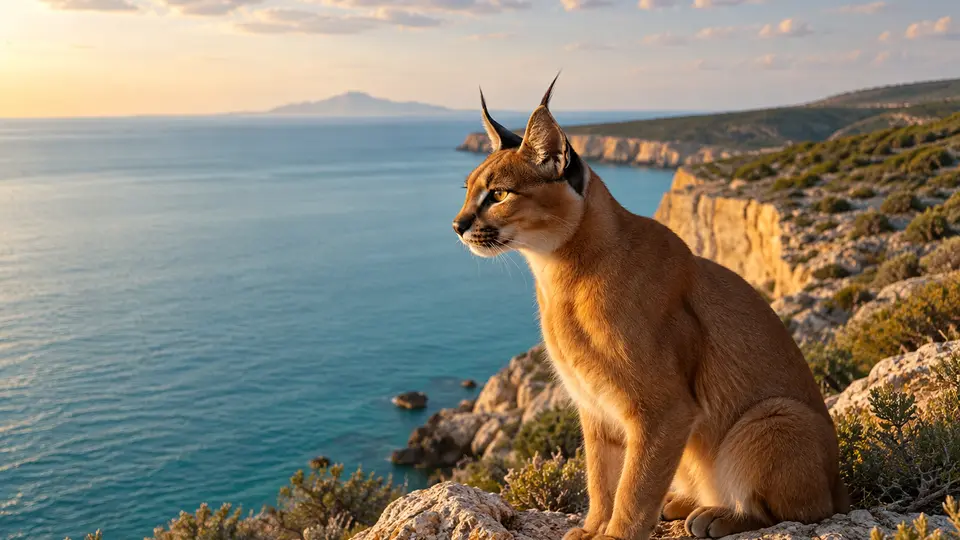
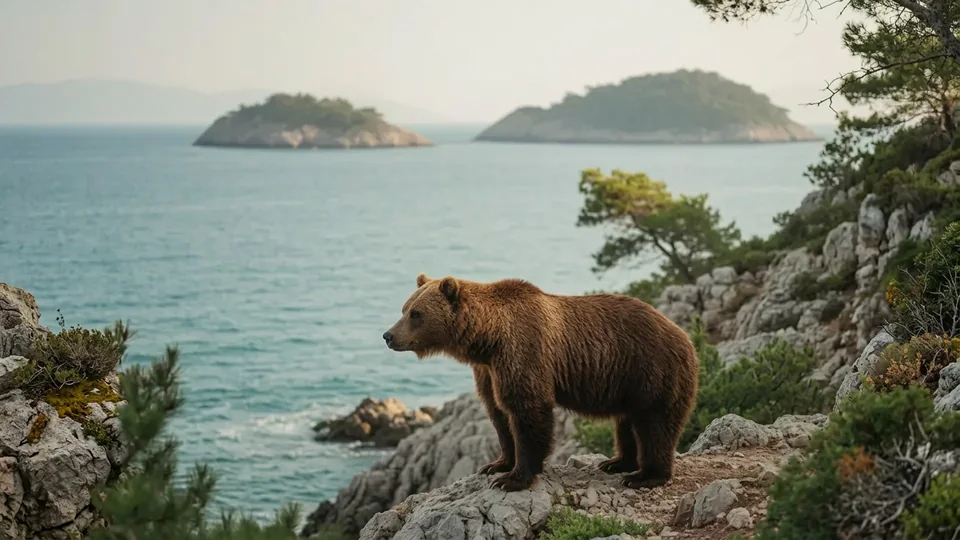
Eurasian OtterAI-modifiedEurasian OtterBrown BearAI-modifiedBrown BearCaracalAI-modifiedCaracal
Animal groupMammalsAnimal groupMammalsAnimal groupMammals
DestinationsScotland, TurkeyDestinationsTurkeyDestinationsTurkey
Scientific nameLutra lutraScientific nameScientific name
All wildlife destinations
AI-modified
Plan your trip

Find your next wildlife adventure

Compare destinations, shore programs and dates with the animals and habitats you would love to see.

  • Naturalist-led shore excursions
  • Responsible wildlife watching
  • Small expedition ships