

01 · Coastal landscapes
Everglades coast
Mangrove shorelines and wetland habitats support wading birds and other wildlife. Access depends on the landing area and park rules.
Check access, activity level and inclusion on your confirmed itinerary.
Newsletter
Adventure cruise offers, last-minute deals and trip inspiration.
Free, unsubscribe anytime. Details: Privacy Policy
Partner with Blue Rides
Recommend adventure cruises and earn commission on every confirmed booking.
Share. Track. Earn.

Mangroves, island keys and subtropical shores
Small ships
Personal, guided voyages
Choose your season
Nov – Apr
Shore experiences
On your confirmed itinerary
Nature & wildlife
Coasts, trails & island habitats
Mangroves, island keys and subtropical shores

A journey through Everglades coast and the surrounding region brings the landscape into focus. Your ship connects the coastal places while guided excursions reveal the details that are easy to miss from the deck.
Choose the actual stops on the programme, not just the destination name. Routes that include Dry Tortugas can offer a different balance of nature and culture from those centred on Ten Thousand Islands. Activities, permits and walking demands vary by voyage.
When to go
Mild, dry winter: comfortable walks in the Everglades and Keys, manatees gathering in warm springs and abundant wading birds.
Warmer days with occasional storms; good for beaches and mangrove kayaking.
Hot, humid hurricane season with frequent thunderstorms that can disrupt shore days.
Typical patterns for planning shore excursions; weather varies year to year and is never guaranteed.
Mild, dry winter: comfortable walks in the Everglades and Keys, manatees gathering in warm springs and abundant wading birds.
Warmer days with occasional storms; good for beaches and mangrove kayaking.
| Typical pattern | Jan | Feb | Mar | Apr | May | Jun | Jul | Aug | Sep | Oct | Nov | Dec |
|---|---|---|---|---|---|---|---|---|---|---|---|---|
| Shore conditions | Peak | Peak | Peak | Peak | Variable | Limited | Limited | Limited | Limited | Variable | Peak | Peak |
| Rain / snow · mm | 37 | 23 | 28 | 33 | 87 | 111 | 71 | 105 | 147 | 105 | 60 | 46 |
| Cruises | Seasonal | Seasonal | Seasonal | Seasonal | Seasonal | Limited | Limited | Limited | Limited | Seasonal | Seasonal | Seasonal |
Local conditions differ between coastlines and islands. The chart represents Key West, not every stop on a voyage. Cruise operation depends on the published itinerary, not the weather rating.
Key West · 2015–2024. Monthly averages calculated from ERA5 daily values via Open-Meteo; rounded for planning, not a forecast or a local station measurement. Rainfall includes water-equivalent snowfall where relevant.
Wildlife on land & along the coast
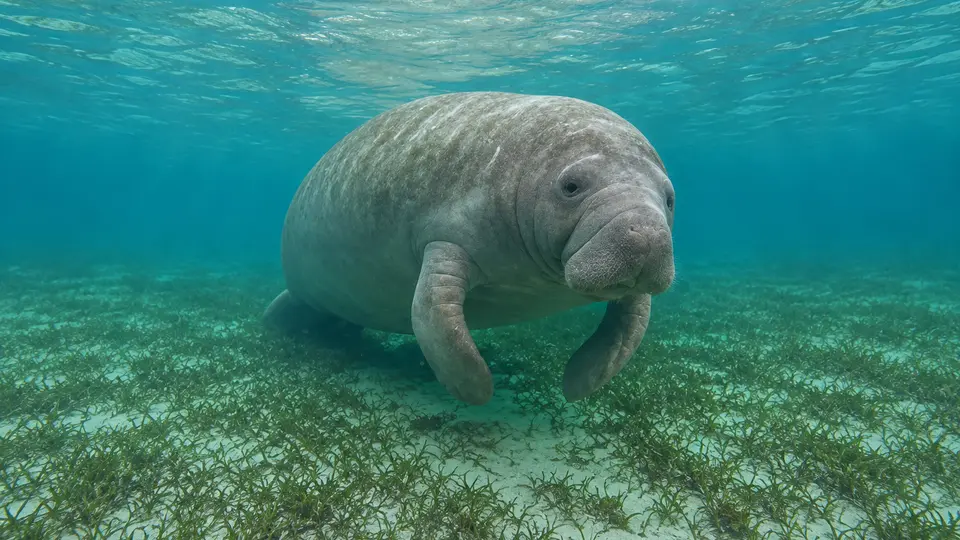
Cold weather can concentrate manatees at warm refuges; this is not a breeding window, and mild spells may reduce shore visibility.
Designated spring overlooks, riverbank platforms and sheltered coastal viewing areas can provide distant surface views.
The West Indian manatee is a large aquatic herbivore of warm coastal and inland waters in the western Atlantic region.
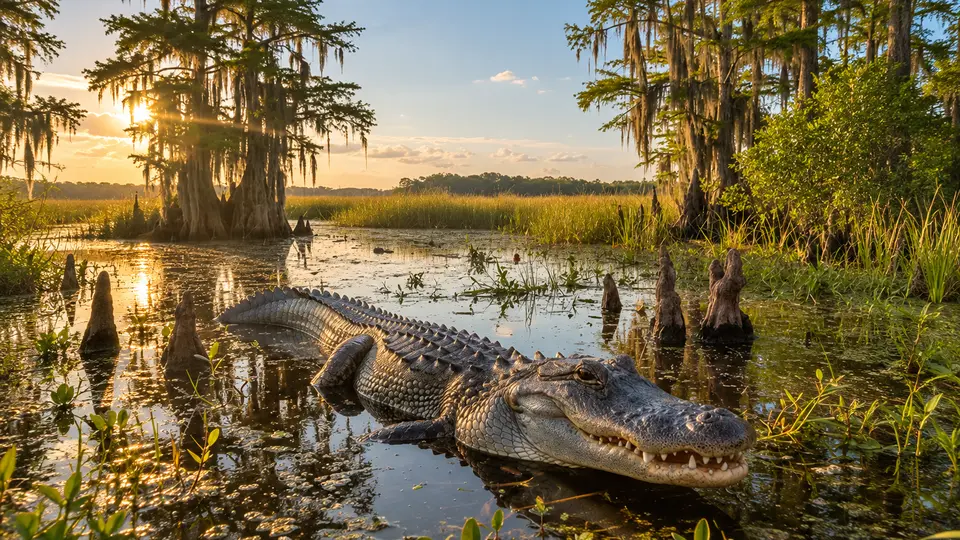
Cooler, generally drier months suit visitor access and basking observation; local water levels and cold spells can still reduce visibility.
Freshwater marsh boardwalks, lake overlooks and managed wetland trails offer shore-based observation.
The American alligator is a large freshwater crocodilian native to the southeastern United States.
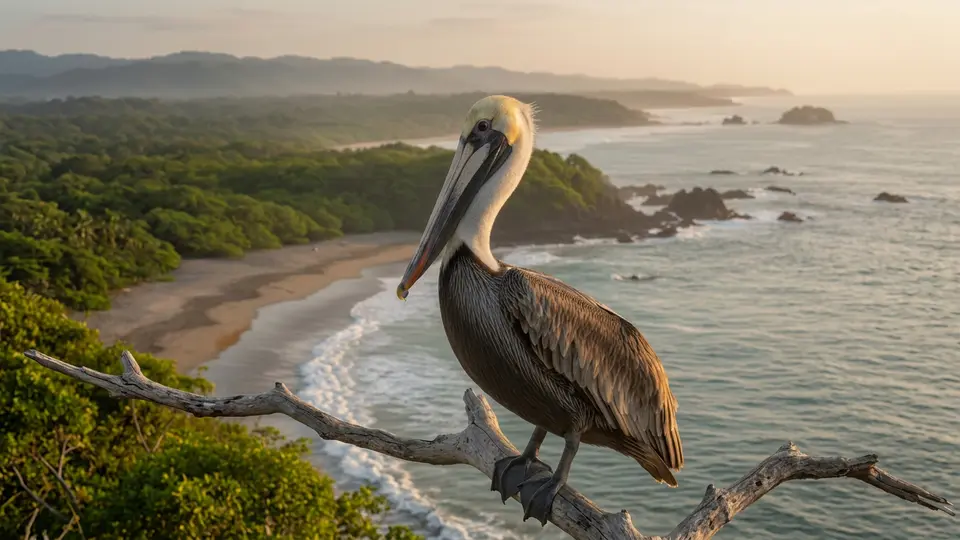
Present year-round in suitable coastal habitat; storms, heat, migration and regional breeding schedules alter local numbers and viewing comfort.
Public piers, bayfront paths, beaches and mangrove-fringed estuaries offer accessible views.
The brown pelican is a large coastal bird famous for plunge-feeding and orderly lines of birds gliding just above the waves.
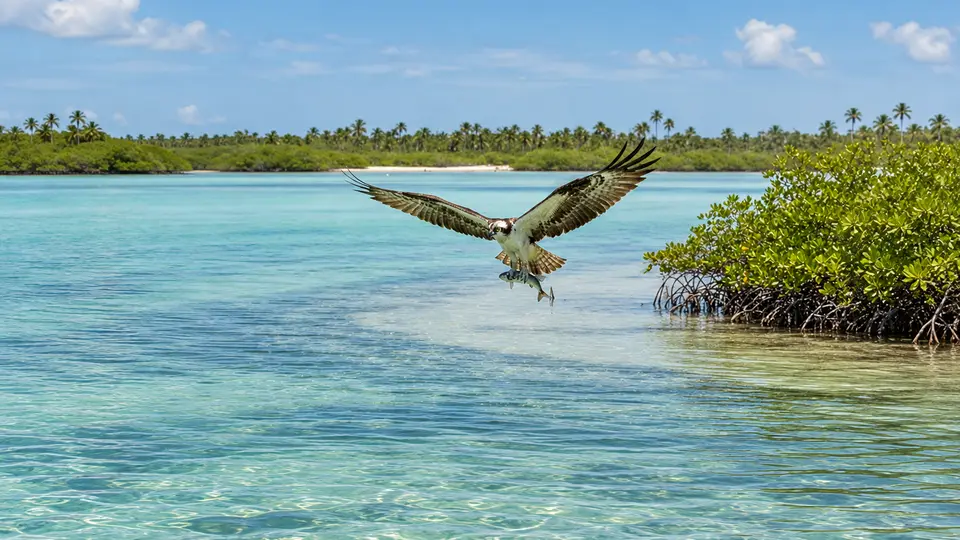
Residents occur year-round, with additional seasonal migrants; breeding schedules and local abundance vary across Florida.
Estuaries, coastal lagoons, causeways and waterfront parks provide accessible viewing habitat.
The osprey is a fish-catching raptor distributed across much of the world, recognizable by its pale underside, dark eye stripe and long, angled wings.
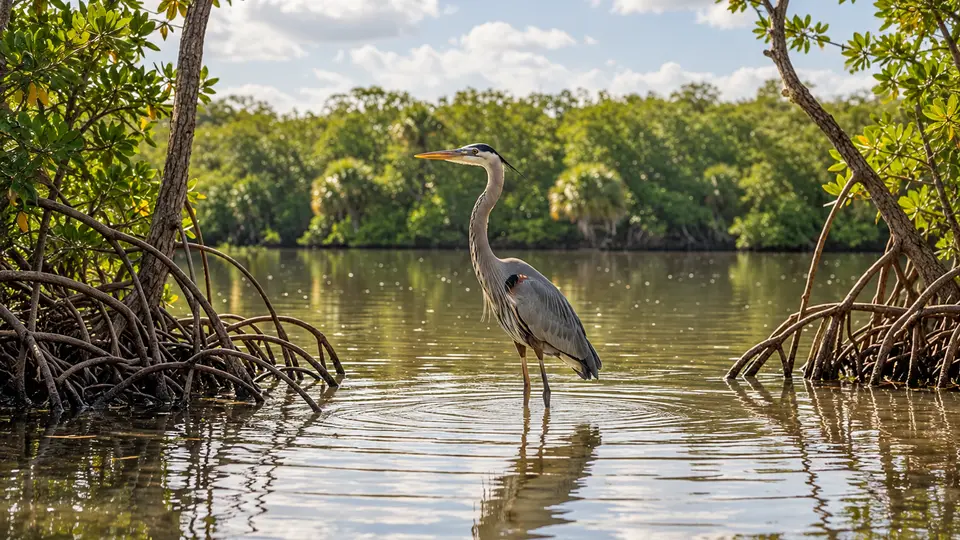
A comfortable dry-season travel window for a resident species; local water levels and disturbance determine whether birds use any particular viewpoint.
Public wetland boardwalks, tidal creek overlooks and mangrove-edged parks offer plausible shore viewing.
North America's largest widespread heron, the great blue heron combines long legs, a heavy pointed bill and blue-gray plumage with darker shoulder markings.
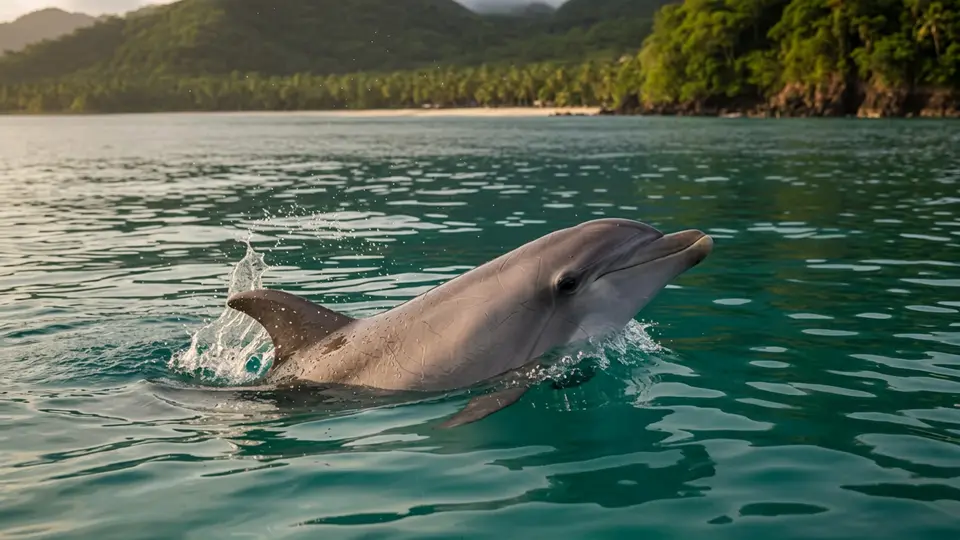
Cooler months often suit shore visits; dolphins occur year-round in many areas, and wind still controls visibility.
Estuary mouths, barrier-island shores and open bays provide suitable coastal viewing habitat.
The common bottlenose dolphin is a large, adaptable marine mammal found in temperate and tropical seas.
Wildlife is wild: sightings, courtship displays and nesting activity cannot be guaranteed. Species occur in different parts of the region, not at every landing.
Show all other animalsEvery shore tells a different story
01 · Coastal landscapes
Mangrove shorelines and wetland habitats support wading birds and other wildlife. Access depends on the landing area and park rules.
Check access, activity level and inclusion on your confirmed itinerary.
02 · Local heritage
Fort Jefferson and surrounding waters lie far west of Key West. A visit needs a route that actually reaches the park.
Check access, activity level and inclusion on your confirmed itinerary.
03 · Guided exploration
Historic streets, harbour life and island culture can complement a nature-focused coastal voyage.
Check access, activity level and inclusion on your confirmed itinerary.
04 · Nature ashore
Sheltered creeks and tidal roots reveal how mangroves protect shorelines. Kayaking is only possible where offered and conditions permit.
Check access, activity level and inclusion on your confirmed itinerary.
05 · Island experiences
A maze of mangrove islands and tidal channels. Guided boat outings must respect shallow-water habitats and wildlife.
Check access, activity level and inclusion on your confirmed itinerary.
06 · Route highlights
Sand, seagrass and coral-island landscapes vary greatly between keys. Check landing access and protected-area regulations.
Check access, activity level and inclusion on your confirmed itinerary.
Limestone foundations, low islands and sandbars shape the coast and make tides important.

Mangroves and seagrass shelter juvenile marine life and coastal birds.

Everglades and Dry Tortugas have specific visitor rules. Never approach manatees or disturb nesting birds.
Choose places before cabins
Choose island-hopping routes for Key West and the lower Keys.
Look for mangrove and estuary excursions around the Gulf coast.

Atlantic and other coastal voyages may prioritise waterfront towns rather than wilderness landings.
Your base between shore days
Loading Florida cruise ships…
Flights & arrival
Flight gateway
Ports are usually a short taxi or shuttle ride from the airport. Confirm the onward flight or harbour transfer from Miami International with your operator before booking.
Flight gateway
Ports are usually a short taxi or shuttle ride from the airport. Confirm the onward flight or harbour transfer from Fort Lauderdale–Hollywood with your operator before booking.
Flight gateway
Ports are usually a short taxi or shuttle ride from the airport. Confirm the onward flight or harbour transfer from Tampa International with your operator before booking.
Flight gateway
Ports are usually a short taxi or shuttle ride from the airport. Confirm the onward flight or harbour transfer from Orlando International with your operator before booking.
Onward journey
Ports are usually a short taxi or shuttle ride from the airport.
Before departure
Arrive the day before embarkation.
We recommend reaching the embarkation town at least one day before departure. Allow more time for remote destinations, separate flights, ferries or long transfers, and follow any earlier arrival or briefing required by your operator.
Flight schedules and entry requirements change. Confirm current arrangements with your operator before booking.
Before you set sail

Discuss health, mobility and dietary needs before choosing a route. Remote areas may have limited medical facilities; travel insurance should cover your activities and any necessary evacuation.
Good to know
Find the ship, route and travel dates that suit you.