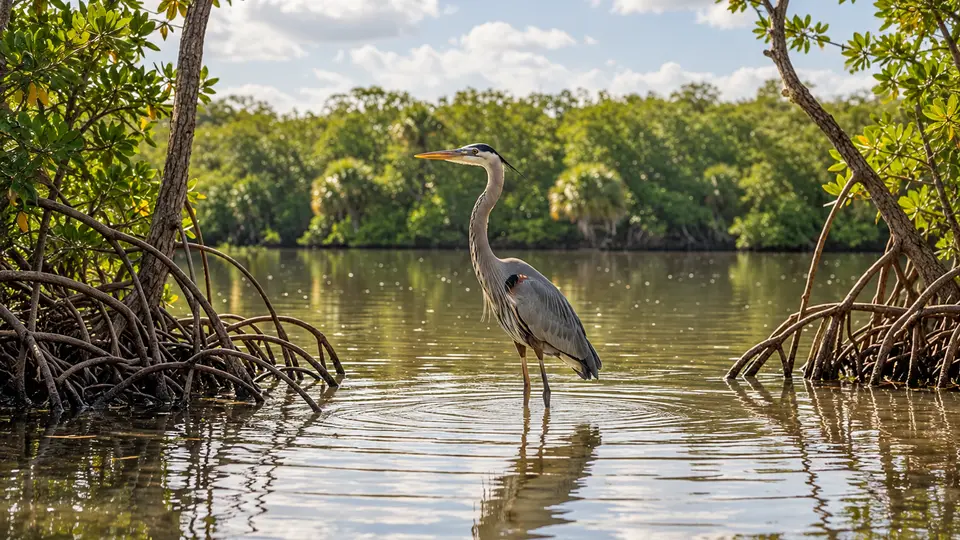
Great Blue Heron in its natural habitat, AI illustration
Size97-137 cm longLifespanNot reliably establishedStatusLeast Concern

Great Blue Heron: where and when to see them

Ardea herodias

Great Blue Heron at a glance

North America's largest widespread heron, the great blue heron combines long legs, a heavy pointed bill and blue-gray plumage with darker shoulder markings. It is a familiar silhouette beside Florida's tidal flats, ponds and marshes. Despite its size, it can remain almost motionless among reeds or mangrove roots. Southern Florida also supports an all-white form, traditionally called the great white heron, whose classification has prompted continuing discussion.

Behaviour & reproduction

Size
97-137 cm long
Weight
2.1-3.6 kg
Lifespan
Not reliably established
Status
Least Concern

A great blue heron usually hunts alone, stepping slowly or waiting with its neck folded before striking rapidly at prey. Feeding birds defend productive patches, while nesting birds gather in colonies that may include other wading species. Courtship involves bill displays, neck stretching and stick presentation. In flight, the neck folds into an S shape and the long legs trail behind broad wings beating at a measured pace. They are highly territorial on their feeding grounds, often using aggressive posturing to warn off other herons or wading birds. In flight, their slow wingbeats and large size give them a prehistoric appearance, making them easily distinguishable from smaller wading birds.

Top wildlife locations

Florida wildlife habitat

Florida

Public wetland boardwalks, tidal creek overlooks and mangrove-edged parks offer plausible shore viewing. Inland ponds also support birds, so a separate inland excursion is optional rather than essential in many coastal districts.

Adventure cruises in Florida
Destinations describe the species' habitat, not guaranteed cruise stops. Some animals require an optional inland excursion or are found in restricted reserves.

Fun facts about the Great Blue Heron

  • Specialized powder-down feathers help clean fish slime from the plumage.
  • Its folded flight posture separates it from cranes flying with extended necks.
  • Adults can hunt small rodents in fields away from water.
  • Both parents feed chicks by regurgitating food.

Best time to see the Great Blue Heron

Great blue herons occur in Florida throughout the year. November through April usually brings more comfortable shore walking and, at many wetlands, useful feeding conditions as water levels fall. Nesting dates vary locally, so winter travel should not be equated with a universal breeding peak. During cooler months, herons can be more active throughout the day, whereas summer heat often restricts their intense feeding to early morning and late afternoon. Nesting colonies in Florida can be active from late fall through early spring, with peak activity varying by region.

Great Blue Heron: season matrix by destination

Travel and observation windows vary by region. Highlighted months are an orientation for planning, not confirmed sightings or a guarantee of access.

Florida

A comfortable dry-season travel window for a resident species; local water levels and disturbance determine whether birds use any particular viewpoint.

JanFebMarAprMayJunJulAugSepOctNovDec
Cruise ships in Florida

Where the Great Blue Heron lives

It uses freshwater, brackish and marine wetlands, including mangrove margins, tidal creeks, lake edges and flooded fields. Nest colonies occupy trees, shrubs or occasionally ground sites. Florida's extensive coastal shallows provide feeding habitat, but inland ponds can be equally suitable. Nests are typically large platforms of sticks built high in trees, often near water. While adaptable, they prefer areas with ample shallow water for foraging and secure, secluded nesting sites.

What the Great Blue Heron eats

Fish dominate many meals, but this heron also takes frogs, crustaceans, reptiles, insects and small mammals. It usually captures prey with a quick bill thrust and swallows it whole. Available prey and water depth strongly influence local feeding choices. Great blue herons can also consume small birds and even rodents, showcasing a highly opportunistic feeding strategy. They often stand motionless for long periods, patiently waiting for prey to come within striking distance.

Species at a glance

Common name
Great Blue Heron
Scientific name
Ardea herodias
Animal group
Birds
Size
97-137 cm long
Weight
2.1-3.6 kg
Lifespan
Not reliably established
Status
Least Concern
Identification
Its large size, heavy yellowish bill and blue-gray body distinguish it from the smaller little blue heron, while the white form has pale legs unlike a great egret. Adults display rusty thigh patches and a streaked neck, with two black plumes extending from behind the eye in breeding individuals. Juveniles are duller and lack the prominent head plumes of adults, having a grayish-black cap.

Great Blue Heron: frequently asked questions

Where can I see the Great Blue Heron?
Florida. Watch feeding birds from boardwalks or firm paths without pushing them toward deeper water. Keep away from nesting trees, and never handle or corner an injured heron: its long bill can cause serious injury. When viewing from a boat, maintain a respectful distance to avoid disturbing foraging birds, especially those actively hunting. Their camouflage can make them surprisingly difficult to spot against marshy backgrounds; look for their distinctive silhouette or slow movements.
When is the best time to see the Great Blue Heron?
Great blue herons occur in Florida throughout the year. November through April usually brings more comfortable shore walking and, at many wetlands, useful feeding conditions as water levels fall. Nesting dates vary locally, so winter travel should not be equated with a universal breeding peak. During cooler months, herons can be more active throughout the day, whereas summer heat often restricts their intense feeding to early morning and late afternoon. Nesting colonies in Florida can be active from late fall through early spring, with peak activity varying by region.
How big does the Great Blue Heron get?
97-137 cm long. Adult weight: 2.1-3.6 kg. Size varies with age, sex and population.
How should I behave around the Great Blue Heron?
Watch feeding birds from boardwalks or firm paths without pushing them toward deeper water. Keep away from nesting trees, and never handle or corner an injured heron: its long bill can cause serious injury. When viewing from a boat, maintain a respectful distance to avoid disturbing foraging birds, especially those actively hunting. Their camouflage can make them surprisingly difficult to spot against marshy backgrounds; look for their distinctive silhouette or slow movements.
What does the Great Blue Heron eat?
Fish dominate many meals, but this heron also takes frogs, crustaceans, reptiles, insects and small mammals. It usually captures prey with a quick bill thrust and swallows it whole. Available prey and water depth strongly influence local feeding choices. Great blue herons can also consume small birds and even rodents, showcasing a highly opportunistic feeding strategy. They often stand motionless for long periods, patiently waiting for prey to come within striking distance.
Are wildlife sightings guaranteed on an adventure cruise?
No. Animals move freely and routes, weather, access restrictions and local conditions influence every outing. Confirm the actual itinerary and shore programme before booking.

Compare wildlife in the same destinations

Explore other birds recorded in these destinations. Similar surroundings do not mean the animals share the same habits or viewing season.

Species comparison by animal group and destination
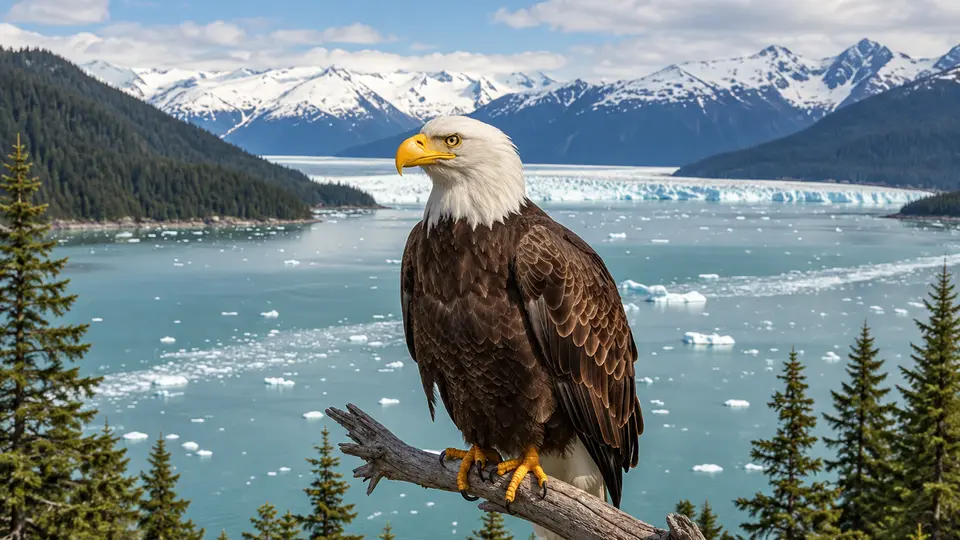
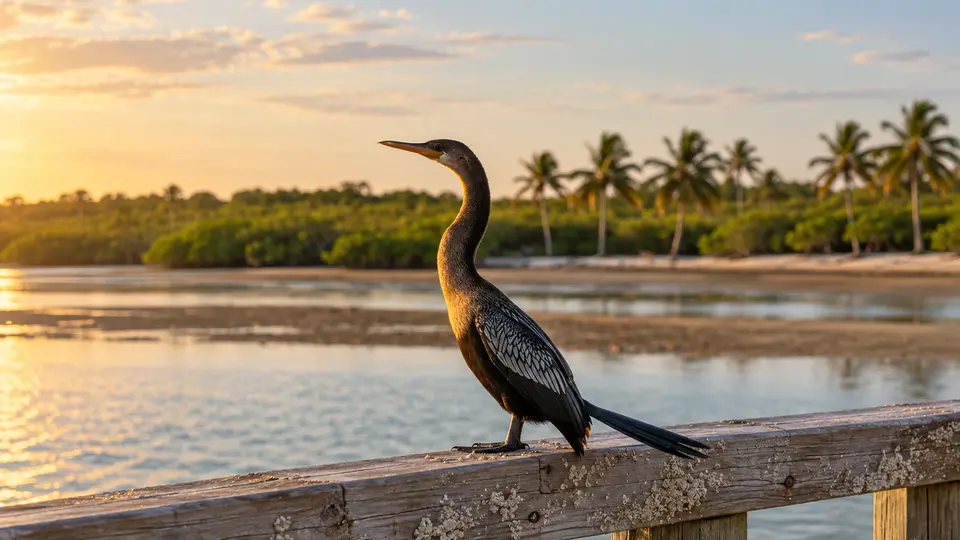
Great Blue HeronGreat Blue HeronAnhingaAnhingaBald EagleBald Eagle
Animal groupBirdsAnimal groupBirdsAnimal groupBirds
DestinationsFloridaDestinationsFloridaDestinationsAlaska, Florida, New England
All wildlife destinations
Plan your trip

Find your next wildlife adventure

Compare destinations, shore programmes and dates with the animals and habitats you would love to see.

  • Naturalist-led shore excursions
  • Responsible wildlife watching
  • Small expedition ships

Newsletter

Take Blue Rides with you

Adventure cruise offers, last-minute deals and trip inspiration.

Free, unsubscribe anytime. Details: Privacy Policy

Partner with Blue Rides

Affiliate Program

Recommend adventure cruises and earn commission on every confirmed booking.

Share. Track. Earn.