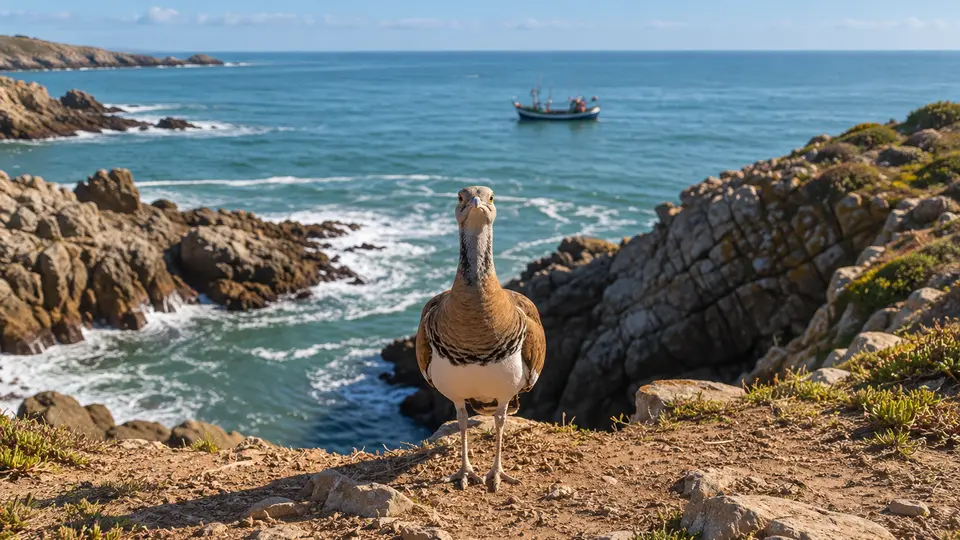
Great Bustard in its natural habitat, AI illustration

Great BustardOtis tardaWhere and when to see them

Great Bustard at a glance

The great bustard is a massive bird of open grassland and traditional farmland, with a broad body, long neck and powerful wings. Males are far larger than females and rank among the heaviest living flying birds. Portugal supports an important part of the western European population, especially in open Alentejo landscapes. Agricultural intensification, infrastructure and disturbance threaten the spacious, low-intensity landscapes on which this distinctive species depends for survival.

Behaviour & reproduction

Size
75-105 cm long
Weight
3.5-16 kg
Lifespan
Not reliably established
Status
Endangered

Outside breeding, great bustards often form flocks that walk steadily across open ground, feeding and scanning for danger. In spring, males gather at traditional display areas and transform their appearance by twisting the wings, lifting the tail and exposing white feathers. Females choose mates and subsequently incubate and rear chicks without male assistance. Birds are wary, and an apparently distant walker or vehicle can interrupt feeding or courtship. The elaborate male display involves puffing out the neck and tail feathers, creating a large white 'foam ball' like appearance to attract females. Females typically lay 2-3 eggs in a shallow scrape on the ground, camouflaged by surrounding vegetation.

Top wildlife locations

Portugal wildlife habitat

Portugal

An inland excursion to protected Alentejo cereal-steppe landscapes is required; this is not a normal shore species. Watch open farmland from authorized public viewpoints without entering fields or approaching display areas.
Destinations describe the species' habitat, not guaranteed cruise stops. Some animals require an optional inland excursion or are found in restricted reserves.

Fun facts about the Great Bustard

  • Adult males may weigh several times as much as females.
  • Displaying males develop conspicuous whisker-like feathers beside the bill.
  • The nest is a shallow scrape on the ground.
  • Power-line collisions are a major conservation problem for this heavy flying bird.

Best time to see the Great Bustard

March and April are especially useful for distant observation of spring displays in Portugal's inland plains. Cooler months can also suit flock watching. Summer heat reduces comfortable viewing time, and breeding birds remain vulnerable to disturbance even when nests are invisible. Early morning and late afternoon are generally the most productive times for observation, as birds are more active and light conditions are optimal. During the non-breeding season, large flocks can offer impressive spectacles as they forage together across fields.

Great Bustard: season matrix by destination

Travel and observation windows vary by region. Highlighted months are an orientation for planning, not confirmed sightings or a guarantee of access.

Portugal

Late winter and spring favor comfortable inland viewing, with displays mainly in spring; access restrictions and agricultural conditions should be checked locally.

JanFebMarAprMayJunJulAugSepOctNovDec
Cruise ships in Portugal

Where the Great Bustard lives

Great bustards favor extensive treeless plains with a mosaic of cereal crops, fallow land, pasture and natural steppe vegetation. They need broad sightlines and relatively little disturbance. In Portugal, suitable habitat is inland rather than along ordinary coastal visitor routes. Though generally avoiding dense tree cover, they may use sparse woodland and olive groves for shelter or foraging in some areas. Conversion of steppe grasslands to intensive agriculture, along with human encroachment, poses significant threats to their remaining strongholds.

What the Great Bustard eats

Adults eat leaves, shoots, seeds and cultivated plants, supplementing these with insects and other small animals. Chicks depend heavily on invertebrates during early growth. Diet changes through the year as rainfall, farming operations and seasonal plant development alter food availability. In addition to natural food sources, they readily consume agricultural crops like alfalfa, rapeseed, and various cereal grains, which can make them a target for farmers. Water is essential, especially for chicks, and they often seek out dew, puddles, or small water bodies when available.

Species at a glance

Common name
Great Bustard
Scientific name
Otis tarda
Animal group
Birds
Size
75-105 cm long
Weight
3.5-16 kg
Lifespan
Not reliably established
Status
Endangered
Identification
Compared with the little bustard, the great bustard is much larger, with a heavy body, gray head and neck, and extensive white flashing across the wings in flight. Adult males are notably larger and heavier than females, weighing up to 18 kilograms, making them one of the world's heaviest flying birds. During display, males develop distinct 'whiskers' formed by elongated feathers on either side of the bill, a key feature for identifying displaying individuals.

Great Bustard: frequently asked questions

Where can I see the Great Bustard?
Portugal. Use designated inland viewpoints and a telescope, remaining inside a stationary vehicle where local guidance recommends it. Never walk toward displaying males or cross occupied fields; ground nests and chicks are exceptionally easy to overlook. Always maintain a respectful distance to avoid causing stress, particularly to breeding birds which are easily disturbed. Understanding local agricultural cycles can help predict where birds might be feeding or nesting at different times of the year.
When is the best time to see the Great Bustard?
March and April are especially useful for distant observation of spring displays in Portugal's inland plains. Cooler months can also suit flock watching. Summer heat reduces comfortable viewing time, and breeding birds remain vulnerable to disturbance even when nests are invisible. Early morning and late afternoon are generally the most productive times for observation, as birds are more active and light conditions are optimal. During the non-breeding season, large flocks can offer impressive spectacles as they forage together across fields.
How big does the Great Bustard get?
75-105 cm long. Adult weight: 3.5-16 kg. Size varies with age, sex and population.
How should I behave around the Great Bustard?
Use designated inland viewpoints and a telescope, remaining inside a stationary vehicle where local guidance recommends it. Never walk toward displaying males or cross occupied fields; ground nests and chicks are exceptionally easy to overlook. Always maintain a respectful distance to avoid causing stress, particularly to breeding birds which are easily disturbed. Understanding local agricultural cycles can help predict where birds might be feeding or nesting at different times of the year.
What does the Great Bustard eat?
Adults eat leaves, shoots, seeds and cultivated plants, supplementing these with insects and other small animals. Chicks depend heavily on invertebrates during early growth. Diet changes through the year as rainfall, farming operations and seasonal plant development alter food availability. In addition to natural food sources, they readily consume agricultural crops like alfalfa, rapeseed, and various cereal grains, which can make them a target for farmers. Water is essential, especially for chicks, and they often seek out dew, puddles, or small water bodies when available.
Are wildlife sightings guaranteed on an adventure cruise?
No. Animals move freely and routes, weather, access restrictions and local conditions influence every outing. Confirm the actual itinerary and shore program before booking.

Compare wildlife in the same destinations

Explore other birds recorded in these destinations. Similar surroundings do not mean the animals share the same habits or viewing season.

Species comparison by animal group and destination
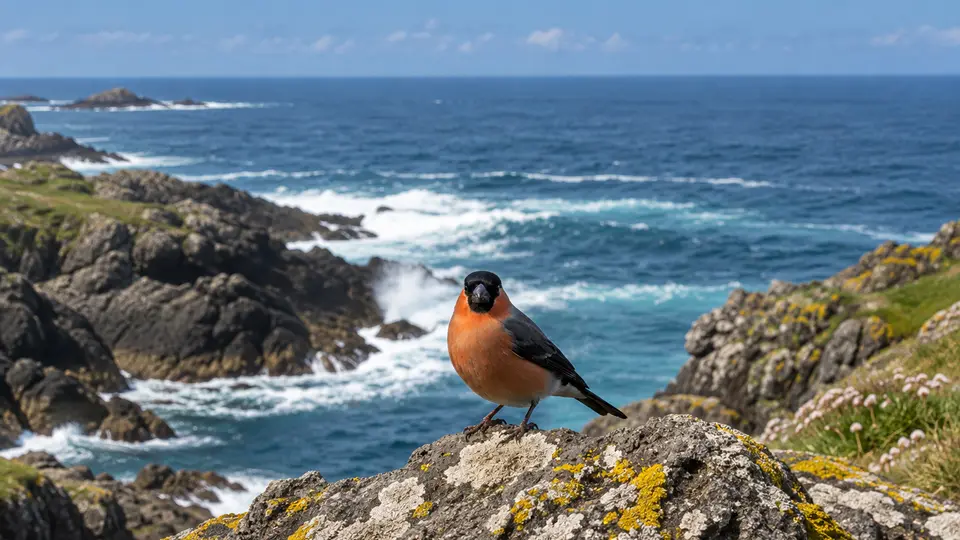
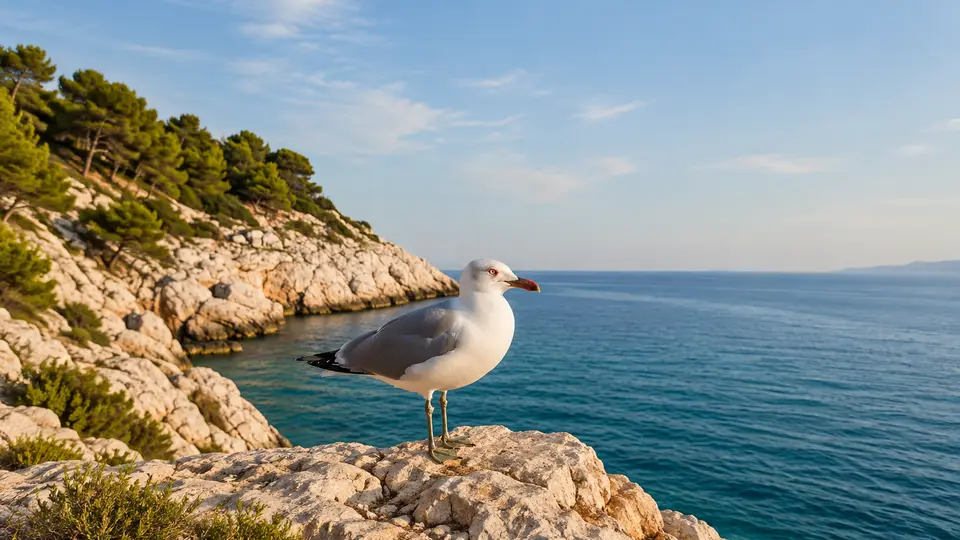
Great BustardGreat BustardAudouin's GullAudouin's GullAzores BullfinchAzores Bullfinch
Animal groupBirdsAnimal groupBirdsAnimal groupBirds
DestinationsPortugalDestinationsCroatia, Greece, Portugal, TurkeyDestinationsPortugal
All wildlife destinations
Plan your trip

Find your next wildlife adventure

Compare destinations, shore programs and dates with the animals and habitats you would love to see.

  • Naturalist-led shore excursions
  • Responsible wildlife watching
  • Small expedition ships

Newsletter

Take Blue Rides with you

Adventure cruise offers, last-minute deals and trip inspiration.

Free, unsubscribe anytime. Details: Privacy Policy

Partner with Blue Rides

Affiliate Program

Recommend adventure cruises and earn commission on every confirmed booking.

Share. Track. Earn.

Your footage, our stage

Send us your videos or pictures.

Captured remarkable nature or wildlife on your journey? Share it with us, we may feature it on Blue Rides.