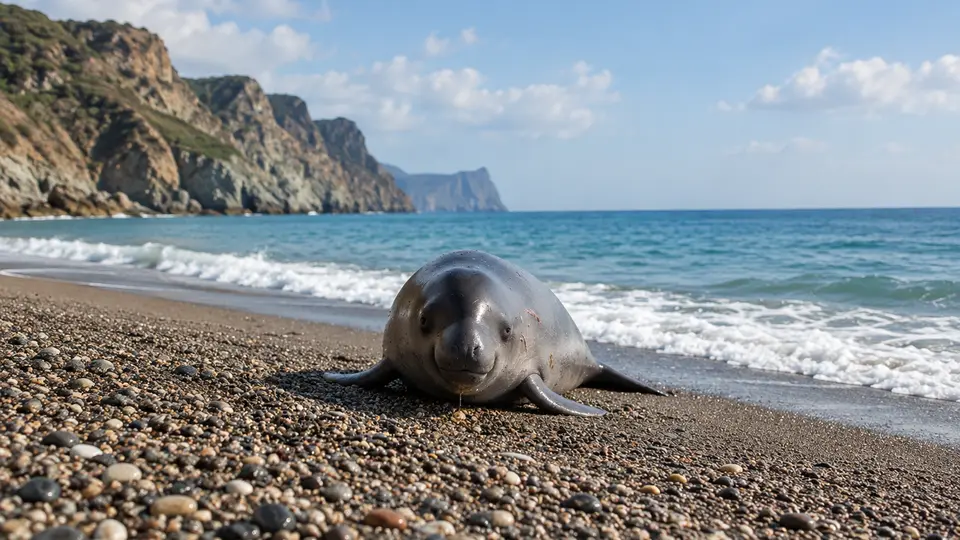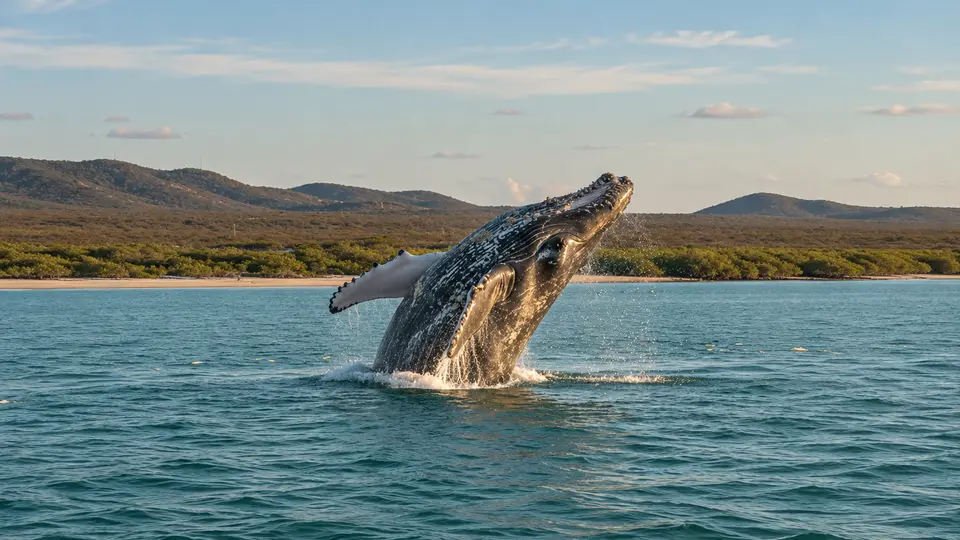
Gray Whale in its natural habitat, AI illustration
Size11-15 m longLifespanNot reliably establishedStatusLeast Concern

Gray Whale: where and when to see them

Eschrichtius robustus

Gray Whale at a glance

The gray whale is a baleen whale of the North Pacific, recognizable by mottled skin, barnacle patches and the absence of a true dorsal fin. The eastern population undertakes a long migration between northern feeding grounds and wintering waters off Mexico. Western North Pacific animals have a different and more precarious conservation history. These whales are entirely marine, although their coastal movements sometimes make distant observation possible from land.

Behaviour & reproduction

Size
11-15 m long
Weight
20-40 tonnes
Lifespan
Not reliably established
Status
Least Concern

Gray whales commonly travel alone or in small, loose groups, surfacing in a sequence of breaths before a longer interval out of view. Many feed by rolling onto one side and disturbing bottom sediment, then straining small animals through baleen. Mothers accompany calves on the northward migration. Breaching and spyhopping occur, but most shore observations involve brief views of blows, a rounded back or tail flukes disappearing offshore. Gray whales are known for their curiosity towards boats in certain areas, particularly in Baja California lagoons where they sometimes approach vessels voluntarily. This 'friendly' behavior is a remarkable aspect of their interactions with humans. During migration, they generally travel close to shore, making them one of the most accessible large whales for land-based observation.

Top wildlife locations

Alaska wildlife habitat

Alaska

Exposed coastal overlooks along the Gulf of Alaska can offer distant spring migration views. Northern feeding grounds are much less accessible, and ordinary coastal travel does not necessarily reach productive observation areas.

Adventure cruises in Alaska
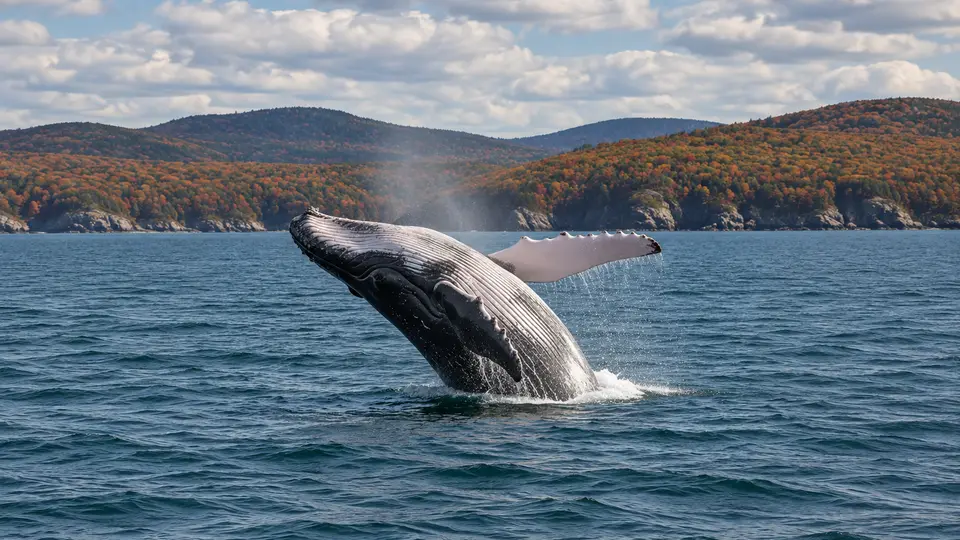
Mexico wildlife habitat

Mexico

Baja California's Pacific coast provides headland viewpoints near migration routes and lagoon approaches. Shore views inside broad lagoons may be very distant; reaching useful overlooks can require a separate road excursion.

Adventure cruises in Mexico

Destinations describe the species' habitat, not guaranteed cruise stops. Some animals require an optional inland excursion or are found in restricted reserves.

Fun facts about the Gray Whale

  • Some individuals migrate more than 15,000 km in a round trip.
  • Their feeding can leave elongated pits in soft seabed sediment.
  • Barnacles and whale lice contribute to their patchwork appearance.
  • The species once inhabited the North Atlantic but disappeared there centuries ago.

Best time to see the Gray Whale

In Mexico, January through March broadly overlaps winter lagoon use and coastal migration. Alaska's south coast can offer spring passage, especially April and May, while some northern feeding areas are relevant in summer. Exact timing shifts annually and differs markedly between coastlines. The peak of the southbound migration past California, often visible from shore, is typically in December and January. Northbound migrants, including mothers with young calves, can be seen along the Pacific coast from February through May. Early spring offers the best chances to witness the northward journey of cow-calf pairs.

Gray Whale: season matrix by destination

Travel and observation windows vary by region. Highlighted months are an orientation for planning, not confirmed sightings or a guarantee of access.

Alaska

April and May suit south-coast migration watching; later months relate to northern feeding areas, where access and local whale presence are uncertain.

JanFebMarAprMayJunJulAugSepOctNovDec
Cruise ships in Alaska

Mexico

This window overlaps winter use of Baja California waters, not all Mexican coasts; timing and visibility vary with locality and weather.

JanFebMarAprMayJunJulAugSepOctNovDec
Cruise ships in Mexico

Where the Gray Whale lives

They use shallow continental-shelf seas, coastal migration corridors and sheltered winter lagoons. Alaska supports important feeding areas, while Baja California contains major wintering grounds. Some animals also feed farther south during summer, and migration routes vary with age, reproductive condition and food availability. They undertake one of the longest annual migrations of any mammal, traveling up to 10,000 to 12,000 miles round trip between their feeding and breeding grounds. The lagoons of Baja California, like San Ignacio and Ojo de Liebre, are crucial calving and nursing areas. While most migrate, a small resident population also exists in the Pacific Northwest.

What the Gray Whale eats

Their diet includes amphipods and other small bottom-dwelling crustaceans, along with mysids and locally available schooling prey. Gray whales filter food through short baleen plates. Feeding strategies are flexible, and some groups exploit prey in the water column rather than sediment. Their unique feeding method, known as 'benthic suction feeding,' involves stirring up sediment with their snout and filtering out prey. They typically feed by diving to the seafloor, turning on their side, and creating a suction to draw in sediment and organisms. This specialized technique allows them to exploit abundant food sources found in soft bottom sediments.

Species at a glance

Common name
Gray Whale
Scientific name
Eschrichtius robustus
Animal group
Marine life
Size
11-15 m long
Weight
20-40 tonnes
Lifespan
Not reliably established
Status
Least Concern
Identification
Unlike humpback whales, gray whales lack a dorsal fin and instead show a low hump followed by a series of knuckles along the rear back. Their mottled gray skin, covered in barnacles and whale lice, creates a unique, often patchy appearance. Many individuals bear scars and white patches from past encounters or infestations. These natural markings can sometimes be used for individual identification by researchers.

Gray Whale: frequently asked questions

Where can I see the Gray Whale?
Alaska, Mexico. Scan from coastal overlooks or a distant deck for low, bushy blows. Do not seek close contact, intercept traveling whales or encourage vessel approaches; mothers and calves particularly need unobstructed movement. Look for their characteristic heart-shaped or V-shaped blow, which is relatively low and bushy compared to larger whales. Their flukes are often raised before a deeper dive, offering a good photo opportunity. When observing from a vessel, maintaining a respectful distance is legally mandated and critical for their welfare.
When is the best time to see the Gray Whale?
In Mexico, January through March broadly overlaps winter lagoon use and coastal migration. Alaska's south coast can offer spring passage, especially April and May, while some northern feeding areas are relevant in summer. Exact timing shifts annually and differs markedly between coastlines. The peak of the southbound migration past California, often visible from shore, is typically in December and January. Northbound migrants, including mothers with young calves, can be seen along the Pacific coast from February through May. Early spring offers the best chances to witness the northward journey of cow-calf pairs.
How big does the Gray Whale get?
11-15 m long. Adult weight: 20-40 tonnes. Size varies with age, sex and population.
How should I behave around the Gray Whale?
Scan from coastal overlooks or a distant deck for low, bushy blows. Do not seek close contact, intercept traveling whales or encourage vessel approaches; mothers and calves particularly need unobstructed movement. Look for their characteristic heart-shaped or V-shaped blow, which is relatively low and bushy compared to larger whales. Their flukes are often raised before a deeper dive, offering a good photo opportunity. When observing from a vessel, maintaining a respectful distance is legally mandated and critical for their welfare.
What does the Gray Whale eat?
Their diet includes amphipods and other small bottom-dwelling crustaceans, along with mysids and locally available schooling prey. Gray whales filter food through short baleen plates. Feeding strategies are flexible, and some groups exploit prey in the water column rather than sediment. Their unique feeding method, known as 'benthic suction feeding,' involves stirring up sediment with their snout and filtering out prey. They typically feed by diving to the seafloor, turning on their side, and creating a suction to draw in sediment and organisms. This specialized technique allows them to exploit abundant food sources found in soft bottom sediments.
Are wildlife sightings guaranteed on an adventure cruise?
No. Animals move freely and routes, weather, access restrictions and local conditions influence every outing. Confirm the actual itinerary and shore programme before booking.

Compare wildlife in the same destinations

Explore other marine life recorded in these destinations. Similar surroundings do not mean the animals share the same habits or viewing season.

Species comparison by animal group and destination
Gray WhaleGray WhaleFin WhaleFin WhaleHarbor PorpoiseHarbor Porpoise
Animal groupMarine lifeAnimal groupMarine lifeAnimal groupMarine life
DestinationsAlaska, MexicoDestinationsMexico, New England, Croatia, Greece, Norway, Portugal, Antarctica, ArcticDestinationsAlaska, Turkey
All wildlife destinations
Plan your trip

Find your next wildlife adventure

Compare destinations, shore programmes and dates with the animals and habitats you would love to see.

  • Naturalist-led shore excursions
  • Responsible wildlife watching
  • Small expedition ships

Newsletter

Take Blue Rides with you

Adventure cruise offers, last-minute deals and trip inspiration.

Free, unsubscribe anytime. Details: Privacy Policy

Partner with Blue Rides

Affiliate Program

Recommend adventure cruises and earn commission on every confirmed booking.

Share. Track. Earn.